
Instant heat for Brownville's coldest nights.
Reliable, code-compliant gas heat for Sayreville-area homes—no woodpile, no ash, no chimney maintenance. Find the right fireplace or insert and connect with a trusted local dealer.
Every Project Starts From One of These Five Situations
The clean, code-friendly choice for tight suburban lots.
Brownville sits within Sayreville Township in Middlesex County, at just 61 feet of elevation with a winter heating season milder than places like Buffalo, NY or Burlington, VT, but still enough cold-weather stretch (winter lows averaging 23°F) that a supplemental heat source pays for itself most winters. With dense residential lots, small yards, and little practical access to cut firewood or store cords of oak and hickory, wood-burning setups are genuinely uncommon here—most homeowners who want a real fire go straight to gas instead.
Gas fireplaces and inserts fit the way people actually live in a town like Brownville: flip a switch, get instant heat, and skip the ash cleanup, chimney sweeping, and firewood storage that wood heat requires. Whether you're converting an older masonry fireplace left over from Sayreville's pre-1980s housing stock or adding a built-in unit to a newer addition, a properly sized and vented gas fireplace delivers real warmth on demand—and can even keep running through a winter power outage with the right ignition system.
Three steps. No salesperson until you're ready.
Tell us about your project
Your zip code, your situation, and the fuel you're leaning toward—or let the answers point you to one.
See what's actually available
The brands dealers within 100 miles genuinely carry—real options, never a catalog mirage.
Get your dealer & Project Guide
A trusted local dealer, plus the free Project Guide & Parts List that names every component of the job.
Frequently Asked Questions
How much does a gas fireplace installation cost in Brownville?
Most gas fireplace and insert installations in the Brownville/Sayreville area run between $4,000 and $10,500, depending on the unit, venting path, and whether new gas line work is required. A direct-vent insert going into an existing masonry fireplace that already has gas service nearby tends to land on the lower end. A new built-in gas fireplace for an addition or finished basement—requiring fresh gas line runs and full venting through an exterior wall—sits toward the higher end. A local installer will give you a firm number after seeing the space.
Can I convert an old wood-burning fireplace to gas?
Yes, and it's one of the most common projects for the older homes scattered through Sayreville and the surrounding Middlesex County neighborhoods. A gas insert typically slides into your existing masonry firebox, running a stainless liner up your current chimney for venting. Since open wood burning is uncommon and impractical on most Brownville's lot sizes, converting an unused wood fireplace to a sealed, high-efficiency gas insert is usually the most cost-effective path to real heat—typically $4,500 to $8,500 depending on the insert and whether a gas line already runs to that wall.
Is natural gas available in Brownville, or do I need propane?
Most homes in this part of Sayreville Township already have natural gas service for cooking, water heating, or furnace use, which makes adding a gas fireplace straightforward—your installer taps into the existing line. For the handful of homes on the edges of Middlesex County without natural gas hookups, propane is a reliable substitute; the fireplace itself can usually be configured for either fuel with the correct orifice kit. Your local dealer will confirm which fuel serves your specific address before quoting the job.
Will a gas fireplace still work if the power goes out?
Most direct-vent gas fireplaces with intermittent pilot ignition (IPI) include a battery backup that kicks in automatically when utility power drops, so the unit lights and operates normally off a few AA batteries. Valor fireplaces go a step further—their pilot assembly generates its own electricity through the thermocouple, so there's no battery to remember at all. For a coastal-adjacent Middlesex County town where nor'easters occasionally knock out power for a day or more, that kind of self-sufficient ignition is worth asking about when you're comparing models.
What's the difference between a gas fireplace, insert, and stove?
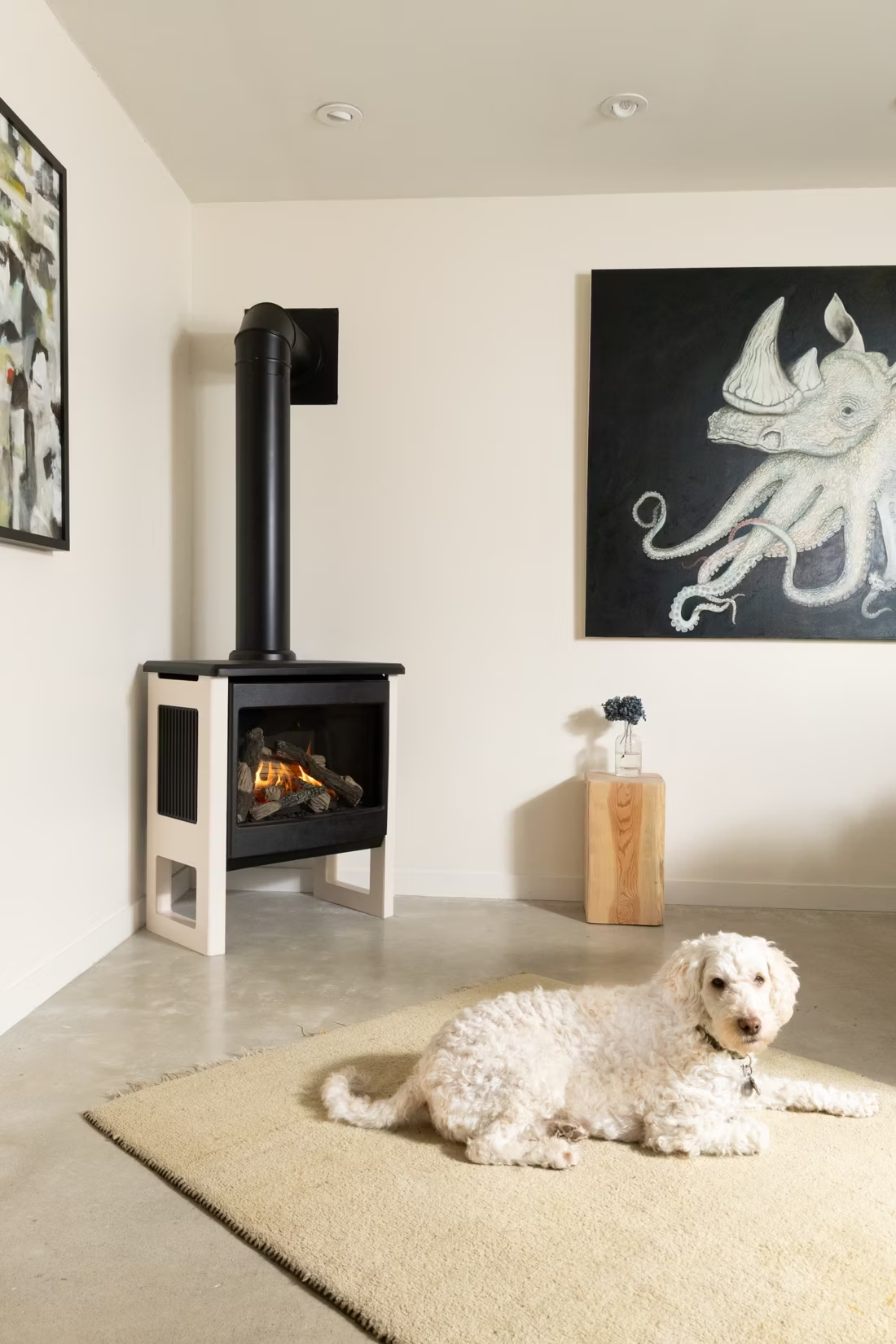
A gas fireplace is a fully built-in unit framed into a wall—the right choice for new construction, additions, or a finished basement without an existing chimney. A gas insert is sized to slide into an existing masonry firebox and uses your current chimney as the vent path, which fits a lot of Sayreville's older housing stock. A gas stove is a freestanding cast-iron or steel unit that sits on the floor like a wood stove but burns gas—a good option for a room with no fireplace opening at all. Most Brownville homeowners with an existing brick fireplace land on an insert; new spaces usually call for a built-in.
Do I need a permit to install a gas fireplace in Brownville?
Yes—any new gas fireplace or insert installation requires both a construction permit and a gas line permit through Sayreville's Construction Code Enforcement office, since Brownville falls under Sayreville Township jurisdiction in Middlesex County. The gas line connection itself has to be run or verified by a licensed plumber or gas fitter. Reputable local hearth dealers handle this paperwork as part of the installation, coordinating the permit, the gas hookup, and the final inspection so you're not juggling separate trades.
Can I install a vent-free gas fireplace in New Jersey?
New Jersey's construction code significantly restricts unvented (vent-free) gas appliances—they're prohibited in bedrooms and tightly limited by room-size and ventilation rules elsewhere in the house, which is why almost every installer in the Brownville area sticks to direct-vent, fully vented units. Direct-vent fireplaces draw combustion air from outside and exhaust it back outside through a sealed pipe, so there's no debate about indoor air quality or code compliance. If you've seen vent-free log sets advertised online, expect your local dealer to steer you toward a vented model instead.
How often does a gas fireplace need to be serviced?
Plan on an annual inspection, ideally in early fall before you're relying on it during a cold snap. A technician checks the burner, pilot assembly, venting, and gas connections, and cleans the glass and interior components. This is a much smaller job than wood-stove chimney sweeping—most local service providers charge in the $150 to $250 range for a standard annual visit—but skipping it is the most common cause of pilot and ignition problems mid-winter.
Gas or electric—which fireplace makes more sense for my Brownville home?
Gas delivers real radiant heat output, works during a power outage with battery or self-generating ignition, and can meaningfully offset furnace use on a cold night—worthwhile given Brownville's generally moderate winter heating season. Electric fireplaces cost far less to install (often $400–$1,200 versus several thousand for a gas unit), need no gas line or venting at all, and are simple to run off standard household wiring—though at Jersey Central Power & Light's residential rate of about 14.97¢/kWh, they're best treated as supplemental or ambiance heat rather than a primary source for a whole room. Many homeowners here use electric in a bedroom or den and reserve gas for the main living space.
Why is my open fireplace making my house colder?
Open fireplaces suck—literally. As the fire burns, it consumes air your furnace already paid to heat and pulls it out through the chimney, so the house is actually colder after the fire goes out than before you lit it. An insert fixes this: it seals the chimney, puts fixed glass across the front, and turns that hole in your house into a real heat source.
Is my gas fireplace wasting gas?
If it was installed more than 15 years ago, probably. Older gas fireplaces keep a standing pilot light burning all the time, and that little flame can cost a couple hundred dollars a year. Newer models use pilot-on-demand ignition—the pilot lights only when you use the fireplace and goes out when you turn it off.
How much should I budget for a fireplace?
For an average home—covering the fireplace, the vent pipe, and basic installation—a budget between $3,900 and $5,500 gives you a lot of options across wood, gas, and pellet. By the time you add finish work, gas line, and electrical, the average complete installation lands between $5,000 and $12,000 all-in. In a remodel or new build, a good rule is to put about 2.5% of the total project cost toward the fireplace.
What is an in-home preview and do I need one?
It's a visit where a hearth professional measures your space, confirms the model you picked actually works in your home, and walks the specs—framing, gas line, venting, finish work—before anything is ordered. Some details you just can't know until you see the house. Never make a down payment without one; it's the single most-skipped step that burns buyers.
Nearby Dealers
Hearth shops serving Brownville and the surrounding area. Every listing shows whether it is a WhyFire partner, a dealer we have verified as authorized for the brands we recommend, or a local business carrying hearth products. No manufacturer pays for placement. How we verify dealers →
Island Renovations
Appliance Brokers, Ltd.
Fireside Pros/Awning Design
Builders Architectural Millwork
Central Jersey Masonry & Chimney Sweep
Hot Concepts Fireplaces
Alternate Energy Products
East Coast Energy Products Inc.
Fireplaces R Us
Harris Hearth And Home
H2 LLC
D & D Design Center
Alpine Fireplaces
Find your gas fireplace in Brownville.
Tell us about your home and your existing fireplace or gas service, and we'll match you with a trusted local dealer plus a free Project Guide & Parts List—the exact parts, including the vent kit, for your Brownville gas fireplace project.
Find Your Fireplace →