
Pellet Heat Built for a Nebraska Winter.
Consistent, thermostat-controlled heat for Pawnee County farmhouses and small-town homes—without the splitting, stacking, and daily tending that cordwood demands. Find the right pellet stove or insert and connect with a trusted local dealer.
Every Project Starts From One of These Five Situations
An easier burn for a county that already knows wood.
Pawnee County sits in Nebraska's Climate Zone 5A, with cold, dry winters that regularly dip well below freezing and occasionally into single digits during hard cold snaps. It's home to fewer than 1,700 people spread across farmsteads, Pawnee City, and small towns like Table Rock and Steinauer—the kind of place where a lot of households already burn wood cut from the oak, hickory, and cottonwood that line the creek bottoms and shelterbelts. Wood heat runs deep here, but not everyone wants to split, haul, and stack cordwood every fall, especially on a working farm where time during harvest and calving season is tight.
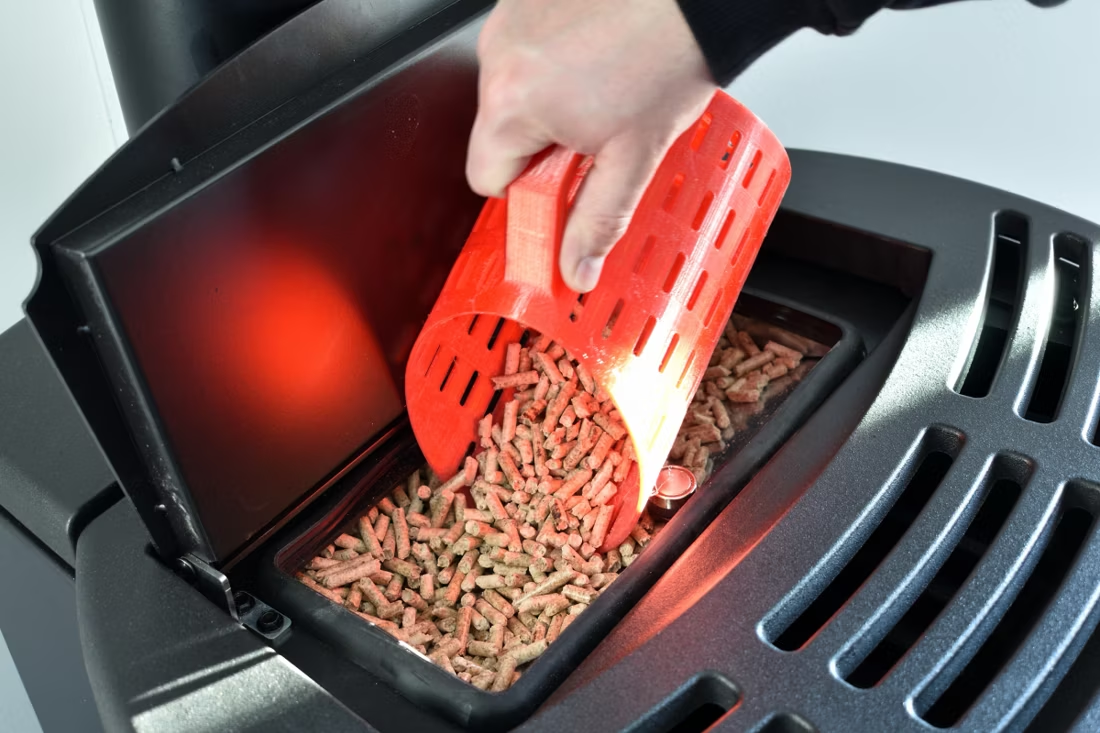
Pellet stoves give Pawnee County households a middle path: real wood-based heat, sourced from brands like Lignetics or Indeck Energy Services, delivered from a bag instead of a woodpile. Load the hopper, set the thermostat, and the auger does the rest—a real advantage for retirees, rental properties, or anyone managing a farm where hauling firewood competes with everything else on the to-do list. Because the nearest dedicated hearth dealers tend to be in Beatrice or Falls City rather than in the county itself, most Pawnee County pellet buyers plan a bit further ahead on both installation scheduling and fuel deliveries—something a local match helps sort out early.
Three steps. No salesperson until you're ready.
Tell us about your project
Your zip code, your situation, and the fuel you're leaning toward—or let the answers point you to one.
See what's actually available
The brands dealers within 100 miles genuinely carry—real options, never a catalog mirage.
Get your dealer & Project Guide
A trusted local dealer, plus the free Project Guide & Parts List that names every component of the job.
Frequently Asked Questions
How much does a pellet stove installation cost in Pawnee County?
A typical freestanding pellet stove installation runs roughly $3,500 to $6,500 in Pawnee County once you factor in the through-wall PL vent kit, a hearth pad if your floor isn't already protected, and labor. Because there isn't a dedicated hearth retailer based in the county itself, expect installers traveling from Beatrice, Falls City, or the Lincoln area to include a modest trip charge in the estimate, especially for rural addresses well outside Pawnee City. Converting an existing masonry fireplace to a pellet insert is often on the lower end of that range since it reuses existing masonry rather than requiring new wall penetrations.
Pellet stove vs. wood stove—which makes more sense on a Pawnee County farmstead?
Wood is free or cheap if you're already cutting oak, hickory, or cottonwood off your own ground, and it keeps working through a power outage—a real consideration here since rural electric service can go down during ice storms. Pellet stoves need electricity to run the auger and combustion blower, so they're not a stand-alone backup heat source unless paired with a generator or battery backup. What pellet buys you is consistency: no splitting, no seasoning wood for a year before it burns clean, and a thermostat that holds a set temperature overnight instead of a fire that needs feeding. Plenty of households here run wood as primary heat and add a pellet stove or insert in a second living space for convenience—talk through your specific setup with a local dealer before deciding.
Where can I buy pellet fuel near Pawnee County?
Bagged pellets from brands like Lignetics and Indeck Energy Services are typically available through farm supply and co-op stores in Beatrice, Falls City, and along the Highway 8 and Highway 4 corridors, though stock can be seasonal and thin by mid-winter. Given the county's small population and rural layout, most residents are better off buying pellets by the ton (roughly 50 forty-pound bags) ahead of the season rather than picking up bags as needed. Ordering early, ideally by early fall, avoids the scramble that happens locally when a hard cold snap sends everyone to the same handful of suppliers at once.
What size pellet stove do I need for a Pawnee County farmhouse?
Older farmhouses in Pawnee County tend to run drafty, with high ceilings, single-pane original windows, and additions that weren't insulated to modern standards—all of which push sizing up compared to a newer, tighter build of the same square footage. As a general guide: a small pellet stove (up to 1,000 sq ft) suits a single room or a well-insulated addition, a medium stove (1,000 to 2,000 sq ft) covers most main living areas, and a large stove (2,000+ sq ft) can serve as a home's primary heat source in a tighter, newer build. A local dealer walking through your actual home—insulation, ceiling height, and floor plan—will size it more precisely than square footage alone.
Do I need a permit to install a pellet stove in Pawnee County?
Building permit requirements for pellet stove installations run through the Pawnee County Zoning and Building office at the county courthouse in Pawnee City. Given the county's small population, enforcement and permitting processes are simpler than in larger metro counties, but a permit is still the right move—it documents that clearances and venting meet code, which matters for insurance and resale. Most installers coming from Beatrice or Falls City will pull the permit as part of the job, so it's worth confirming that up front when you get a quote.
Will my pellet stove work if the power goes out?
Not without a backup power source. Pellet stoves rely on an electric auger to feed fuel and a blower to distribute heat and exhaust combustion gases, so a standard unit shuts down the moment power drops—a real issue in rural Pawnee County, where ice storms and high wind events can knock out electric cooperative service for hours or longer. A small battery backup or portable generator sized for the stove's low wattage draw (often under 100 watts on standby) will keep it running through most outages. If backup heat during outages is a priority, it's worth discussing a wood stove as a complementary primary or secondary unit alongside pellet.
How much maintenance does a pellet stove need?
Pellet stoves need more frequent light maintenance than a wood stove, but far less heavy cleaning. Plan to empty the ash pan every few days during regular use, clean the glass weekly, and vacuum the burn pot and heat exchanger tubes every one to two weeks depending on how many hours the stove runs. A full professional cleaning and inspection once a year—checking the auger motor, gaskets, and venting—is recommended before each heating season starts, similar to how a chimney sweep services a wood stove.
How is a pellet stove vented compared to a wood stove?
Most pellet stoves vent through a smaller-diameter PL (pellet-listed) pipe run horizontally through an exterior wall, rather than requiring a full Class A chimney straight up through the roof like a wood stove typically does. That makes new pellet installations in Pawnee County homes without an existing chimney generally simpler and less expensive than adding wood-burning venting from scratch. For homes with an existing masonry fireplace, a pellet insert can also be installed using the existing chimney with a smaller liner, which is often the most cost-effective route if that fireplace is already in place.
Are there rebates or tax credits available for pellet stoves in Nebraska?
Pellet stoves that meet a 75% or higher efficiency rating can qualify for the federal biomass stove tax credit (25C), which covers a percentage of both equipment and installation costs up to an annual cap—check current IRS guidance for the exact figures in effect for your install year. Nebraska doesn't currently run a state-level rebate program specific to pellet appliances, so the federal credit is typically the main incentive available to Pawnee County homeowners. A local dealer can confirm which specific models they carry meet the efficiency threshold and provide the manufacturer's certification paperwork you'll need at tax time.
What's the difference between an insert and a zero-clearance fireplace?
An insert is a fireplace that slides into a pre-existing wood-burning fireplace—if you don't have one, there's nothing to insert it into. A zero-clearance fireplace is built into a framed wall, which makes it the answer for remodels and new construction. Simple test: existing masonry fireplace means insert; blank or framed wall means zero-clearance.
Why is a fireplace insert so efficient?
An insert does two things: it seals the chimney completely, so you stop losing air you already paid to heat, and it radiates warmth into the room through the firebox and glass. Most add a heat-exchange fan that pulls cool room air underneath, wraps it around the hot firebox, and pushes it back out warm. Your home is more efficient before you've even lit the first fire.
Does a fireplace add value to my home?
On average, a fireplace adds back to the home about the same amount you spent installing it. Add the monthly savings from heating the rooms you actually use instead of the whole house—often hundreds of dollars a year—and the value case is strong before you even count what a fire does for how your family uses the room.
Should the dealer who sells my fireplace also install it?
Ideally, yes. A fireplace project involves vent pipe, gas line, electrical, and often tile or stone. Hire three or four separate trades and you own the liability and the game of telephone between them. One company selling and installing means one accountable party, start to finish—ask about factory training, on-time completion records, and what happens if an inspection fails.
Pellet Brands Stocked Around Pawnee County
Manufacturers will point you to the nearest stocking dealer.
Find your pellet stove in Pawnee County.
Tell us a bit about your home and we'll match you with the right pellet stove or insert, plus a free Project Guide & Parts List—the vent kit, hearth pad, and other parts your project needs, and the local dealer we recommend for the install.
Find Your Fireplace →