
Add real warmth to your Pawnee County home—without a chimney.
From Pawnee City to Table Rock, Steinauer, and DuBois, electric fireplaces give southeast Nebraska homes supplemental heat and ambiance without venting, wood hauling, or masonry work. Find the right unit and connect with a trusted local dealer.
Every Project Starts From One of These Five Situations
Simple heat for a spread-out county.
Pawnee County is home to just over 1,600 residents scattered across Pawnee City and small communities like Table Rock, Steinauer, Burchard, and Lewiston, with a lot of open farmland in between. Climate zone 5A means winters here are genuinely cold—not as brutal as the northern plains, but closer in feel to Madison, Wisconsin than to Kansas City, with stretches of below-freezing days that push heating systems hard. Many homes in the county are older farmhouses with woodlots full of oak, hickory, and cottonwood, but plenty of newer construction and manufactured housing in and around Pawnee City run entirely on electric heat, since natural gas lines don't reach far outside town limits.
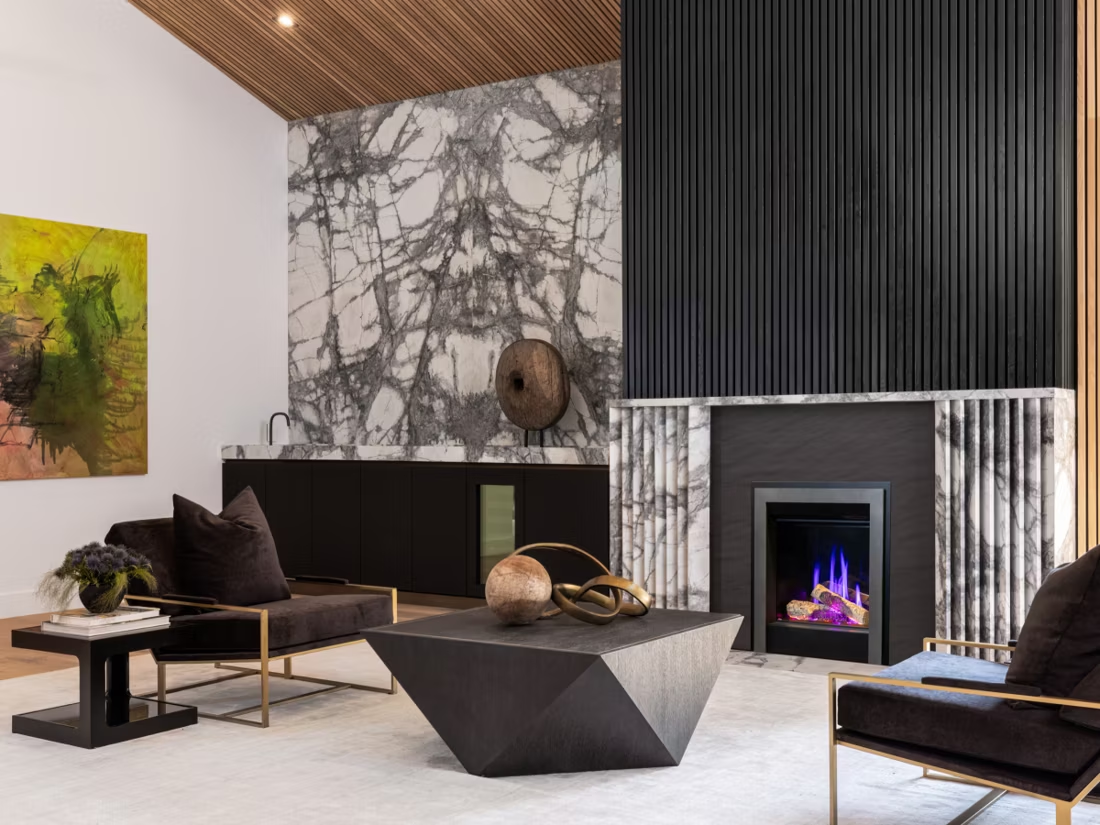
That's where electric fireplaces fit in. A plug-in insert or wall-mount unit adds real, adjustable warmth to a bedroom, sunroom, or living room without a chimney, a gas line, or a building permit for the unit itself—though a dedicated circuit for a larger built-in should be pulled by a licensed electrician and inspected to the code Norris Public Power District's service territory follows. For rural Pawnee County homes where the nearest hearth dealer with an electric fireplace showroom is a 30-to-60-mile drive to Beatrice, Falls City, or Lincoln, that simplicity matters. Find My Fireplace matches you with a trusted local dealer who can size the unit correctly, handle any electrical work, and get it installed without the guesswork of ordering online.
Three steps. No salesperson until you're ready.
Tell us about your project
Your zip code, your situation, and the fuel you're leaning toward—or let the answers point you to one.
See what's actually available
The brands dealers within 100 miles genuinely carry—real options, never a catalog mirage.
Get your dealer & Project Guide
A trusted local dealer, plus the free Project Guide & Parts List that names every component of the job.
Frequently Asked Questions
How much does an electric fireplace installation cost in Pawnee County?
A plug-in electric insert or freestanding stove that uses a standard household outlet typically runs $200 to $800 for the unit, with little to no installation labor beyond mounting. A built-in wall unit or a larger insert that requires its own dedicated 20-amp circuit runs higher—generally $1,000 to $2,500 once you factor in a licensed electrician running new wire and a breaker to code. Because Pawnee County is served by Norris Public Power District's rural distribution grid, older farmhouses sometimes need a panel check before adding a dedicated circuit, which a local electrician or dealer will flag during the in-home visit.
What size electric fireplace do I need for my home?
Electric fireplaces are built to supplement heat in a single room, not to replace a furnace—a typical unit is rated to comfortably warm 400 to 1,500 square feet depending on wattage and ceiling height. For a bedroom or den in a Pawnee City bungalow, a smaller wall-mount or insert is usually plenty. For an open living/dining area in a newer ranch home outside town, look at a larger unit with a higher BTU rating and confirm your electrical panel has room for the added draw. A local dealer will walk the space before recommending a size rather than guessing from square footage alone.
Do I need a permit to install an electric fireplace in Pawnee County?
A standard plug-in electric fireplace or insert doesn't require a permit—it's no different electrically than plugging in a space heater. If you're adding a built-in unit that needs a new dedicated circuit, that electrical work should be done by a licensed electrician and inspected under the code Nebraska has adopted, which Norris Public Power District's member services can confirm for your specific address. There's no chimney, venting, or combustion-related permitting involved at all, which is one of the reasons electric units are popular for quick upgrades in older Pawnee County homes.
What's the difference between an electric fireplace, insert, and stove?
An electric insert is built to slide into an existing masonry fireplace opening, which works well for older Pawnee County homes that have a fireplace they no longer burn wood in but want to keep using visually. An electric fireplace is typically a built-in unit designed for a wall or a custom mantel surround in newer construction. An electric stove is a freestanding cabinet-style unit that mimics a wood stove's look and can sit almost anywhere with an outlet nearby—a common choice for a manufactured home or an add-on room without an existing hearth.
Will my electric fireplace work during a power outage?
No—and this is worth being upfront about. Every electric fireplace, insert, or stove needs grid power to run its heating element, blower, and flame effect, so it won't provide heat if Norris Public Power District's lines go down in an ice storm or summer derecho. For Pawnee County homeowners who want a real backup heat source, a wood stove burning locally available oak or hickory, or a propane unit, is a better fit for that specific job. Many households here run electric for everyday convenience in the main living space and keep a wood stove or LP heater as the outage backup—the two aren't mutually exclusive.
What's the best electric fireplace for an older Pawnee County farmhouse?
For a farmhouse with an existing but unused masonry fireplace, an electric insert that slides into the firebox opening is usually the cleanest option—it keeps the mantel and surround intact while adding real heat output and a realistic flame effect. For homes without an existing fireplace, a wall-mount unit over a stud-framed accent wall is a popular retrofit that doesn't touch the structure. Given how spread out housing stock is across Table Rock, Steinauer, and the rest of the county, a local dealer visiting in person to check wall framing and panel capacity beats ordering a unit online and hoping it fits.
Where can I find electric fireplace dealers near Pawnee County?
There isn't a dedicated hearth showroom inside Pawnee County itself given the small population base, so most residents end up driving to Beatrice, Falls City, or Lincoln for in-person shopping. Find My Fireplace shortcuts that step by matching you with a trusted dealer who already serves rural southeast Nebraska customers and can handle delivery and installation without requiring you to make the trip yourself for a consultation.
How much does it cost to run an electric fireplace day to day?
Most electric fireplaces draw around 1,500 watts on high heat, which works out to roughly 15 cents an hour at typical rural Nebraska electric rates through Norris Public Power District—call it $1 to $2 for an evening's use in a bedroom or den. That's meaningfully cheaper to run than heating that same room with a whole-house furnace, which is part of why electric units are popular as zone heat in larger farmhouses where closing off and heating just one occupied room saves on the overall bill.
Electric vs. wood—which makes more sense for my Pawnee County home?
Wood heat has deep roots here, with oak, hickory, and cottonwood readily available from local woodlots, and it keeps working when the power doesn't. Electric skips the cutting, hauling, ash cleanup, and chimney maintenance entirely, and installs in an afternoon with no venting. For a primary living space where convenience matters most and you already have reliable electric service, electric wins. For a household that wants a genuine backup heat source for winter outages, or already has a woodlot to draw from, a wood stove is worth pairing alongside it rather than choosing one over the other.
Do electric fireplaces actually produce heat?
Yes—most put out around 4,800–5,000 BTUs from a standard outlet, which comfortably warms a bedroom, office, or den as a comfort-zone heater. What they won't do is carry a whole house the way wood, gas, or pellet can. Think of electric as ambiance-first with honest supplemental heat: flames on with no heat in July, flames plus warmth in January.
Can I put a TV above my fireplace?
Yes—with an asterisk. Fireplaces are hot and TVs don't like heat. Either put a mantel between them to deflect rising warmth, or choose a fireplace with heat-management technology that creates a cool zone on the wall above—the wall stays around 125 degrees, barely warm, while the room still gets full heat. If you like clean lines and don't want a mantel, heat management is the answer.
Can a fireplace actually lower my heating bill?
Yes—by creating a comfort zone. A furnace heats every square foot of the house just to warm the one room you're in; a gas fireplace on low burns roughly a sixth of the gas a typical furnace does. Set the furnace around 55–60 degrees as a baseline, then heat the rooms your family actually uses. Families who heat this way commonly save $20–$60 a month.
Does a fireplace add value to my home?
On average, a fireplace adds back to the home about the same amount you spent installing it. Add the monthly savings from heating the rooms you actually use instead of the whole house—often hundreds of dollars a year—and the value case is strong before you even count what a fire does for how your family uses the room.
Find your electric fireplace in Pawnee County.
Tell us a bit about your home and we'll put together a free Project Guide & Parts List for your Pawnee County electric fireplace project, then connect you with a trusted local dealer to install it.=
Find Your Fireplace →