
Find the right hearth for your Pawnee County farmhouse.
Wood, gas, pellet, and electric fireplace resources for every town and rural section of Pawnee County—from Pawnee City to Table Rock and Steinauer. Find the right unit and connect with a trusted local hearth retailer.
Every Project Starts From One of These Five Situations
Zone 5A heating on the southeast Nebraska plains.
Pawnee County sits in the rolling farmland of Nebraska's southeast corner, a Climate Zone 5A county where winter cold snaps rival what you'd see in Madison or Fargo during an arctic outbreak, even if the season averages milder than those cities. With just over 1,600 residents spread across small towns and farmsteads, this is a county where a lot of homes still rely on wood cut from the county's own oak, hickory, and cottonwood stands—timber that's been part of local heating for generations, especially along the Nemaha River bottoms. There are no air quality non-attainment issues here and no wood-burning curtailment days to plan around, which gives homeowners more flexibility than counties dealing with winter inversions.
What you'll find on this hub: hearth retailers, service technicians, and fuel suppliers serving every community in the county—from Pawnee City as the county seat out to Table Rock, Steinauer, Burchard, Du Bois, and Lewiston. Pick your fuel below to drill into specifics—local dealers, installation costs, recommended units, and the resources that match your project. Whether you're heating a farmhouse on acreage or a home in town, this is the starting point.
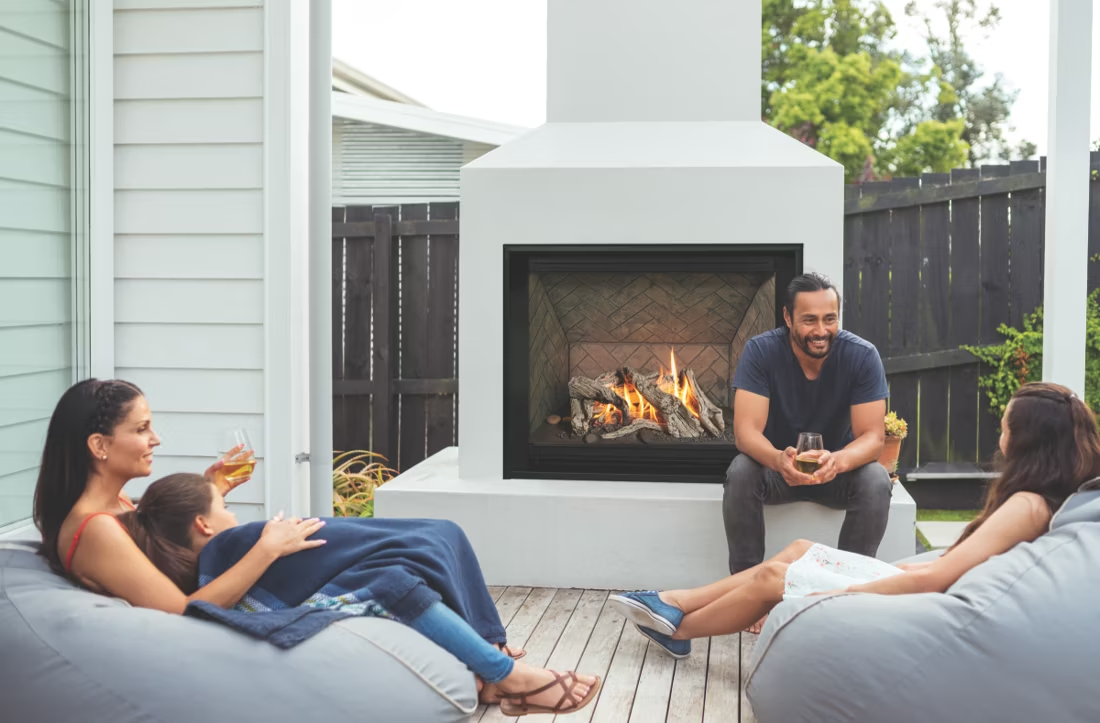
Four fuels. One honest answer for Pawnee County.
Three steps. No salesperson until you're ready.
Tell us about your project
Your zip code, your situation, and the fuel you're leaning toward—or let the answers point you to one.
See what's actually available
The brands dealers within 100 miles genuinely carry—real options, never a catalog mirage.
Get your dealer & Project Guide
A trusted local dealer, plus the free Project Guide & Parts List that names every component of the job.
Frequently Asked Questions
Which fuel works best in Pawnee County?
It depends on your home and how you use it. Wood remains a strong choice for rural Pawnee County homes—oak, hickory, and cottonwood are all locally available, and a well-sized wood stove or insert can carry a farmhouse through a hard January cold snap even if the power goes out. Gas is the convenience pick for homes with propane service or in-town natural gas access—no wood-splitting, no ash, heat on demand. Pellet stoves are a solid middle ground for homeowners who want wood-like heat without the labor of processing cordwood, and regional supply from brands like Lignetics keeps fuel accessible. Electric fireplaces work well as supplemental heat in a bedroom or den, but in a 5A climate they're not going to carry a home through the coldest stretches on their own. Many county homes end up running two fuels—wood or pellet as the primary heat source, with gas or electric filling in secondary rooms.
Do I need a permit to install a fireplace in Pawnee County?
Most new installations require a permit, though the process is simpler here than in larger jurisdictions. New wood stoves, wood inserts, gas fireplaces, gas inserts, gas stoves, and pellet stoves typically need a building permit through the local jurisdiction, and gas work requires a separate line permit handled by a licensed installer. Wood-burning appliances sold new must meet current EPA emissions standards. Electric fireplaces generally skip the permit process unless you're doing a built-in installation with new wiring. In unincorporated parts of the county, check with the county clerk's office on current permitting requirements before you start; within Pawnee City or the smaller incorporated towns, the local town office handles it. Most hearth retailers serving the county will pull the permit as part of the installation, so it's rarely something the homeowner has to navigate alone.
Are there air quality restrictions on wood burning in Pawnee County?
No. Pawnee County has no air quality non-attainment designation and no winter wood-burning curtailment program—unlike counties in mountain basins or valleys that trap smoke during inversions. That means you can burn wood on a normal schedule without checking a daily air quality advisory first. The one practical consideration is still burning dry, seasoned wood (oak and hickory need roughly a year or more to season properly) rather than green wood, which produces more smoke and creosote regardless of local regulation. It's good practice for chimney safety and neighborliness even without a formal restriction in place.
Can one local hearth retailer handle all four fuel types?
In a county this size, dealers covering multiple fuel types are the norm rather than the exception, since a single-fuel showroom rarely makes sense for a population under 2,000 spread across small towns. Most retailers serving Pawnee County carry at least three of the four fuel types—typically wood, gas, and pellet, with electric as a smaller add-on line. If you're cross-shopping fuels, look for a dealer with working display units of each type so you can compare heat output and see the actual footprint before deciding. Given the travel distances involved for rural service, it's also worth asking whether the same dealer handles installation and follow-up service, or whether that's a separate technician.
How does installation and service work for rural farmsteads in Pawnee County?
Because Pawnee County is mostly farmland and small towns, most hearth retailers and technicians are based in a nearby regional hub—often Beatrice or Lincoln—and travel out for both installation and annual service. Expect a modest travel fee for rural calls, and expect to schedule further in advance than you would in a metro area, especially for pre-winter chimney sweeps in September and October when every wood-burning household in the region is trying to book the same handful of technicians. If you're on acreage with a long driveway or gravel access, mention that when scheduling—it affects how crews plan their route and equipment for the day.
What's the typical cost range for fireplace installation across all fuel types in Pawnee County?
Costs run in line with rural Midwest pricing generally. Wood stove or insert installation: roughly $4,000–$8,500 for a typical retrofit, higher for new chimney construction. Gas fireplace, insert, or stove: roughly $4,000–$10,000 depending on whether a new gas line or venting run is needed. Pellet stove or insert: roughly $4,000–$7,000 for a standard install. Electric fireplace: $200–$3,000 for the unit itself, plus $400–$1,200 in labor for anything beyond a plug-in wall unit. Rural travel fees for installation crews can add to these figures depending on distance from the retailer's base. For a firm number, the free Project Guide & Parts List from a matched local dealer will lay out exact parts and costs for your specific home.
Can I install a fireplace myself?
If you're putting a fire in your house on purpose, it's best to work with an expert. Unless you're genuinely experienced in framing, gas line, vent pipe, and the national code on clearances to combustibles, have a professional do it—and ideally the same company that sells you the fireplace, so warranty, service, and liability all live under one roof.
Does a fireplace add value to my home?
On average, a fireplace adds back to the home about the same amount you spent installing it. Add the monthly savings from heating the rooms you actually use instead of the whole house—often hundreds of dollars a year—and the value case is strong before you even count what a fire does for how your family uses the room.
Can a fireplace actually lower my heating bill?
Yes—by creating a comfort zone. A furnace heats every square foot of the house just to warm the one room you're in; a gas fireplace on low burns roughly a sixth of the gas a typical furnace does. Set the furnace around 55–60 degrees as a baseline, then heat the rooms your family actually uses. Families who heat this way commonly save $20–$60 a month.
I know I want a fireplace—where do I actually start?
Do two things today: snap a photo of the wall or fireplace you want to transform, and take a tape measure to the space—width, height, depth. Those two artifacts answer most of a hearth professional's first questions. Then settle fuel (wood, gas, pellet, or electric) and set a realistic budget: $3,900–$5,500 covers fireplace, vent, and basic install for most homes.
Stove and Fireplace Dealers in Pawnee County
Listings include WhyFire partner dealers, dealers we have verified as authorized for the brands we recommend, and established local businesses that carry hearth products. Every listing shows which one it is. The ones marked Preferred run on WhyFire's software, so they can show you real pricing and book your appointment right here. No manufacturer pays for placement. How we verify dealers →
Edelman's Home Center
Edward's Stone Inc
Fireplace Stone & Patio - Lincoln
Table Rock Stone & Fireplace
Capital Patio/flame Shop
Arnold Refrigeration
Robidoux Inc
Find your fireplace in Pawnee County.
Tell us your fuel and your town, and we'll match you with a trusted local dealer and send a free Project Guide & Parts List—the exact parts, vent kit included, and the dealer we recommend for your project.
Find Your Fireplace →