
Find your gas fireplace in Pawnee County.
Instant, reliable heat for Pawnee County's cold winters—from Pawnee City to Table Rock, Steinauer, and Du Bois. We match you with a trusted local dealer who can size and install the right unit.
Every Project Starts From One of These Five Situations
Steady heat for southeast Nebraska winters, without tending a fire.
Pawnee County sits in climate zone 5A, in a stretch of southeast Nebraska where winter brings sustained cold spells and hard freezes rather than any single brutal extreme—closer in feel to Fargo, ND than to a mild Plains winter. Many homes here, especially older farmhouses around Pawnee City and Table Rock, were built with a single wood-burning fireplace as the only hearth feature. A growing number of homeowners are converting that fireplace to gas, or adding a freestanding gas stove in a shop, basement, or addition, because it delivers consistent heat on demand without the daily work of splitting and hauling oak or hickory.
With a population under 1,700 spread across small towns and rural acreages, Pawnee County doesn't have a hearth showroom on every corner—which is exactly why matching with the right installer matters. Whether your home is served by natural gas or you're running off a propane tank (common on rural properties outside town limits), a local dealer will know which venting path and fuel setup actually works for your address, pull the right permits, and size the unit correctly rather than sending you home with a big-box unit and a shrug.
Three steps. No salesperson until you're ready.
Tell us about your project
Your zip code, your situation, and the fuel you're leaning toward—or let the answers point you to one.
See what's actually available
The brands dealers within 100 miles genuinely carry—real options, never a catalog mirage.
Get your dealer & Project Guide
A trusted local dealer, plus the free Project Guide & Parts List that names every component of the job.
Frequently Asked Questions
How much does a gas fireplace installation cost in Pawnee County?
Costs vary based on whether you're converting an existing masonry fireplace, installing new in a basement or addition, and whether propane tank or gas line work is needed. A gas insert into an existing chimney with gas already run to the house tends to sit on the lower end of typical ranges. A new direct-vent gas fireplace in a room without existing venting, or a rural home needing a new propane tank installed, runs higher. Because Pawnee County has relatively few installers, expect your dealer to give you a firm number after an in-home visit rather than a phone quote—travel distance in a rural county like this affects labor pricing more than in a dense city.
Can I convert my existing wood fireplace to gas?
Yes, and it's a common project in Pawnee County's older housing stock, where many farmhouses and Pawnee City homes were built with a single masonry wood fireplace decades ago. A gas insert typically slides into that existing opening, using a stainless liner run up the original chimney for venting. The conversion keeps the look of the old hearth while giving you push-button heat instead of a fire that needs oak or hickory splits fed into it. Whether you're on natural gas or propane determines the gas line work involved, so your dealer will confirm your fuel source before quoting the job.
Is natural gas or propane more common in Pawnee County?
It depends heavily on where in the county you live. Homes inside Pawnee City and some of the smaller incorporated towns like Table Rock and Steinauer may have natural gas service available, while homes on rural acreages and farmsteads outside town limits typically rely on propane delivered and stored in an on-site tank. Both fuels work fine in a modern gas fireplace or insert—the unit is simply configured with the correct orifice and regulator for whichever you have. If you're unsure what's available at your specific address, that's one of the first things a local dealer will check before recommending equipment.
Will my gas fireplace work during a power outage?
Most modern gas fireplaces with intermittent pilot ignition (IPI) include a battery backup that keeps the unit running when the power drops—useful in Pawnee County, where rural power lines can be slower to restore after an ice storm or high-wind event common to this part of Nebraska. Some manufacturers, like Valor, go a step further and generate their own electricity through the pilot's thermocouple, so there's no battery to remember or replace. If backup heat during outages matters to you—and on an exposed rural property it often should—ask your dealer specifically about the ignition system before you buy.
What's the difference between a gas fireplace, gas insert, and gas stove?
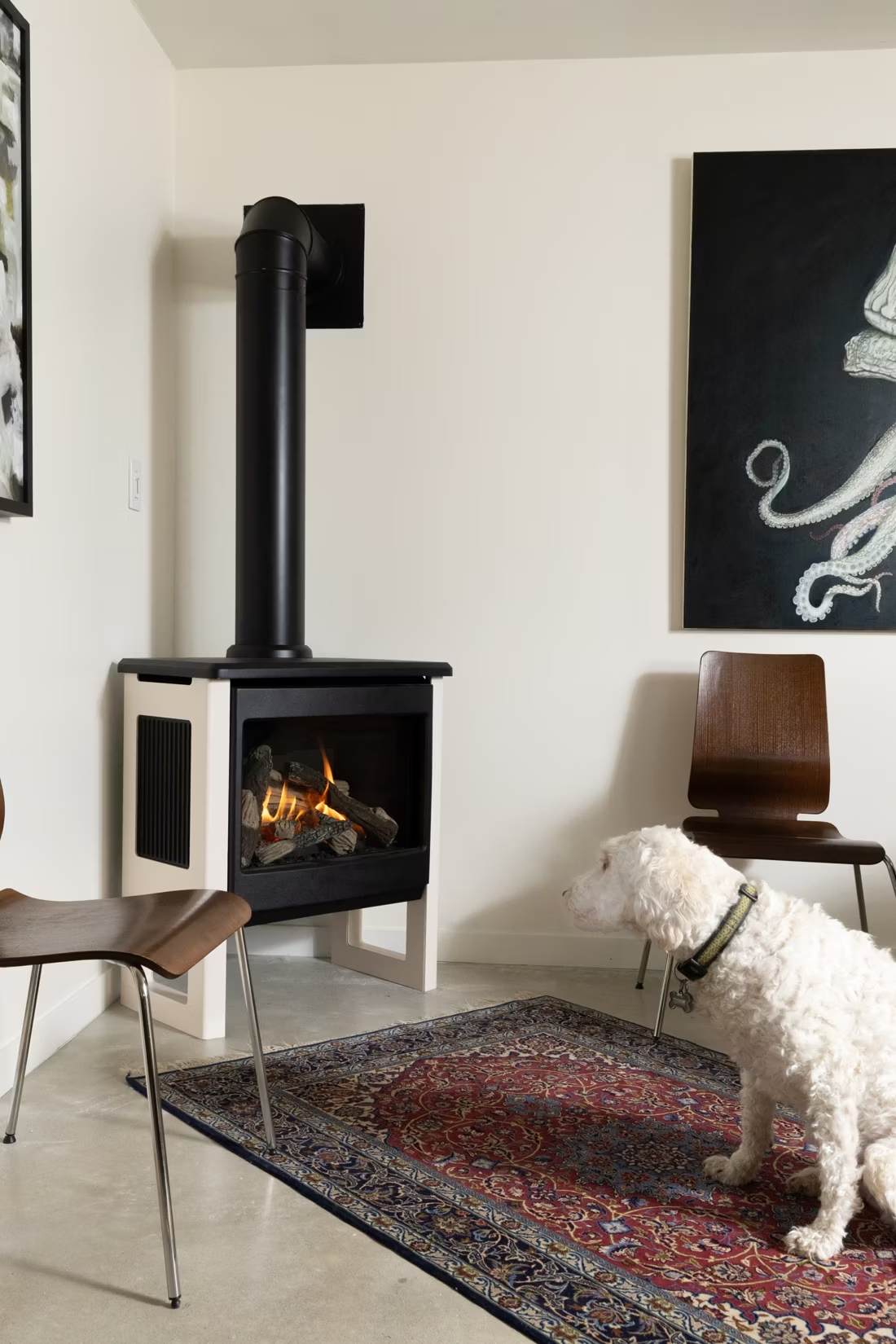
A gas fireplace is a built-in unit installed into new framing, typically used in new construction or a remodel. A gas insert fits into an existing masonry fireplace opening, converting an old wood-burning hearth into a sealed, efficient gas unit that vents through the original chimney. A gas stove is a freestanding cabinet-style unit that sits on the floor, similar in shape to a wood stove, and can go almost anywhere with the right clearances and venting. For the many older homes around Pawnee County with an existing fireplace opening, an insert is usually the simplest upgrade; a stove is often the better fit for a basement, shop, or addition with no existing chimney.
Do I need a permit to install a gas fireplace in Pawnee County?
Gas appliance installations generally require both a building permit and gas line work performed or signed off by a licensed gas-fitter, and this applies whether you're inside Pawnee City limits or on a rural property in the county. In a small county like this, permitting can move through fewer hands than in a large city, but the code requirements around clearances and venting are the same nationally. A dealer who regularly installs in Pawnee County will already know the local permitting process and typically handles it as part of the job.
What's the difference between vented and vent-free gas fireplaces?
Vented (direct-vent) gas fireplaces draw combustion air from outside and exhaust the byproducts back outside through sealed venting—they're the most common recommendation and work in every state. Vent-free units burn gas directly into the room air without exterior venting; they're legal in Nebraska but come with strict room-size and ventilation requirements, and some states restrict them outright. For a farmhouse or newer build in Pawnee County, a direct-vent unit is almost always the better long-term choice—you get real heat output without any tradeoff on indoor air quality, which matters in a tightly sealed modern home.
How often should my gas fireplace be serviced?
Plan on an annual inspection, ideally before the county's coldest stretch sets in each winter. A technician checks the burner, pilot assembly, gas connections, and venting, and cleans the glass and interior—a much quicker job than a wood chimney sweep, but still important for safety, especially on units that see heavy use as a primary heat source in a farmhouse. Given the smaller number of service providers covering a rural county like Pawnee, it's worth scheduling early in the fall rather than waiting until the first cold snap.
Gas vs. wood—which is right for my home in Pawnee County?
Wood remains a practical choice here—oak, hickory, and cottonwood are all available locally, and a wood stove or fireplace keeps working with zero electricity during an outage, which matters on exposed rural properties. Gas wins on convenience: no splitting, hauling, or ash cleanup, and instant heat at the flip of a switch or a wall control. Many Pawnee County households end up with both—gas in the main living area for daily comfort, and a wood-burning unit in a shop, basement, or secondary space as backup heat and for the lower running cost of self-cut firewood.
Why is a fireplace insert so efficient?
An insert does two things: it seals the chimney completely, so you stop losing air you already paid to heat, and it radiates warmth into the room through the firebox and glass. Most add a heat-exchange fan that pulls cool room air underneath, wraps it around the hot firebox, and pushes it back out warm. Your home is more efficient before you've even lit the first fire.
What's the difference between an insert and a zero-clearance fireplace?
An insert is a fireplace that slides into a pre-existing wood-burning fireplace—if you don't have one, there's nothing to insert it into. A zero-clearance fireplace is built into a framed wall, which makes it the answer for remodels and new construction. Simple test: existing masonry fireplace means insert; blank or framed wall means zero-clearance.
Does a fireplace add value to my home?
On average, a fireplace adds back to the home about the same amount you spent installing it. Add the monthly savings from heating the rooms you actually use instead of the whole house—often hundreds of dollars a year—and the value case is strong before you even count what a fire does for how your family uses the room.
Can I install a fireplace myself?
If you're putting a fire in your house on purpose, it's best to work with an expert. Unless you're genuinely experienced in framing, gas line, vent pipe, and the national code on clearances to combustibles, have a professional do it—and ideally the same company that sells you the fireplace, so warranty, service, and liability all live under one roof.
Get matched with a Pawnee County gas fireplace dealer.
Tell us about your home and we'll send you a free Project Guide & Parts List—the right unit, the vent kit, and a recommended local dealer to install it correctly.
Find Your Fireplace →