
Keep Your Family Warm and Safe—No Matter What
With a long, demanding winter heating season and winter lows averaging 11°F, wood heat still carries real weight from Hardin to Lodge Grass. We'll match you with a trusted local dealer and hand you a free planning packet built around your home.
Every Project Starts From One of These Five Situations
Wood heat that matches the country it's burned in.
Big Horn County sits in climate zone 6B, closer in feel to Bismarck or Fargo than to milder parts of the Northern Rockies. Winter lows average 11°F and the county racks up a long, hard winter heating season—enough that a stove sized for casual weekend use in a milder climate will get overwhelmed here. Lodgepole pine, ponderosa pine, Douglas fir, and aspen are the wood species most local burners are working with, and each behaves differently in the stove: pine and fir season faster and burn hotter, aspen is easy to split but burns quicker and needs more frequent reloading.
Public land access matters here. The Bighorn National Forest issues cutting permits for $5 to $20 per cord during a May-through-October season, and the BLM Montana State Office manages permits at $10 per cord from April through October—both reasonable ways to stock a woodshed if you're willing to do the cutting yourself. Wildfire smoke is the county's main air quality concern rather than winter inversion, which means burning restrictions here tend to track summer fire danger rather than cold-weather smoke advisories. A properly sized, correctly vented stove from a local dealer who knows this terrain is the difference between a stove that keeps up on a 20-below night and one that just takes the edge off.
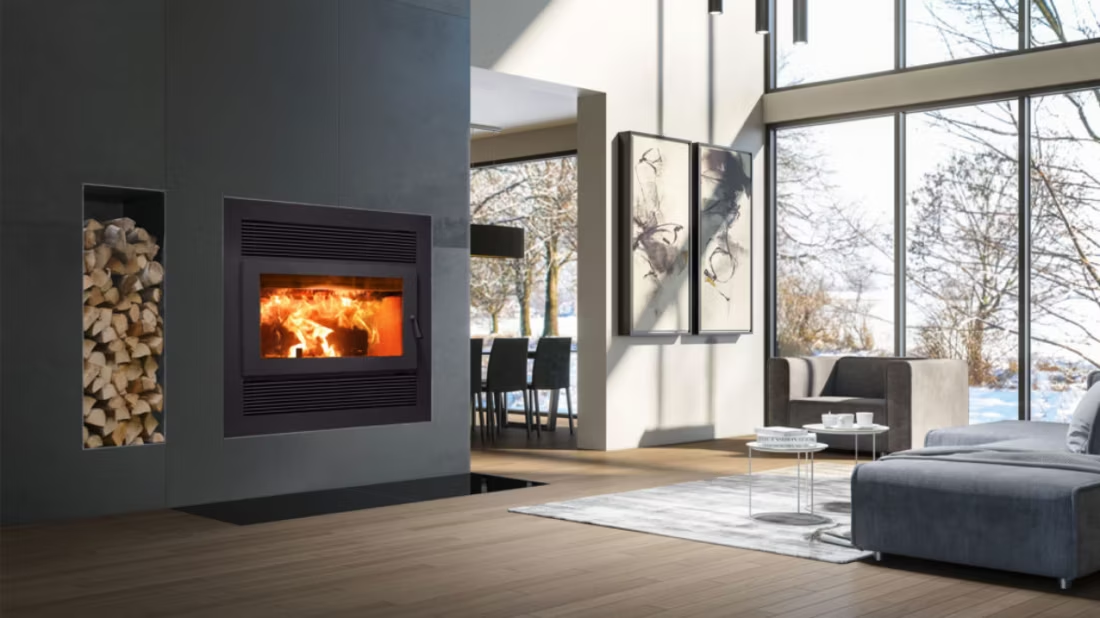
Firewood Cutting Permits Near Big Horn County
Three steps. No salesperson until you're ready.
Tell us about your project
Your zip code, your situation, and the fuel you're leaning toward—or let the answers point you to one.
See what's actually available
The brands dealers within 100 miles genuinely carry—real options, never a catalog mirage.
Get your dealer & Project Guide
A trusted local dealer, plus the free Project Guide & Parts List that names every component of the job.
Frequently Asked Questions
How much does a wood stove installation cost in Big Horn County?
Costs vary based on the stove, whether new Class A chimney pipe is needed, and hearth pad requirements, but expect a range similar to other rural Montana counties: roughly $4,000 to $9,000 for a straightforward install into an existing chimney or masonry fireplace, and higher if you're building new venting from scratch. Homes outside Hardin—out toward Lodge Grass, Wyola, or the more remote parts of the Crow Reservation—may see a modest travel charge added by installers, since dealer coverage in a county this size means some driving. A local dealer can give you a firm number after seeing your home and chimney situation.
What size wood stove do I need for a Big Horn County home?
With winter lows averaging 11°F and a long, demanding winter heating season, this is not a mild-climate county, and sizing should reflect that. A small stove (rated for roughly 1,000 sq ft or less) suits a cabin or single large room; medium stoves (1,000–2,000 sq ft) cover most main living areas in a typical Hardin or Lodge Grass home; larger stoves are worth considering for whole-home heating in well-insulated houses, especially if you're burning primarily lodgepole pine or aspen, which run through a firebox faster than denser hardwoods. A dealer sizing your specific square footage, ceiling height, and insulation level will get you closer than any generic chart.
Where can I find certified wood stove installers near me in Big Horn County?
Look for installers with NFI (National Fireplace Institute) or CSIA (Chimney Safety Institute of America) certification—this is a rural county, so dealer coverage is thinner than in a metro area, and a certified installer matters even more when the nearest chimney sweep might be an hour away. We match you with a trusted local dealer rather than a general contractor or handyman, because improper clearances and venting on a wood-burning unit are the leading cause of chimney fires, and that risk is higher, not lower, when help is farther away.
What's the difference between a wood stove and a wood insert for my home?
A wood stove is freestanding, sits on a hearth pad, and can go almost anywhere with the right clearances—a common choice in newer Big Horn County homes or outbuildings without an existing chimney. A wood insert slides into an existing masonry fireplace and uses that chimney (typically with a stainless liner) to vent, turning a drafty open hearth into a genuine heat source. If your Hardin or Lodge Grass home already has an old masonry fireplace that barely puts out heat, an insert is usually the more efficient upgrade; if you're starting from nothing, a freestanding stove gives you more placement flexibility.
Do I need a permit to install a wood stove in Big Horn County?
Most new wood stove installations require a local building permit, and the stove itself needs to meet current EPA emissions standards. A local dealer typically handles this paperwork as part of the installation so you're not tracking it down yourself. Separately, if you plan to cut your own firewood on public land, note that's a different permit entirely—the Bighorn National Forest and the BLM Montana State Office both issue cutting permits, running $5-$20 per cord and $10 per cord respectively, during roughly an April/May-to-October season each year.
What's the best wood stove for Big Horn County's climate?
For a climate with winter lows around 11°F and a heating season this long, a catalytic stove built for extended burn times is worth the premium—brands like Blaze King can hold a fire 20+ hours on a load, which matters on nights that stay in the single digits or below zero. If you're burning mostly lodgepole pine, ponderosa pine, or aspen—all lighter, faster-burning woods common in this part of Montana—a stove with good secondary combustion will get more heat out of each load rather than just running through wood quickly. A local dealer familiar with these species can steer you toward the right model rather than a generic recommendation.
How often should my chimney be inspected and cleaned in Big Horn County?
An annual inspection before burning season starts, typically late summer, is the standard recommendation from the CSIA—and worth sticking to strictly here, since this county's long, demanding winter heating season means more cumulative burn hours and more creosote buildup than a milder climate would produce. Households burning wood as a primary heat source, especially with faster-burning species like aspen or lodgepole pine, may need a mid-season check as well. Given the distances involved in a rural county like this, scheduling ahead rather than waiting for a problem is the safer approach.
Where can I get firewood or cutting permits in Big Horn County?
For self-cut firewood, the Bighorn National Forest issues permits at $5 to $20 per cord for a May-through-October season, and the BLM Montana State Office issues permits at $10 per cord from April through October. Both offices are worth contacting directly for current unit limits and access maps, since permit terms can shift year to year. If you'd rather buy split, seasoned wood, local sellers around Hardin and the broader county typically price by the cord, with lodgepole pine, ponderosa pine, and Douglas fir the most commonly available species.
Wood stove vs. pellet stove—which is right for my Big Horn County home?
Wood stoves burn cordwood, work with zero electricity, and pair naturally with the cutting permits available through the Bighorn National Forest and BLM—a real advantage in a rural county where winter power outages happen and self-cut wood is genuinely accessible. Pellet stoves, using bagged pellets from brands like Bear Mountain or Lignetics, are more convenient to load and burn cleaner, but they need electricity to run the auger and blower, so they go dark exactly when a wood stove would keep working. For a county this rural with winter lows this cold, wood's independence from the grid is a real consideration, not just a preference. A local dealer can walk through both options against your specific home.
Why is a fireplace insert so efficient?
An insert does two things: it seals the chimney completely, so you stop losing air you already paid to heat, and it radiates warmth into the room through the firebox and glass. Most add a heat-exchange fan that pulls cool room air underneath, wraps it around the hot firebox, and pushes it back out warm. Your home is more efficient before you've even lit the first fire.
Why is my open fireplace making my house colder?
Open fireplaces suck—literally. As the fire burns, it consumes air your furnace already paid to heat and pulls it out through the chimney, so the house is actually colder after the fire goes out than before you lit it. An insert fixes this: it seals the chimney, puts fixed glass across the front, and turns that hole in your house into a real heat source.
Can I install a fireplace myself?
If you're putting a fire in your house on purpose, it's best to work with an expert. Unless you're genuinely experienced in framing, gas line, vent pipe, and the national code on clearances to combustibles, have a professional do it—and ideally the same company that sells you the fireplace, so warranty, service, and liability all live under one roof.
Does a fireplace add value to my home?
On average, a fireplace adds back to the home about the same amount you spent installing it. Add the monthly savings from heating the rooms you actually use instead of the whole house—often hundreds of dollars a year—and the value case is strong before you even count what a fire does for how your family uses the room.
Find your wood fireplace in Big Horn County.
Tell us about your home and we'll match you with a trusted local dealer and send over a free Project Guide & Parts List—the exact parts, including the vent kit, for a wood stove or insert project built for Big Horn County winters.
Find Your Fireplace →