
Reliable Heat for Big Horn County's High Plains Winters.
With winter lows averaging 11°F and a heating season on par with Bismarck, ND, Big Horn County homes from Hardin to Crow Agency and Lodge Grass need heat that starts on the first try. Find the right gas fireplace, insert, or stove, and get matched with a trusted local dealer.
Every Project Starts From One of These Five Situations
Dependable warmth without tending a fire.
Big Horn County sits in southeastern Montana along the Bighorn and Little Bighorn river valleys, most of it within the Crow Indian Reservation. Winters here are long and wind-driven, with a heating season on par with Bismarck, ND, and average lows around 11°F—colder than most of the Midwest and in the same range as Bismarck, ND. Wood heat has deep roots throughout the county, with lodgepole pine, ponderosa pine, Douglas fir, and aspen all common on the surrounding BLM and Bighorn National Forest land. But wildfire smoke concerns in late summer and fall, along with the practical need for heat that fires up instantly on a subzero morning, have made gas a common choice in homes across Hardin, Crow Agency, Lodge Grass, Wyola, and St. Xavier.
Natural gas service reaches parts of Hardin through NorthWestern Energy, but across most of Big Horn County—the ranches, the reservation communities, and the outlying areas along Highway 313 and Highway 87—propane is the standard fuel, delivered by regional suppliers that serve the Bighorn valley. Either way, a properly installed direct-vent gas fireplace gives you heat on demand during a blizzard, no chimney to clean, and a hedge against the wildfire-season air quality concerns that can make wood burning less appealing in late summer.
Three steps. No salesperson until you're ready.
Tell us about your project
Your zip code, your situation, and the fuel you're leaning toward—or let the answers point you to one.
See what's actually available
The brands dealers within 100 miles genuinely carry—real options, never a catalog mirage.
Get your dealer & Project Guide
A trusted local dealer, plus the free Project Guide & Parts List that names every component of the job.
Frequently Asked Questions
How much does a gas fireplace installation cost in Big Horn County?
Expect to spend somewhere between $4,000 and $9,500 for a typical gas fireplace or insert installation in Big Horn County, depending on the unit, the venting path, and whether you're on natural gas in Hardin or need propane tank work done. A direct-vent insert going into an existing masonry fireplace with fuel already run to the house sits at the lower end. New construction or a remodel that needs framing, venting through an exterior wall, and a fresh propane tank set is more like $8,000 to $9,500. Homes on ranch properties outside Hardin, Crow Agency, or Lodge Grass may see a modest delivery or travel charge added by installers covering the wider county.
Can I convert my existing wood fireplace to gas?
Yes, and it's a common request from older homes in Hardin and the surrounding valley. A gas insert is fitted into your existing masonry fireplace opening, with a stainless liner run up the current chimney to vent safely. In Big Horn County this usually runs $4,000 to $8,000, with the low end reserved for homes already connected to natural gas or an existing propane line, and the high end for homes needing a new propane tank set and gas line run from the yard. The conversion keeps the look of the original fireplace while eliminating the wood-hauling and creosote buildup that comes with burning lodgepole pine or Douglas fir all winter.
Do I need natural gas, or should I plan on propane?
It depends on where in the county you are. Natural gas service through NorthWestern Energy reaches parts of Hardin, so homes there with an existing gas water heater or furnace can usually add a fireplace without much extra plumbing. Outside city limits—including Crow Agency, Lodge Grass, Wyola, and the ranch country along the Bighorn and Little Bighorn—propane is the default, supplied by regional bulk delivery companies that already serve most rural Montana households for heating and cooking. Most gas fireplace models can be set up for either fuel; your installer just swaps the orifice and regulator to match.
Will my gas fireplace still work during a power outage?
In most cases, yes. Gas fireplaces with IPI (intermittent pilot ignition) run their electronics off small backup batteries, so they'll still light and produce heat when the power drops—a real advantage during a high plains blizzard that knocks out rural electric service around Crow Agency or Wyola for hours or longer. Valor fireplaces take a slightly different approach: the pilot's thermocouple generates its own electricity, so there are no batteries to remember at all. Standing-pilot models with no electronics work through an outage by default. Ask your local retailer which ignition system is on any unit you're considering—it matters more here than in most places.
What's the difference between a gas fireplace, gas insert, and gas stove?
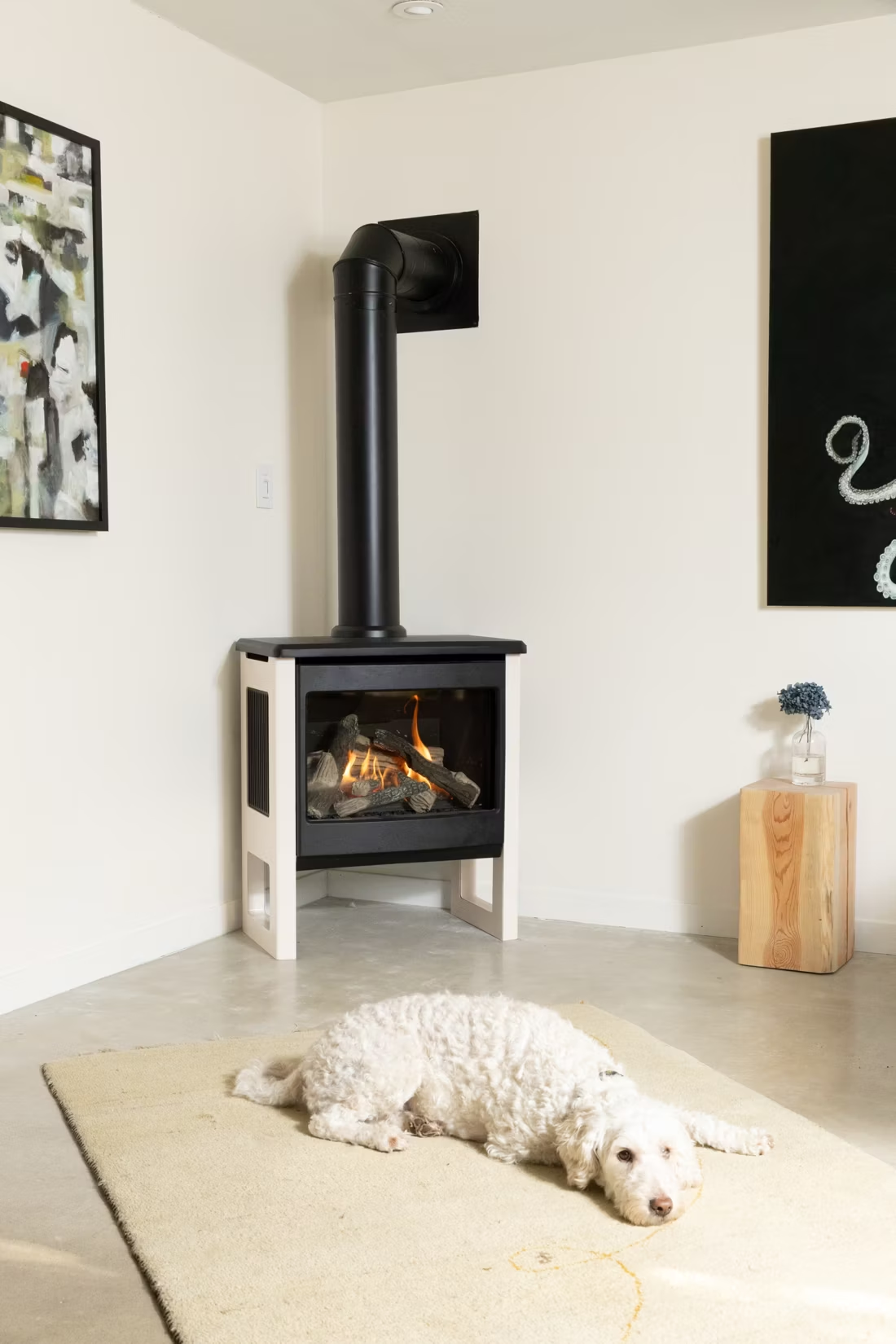
A gas fireplace is a built-in unit framed into a wall, typically used for new construction or a full remodel. A gas insert slides into an existing masonry fireplace opening and uses the current chimney as its vent path—the most common upgrade for older homes in Hardin and Lodge Grass. A gas stove is a freestanding cabinet-style unit that sits on the floor like a wood stove but runs on natural gas or propane, a good fit for homes without an existing fireplace or for outbuildings and shop spaces on ranch properties. Most Big Horn County homeowners with an existing hearth choose an insert; new spaces are better suited to a built-in fireplace or freestanding stove.
Do I need a permit to install a gas fireplace in Big Horn County?
Yes—a building permit is required for new gas fireplace installations through the Big Horn County Building Department, and any new gas line or propane line work must be done by a licensed gas-fitter. Most local hearth retailers coordinate the permitting, the gas line, and the venting inspection together as part of the installation, so you're not left managing separate trades yourself. If you're on a rural property served by propane rather than a piped utility, your propane supplier will also need to sign off on the tank setup and initial fuel connection.
Vented vs. vent-free gas fireplaces—which makes sense here?
Vented (direct-vent) gas fireplaces pull combustion air from outside and exhaust it back outside through sealed venting, which keeps combustion byproducts out of the living space. Vent-free units burn without any outside venting and release some water vapor, CO, and NO₂ directly into the room, so they carry stricter room-sizing and ventilation rules. Vent-free units are legal in Montana but not ideal for the kind of tight, well-insulated construction that makes sense given a heating season on par with Bismarck, ND—you want reliable outdoor combustion air, not indoor humidity buildup, during a stretch of subzero nights. Direct-vent units are the standard recommendation for most Big Horn County installations.
How often should my gas fireplace be serviced?
Plan on an annual inspection, ideally before the coldest stretch of winter hits. A technician checks the burner, pilot assembly, gas connections, venting, and any electronic ignition components, and cleans the glass and firebox interior. This matters more in a county where a fireplace may be doing real supplemental heating work rather than sitting purely for ambiance. Expect to pay in the neighborhood of $150 to $250 for a standard annual service call from a local gas appliance technician.
Gas vs. wood—which makes more sense for a Big Horn County home?
Wood has real advantages here: lodgepole pine, ponderosa pine, Douglas fir, and aspen are all locally available, cutting permits through the Bighorn National Forest and BLM Montana State Office run as little as $10 per cord, and a wood stove keeps working with no electricity at all during a rural power outage. Gas trades that self-sufficiency for convenience and consistency—instant heat with no hauling, stacking, or creosote, and no smoke output to worry about during wildfire-season air quality advisories. Many households in Hardin, Crow Agency, and Lodge Grass end up with both: gas for daily use in the main living space, wood as backup heat and for the ranch shop or cabin. If reliable heat during outages is the priority and you don't mind the wood handling, wood still has a strong case in this county; if convenience and cleaner air during smoke season matter more, gas is the better everyday fit.
Is my gas fireplace wasting gas?
If it was installed more than 15 years ago, probably. Older gas fireplaces keep a standing pilot light burning all the time, and that little flame can cost a couple hundred dollars a year. Newer models use pilot-on-demand ignition—the pilot lights only when you use the fireplace and goes out when you turn it off.
Why is a fireplace insert so efficient?
An insert does two things: it seals the chimney completely, so you stop losing air you already paid to heat, and it radiates warmth into the room through the firebox and glass. Most add a heat-exchange fan that pulls cool room air underneath, wraps it around the hot firebox, and pushes it back out warm. Your home is more efficient before you've even lit the first fire.
Can I install a fireplace myself?
If you're putting a fire in your house on purpose, it's best to work with an expert. Unless you're genuinely experienced in framing, gas line, vent pipe, and the national code on clearances to combustibles, have a professional do it—and ideally the same company that sells you the fireplace, so warranty, service, and liability all live under one roof.
How much should I budget for a fireplace?
For an average home—covering the fireplace, the vent pipe, and basic installation—a budget between $3,900 and $5,500 gives you a lot of options across wood, gas, and pellet. By the time you add finish work, gas line, and electrical, the average complete installation lands between $5,000 and $12,000 all-in. In a remodel or new build, a good rule is to put about 2.5% of the total project cost toward the fireplace.
Find your gas fireplace in Big Horn County.
Tell us about your home and we'll match you with a trusted local dealer and send over a free Project Guide & Parts List—the exact parts, including the vent kit, for your gas fireplace project in Big Horn County.
Find Your Fireplace →