
Set-It-and-Forget-It Warmth for Big Horn County Winters.
With average lows around 11°F and winters as demanding as Madison, Wisconsin's, Big Horn County homes need heat that doesn't quit. A hopper-fed pellet stove delivers steady, thermostat-controlled warmth from Hardin to Lodge Grass to Fort Smith—find the right unit and connect with a trusted local dealer.
Every Project Starts From One of These Five Situations
Automated heat for a county built on cordwood tradition.
Big Horn County stretches across the plains and foothills of south-central Montana along the Wyoming line, taking in Hardin, Crow Agency, Lodge Grass, Fort Smith, St. Xavier, and Wyola—much of it within the Crow Indian Reservation. Winters here run long and exposed, with open plains wind pushing wind chills well below the 11°F average low, and a winter heating load that puts the county in the same cold-climate tier as Madison, Wisconsin. Wood heat has deep roots throughout the county, with lodgepole pine, ponderosa pine, Douglas fir, and aspen cut locally under BLM Montana State Office and Bighorn National Forest permits. Pellet stoves have picked up steadily among households that want that same dry, radiant heat without the daily splitting, stacking, and hauling.
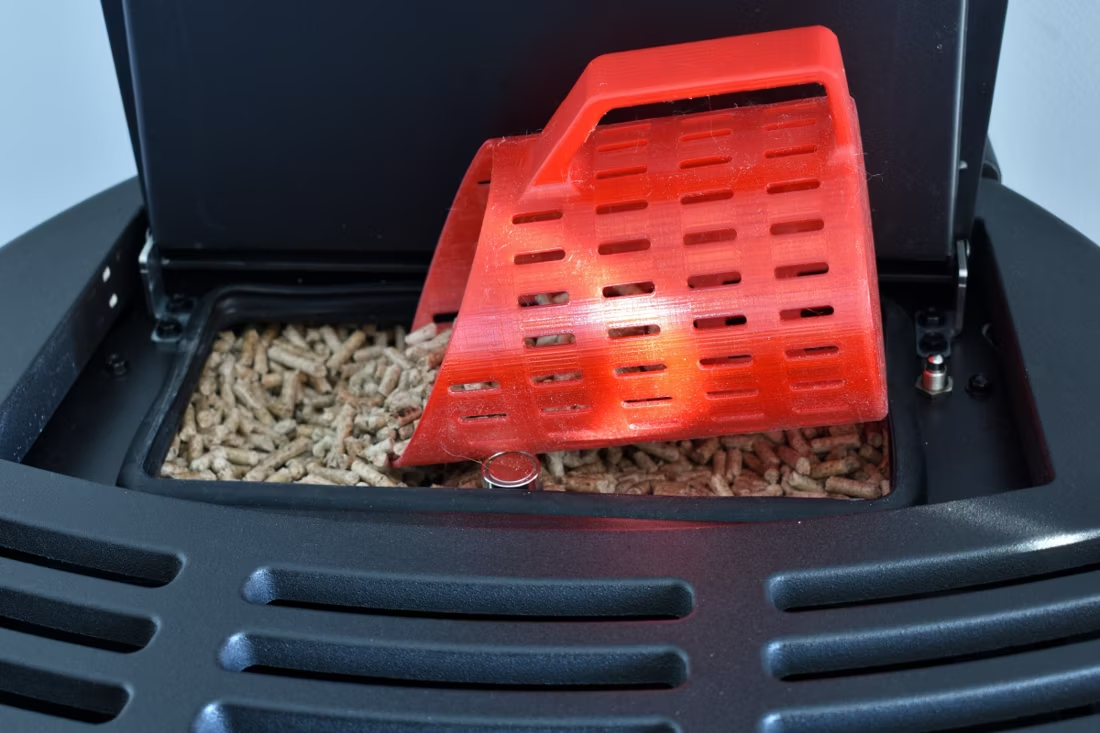
Regional pellet brands like Bear Mountain, Lignetics, and Forest Energy are trucked in from mills across the Inland Northwest and are generally available through dealers serving the Hardin and Billings trade areas. A hopper load can run a stove for a full day or more on the coldest nights, and because pellet combustion is far cleaner than open wood burning, it's a practical option for households managing the wildfire-smoke-heavy air quality this part of Montana sees in late summer and fall without adding to particulate load once heating season starts. Installation typically runs $3,000 to $6,000 depending on whether you're venting through an existing chimney chase or cutting a new through-wall vent, and a local dealer will size the unit to your home's square footage and exposure rather than a one-size-fits-all catalog number.
Three steps. No salesperson until you're ready.
Tell us about your project
Your zip code, your situation, and the fuel you're leaning toward—or let the answers point you to one.
See what's actually available
The brands dealers within 100 miles genuinely carry—real options, never a catalog mirage.
Get your dealer & Project Guide
A trusted local dealer, plus the free Project Guide & Parts List that names every component of the job.
Frequently Asked Questions
How much does a pellet stove installation cost in Big Horn County?
Most installations in Big Horn County land between $3,000 and $6,000, with the spread driven mainly by venting. A pellet stove replacing an existing wood stove or fitting into a masonry hearth with a chimney liner already in place sits toward the lower end. A fresh through-wall installation in a home with no existing venting—common in older ranch houses around Lodge Grass or Wyola that never had a wood-burning chimney—runs higher once you factor in the horizontal vent kit, exterior wall penetration, and any hearth pad work needed to meet clearance requirements. Homes farther from Hardin should also budget for a modest travel charge, since most certified installers are based in or near town.
Do pellet stoves still work if the power goes out?
This is the honest tradeoff of pellet heat, and it matters in a county like Big Horn where winter storms on the open plains regularly knock out lines around Crow Agency, Fort Smith, and the rural stretches between towns. A pellet stove's auger, igniter, and combustion blower all run on household current—no power, no fire. Homeowners who want pellet convenience but need backup heat security typically pair the stove with a small battery backup unit (many pellet stoves have optional battery packs that run the auger and fan for several hours) or keep a generator on hand for extended outages. If reliable off-grid backup heat is the top priority for your household, a wood stove is worth comparing against pellet for at least one room in the house.
Where can I buy pellets locally in Big Horn County?
Bear Mountain, Lignetics, and Forest Energy are the regional brands most commonly stocked or orderable through dealers serving Hardin and the wider county, since all three mill pellets from Inland Northwest timber and distribute through south-central Montana. Buying a season's supply—typically 2 to 4 tons for a primary-heat home given the county's long, demanding winters—in late summer before demand peaks is the standard local strategy. Pellets need to stay bone dry, so storage matters more here than the cold itself: a detached garage or shed works, but bags stacked directly on a concrete floor can wick moisture and cause pellets to swell and jam the auger. Pallets or shelving off the ground solve that.
Do I need a permit to install a pellet stove in Big Horn County?
Yes—a building permit is required through the Big Horn County building department for any new solid-fuel appliance installation, pellet stoves included, and the unit needs to meet current EPA emissions standards. Unlike wood heat, pellet stoves don't require a cutting permit from the BLM Montana State Office or Bighorn National Forest since there's no timber harvesting involved—that's one less step compared to a wood stove project. Most local dealers handle the building permit paperwork as part of the installation, so it's rarely something the homeowner has to manage directly.
What size pellet stove do I need for a Big Horn County home?
Sizing should account for both square footage and the county's exposure—open plains wind drives heat loss faster than the raw temperature number suggests, especially in older, less-insulated farmhouses around Wyola and St. Xavier. As a rough guide, stoves rated for 1,000 to 1,500 square feet handle smaller or well-insulated homes, 1,500 to 2,200 square foot ratings cover most main living areas, and anything larger or drafty should be sized up rather than down. An undersized stove will run at max output constantly and still fall short on the coldest nights near or below the 11°F average low; an oversized one cycles on and off more than it should. A local dealer walking your actual floor plan will get this right faster than a chart.
How much maintenance does a pellet stove need?
Ash pan emptying every few days during heavy winter use, a burn pot scrape roughly once a week, and a full glass and hopper cleaning monthly are the routine tasks. Beyond that, plan on one professional service visit a year—typically late summer before the burning season starts—to inspect the auger motor, combustion blower, gaskets, and venting. Pellet stoves have more moving mechanical parts than a wood stove, so this annual service catches wear on the auger and igniter before it fails mid-winter, which matters when a service call from Hardin can mean a day or more without heat during a cold snap.
Pellet stove vs. wood stove—which makes more sense in Big Horn County?
Wood heat has a real head start here: lodgepole pine, ponderosa pine, Douglas fir, and aspen are all cuttable under low-cost BLM and Bighorn National Forest permits (as little as $10 a cord on some units), which makes self-cut firewood the cheapest heat option for households with the time and equipment to harvest it. It also keeps working with no electricity, which matters through plains windstorms. Pellet stoves trade that self-sufficiency for convenience—no splitting, less ash, more even output, and a cleaner burn during the wildfire-smoke season—but they need grid power to run and rely on bagged fuel delivered or purchased rather than cut. Many households in the county end up with both: a wood stove for backup and heritage, pellet for the room they use daily.
Are there rebates or tax credits for a pellet stove installation?
Federal tax credit programs currently allow a 30% credit (up to $2,000 annually) on the purchase and installation cost of qualifying biomass stoves rated at 75% efficiency or higher under the Residential Clean Energy Credit—most modern pellet stoves from major manufacturers qualify. Montana doesn't currently run a separate statewide rebate for pellet appliances the way some states do for wood-to-clean-heat conversions, so the federal credit is the main incentive to plan around. Keep the manufacturer's efficiency certification and your dealer's itemized invoice for tax filing.
Which pellet stove brands can I actually get installed near Big Horn County?
Local dealers serving Big Horn County typically carry national manufacturers like Harman, Quadra-Fire, and Englander alongside the regional pellet fuel supply from Bear Mountain, Lignetics, and Forest Energy. Availability shifts by season and dealer, which is exactly why matching with a real local installer matters more than browsing a national catalog—they know what they can actually get, service, and keep parts stocked for in this part of Montana, rather than what's simply listed on a manufacturer's website.
Why is a fireplace insert so efficient?
An insert does two things: it seals the chimney completely, so you stop losing air you already paid to heat, and it radiates warmth into the room through the firebox and glass. Most add a heat-exchange fan that pulls cool room air underneath, wraps it around the hot firebox, and pushes it back out warm. Your home is more efficient before you've even lit the first fire.
Why is my open fireplace making my house colder?
Open fireplaces suck—literally. As the fire burns, it consumes air your furnace already paid to heat and pulls it out through the chimney, so the house is actually colder after the fire goes out than before you lit it. An insert fixes this: it seals the chimney, puts fixed glass across the front, and turns that hole in your house into a real heat source.
What is an in-home preview and do I need one?
It's a visit where a hearth professional measures your space, confirms the model you picked actually works in your home, and walks the specs—framing, gas line, venting, finish work—before anything is ordered. Some details you just can't know until you see the house. Never make a down payment without one; it's the single most-skipped step that burns buyers.
How much should I budget for a fireplace?
For an average home—covering the fireplace, the vent pipe, and basic installation—a budget between $3,900 and $5,500 gives you a lot of options across wood, gas, and pellet. By the time you add finish work, gas line, and electrical, the average complete installation lands between $5,000 and $12,000 all-in. In a remodel or new build, a good rule is to put about 2.5% of the total project cost toward the fireplace.
Pellet Brands Stocked Around Big Horn County
Manufacturers will point you to the nearest stocking dealer.
Find your pellet stove in Big Horn County.
Tell us about your home and heating goals, and we'll match you with a trusted local dealer and send over a free Project Guide & Parts List—sized for your space, with the vent kit and parts your Big Horn County installer will need.
Find Your Fireplace →