
Reliable heat for every Big Horn County winter.
Wood, gas, pellet, and electric fireplace resources for Hardin, Lodge Grass, Fort Smith, and the rural stretches in between. Find the right unit for your home and connect with a trusted local hearth retailer.
Every Project Starts From One of These Five Situations
Nearly 6,900 heating degree days on the Crow Reservation plains.
Big Horn County sits in south-central Montana across the Crow Indian Reservation, where open plains give way to the Bighorn Mountains along the Wyoming line. At Climate Zone 6B with an average winter low of 11°F and 6,895 heating degree days—a heating load in the range of Bismarck, ND—winters here are long and the wind cuts hard across the flats. Lodgepole pine, ponderosa pine, Douglas fir, and aspen are the wood species most households burn, much of it self-cut under BLM Montana State Office and Bighorn National Forest permits. With a population under 9,000 spread across a wide, rural county, wood heat has stayed a practical, cost-effective choice for generations here, not a lifestyle accessory.
What you'll find on this hub: hearth retailers, service technicians, and fuel suppliers covering the whole county—Hardin, Lodge Grass, Fort Smith, Wyola, St. Xavier, and the ranch country between them. Pick your fuel below to get into specifics—local dealers, install costs, recommended units, and resources matched to your project. Whether you're heating a Hardin home a few blocks from the courthouse or a place near Yellowtail Dam, this is the starting point.
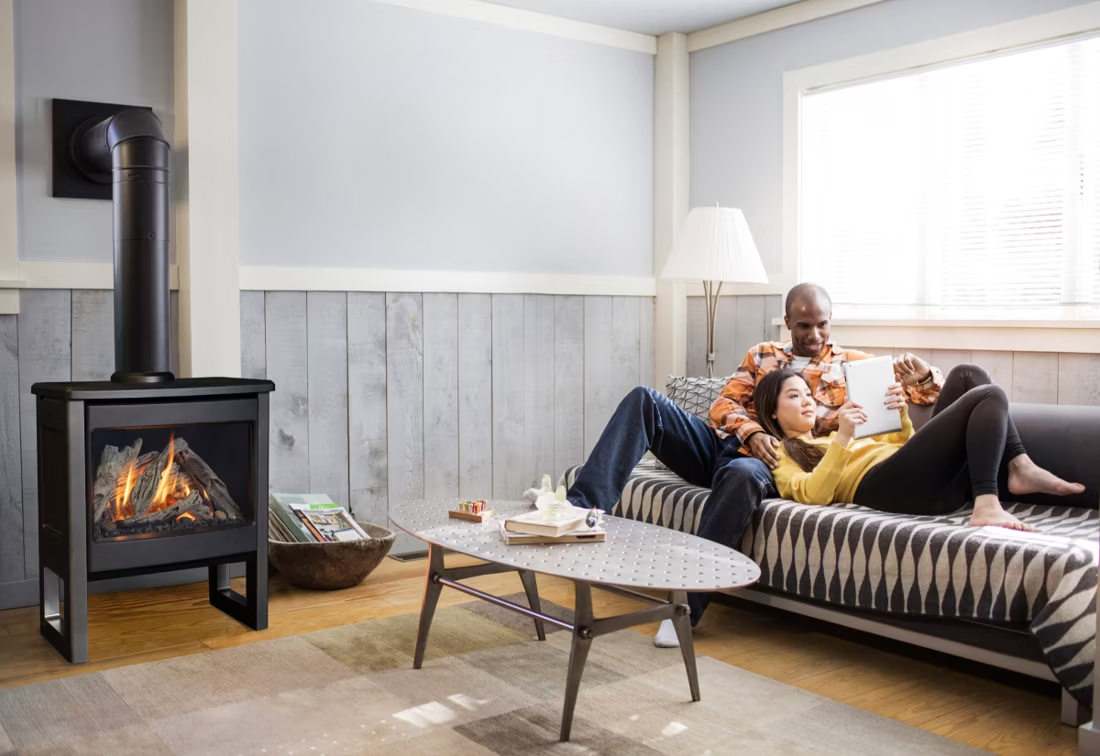
Four fuels. One honest answer for Big Horn County.
Three steps. No salesperson until you're ready.
Tell us about your project
Your zip code, your situation, and the fuel you're leaning toward—or let the answers point you to one.
See what's actually available
The brands dealers within 100 miles genuinely carry—real options, never a catalog mirage.
Get your dealer & Project Guide
A trusted local dealer, plus the free Project Guide & Parts List that names every component of the job.
Frequently Asked Questions
Which fuel works best in Big Horn County?
It depends on your home and how you want to manage a long heating season. Wood is the traditional and most cost-effective choice for rural Big Horn County homes—BLM and Bighorn National Forest permits keep fuel costs low for those willing to cut and haul, and a catalytic stove can hold a fire through an overnight low near 11°F without constant tending. Gas, mostly propane outside of Hardin's limited natural gas service, is the convenience choice—instant heat with no wood handling, though propane costs fluctuate more than firewood. Pellet is the middle ground, with Bear Mountain, Lignetics, and Forest Energy all sold regionally—less labor than splitting wood, but it depends on a supply chain that can tighten in a bad winter. Electric works well as a supplemental heater for a bedroom or office but isn't a realistic primary heat source given this county's heating load. Many households here run wood or pellet as primary heat with gas or electric backup.
Do I need a permit to install a fireplace in Big Horn County?
Generally yes for solid-fuel and gas appliances. New wood stove, wood insert, gas fireplace, gas insert, and pellet stove installations typically require a building permit, and any new gas line work needs a licensed installer. Wood-burning appliances installed new should meet current EPA emissions standards. Electric fireplaces usually skip the permit process unless the installation involves hardwiring into a new circuit. Because much of Big Horn County is unincorporated or on the Crow Reservation, permitting authority can vary by location—some projects route through county building offices, others through tribal or federal channels depending on where the land sits. A local hearth retailer who's installed in your specific area before can usually tell you which office to go through and typically handles the paperwork as part of the job.
Are there wood-burning restrictions in Big Horn County?
There's no routine winter inversion advisory system here like you'd find in a mountain-basin county, but wildfire smoke is the real air quality concern in Big Horn County—summers can bring heavy smoke from regional fires that affects outdoor burning and air quality generally. That's mostly a warm-season issue and doesn't typically restrict home heating appliances in winter. New wood stove installations should still be EPA-certified units, which burn cleaner and use less wood per BTU than older uncertified stoves—a real advantage given how many households here are cutting and hauling their own fuel under BLM or Forest Service permits.
Can one local hearth retailer handle all four fuel types?
Coverage varies by dealer, and in a county this rural, not every retailer stocks all four. Some Hardin-area dealers carry wood, gas, and pellet as their core lines, with electric fireplaces available but a smaller part of the business. If you're set on comparing wood against pellet against gas side by side, ask specifically—a dealer with working display units of each fuel type can walk you through real trade-offs for a Big Horn County heating load rather than a generic sales pitch. Fuel suppliers selling firewood, pellets, or propane are typically separate from the retailers who sell and install the appliances themselves.
How does service work in rural parts of Big Horn County?
Most technicians are based in or near Hardin and travel out to Lodge Grass, Fort Smith, Wyola, St. Xavier, and the ranch roads in between. Expect a travel fee for longer rural service calls—distance and road conditions matter more here than in a compact town. Scheduling annual service in late summer or early fall, before the first real cold snap, is easier than trying to get someone out mid-winter when demand for emergency repairs spikes. If you're on a remote property, it's worth keeping backup heat on hand—a wood stove as backup for a pellet or gas system is common here given how isolated some ranch properties are during a hard winter.
What's the typical cost range for fireplace installation across all fuel types in Big Horn County?
Costs run close to regional Montana averages, sometimes a bit higher for rural properties with longer chimney runs or more travel involved. Wood stove or insert installation: roughly $4,500–$9,500 for a typical install, more for new full chimney systems. Gas fireplace, insert, or stove: roughly $4,500–$11,000, with propane conversions often at the lower end if a tank and line are already in place. Pellet stove or insert: roughly $4,500–$7,500 for a standard install. Electric fireplace: $200–$3,000 for the unit itself, plus $400–$1,200 in labor for anything beyond a simple plug-and-play setup. See the county + fuel pages above for cost detail tied to specific local retailers.
Does a fireplace add value to my home?
On average, a fireplace adds back to the home about the same amount you spent installing it. Add the monthly savings from heating the rooms you actually use instead of the whole house—often hundreds of dollars a year—and the value case is strong before you even count what a fire does for how your family uses the room.
How much should I budget for a fireplace?
For an average home—covering the fireplace, the vent pipe, and basic installation—a budget between $3,900 and $5,500 gives you a lot of options across wood, gas, and pellet. By the time you add finish work, gas line, and electrical, the average complete installation lands between $5,000 and $12,000 all-in. In a remodel or new build, a good rule is to put about 2.5% of the total project cost toward the fireplace.
What are the biggest mistakes people make buying a fireplace?
Five come up constantly: budgeting for the unit but not the full job (vent, gas line, electrical, finish work); drowning in options instead of starting from style and fuel; buying without an in-home preview; handing installation to a handyman instead of a pro; and giving up out of sheer indecision. Every one is avoidable with a clear plan—step one, step two, step three.
Can a fireplace actually lower my heating bill?
Yes—by creating a comfort zone. A furnace heats every square foot of the house just to warm the one room you're in; a gas fireplace on low burns roughly a sixth of the gas a typical furnace does. Set the furnace around 55–60 degrees as a baseline, then heat the rooms your family actually uses. Families who heat this way commonly save $20–$60 a month.
Stove and Fireplace Dealers in Big Horn County
Listings include WhyFire partner dealers, dealers we have verified as authorized for the brands we recommend, and established local businesses that carry hearth products. Every listing shows which one it is. The ones marked Preferred run on WhyFire's software, so they can show you real pricing and book your appointment right here. No manufacturer pays for placement. How we verify dealers →
Stove Doctor
White Heating & Air Conditioning
Find your fireplace project in Big Horn County.
Tell us about your home and we'll match you with a trusted local dealer and send a free Project Guide & Parts List—the parts, the vent kit, and the recommended installer for your fuel and your address.
Find Your Fireplace →