
Reliable Warmth for Gulfport's Mild Winters and Storm Season.
Gulfport's winters are short and mild, but tropical storms and hurricane-season outages are a regular part of life on the Mississippi coast. A properly vented gas fireplace gives you real flame, dependable heat when a cold front rolls through, and a backup source of warmth and light when the grid goes down. I'll match you with a trusted local dealer who can size the right system for your home.
Every Project Starts From One of These Five Situations
Ambiance most days, dependable heat on the rare cold snap.
Gulfport sits at sea level on the Mississippi Gulf Coast, in climate zone 2A, where the winter low averages just 42°F and the entire heating season is short and mild—a fraction of the heating a place like Duluth, Minnesota needs in a single hard month. Snow is essentially unheard of here, and most winters bring maybe a handful of nights that dip into the 30s. That reality shapes how gas heat gets used in Gulfport: less as a whole-house necessity and more as a source of real-flame ambiance with genuine heat output on the coldest nights and during the region's more frequent weather disruption—tropical storms and hurricanes.
Natural gas service reaches many neighborhoods across Gulfport's 39501, 39503, and 39507 zip codes, though coverage varies block by block, and homes in newer subdivisions or unincorporated pockets of Harrison County often run on propane instead. Either fuel works well in a direct-vent gas fireplace or insert. Because so much of Gulfport sits at or near sea level and within FEMA flood zones, local installers also have to think about vent termination height and gas line routing differently than a contractor inland—one more reason to work with a dealer who installs gas hearth products in this specific coastal environment regularly, rather than a big-box crew unfamiliar with local flood and wind-load code.
Three steps. No salesperson until you're ready.
Tell us about your project
Your zip code, your situation, and the fuel you're leaning toward—or let the answers point you to one.
See what's actually available
The brands dealers within 100 miles genuinely carry—real options, never a catalog mirage.
Get your dealer & Project Guide
A trusted local dealer, plus the free Project Guide & Parts List that names every component of the job.
Frequently Asked Questions
How much does a gas fireplace installation cost in Gulfport?
Most gas fireplace and insert installations in the Gulfport area run somewhere between $3,000 and $9,000, with the final number driven by whether you're adding a new gas line, converting an existing masonry fireplace, or building out a fresh direct-vent unit in a remodel. Homes on Gulfport's common slab foundations sometimes see added cost when the gas line has to be routed under or around the slab rather than through a basement—something inland installers rarely deal with. Because much of the city sits in a FEMA flood zone, local code also affects where vent terminations can sit relative to base flood elevation, which a Harrison County-familiar installer will already know how to handle.
Can I convert my existing wood fireplace to gas in Gulfport?
It's possible, but less common here than in colder parts of the country—a large share of Gulfport's housing stock was rebuilt after Hurricane Katrina in 2005, and many of those newer homes were never built with a wood-burning masonry fireplace to begin with. If your home does have an older masonry fireplace, a gas insert with a stainless liner run through the existing chimney is a straightforward retrofit, typically landing in the $4,000-$8,000 range depending on gas line work. For homes without an existing chimney, most Gulfport homeowners instead add a new direct-vent gas fireplace during a remodel rather than trying to retrofit one.
Do I need natural gas, or should I plan on propane?
It depends on your exact address. Natural gas lines run through many parts of Gulfport, but coverage is uneven—some streets have it, and others, particularly newer subdivisions and areas out toward unincorporated Harrison County, don't, and rely on propane tanks instead. Before picking a fireplace model, it's worth confirming which fuel actually reaches your house; a local hearth dealer can check this quickly and will set the unit up for whichever fuel you have, since most gas fireplaces can be configured for either with the correct orifice.
Will my gas fireplace still work if a hurricane knocks out power?
This is one of the most practical reasons Gulfport homeowners choose gas over other options. Tropical storms and hurricanes regularly knock out power across service territories for Mississippi Power, Coast Electric Power Association, and Singing River Electric Cooperative, sometimes for days at a stretch. A gas fireplace with a millivolt standing pilot or an IPI (intermittent pilot ignition) system with battery backup will still light and produce real heat with no grid power at all—the battery only runs the electronic ignition and blower, not the flame itself. If storm-season resilience is a priority, tell your local dealer that up front so they steer you toward a model with a battery-backup or standing-pilot ignition system rather than one that depends fully on household power.
What's the difference between a gas fireplace, gas insert, and gas stove?
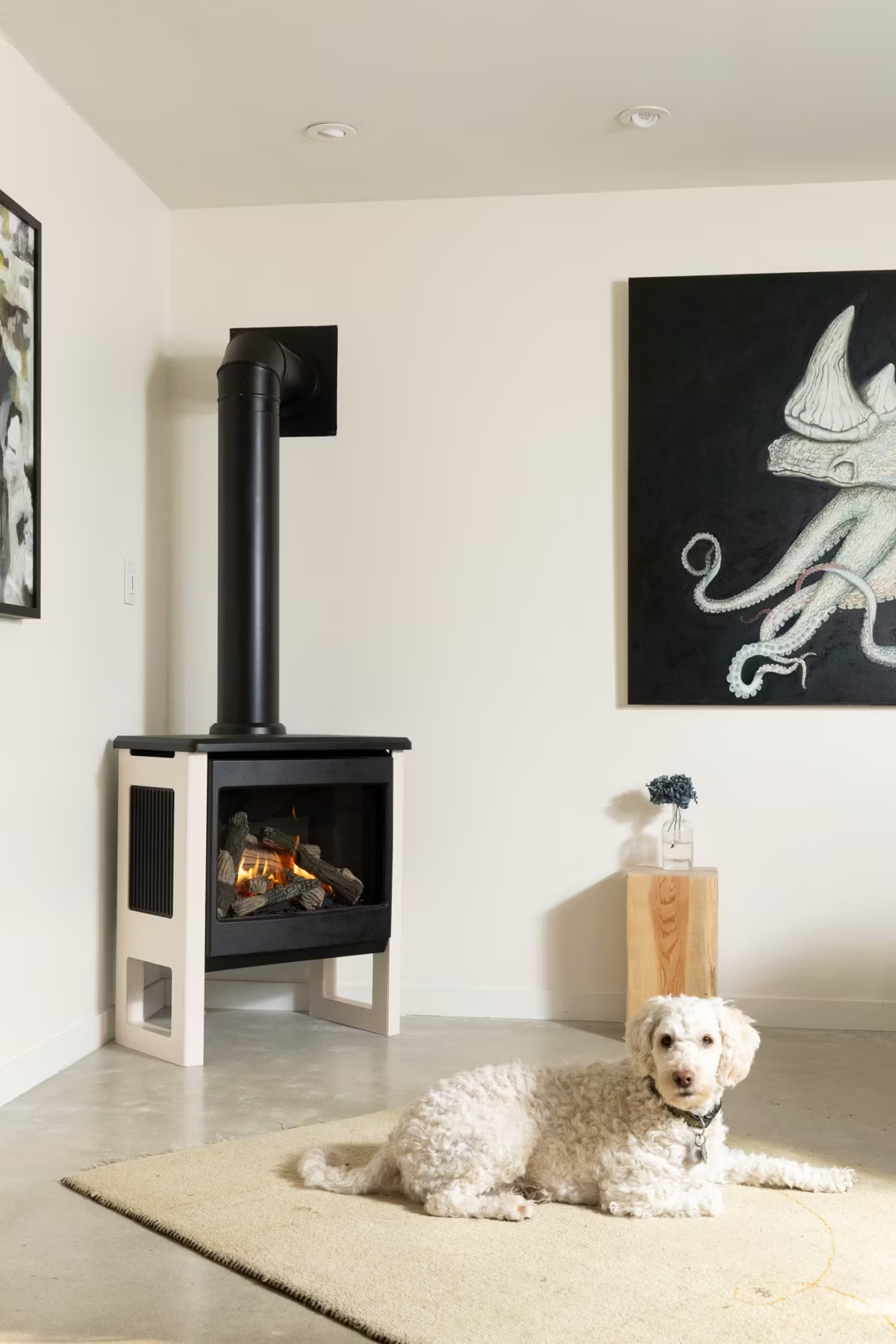
A gas fireplace is a fully built-in unit framed into a wall—the right choice for new construction or a remodel where there's no existing hearth. A gas insert slides into an existing masonry fireplace opening and uses the existing chimney (lined) as its vent path—the common upgrade for Gulfport's older pre-Katrina homes that still have a wood-burning fireplace. A gas stove is a freestanding cabinet-style unit that sits on the floor, useful when you want a stand-alone heat source without opening up a wall. Most new Gulfport builds, lacking an existing masonry fireplace, end up choosing between a built-in direct-vent fireplace and a freestanding stove.
Do I need a permit to install a gas fireplace in Gulfport?
Yes. New gas fireplace installations require a building permit and a separate gas line permit pulled through the City of Gulfport (or Harrison County, if you're outside city limits), and the gas line connection itself has to be done by a licensed gas-fitter. Because so much of Gulfport sits at or near sea level in mapped flood zones, permitting here also touches on where equipment and venting sit relative to base flood elevation—details a local hearth dealer who pulls permits in this area regularly will already have dialed in, rather than something you have to research yourself.
Should I get a vented or vent-free gas fireplace in Gulfport's climate?
Vented direct-vent units are the better fit here. Vent-free (unvented) gas fireplaces release combustion byproducts, including water vapor, directly into the room, and Gulfport's climate zone 2A is already hot and humid for much of the year—adding more moisture indoors is the last thing most homes here need, since it can aggravate mold and humidity problems that Gulf Coast homes are already prone to. Vented direct-vent fireplaces draw combustion air from outside and exhaust everything back outside through sealed venting, so they don't affect your home's indoor humidity or air quality at all. Mississippi doesn't prohibit vent-free units, but for coastal humidity reasons, most local dealers steer Gulfport customers toward vented models.
How often does a gas fireplace need to be serviced in Gulfport?
Plan on an annual inspection, the same as anywhere—a technician should check the burner, pilot assembly, venting, and gas connections, and clean the glass. Gulfport's salt air is worth calling out specifically: homes near the coast see faster corrosion on exterior vent caps, termination hardware, and any exposed metal components than homes further inland, so annual inspections matter even more here to catch corrosion before it becomes a venting problem. Expect to pay in the neighborhood of $150-$250 for a standard annual service call.
Should I choose gas, electric, or wood heat for my Gulfport home?
Wood is genuinely rare here—with such a short, mild heating season and winter lows averaging in the low 40s, Gulfport doesn't have the sustained cold that makes wood heat practical the way it does in a place like Duluth, Minnesota, where whole-house wood heat is common. Most Gulfport homeowners choosing a hearth product are really deciding between gas and electric. Gas gives you a real flame, genuine heat output on the occasional cold front, and—importantly on the coast—the ability to run without grid power during hurricane-season outages. Electric fireplaces need no venting or gas line at all, install in an afternoon for a few hundred to about a thousand dollars, and work well in condos and rental units along the coast, but they go dark the moment the power does, which matters when storms are part of the equation. If Gulf Coast outages are a real consideration for your household, gas is usually the more resilient pick.
Why is a fireplace insert so efficient?
An insert does two things: it seals the chimney completely, so you stop losing air you already paid to heat, and it radiates warmth into the room through the firebox and glass. Most add a heat-exchange fan that pulls cool room air underneath, wraps it around the hot firebox, and pushes it back out warm. Your home is more efficient before you've even lit the first fire.
What's the difference between an insert and a zero-clearance fireplace?
An insert is a fireplace that slides into a pre-existing wood-burning fireplace—if you don't have one, there's nothing to insert it into. A zero-clearance fireplace is built into a framed wall, which makes it the answer for remodels and new construction. Simple test: existing masonry fireplace means insert; blank or framed wall means zero-clearance.
Can I install a fireplace myself?
If you're putting a fire in your house on purpose, it's best to work with an expert. Unless you're genuinely experienced in framing, gas line, vent pipe, and the national code on clearances to combustibles, have a professional do it—and ideally the same company that sells you the fireplace, so warranty, service, and liability all live under one roof.
Does a fireplace add value to my home?
On average, a fireplace adds back to the home about the same amount you spent installing it. Add the monthly savings from heating the rooms you actually use instead of the whole house—often hundreds of dollars a year—and the value case is strong before you even count what a fire does for how your family uses the room.
Nearby Dealers
Hearth shops serving Gulfport and the surrounding area. Every listing shows whether it is a WhyFire partner, a dealer we have verified as authorized for the brands we recommend, or a local business carrying hearth products. No manufacturer pays for placement. How we verify dealers →
Top Hat Fireplace
Compton And Son Appliance
Magnolia Gas, Inc.
Find your gas fireplace in Gulfport.
Tell me about your home and I'll match you with a trusted local Gulfport dealer and send over your free Project Guide & Parts List—the exact parts, including the vent kit, and a fireplace built for your home's fuel setup and the Gulf Coast's flood and wind-load codes.
Find Your Fireplace →