
Instant Warmth for Biloxi's Short, Humid Winters.
A gas fireplace or insert built for Gulf Coast living—real flame, minimal upkeep, and backup heat when a storm knocks out the grid. Get matched with a trusted local dealer.
Every Project Starts From One of These Five Situations
Ambiance first, heat second—and that's the point.
Biloxi sits right at sea level on the Mississippi Gulf Coast, in climate zone 2A, where the average winter low hovers around 44°F and the heating season is short and mild—overall winter heating need adds up to only about one-seventh as much as a place like Duluth, Minnesota, which racks up a much heavier winter workload for furnaces and fireplaces—and it's clear a gas fireplace here isn't fighting subzero nights. Wood stoves and pellet stoves are essentially absent from the Biloxi market for good reason; there's little practical demand for a primary wood-heat source when central HVAC handles the handful of genuinely cold weeks each winter.
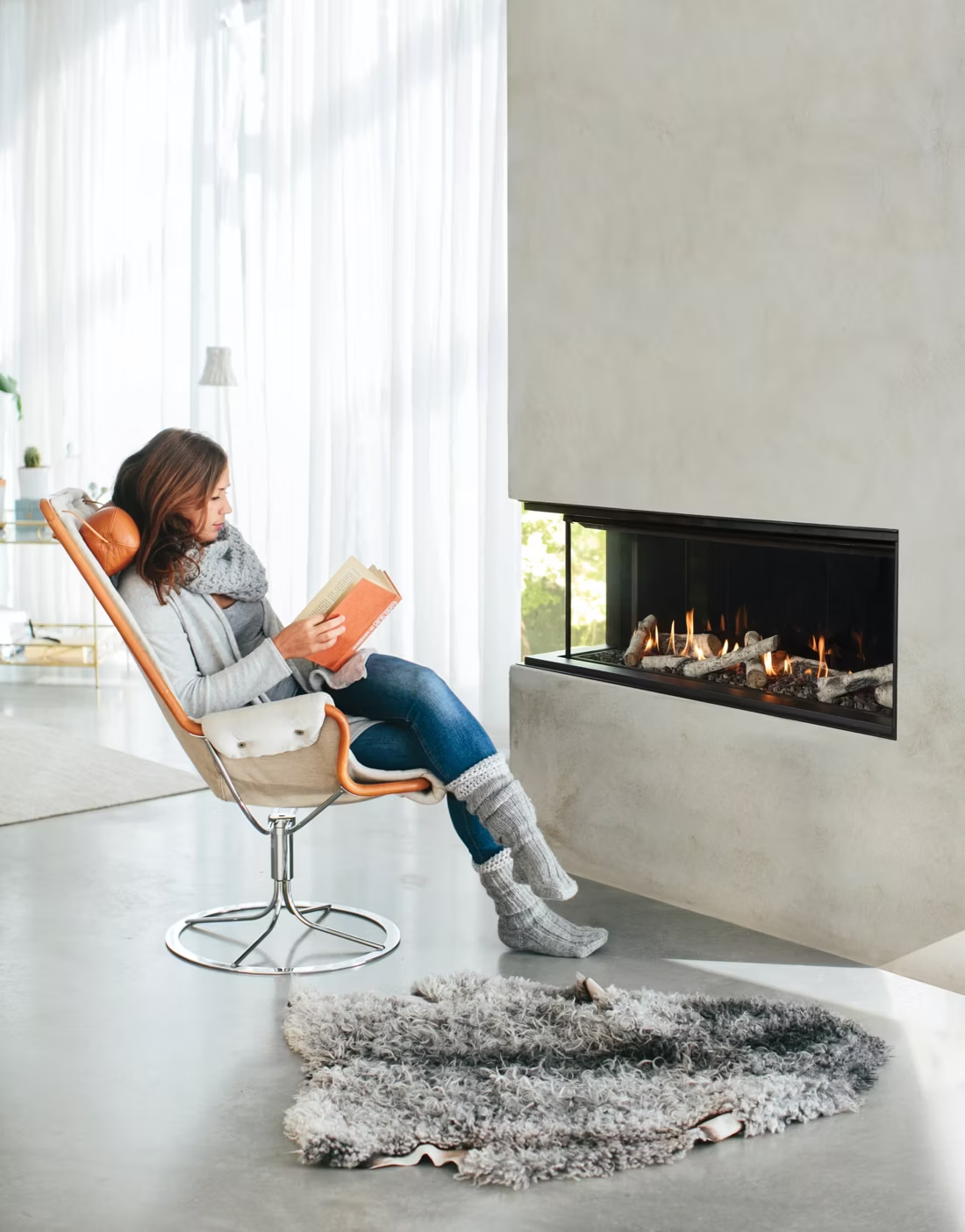
That doesn't mean gas doesn't have a place. A direct-vent gas fireplace or insert gives Biloxi homeowners real, controllable flame for the cool snaps that do roll through, plus something the region cares about more than most: a heat source that still works when Gulf hurricanes take the power out. Natural gas infrastructure along the Mississippi coast is uneven—some established Biloxi neighborhoods have it, others rely on propane delivered by regional suppliers, which is why most local installers quote both fuel paths. Salt air and humidity also factor into equipment choices here; sealed direct-vent systems with corrosion-resistant venting hold up far better on the coast than open masonry fireplaces ever did.
Three steps. No salesperson until you're ready.
Tell us about your project
Your zip code, your situation, and the fuel you're leaning toward—or let the answers point you to one.
See what's actually available
The brands dealers within 100 miles genuinely carry—real options, never a catalog mirage.
Get your dealer & Project Guide
A trusted local dealer, plus the free Project Guide & Parts List that names every component of the job.
Frequently Asked Questions
How much does a gas fireplace installation cost in Biloxi?
Most gas fireplace and insert installations in Biloxi run between roughly $3,500 and $8,500, depending on the unit, whether you're running a new gas line or tying into an existing one, and whether venting has to route through brick veneer or a stucco exterior wall common in coastal construction. Homes already on natural gas with a line near the install point land on the lower end. Propane conversions, tank setup, or longer vent runs through exterior walls push toward the higher end. A local dealer will give you a firm number after walking the space in person.
Can I convert an old masonry fireplace to gas?
Some of Biloxi's older homes, particularly around the Point Cadet and Beauvoir areas, still have a decorative masonry fireplace that was rarely used even historically given the mild climate. Converting one to a gas insert or vented log set is a common project—it gives you real flame and usable heat output without the ash, humidity issues, or pest problems that come with an idle open masonry hearth in a Gulf Coast climate. Cost typically runs $3,000 to $6,500 depending on whether the flue needs a stainless liner and whether gas service already reaches the house.
Should I go with natural gas or propane for my fireplace?
It depends on where in Biloxi you live. Natural gas service reaches a good portion of the city, but coverage is patchy in newer subdivisions and unincorporated pockets of Harrison County, where propane is the standard fallback. If your home already runs on natural gas for the water heater or range, extending a line to a fireplace is usually the cheaper path. If you're outside the natural gas footprint, a propane tank installation from a regional supplier is straightforward and just as reliable—nearly every gas fireplace model sold locally can be configured for either fuel.
Will a gas fireplace still work if a hurricane knocks out the power?
Most direct-vent gas fireplaces with intermittent pilot ignition include a battery backup that keeps the unit lighting on demand even with the grid down—a real advantage during Gulf hurricane season when Mississippi Power or Coast Electric outages can stretch for days. Some manufacturers, including Valor, use a continuous pilot that generates its own electricity through the thermocouple, so there's no battery to remember at all. Given how often coastal Mississippi sees storm-related outages, it's worth asking your local dealer specifically about the ignition system before you buy.
What's the difference between a gas fireplace, insert, and log set?
A gas fireplace is a fully built-in, framed unit used in new construction or a full remodel. A gas insert drops into an existing masonry firebox and seals it off, using the chimney as a vent chase while running as a sealed, high-efficiency appliance. A vented log set is the simplest option—realistic ceramic logs installed inside an existing wood-burning fireplace that still vents through the original chimney. For the older Biloxi homes with a rarely-used masonry fireplace, a log set or insert are both common upgrades; new construction along the coast typically goes with a built-in direct-vent fireplace instead.
Do I need a permit to install a gas fireplace in Biloxi?
Yes. The City of Biloxi Building Department (or Harrison County Building Services for homes outside city limits) requires a building permit and a separate gas line permit for new installations, and coastal wind-load codes affect how exterior vent terminations must be flashed and secured. A licensed gas-fitter has to handle the line work regardless of which fuel you use. Local hearth dealers who install regularly in Biloxi generally pull these permits themselves as part of the job.
Should I choose a vented or vent-free gas fireplace on the coast?
Vent-free gas fireplaces are legal in Mississippi, but I'd steer most Biloxi homeowners toward a vented direct-vent unit instead. Coastal humidity already puts moisture-sensitive materials under stress, and vent-free units add combustion byproducts, including water vapor, directly into the room—not ideal in a climate where mold and moisture management are already a year-round concern. Direct-vent units exhaust everything outside through sealed venting and perform well even in the region's humidity, which is why they're the more common choice among local installers.
How often does a gas fireplace need to be serviced in Biloxi?
Plan on an annual inspection, ideally before the first cool snap in late fall. A technician checks the burner, pilot assembly, gas connections, and venting, and on the Gulf Coast specifically should also inspect the exterior vent cap and termination hardware for salt-air corrosion, which can happen faster here than in inland climates. Most local service providers charge $150 to $250 for a standard annual visit.
Gas fireplace or electric fireplace—which makes more sense for my home?
With wood and pellet appliances essentially off the table in Biloxi's climate, the real choice for most homeowners here is gas versus electric. A gas fireplace delivers genuine flame and real heat output, and with battery backup or a continuous pilot it keeps working through hurricane-season power outages—a meaningful edge on the coast. An electric fireplace or insert is cheaper to install (often $400–$1,200), needs no gas line or venting, and works well in condos and high-rise units along the beachfront where running gas isn't practical, but it depends entirely on the grid and offers a less convincing flame. At local electric rates of roughly 13.5 to 14.5 cents per kWh through Mississippi Power, Coast Electric, or Singing River Electric, running an electric unit for ambiance is inexpensive, but it won't help you during the outages a Gulf storm can cause.
Is my gas fireplace wasting gas?
If it was installed more than 15 years ago, probably. Older gas fireplaces keep a standing pilot light burning all the time, and that little flame can cost a couple hundred dollars a year. Newer models use pilot-on-demand ignition—the pilot lights only when you use the fireplace and goes out when you turn it off.
What's the difference between an insert and a zero-clearance fireplace?
An insert is a fireplace that slides into a pre-existing wood-burning fireplace—if you don't have one, there's nothing to insert it into. A zero-clearance fireplace is built into a framed wall, which makes it the answer for remodels and new construction. Simple test: existing masonry fireplace means insert; blank or framed wall means zero-clearance.
What is an in-home preview and do I need one?
It's a visit where a hearth professional measures your space, confirms the model you picked actually works in your home, and walks the specs—framing, gas line, venting, finish work—before anything is ordered. Some details you just can't know until you see the house. Never make a down payment without one; it's the single most-skipped step that burns buyers.
Can a fireplace actually lower my heating bill?
Yes—by creating a comfort zone. A furnace heats every square foot of the house just to warm the one room you're in; a gas fireplace on low burns roughly a sixth of the gas a typical furnace does. Set the furnace around 55–60 degrees as a baseline, then heat the rooms your family actually uses. Families who heat this way commonly save $20–$60 a month.
Nearby Dealers
Hearth shops serving Biloxi and the surrounding area. Every listing shows whether it is a WhyFire partner, a dealer we have verified as authorized for the brands we recommend, or a local business carrying hearth products. No manufacturer pays for placement. How we verify dealers →
Top Hat Fireplace
Compton And Son Appliance
Magnolia Gas, Inc.
Blossman Gas And Appliance
Find your gas fireplace in Biloxi, Mississippi.
Tell us about your home and we'll match you with a trusted local Biloxi dealer and send over a free Project Guide & Parts List—the exact parts, vent kit, and installer recommendation for your project.
Find Your Fireplace →