
Keep Your Family Warm and Safe—No Matter What
With oak, pine, and pecan timber all around and mild zone 3A winters, wood heat in Benton County is more about tradition and self-sufficiency than survival—and it still makes sense for a huge share of local homes. Find the right stove or insert, and get matched with a trusted local dealer.
Every Project Starts From One of These Five Situations
A county built on timber and tradition.
Benton County is one of the smallest counties in Mississippi by population—under 1,800 people spread across rolling hardwood and pine forestland near the Tennessee state line, centered on the county seat of Ashland. This is climate zone 3A: winters are mild by national standards, with cold snaps that dip into the 20s but nothing like the extended sub-zero stretches you'd find in a place like Duluth or Bismarck. Heating season here runs roughly November through February, and for most of that stretch a wood stove is doing supplemental work alongside a propane furnace or heat pump rather than carrying the whole load around the clock.
What makes wood heat genuinely standard here, rather than a novelty, is what's growing on the ground. Oak and pine are everywhere on the timbered acreage that surrounds most homes in the county, and pecan—a nod to the orchards scattered across this part of north Mississippi—shows up in wood piles too, prized for its dense, long-burning coals. There's no non-attainment designation or winter inversion problem here, so there's no burn-ban culture to navigate the way there is in parts of the West. Combine that with rural acreage where cutting your own firewood is simple and a county where natural gas lines don't reach far outside Ashland, and a wood stove or insert remains one of the most practical heat sources a Benton County homeowner can install.
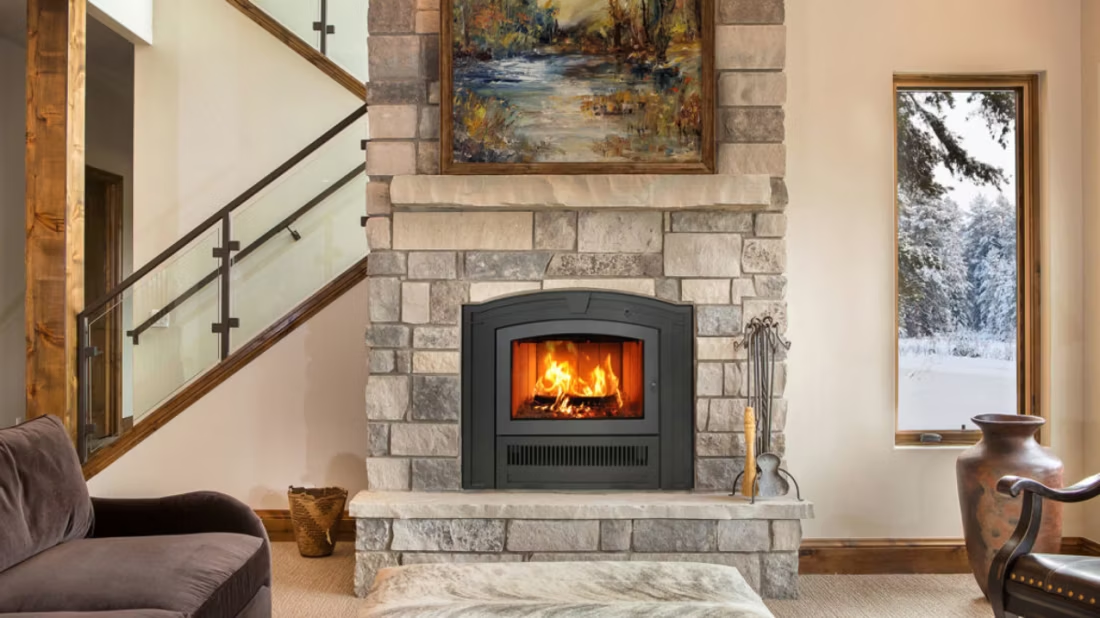
Three steps. No salesperson until you're ready.
Tell us about your project
Your zip code, your situation, and the fuel you're leaning toward—or let the answers point you to one.
See what's actually available
The brands dealers within 100 miles genuinely carry—real options, never a catalog mirage.
Get your dealer & Project Guide
A trusted local dealer, plus the free Project Guide & Parts List that names every component of the job.
Frequently Asked Questions
How much does a wood stove installation cost in Benton County?
Most wood stove installations in Benton County run between roughly $2,500 and $6,000, on the lower end of national averages—a reflection of the county's rural labor market and the fact that many homes already have a usable chimney or straightforward stovepipe run. Installing into an existing masonry fireplace with an insert tends to land at the lower end; a freestanding stove in a home with no existing chimney, requiring new Class A pipe through the roof and a code-compliant hearth pad, pushes toward the higher end. Manufactured and mobile homes, which are common throughout rural Benton County, sometimes need additional clearance work and a listed through-wall kit, which local installers will factor into the quote.
What size wood stove do I need for a Benton County home?
Because Benton County sits in the milder zone 3A climate, most homes here don't need the oversized, 20-hour-burn stoves you'd spec for a place like Fargo or Caribou. A small to medium stove rated for 1,000 to 1,800 square feet is typically enough to comfortably heat a main living area or supplement a propane furnace on cold nights. Older farmhouses with high ceilings and less insulation may need to size up slightly even at a smaller square footage, since heat escapes faster through original single-pane windows and uninsulated walls. A local dealer can walk your home and give you an accurate sizing recommendation rather than relying on a generic square-footage chart.
Where can I find certified wood stove installers near Benton County?
With a population under 2,000, Benton County itself doesn't support a large hearth retail presence, so most homeowners work with certified installers based in nearby towns—Holly Springs, New Albany, Ripley, or Corinth, or occasionally across the state line into southern Tennessee. Look for NFI (National Fireplace Institute) or CSIA (Chimney Safety Institute of America) certification, which confirms proper training in clearances, venting, and code compliance. Because installers are covering a wide rural service area, expect a modest trip charge built into quotes for homes well outside Ashland—it's standard practice here, not a sign of overcharging.
Should I get a wood stove or a wood insert?
A wood insert fits into an existing masonry fireplace and uses your current chimney, which makes it a strong fit for the many older farmhouses and brick-fireplace homes scattered through Benton County—it turns a drafty open hearth into a genuine heat source without new venting work. A freestanding wood stove, by contrast, can go almost anywhere in a home with the right clearances and a new stovepipe run, which makes it the better option for newer construction, additions, or manufactured homes without an existing chimney. Local dealers can tell you within a few minutes which category fits your house.
Do I need a permit to install a wood stove in Benton County?
Benton County doesn't carry the strict emissions or non-attainment restrictions you'll find in parts of the West—there's no winter burn-ban program to navigate here. Building permit requirements for a new wood stove installation are typically handled through the county building department, and most local installers include the permitting as part of the job. Because a large share of Benton County housing sits on unincorporated rural acreage, code enforcement can be lighter than in a city, but manufactured and mobile homes still need to follow listed clearance and through-wall venting requirements for insurance and safety reasons, regardless of whether a permit is pulled.
What's the best wood stove for Benton County's climate?
Since zone 3A winters here are milder than in true cold-climate regions, an oversized catalytic stove built for 20-hour burns at sub-zero temperatures usually isn't necessary. Mid-size non-catalytic stoves from manufacturers like Vermont Castings, Pacific Energy, or Englander tend to be a better fit—efficient, easier to run for shorter burn cycles, and sized appropriately for supplemental heat in a home that's also running a propane furnace or heat pump. If your home is drafty or older, or you plan to burn as your primary heat source, ask a local dealer about stepping up one size class.
How often should my chimney be inspected in Benton County?
The CSIA recommends an annual inspection for any wood-burning appliance, and that holds true even in a milder climate like Benton County's—shorter burn seasons don't eliminate creosote buildup, and the region's humidity can actually contribute to different kinds of buildup than you'd see in a drier climate. Plan on a sweep and inspection in early fall, before the first cold snap hits, especially if your stove is installed in an insert configuration using an older masonry chimney common in the county's farmhouses.
Where can I get firewood in Benton County?
Firewood is abundant and inexpensive here. Oak and pine dominate the local forestland, and many rural landowners cut their own from wooded acreage rather than buying it. For those who do buy, cordwood typically runs on the low end of regional pricing given how much timber surrounds the county. Pecan wood also shows up locally, tied to the area's small orchards—it burns hot and long, and if you don't use it all for heat, it doubles as excellent cooking wood.
Wood stove vs. pellet stove—which makes more sense in Benton County?
Wood is the more natural fit for most Benton County homes: cordwood is cheap or free from local timber, a wood stove keeps working without electricity during the ice storms that occasionally knock out power in rural north Mississippi, and it pairs with the self-sufficient rural lifestyle common here. Pellet stoves—using regional brands like Lignetics, Hamer Pellet Fuel, or Greenway Renewable Energy—offer more convenience and cleaner burns, but they need electricity to run the auger and blower, so they're not a backup option during an outage. For most Benton County households, wood remains the practical default, with pellet stoves better suited to homes prioritizing convenience over off-grid resilience.
What's the difference between an insert and a zero-clearance fireplace?
An insert is a fireplace that slides into a pre-existing wood-burning fireplace—if you don't have one, there's nothing to insert it into. A zero-clearance fireplace is built into a framed wall, which makes it the answer for remodels and new construction. Simple test: existing masonry fireplace means insert; blank or framed wall means zero-clearance.
Why is a fireplace insert so efficient?
An insert does two things: it seals the chimney completely, so you stop losing air you already paid to heat, and it radiates warmth into the room through the firebox and glass. Most add a heat-exchange fan that pulls cool room air underneath, wraps it around the hot firebox, and pushes it back out warm. Your home is more efficient before you've even lit the first fire.
What is an in-home preview and do I need one?
It's a visit where a hearth professional measures your space, confirms the model you picked actually works in your home, and walks the specs—framing, gas line, venting, finish work—before anything is ordered. Some details you just can't know until you see the house. Never make a down payment without one; it's the single most-skipped step that burns buyers.
Does a fireplace add value to my home?
On average, a fireplace adds back to the home about the same amount you spent installing it. Add the monthly savings from heating the rooms you actually use instead of the whole house—often hundreds of dollars a year—and the value case is strong before you even count what a fire does for how your family uses the room.
Find your wood stove in Benton County.
Tell us a bit about your home and we'll put together a free Project Guide & Parts List—the right stove or insert for your Benton County home, the exact parts including the vent kit, and a trusted local dealer to install it.
Find Your Fireplace →