
Electric heat and ambiance, without the chimney work.
Zone heat and real-looking flame for Benton County homes—from Ashland to the rural routes off Highway 4—without a flue, a fuel tank, or a wood pile. Find the right unit and connect with a trusted local dealer.
Every Project Starts From One of These Five Situations
Electric heat that fits into any home—new or old.
Benton County is small—under 1,800 people spread across a rural stretch of north Mississippi anchored by Ashland—and the housing stock reflects that: older frame houses, a fair number of manufactured and mobile homes along the county roads, and newer central-heat-pump construction. The climate here is Zone 3A: mild, humid winters with only occasional hard cold, not the sustained sub-freezing stretches you'd see in a place like Duluth or Fargo. Most Benton County homes lean on a heat pump or central system for the bulk of the winter, which is exactly the environment where electric fireplaces earn their keep.
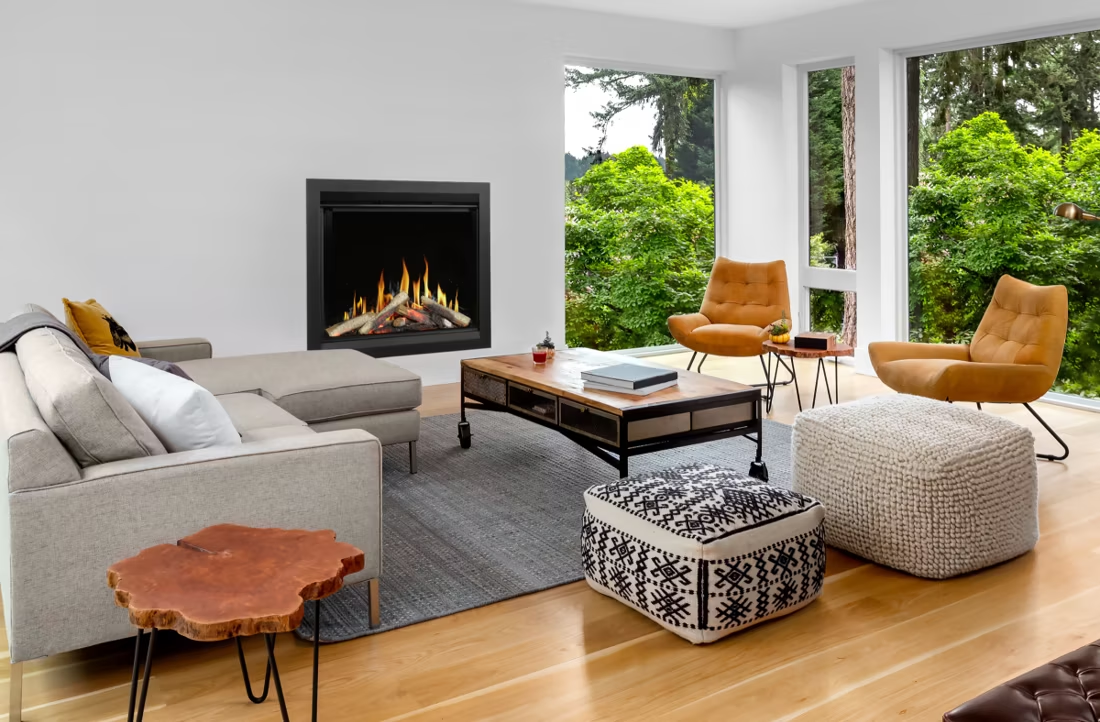
An electric fireplace plugs into a standard outlet, needs no chimney, no gas line, and no venting through the wall—which matters in a county where a lot of homes simply don't have an existing masonry fireplace to work with. It supplements the heat pump on the handful of genuinely cold nights each winter, adds real ambiance to a living room or bedroom without any of the upkeep of a wood stove, and doesn't depend on a fuel delivery. The one honest limitation: it needs grid power to run, and when ice storms occasionally knock out Tippah Electric Power Association's lines in this part of the state, an electric unit goes dark right along with everything else—which is why many longtime Benton County households still keep a wood stove or fireplace, often burning the oak, pine, or pecan common to the area, as backup even as electric handles daily comfort.
Three steps. No salesperson until you're ready.
Tell us about your project
Your zip code, your situation, and the fuel you're leaning toward—or let the answers point you to one.
See what's actually available
The brands dealers within 100 miles genuinely carry—real options, never a catalog mirage.
Get your dealer & Project Guide
A trusted local dealer, plus the free Project Guide & Parts List that names every component of the job.
Frequently Asked Questions
How much does it cost to install an electric fireplace in Benton County?
Plug-in freestanding or wall-mounted electric fireplaces are the cheapest option and typically run $150 to $600 for the unit, with no installation cost beyond hanging it—no permit, no electrician required if it's just plugged into an existing outlet. Electric inserts that fit into an existing fireplace opening usually run $500 to $2,000 installed. Built-in wall units that require framing and a dedicated 120V or 240V circuit run higher, often $1,500 to $4,000 once electrical work is included—and that electrical work is where a licensed electrician and, in some cases, a county permit come in. For most Benton County homes without an existing masonry fireplace, the insert or built-in route ends up being the more realistic option than trying to retrofit a chimney that was never there.
Do I need a permit for an electric fireplace in Benton County?
A plug-in electric fireplace that runs off an existing standard outlet doesn't require a permit—it's treated like any other appliance. If you're adding a built-in unit that needs a new dedicated circuit or panel work, that electrical work typically does require a permit and should be pulled by a licensed electrician, since Benton County inspects new circuit installations for code compliance. There's no equivalent to the EPA emissions rules or chimney sweep requirements that apply to wood-burning appliances—electric is the simplest fuel type in the county from a permitting standpoint.
What size electric fireplace do I need for my room?
Most electric fireplace inserts and built-ins are rated around 4,600 to 5,200 BTU (roughly 1,500 watts), which is enough to noticeably warm a single room in the 300- to 400-square-foot range—a living room or a bedroom, not a whole house. Electric fireplaces in Benton County are almost always installed as zone heat layered on top of a central heat pump rather than as a home's primary heat source, which fits the mild Zone 3A winters here. If you're trying to heat a larger open living/dining area, talk to a local dealer about a unit with a wider firebox or plan on it supplementing rather than replacing your existing system.
Will my electric fireplace work during a power outage?
No—electric fireplaces require grid power to run the heater and flame effect, so they go dark during an outage just like any other electrical appliance. That's a real consideration in rural Benton County, where ice storms occasionally take down Tippah Electric Power Association's lines for a day or more during winter. Homes that want heat regardless of outage should keep a wood stove or a battery/propane backup option alongside the electric fireplace rather than relying on electric as the sole heat source.
What's the difference between an electric insert, a built-in, and a freestanding electric fireplace?
A freestanding electric fireplace is a self-contained cabinet unit you plug in and place against a wall—no installation beyond finding an outlet, and it's fully portable if you move. An electric insert is sized to slide into an existing fireplace opening, which works well for the handful of older Benton County homes that already have a masonry firebox sitting unused. A built-in electric fireplace is framed into a wall like a real fireplace, wired to a dedicated circuit, and finished with trim or a mantel surround—the most polished look but the most involved install. For a home without an existing fireplace opening, a built-in is the closest thing to a real hearth without the venting a gas or wood unit would require.
Electric vs. wood—which makes sense for my Benton County home?
Wood heat has deep roots in this part of Mississippi—oak, pine, and pecan are all common locally and burn well—and a wood stove keeps producing heat with zero dependence on the power grid, which matters when winter ice storms knock out electric co-op service. Electric fireplaces, on the other hand, need no wood handling, no ash cleanup, and no chimney, and they turn on and off instantly with a remote. For a primary residence in a rural part of the county where outages happen, many homeowners keep both: a wood stove or fireplace for backup and ambiance, and an electric unit in a secondary living space or bedroom for everyday convenience. For a rental property or a room where installing a chimney isn't realistic, electric is usually the more practical call outright.
Electric vs. gas fireplace—which is right for me?
Gas fireplaces put out real, sustained heat and can be configured to run on propane in a county like Benton where natural gas service is limited outside of town—but they require a gas line or propane tank, venting in most cases, and periodic servicing. Electric fireplaces skip all of that: no fuel to store or deliver, no venting, and far less maintenance, but the heat output is lower and it's entirely dependent on grid power. If you want a fireplace primarily for ambiance and light supplemental warmth in a bedroom, den, or rental unit, electric is usually the simpler and cheaper path. If you want a unit that can meaningfully offset your heating bill or serve as a stronger backup heat source, a propane gas fireplace is worth a look from a local dealer.
What brands of electric fireplaces are commonly installed in Benton County?
Local dealers serving Benton County typically carry mainstream electric fireplace brands like Dimplex, Napoleon, and Touchstone for both inserts and built-ins, along with more budget-oriented freestanding units for buyers who just want a plug-in option. Brand selection matters less here than fit and finish—a local dealer will walk you through flame realism, heater wattage, and trim/surround options based on the specific opening or wall space you're working with, rather than pushing whatever's easiest to ship.
Can an electric fireplace actually lower my heating bill in Benton County?
It can help modestly. Because Benton County sits in a mild Zone 3A climate with a heating season that's short compared to the northern half of the country, an electric fireplace used as zone heat—warming just the room you're in rather than running central heat throughout the house—can trim the heat pump's workload on the handful of genuinely cold nights each winter. It's not going to replace a whole-home heating bill the way it might in a colder climate, but for supplemental comfort in a bedroom, den, or sunroom, it's a low-cost way to take the edge off without running the whole system harder.
Can I put a TV above my fireplace?
Yes—with an asterisk. Fireplaces are hot and TVs don't like heat. Either put a mantel between them to deflect rising warmth, or choose a fireplace with heat-management technology that creates a cool zone on the wall above—the wall stays around 125 degrees, barely warm, while the room still gets full heat. If you like clean lines and don't want a mantel, heat management is the answer.
Does an electric fireplace need a vent or chimney?
No—that's its superpower. An electric fireplace needs a wall and an outlet, period. No vent pipe, no gas line, no clearances to design around, which is why it works in bedrooms, offices, apartments, and walls where venting a gas or wood unit would be impractical or impossible. Installation is typically the simplest and least expensive of any fireplace type.
Does a fireplace add value to my home?
On average, a fireplace adds back to the home about the same amount you spent installing it. Add the monthly savings from heating the rooms you actually use instead of the whole house—often hundreds of dollars a year—and the value case is strong before you even count what a fire does for how your family uses the room.
Can a fireplace actually lower my heating bill?
Yes—by creating a comfort zone. A furnace heats every square foot of the house just to warm the one room you're in; a gas fireplace on low burns roughly a sixth of the gas a typical furnace does. Set the furnace around 55–60 degrees as a baseline, then heat the rooms your family actually uses. Families who heat this way commonly save $20–$60 a month.
Find your electric fireplace in Benton County.
Tell us a bit about your home and we'll put together a free Project Guide & Parts List for your electric fireplace project—matched with a trusted local Benton County dealer who can install it right.
Find Your Fireplace →