
Warm, reliable heat for Benton County homes.
From Ashland to Hickory Flat to Michigan City, Benton County's mild Zone 3A winters still bring cold snaps that call for real heat. Find the right gas fireplace or insert and connect with a trusted local dealer.
Every Project Starts From One of These Five Situations
Propane-powered comfort in a county built on wood heritage.
Benton County is one of Mississippi's smallest and most rural counties—just under 1,800 people spread across Ashland, Hickory Flat, Michigan City, and Snow Lake Shores, with a good stretch of the Holly Springs National Forest running through it. Climate Zone 3A means winters here are generally mild compared to the upper Midwest, but January and February still bring hard freezes and the occasional ice event, and older farmhouses built with oak, pine, and pecan lumber tend to lose heat fast through drafty walls and single-pane windows. Wood heat has deep roots here—it still is standard practice for a lot of households—but gas fireplaces have become a popular addition for homeowners who want instant, hands-off warmth without tending a firebox every evening.
Because Benton County is sparsely populated and doesn't have municipal natural gas mains reaching most homes outside the immediate Ashland town limits, propane is the practical fuel for the vast majority of gas fireplace installs here—delivered and stored in an above-ground tank set up by a regional propane supplier. There's no big-box hearth showroom in the county itself, so most installs are handled by certified dealers who travel in from Holly Springs, New Albany, Oxford, or Tupelo. A trusted local installer means permits are handled correctly, the propane line is sized and pressure-tested properly, and the unit is matched to your actual square footage—not guessed at from a big-box display model.
Three steps. No salesperson until you're ready.
Tell us about your project
Your zip code, your situation, and the fuel you're leaning toward—or let the answers point you to one.
See what's actually available
The brands dealers within 100 miles genuinely carry—real options, never a catalog mirage.
Get your dealer & Project Guide
A trusted local dealer, plus the free Project Guide & Parts List that names every component of the job.
Frequently Asked Questions
How much does a gas fireplace installation cost in Benton County?
For a rural county like Benton, most gas fireplace installs run in the $3,500 to $9,000 range, and the biggest cost driver is almost always the propane setup rather than the fireplace itself. If you already have a propane tank and line serving your home—common for many farmhouses that use propane for cooking or water heating—a direct-vent insert or fireplace on the lower end of that range is realistic. If you need a new tank installation and a fresh gas line run from the tank to the fireplace location, expect to land toward the higher end. Because there's no dealer physically based in the county, some installers factor in a modest travel charge from Holly Springs, New Albany, or Oxford.
Can I convert my existing wood fireplace to gas?
Yes, and it's a common project for the older masonry fireplaces found in Benton County farmhouses. A gas insert typically slides into the existing firebox and vents through a stainless liner run up your existing chimney—the same chimney that's likely been venting oak and pine smoke for decades. This preserves the look of the original hearth while eliminating the wood handling and ash cleanup. Since natural gas isn't an option for most of the county, the conversion runs on propane, which means budgeting for either an existing tank hookup or a new tank installation as part of the project.
Is natural gas available in Benton County, or is it all propane?
Natural gas mains don't reach most of Benton County—this is a county of under 1,800 residents with no incorporated city large enough to justify the pipeline infrastructure that natural gas requires. Practically every gas fireplace installed outside a handful of in-town properties runs on propane, delivered and stored in a tank on the property. This isn't a downside for fireplace performance—propane burns just as hot and clean as natural gas, and any gas fireplace model can be configured for propane with the right orifice kit. It just means your installer needs to coordinate with a regional propane supplier rather than a gas utility.
Will my gas fireplace work during a power outage?
Most modern gas fireplaces with intermittent pilot ignition (IPI) include a battery backup that keeps the unit running when the power drops—which matters in a county like Benton, where overhead rural lines mean outages can stretch longer after storms or ice events than they would in a denser town. Valor fireplaces take a different approach: their pilot generates its own electricity through the thermocouple, so there's no battery to remember or replace. For a household that also keeps a wood stove or fireplace for backup heat—still common practice here—a gas fireplace with reliable outage performance rounds out the setup nicely.
What's the difference between a gas fireplace, gas insert, and gas stove?
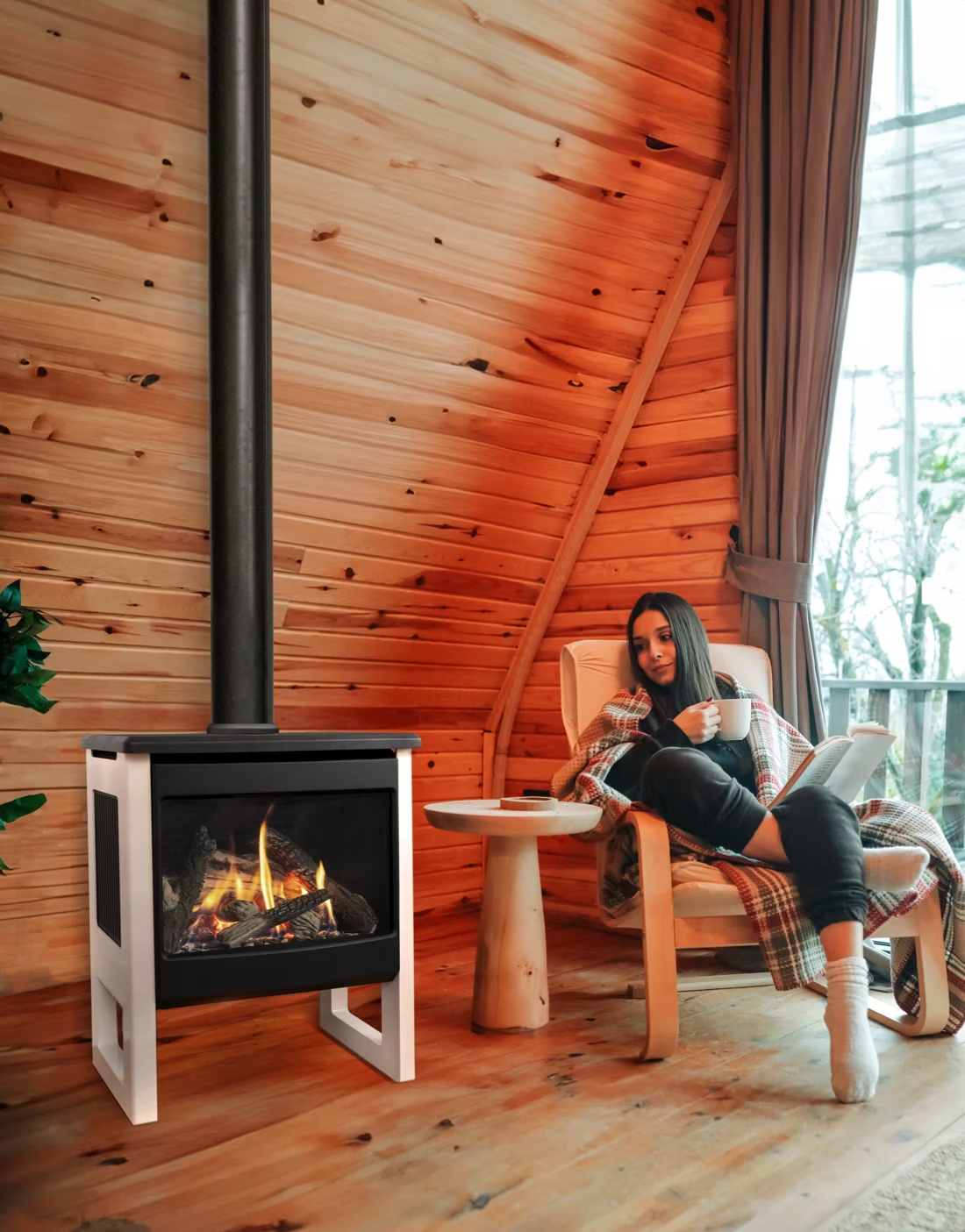
A gas fireplace is a fully built-in unit, framed into a wall—the right call for new construction or a major remodel. A gas insert drops into an existing masonry firebox, which fits the older farmhouse fireplaces common throughout Ashland, Hickory Flat, and the surrounding county. A gas stove is a freestanding cabinet-style unit that sits on the floor, similar in footprint to a wood stove, and works well in homes without an existing fireplace opening. For most Benton County homeowners looking to upgrade an old wood-burning hearth, the insert is the straightforward answer.
Do I need a permit to install a gas fireplace in Benton County?
Benton County has lighter permitting requirements than more urban Mississippi counties, but any propane gas line work still needs to be done by a licensed propane technician under state fire marshal code, and your installer should pull whatever local permit applies to the tank and line installation. Most dealers who regularly work rural counties like Benton handle this coordination as part of the install, so you're not left tracking down inspectors yourself.
What's the difference between vented and vent-free gas fireplaces?
Vented (direct-vent) gas fireplaces pull combustion air from outside and exhaust it back outside through a sealed pipe—the safest option and the one most local installers recommend by default. Vent-free units burn fuel directly into the room without external venting; they're legal in Mississippi but come with strict room-size and ventilation requirements, and they release some combustion byproducts into your living space. Given Benton County's mild but humid Zone 3A climate, a well-sealed home can trap that moisture more than you'd expect, which is one more reason most homeowners here go with a direct-vent model.
How often should my gas fireplace be serviced?
Plan on an annual inspection—a technician checks the burner, pilot assembly, venting, and gas connections, and cleans the glass and interior. This matters even more for propane systems, since the technician should also check the tank, regulator, and line connections as part of the visit. Because Benton County doesn't have its own dedicated hearth service company, most homeowners schedule this alongside their propane supplier's regular tank check or through the same dealer who handled the original install.
Gas vs. wood—which makes more sense in Benton County?
Wood heat still runs deep here—oak, pine, and pecan are all locally available, the Holly Springs National Forest sits right in the county, and a wood stove keeps running with zero utility dependence during an outage. Gas trades that self-sufficiency for convenience: instant on-off operation, no ash or splitting, and consistent heat without daily tending. Given Benton County's mild Zone 3A winters, many households find a gas fireplace covers the bulk of day-to-day comfort in the main living space, while keeping a wood-burning stove or fireplace elsewhere in the house as backup heat for the occasional hard freeze or extended outage.
Why is a fireplace insert so efficient?
An insert does two things: it seals the chimney completely, so you stop losing air you already paid to heat, and it radiates warmth into the room through the firebox and glass. Most add a heat-exchange fan that pulls cool room air underneath, wraps it around the hot firebox, and pushes it back out warm. Your home is more efficient before you've even lit the first fire.
What's the difference between radiant and convective fireplace heat?
Most fireplaces are a thin metal box—they heat fine, but you rely on the fan to move the warmth into the room. Radiant models use a thick cast-ceramic firebox, about an inch and a quarter thick, that soaks up the fire's heat and radiates roughly 25–30% more warmth into the room with no fan running. If you watch TV in the same room or want heat in a power outage, radiant is worth asking about.
Does a fireplace add value to my home?
On average, a fireplace adds back to the home about the same amount you spent installing it. Add the monthly savings from heating the rooms you actually use instead of the whole house—often hundreds of dollars a year—and the value case is strong before you even count what a fire does for how your family uses the room.
Can I install a fireplace myself?
If you're putting a fire in your house on purpose, it's best to work with an expert. Unless you're genuinely experienced in framing, gas line, vent pipe, and the national code on clearances to combustibles, have a professional do it—and ideally the same company that sells you the fireplace, so warranty, service, and liability all live under one roof.
Find your gas fireplace in Benton County.
Tell us a bit about your home and we'll match you with the right gas fireplace or insert for Benton County's climate—plus a free Project Guide & Parts List and a trusted local dealer to install it.
Find Your Fireplace →