
Warm, Clean Heat Without a Woodpile in Benton County.
Benton County's Zone 3A winters are mild by national standards, but the damp cold snaps off Highway 4 still call for real heat. A pellet stove gives you that heat without splitting oak and pine cordwood—find the right unit and get matched with a trusted local dealer.
Every Project Starts From One of These Five Situations
Convenience meets clean burning in the Mississippi hill country.
Benton County is small and rural—a hill-country stretch of north Mississippi along the Tennessee line, with the county seat at Ashland and a population under two thousand spread across timber and pasture land. Climate zone 3A means winters here are mild and humid rather than brutally cold—nothing like a Duluth or Fargo winter—but the county still sees regular nights in the 20s and 30s, ice events off the Gulf-Tennessee interface, and drafty older farmhouses and mobile homes that lose heat fast once the sun goes down. Local hardwoods run heavy to oak, pine, and pecan, which is exactly what's fed into the regional pellet supply.
Benton County has no air quality non-attainment designation and no wood-burning curtailment periods to worry about, so pellet stoves here are chosen for convenience and comfort rather than regulatory necessity. That matters in a county this rural: instead of cutting, hauling, and stacking cords of oak, a hopper-fed pellet stove runs on bagged fuel you can load once a day. Regional suppliers make that fuel easy to source close to home—Hamer Pellet Fuel and Greenway Renewable Energy both mill pellets in Mississippi, and Lignetics is widely distributed through farm and hardware stores across the region, so you're not depending on a single supplier or a long freight haul.
Three steps. No salesperson until you're ready.
Tell us about your project
Your zip code, your situation, and the fuel you're leaning toward—or let the answers point you to one.
See what's actually available
The brands dealers within 100 miles genuinely carry—real options, never a catalog mirage.
Get your dealer & Project Guide
A trusted local dealer, plus the free Project Guide & Parts List that names every component of the job.
Frequently Asked Questions
How much does a pellet stove installation cost in Benton County?
A typical pellet stove installation in Benton County runs in the range of $2,500 to $5,500, depending on the unit, whether you're venting through an existing masonry fireplace or running new through-wall venting, and whether a hearth pad is needed for clearance. Homes with an existing chimney can often use a pellet insert and reuse part of that structure, which trims cost. Freestanding stoves in a room with no existing chimney require new wall venting, which adds to the total. Because Benton County is thinly populated, expect local dealers based out of nearby towns like New Albany or Holly Springs to factor a small travel charge into rural installs.
What size pellet stove do I need for my home?
Because Benton County sits in climate zone 3A with generally mild winters, most homes don't need the largest stoves on the market—a small to medium pellet stove (rated for 1,000 to 1,800 square feet) is usually enough for a primary living area, even in an older farmhouse or mobile home with average insulation. Homes using the stove as the sole heat source, or drafty older construction with high ceilings, should size up rather than down. A local dealer can walk your home and account for insulation, ceiling height, and layout—sizing is worth getting right, since an undersized stove will run constantly on cold nights and an oversized one will short-cycle and waste fuel.
Where can I find certified pellet stove installers near me?
Benton County itself is small enough that most certified hearth dealers are based in neighboring towns—New Albany, Holly Springs, or the Corinth/Tupelo corridor—and travel into the county for installs. Look for NFI-certified installers, which indicates specific training on venting clearances and appliance listing requirements for pellet-burning units. Because pellet stoves have simpler venting than wood stoves (no masonry chimney required in most cases), installs tend to move faster once the unit and location are confirmed. Avoid handyman installs—pellet units still require correct wall or roof penetration, electrical hookup for the auger and blower, and code-compliant clearances.
What's the difference between a pellet stove and a pellet insert?
A pellet stove is a freestanding unit that sits on a hearth pad and vents through a wall or existing chimney chase—it can go almost anywhere in a room with the right clearances. A pellet insert is built to slide into an existing masonry fireplace opening, turning an old open hearth into a sealed, efficient heat source while reusing part of the existing chimney. For Benton County homes with an older brick fireplace already in place—common in the county's farmhouse-era housing stock—an insert is often the simpler retrofit. Homes without an existing fireplace, including many of the county's mobile and manufactured homes, are better suited to a freestanding stove.
Do I need a permit to install a pellet stove in Benton County?
Most pellet stove installations require a standard building permit through the Benton County building permitting office, primarily to confirm the venting path and clearances meet code. Because Benton County has no air quality non-attainment status and no burn curtailment periods, there's no additional environmental permitting layer to deal with—unlike counties in the Pacific Northwest or California that restrict burning during inversion events. Most local installers pull the permit as part of the install, so it's rarely something the homeowner has to handle directly.
What's the best pellet stove for Benton County's climate?
Because winters here are mild compared to the northern half of the country, Benton County homeowners generally don't need the largest-capacity units built for sub-zero climates. Reliable mid-size stoves from brands like Harman, Englander, and US Stove Company (built just up the road in South Pittsburg, Tennessee) cover most homes well, with auto-ignition and thermostat control that make day-to-day operation simple. What matters more locally is fuel compatibility—most stoves burn standard hardwood pellets like those from Lignetics, Hamer Pellet Fuel, or Greenway Renewable Energy without issue, so the appliance choice comes down more to size, features, and budget than climate extremes.
Where can I buy pellet fuel in or near Benton County?
Bagged hardwood pellets are typically sold by the ton (usually as pallets of forty to fifty 40-pound bags) through farm supply and hardware stores across north Mississippi, with Lignetics, Hamer Pellet Fuel, and Greenway Renewable Energy all commonly stocked regionally. Because Hamer Pellet Fuel and Greenway Renewable Energy both mill product within the state, supply tends to stay steady even during the coldest stretches of winter when demand spikes elsewhere. Buying a season's worth in late summer or early fall, before the first cold snap, is the easiest way to avoid scrambling for fuel once temperatures drop.
How much maintenance does a pellet stove need?
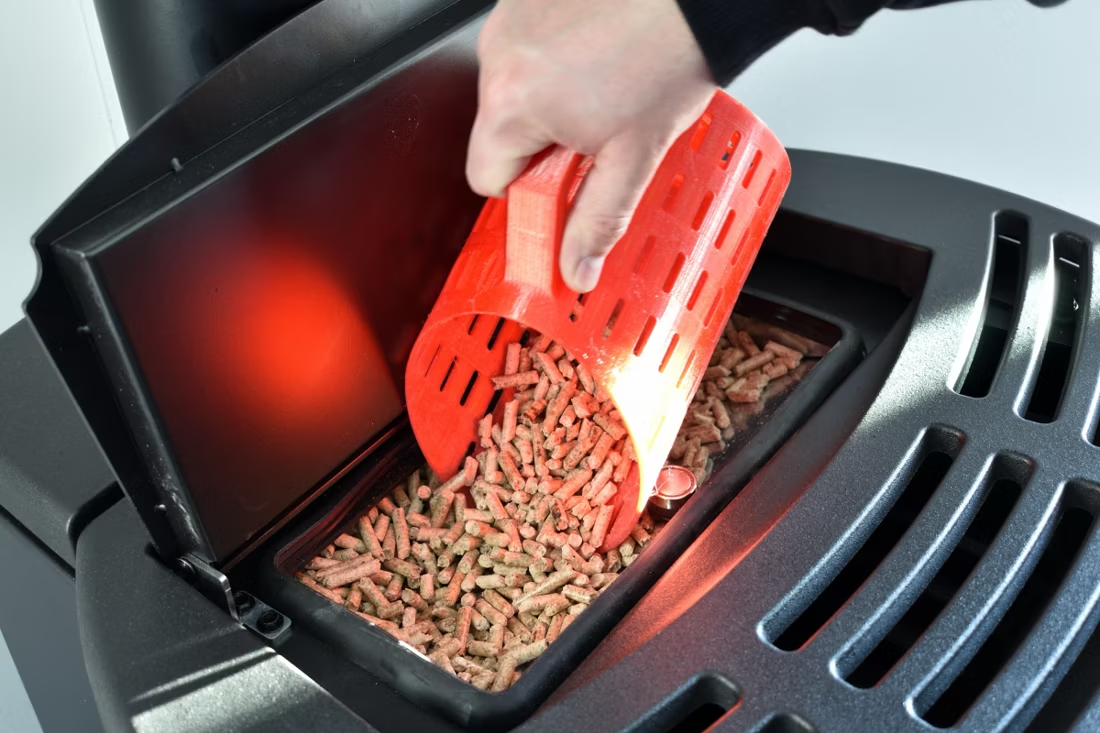
Pellet stoves need more routine attention than a gas unit but less than a wood stove. Plan on emptying the ash pan every few days to weekly depending on use, cleaning the glass as needed, and running a full burn-pot and auger cleaning roughly every one to two tons of pellets burned. An annual professional service—checking the auger, blower motor, gaskets, and venting—keeps the unit running efficiently and catches wear before it becomes a breakdown mid-winter. Given the thin dealer coverage in a small county like Benton, it's worth scheduling that annual service in late summer before the winter rush.
Pellet stove vs. wood stove—which is right for my home?
Wood stoves burn cordwood cut from the oak, pine, and pecan common on Benton County land, run without electricity, and work as backup heat during the ice-storm power outages that occasionally hit north Mississippi. Pellet stoves are easier to operate day-to-day—load the hopper, set the thermostat, and let the auger and igniter do the rest—and they burn cleaner with less ash, but they need a live electrical outlet to run the auger and blower, so they go dark in an outage unless paired with a battery backup. For a primary residence with reliable power, pellet is usually the more convenient daily-use choice. For a property where storm-driven outages are a real concern, many Benton County homeowners keep a wood stove or fireplace as backup alongside a pellet unit for everyday comfort.
What's the difference between an insert and a zero-clearance fireplace?
An insert is a fireplace that slides into a pre-existing wood-burning fireplace—if you don't have one, there's nothing to insert it into. A zero-clearance fireplace is built into a framed wall, which makes it the answer for remodels and new construction. Simple test: existing masonry fireplace means insert; blank or framed wall means zero-clearance.
Why is my open fireplace making my house colder?
Open fireplaces suck—literally. As the fire burns, it consumes air your furnace already paid to heat and pulls it out through the chimney, so the house is actually colder after the fire goes out than before you lit it. An insert fixes this: it seals the chimney, puts fixed glass across the front, and turns that hole in your house into a real heat source.
How much should I budget for a fireplace?
For an average home—covering the fireplace, the vent pipe, and basic installation—a budget between $3,900 and $5,500 gives you a lot of options across wood, gas, and pellet. By the time you add finish work, gas line, and electrical, the average complete installation lands between $5,000 and $12,000 all-in. In a remodel or new build, a good rule is to put about 2.5% of the total project cost toward the fireplace.
What is an in-home preview and do I need one?
It's a visit where a hearth professional measures your space, confirms the model you picked actually works in your home, and walks the specs—framing, gas line, venting, finish work—before anything is ordered. Some details you just can't know until you see the house. Never make a down payment without one; it's the single most-skipped step that burns buyers.
Pellet Brands Stocked Around Benton County
Manufacturers will point you to the nearest stocking dealer.
Find your pellet stove in Benton County.
Tell us a bit about your home and we'll put together a free Project Guide & Parts List for your Benton County pellet project—the right unit, the vent kit it needs, and a trusted local dealer who can install it correctly.
Find Your Fireplace →