
Warm up Wayne County without the wood pile.
With a long, cold heating season and winter lows averaging 19°F, Wayne County homes need real heat, not just ambiance. Natural gas from DTE Energy reaches nearly every block from Detroit to the western suburbs, making a direct-vent fireplace or insert the practical upgrade. Find the right unit and connect with a trusted local dealer.
Every Project Starts From One of These Five Situations
The default choice for 4.5 million residents.
Wayne County stretches from the Detroit riverfront through Dearborn, the Grosse Pointes, and the Downriver communities of Wyandotte and Trenton, out to the newer, lower-density suburbs of Canton, Plymouth, and Northville. It's Michigan's most populous county and sits in climate zone 5A, with an average winter low near 19°F and a long, cold heating season—comparable to Buffalo, NY for sheer cold-season length, with lake-effect snow off Lake Erie and Lake St. Clair adding to the mix. A lot of that older housing stock—Detroit's boulevard homes, Dearborn's brick bungalows, Grosse Pointe's masonry-fronted colonials—was built with a wood fireplace that hasn't burned a real log in decades.
DTE Energy provides natural gas to virtually all of Wayne County, which is a big part of why gas has become the default fireplace fuel here. Wood stoves and pellet stoves are genuinely uncommon in this county—small urban lots, attached garages with no room for cordwood storage, and municipal ordinances in denser cities make solid-fuel appliances impractical for most homeowners. A handful of rural pockets in far western Wayne (New Boston, Huron Township) still see some wood use, but for the overwhelming majority of the county's residents, a direct-vent gas insert or fireplace is the realistic path to real fireplace heat: instant on, no ash, no wood handling, and heat you can rely on when a Downriver ice storm knocks out the furnace.
Three steps. No salesperson until you're ready.
Tell us about your project
Your zip code, your situation, and the fuel you're leaning toward—or let the answers point you to one.
See what's actually available
The brands dealers within 100 miles genuinely carry—real options, never a catalog mirage.
Get your dealer & Project Guide
A trusted local dealer, plus the free Project Guide & Parts List that names every component of the job.
Frequently Asked Questions
How much does a gas fireplace installation cost in Wayne County?
A typical gas fireplace installation in Wayne County runs roughly $4,000 to $10,000, depending on the unit, the venting path, and whether you're converting an existing masonry fireplace or building new. In older housing stock—Detroit's boulevard homes, Dearborn's brick bungalows, the Grosse Pointes—a direct-vent gas insert dropped into an existing chimney is common and tends to land toward the lower end. New construction or major remodels in western Wayne communities like Canton, Plymouth, and Northville, where framing and a fresh gas line run are needed, land in the middle to upper end. A local retailer will give you a firm number after an in-home visit.
Can I convert my existing wood fireplace to gas?
Yes, and in Wayne County it's the most common project local hearth retailers handle. Plenty of homes here—especially older Detroit, Dearborn, and Grosse Pointe properties—have a masonry wood fireplace that was built decades ago and rarely used for actual wood burning. A gas insert slides into that existing chimney using a stainless liner, preserving the look of the original fireplace while adding real, reliable heat. Since natural gas from DTE Energy reaches nearly every block in the county, most homes already have gas service nearby, which keeps the line-run cost down and makes this one of the more affordable upgrades a homeowner can make.
Do I need natural gas to install a gas fireplace, or can I use propane?
In Wayne County, natural gas through DTE Energy is by far the standard, and it covers virtually the entire county from Detroit to the western suburbs. Propane is rarely necessary here and mostly shows up in a few unincorporated rural pockets of far western Wayne where gas mains haven't been extended. If your home already has a gas water heater, range, or furnace, adding a gas fireplace is typically a straightforward tie-in for your installer, with no tank to install or manage.
Will my gas fireplace work during a power outage?
Most modern gas fireplaces will, which matters in Wayne County given how often ice storms and high winds off the Great Lakes knock out DTE Energy service across Detroit and the Downriver communities. Units with IPI (intermittent pilot ignition) run on a battery backup that kicks in automatically when the power drops, so the fireplace lights on demand just like normal. Valor's gas fireplaces take a different approach: they generate their own electricity through the pilot's thermocouple, so there's no battery to remember to replace. Ask your local retailer which ignition system a given model uses if outage performance matters to you.
What's the difference between a gas fireplace, gas insert, and gas stove?
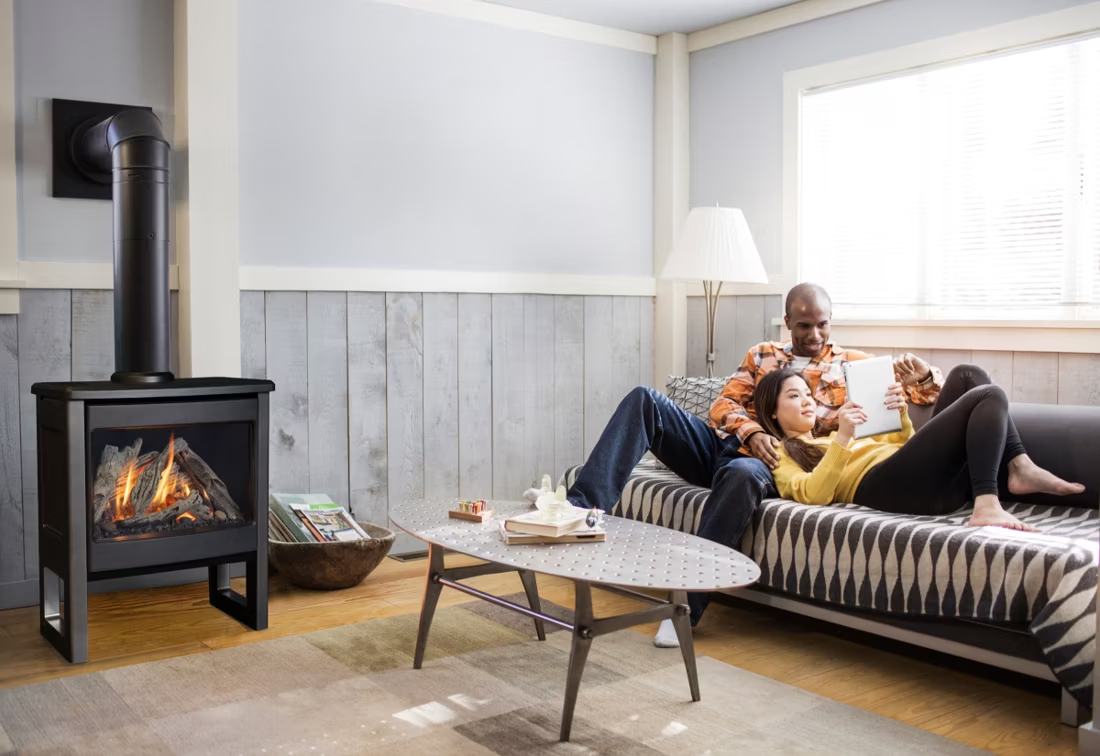
A gas fireplace is a fully built-in unit framed into a wall—common in new construction and remodels in growing communities like Canton and Northville. A gas insert is built to drop into an existing masonry fireplace, which describes a huge share of Wayne County's older housing stock in Detroit, Dearborn, and the Grosse Pointes, using the existing chimney as the vent path. A gas stove is a freestanding unit that sits on the floor, useful where there's no existing fireplace opening to work with. For most Wayne County homeowners with an old, rarely-used wood fireplace, an insert is the straightforward upgrade.
Do I need a permit to install a gas fireplace in Wayne County?
Yes, but which office issues it depends on where you live—Wayne County has more than thirty individual cities and townships, each with its own building department, so there's no single county permit office covering the whole area. In Detroit, that's the Buildings, Safety Engineering and Environmental Department (BSEED); in Dearborn, Livonia, Westland, Canton, and the rest, it's that municipality's own building or mechanical permit office. A gas fireplace install typically requires both a building permit and a mechanical/gas permit for the line work, and most local hearth retailers coordinate this with a licensed gas-fitter as part of the installation.
What's the difference between vented and vent-free gas fireplaces?
Vented gas fireplaces (direct-vent or B-vent) pull combustion air from outside and exhaust gases back outside through a sealed vent. Vent-free units burn fuel directly into the room without external venting and are legal in Michigan under strict room-sizing and ventilation rules, but they release some combustion byproducts into the living space. Given Wayne County's long, cold heating season and the amount of time homes spend sealed up tight through the winter, direct-vent units are the far more common and generally recommended choice here—they deliver real heat without any tradeoff on indoor air quality.
How often should my gas fireplace be serviced?
An annual inspection is recommended for any gas fireplace or insert. A technician checks the burner, pilot, gas connections, and venting, and cleans the glass and interior—usually $150 to $250 in the Wayne County market. This matters even more for the many gas inserts installed into older masonry chimneys around Detroit, Dearborn, and the Grosse Pointes, where the liner and chimney condition should be checked alongside the appliance itself.
Gas vs. wood—which is right for my home in Wayne County?
Wood stoves are genuinely uncommon in Wayne County. The county's dense urban and suburban lots leave little room for cordwood storage, many municipal ordinances make new solid-fuel installs impractical, and there's no meaningful local firewood-permit culture the way there is in more rural parts of Michigan. A small number of homeowners in far western Wayne—around New Boston or Huron Township—still burn wood, but for the overwhelming majority of the county, gas is the realistic and far more common choice: instant heat, no ash or wood handling, and a straightforward insert conversion for the many homes that already have an old, unused masonry fireplace on hand.
Why is a fireplace insert so efficient?
An insert does two things: it seals the chimney completely, so you stop losing air you already paid to heat, and it radiates warmth into the room through the firebox and glass. Most add a heat-exchange fan that pulls cool room air underneath, wraps it around the hot firebox, and pushes it back out warm. Your home is more efficient before you've even lit the first fire.
Is my gas fireplace wasting gas?
If it was installed more than 15 years ago, probably. Older gas fireplaces keep a standing pilot light burning all the time, and that little flame can cost a couple hundred dollars a year. Newer models use pilot-on-demand ignition—the pilot lights only when you use the fireplace and goes out when you turn it off.
Can a fireplace actually lower my heating bill?
Yes—by creating a comfort zone. A furnace heats every square foot of the house just to warm the one room you're in; a gas fireplace on low burns roughly a sixth of the gas a typical furnace does. Set the furnace around 55–60 degrees as a baseline, then heat the rooms your family actually uses. Families who heat this way commonly save $20–$60 a month.
What is an in-home preview and do I need one?
It's a visit where a hearth professional measures your space, confirms the model you picked actually works in your home, and walks the specs—framing, gas line, venting, finish work—before anything is ordered. Some details you just can't know until you see the house. Never make a down payment without one; it's the single most-skipped step that burns buyers.
Stove and Fireplace Dealers in Wayne County
Listings include WhyFire partner dealers, dealers we have verified as authorized for the brands we recommend, and established local businesses that carry hearth products. Every listing shows which one it is. The ones marked Preferred run on WhyFire's software, so they can show you real pricing and book your appointment right here. No manufacturer pays for placement. How we verify dealers →
Allstate By Watsons
Allstate Billiards, Patio, Fireplace
Glenn's Fireplace & Spa
Premier Furniture
Fireside Hearth & Home - Canton
AirMaster
Fireside Hearth & Home - Royal Oak
Syles
Marquis Fireplace Ltd.
Scott’s Fireplace
This Is It Shop's House Of Fire
Bourlier & Sons Inc
Grate Fireplace Shop
Creative Design Build Associates
Find your gas fireplace in Wayne County.
Tell us a bit about your home and we'll match you with a trusted local dealer, plus send along a free Project Guide & Parts List—the exact parts, including the vent kit, and the dealer we recommend for your gas fireplace project in Wayne County.,
Find Your Fireplace →