
Instant Heat for Lake St. Clair Winters.
Grosse Pointe Park sits right on the water, where winter wind off Lake St. Clair makes a gas fireplace one of the most practical upgrades a home can get. We will match you with a trusted local dealer who can size, permit, and install it right.
Every Project Starts From One of These Five Situations
Zone heat that keeps up with lakefront winters.
With winters comparable to Buffalo, NY, Grosse Pointe Park runs a climate with long winters, lake-effect chill off Lake St. Clair, and average lows around 17°F. Wood burning is essentially off the table here, since there is no meaningful cutting or firewood culture inside Wayne County's built-up lakefront communities, and pellet fuel is scarce for the same reason. Gas has become the default answer for homeowners who want real, reliable heat without hauling fuel or maintaining a chimney flue.
DTE, the region's dominant utility, supplies both electricity and natural gas to nearly every home in the 48230 zip code, which makes a direct-vent gas fireplace or insert an easy retrofit in the century-old colonials and brick bungalows near Windmill Pointe Park. A properly sized gas insert turns a decorative, drafty masonry fireplace into a real heat source, and it can give you backup warmth if DTE service is interrupted during a winter storm, provided the unit has the right ignition system.
Three steps. No salesperson until you're ready.
Tell us about your project
Your zip code, your situation, and the fuel you're leaning toward—or let the answers point you to one.
See what's actually available
The brands dealers within 100 miles genuinely carry—real options, never a catalog mirage.
Get your dealer & Project Guide
A trusted local dealer, plus the free Project Guide & Parts List that names every component of the job.
Frequently Asked Questions
How much does a gas fireplace installation cost in Grosse Pointe Park?
Costs vary a lot by scope. Converting one of the neighborhood's many masonry fireplaces, common in the brick colonials and Tudors around Windmill Pointe and the Cabbage Patch, to a direct-vent gas insert typically runs $4,000 to $8,500, largely because the existing chimney can carry a stainless liner instead of new venting. A full built-in gas fireplace in a remodel, with framing, a new direct-vent chase, and a gas line extension from DTE's mains, usually lands between $7,500 and $13,000. Your local dealer will quote firm numbers after seeing the space and confirming gas line capacity.
Can I convert my existing wood fireplace to gas?
Yes, and it's one of the most requested projects in Grosse Pointe Park given how many homes here still have the original masonry fireplace from when the house was built in the 1920s or 1930s. A gas insert slides into that opening and vents through a stainless liner run up your existing flue, so you keep the mantel and surround you already have. Since almost every home in the 48230 zip already has DTE natural gas service for the furnace and water heater, tapping a line for the fireplace is usually a straightforward branch off an existing run rather than a long new extension.
Do I need natural gas, or is propane more common here?
Natural gas is the standard here. DTE's distribution network covers essentially all of Grosse Pointe Park, and nearly every home already has gas service for heating and cooking. Propane installations are rare inside city limits; you would mainly see one on a boat, a detached garage without a gas line, or a cottage further out. If your home already has a DTE gas meter, which almost all do, a natural gas fireplace or insert is the simpler and cheaper path.
Will my gas fireplace still work if the power goes out?
It can, depending on the ignition system. Lake-effect ice storms off Lake St. Clair are the most common cause of DTE outages in this area, and a battery-backed IPI (intermittent pilot ignition) unit will keep lighting on demand using a few AA batteries even with the grid down. Valor fireplaces go a step further: their pilot generates its own electricity through the thermocouple, so there is no battery to remember to replace. If backup heat during a storm matters to you, ask your local dealer to spec the ignition system specifically, not just the burner.
What's the difference between a gas fireplace, insert, and stove?
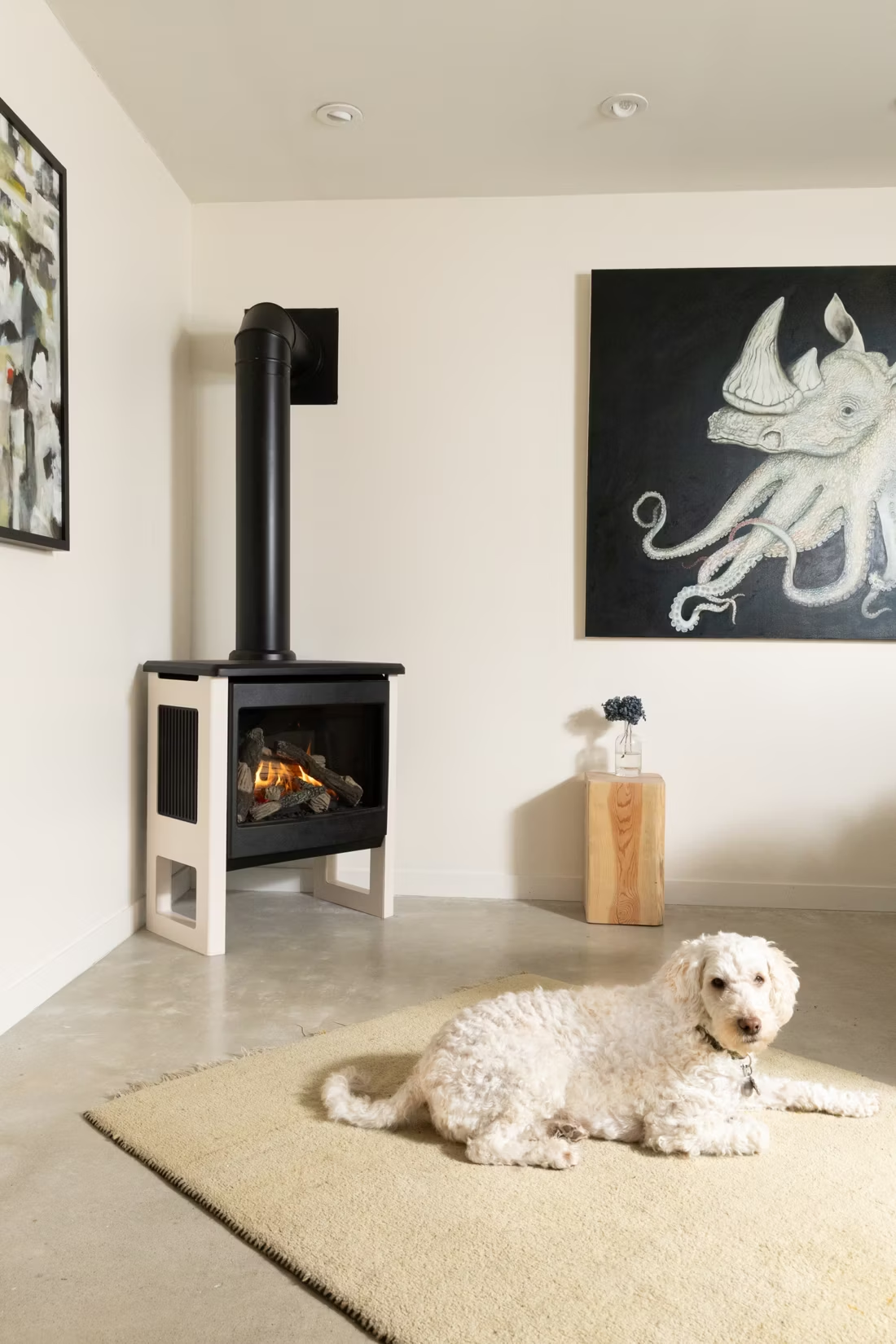
A gas insert is built to drop into an existing masonry firebox, the most common retrofit in a city like Grosse Pointe Park where most housing stock predates 1950 and already has a fireplace opening. A built-in gas fireplace is framed into a wall from scratch, which fits better in additions or newer construction near the water where there is no existing chimney. A freestanding gas stove sits on the floor on its own hearth pad and suits a den or three-season room where you want a stove's footprint rather than a fireplace's. For most Grosse Pointe Park homes with an existing fireplace, the insert is the natural fit.
Do I need a permit to install a gas fireplace in Grosse Pointe Park?
Yes. The City of Grosse Pointe Park Building Department requires a building permit and a licensed gas-fitter for the gas line work on any new fireplace or insert installation. Homes on blocks with historic overlay near the lakefront sometimes face an added review step if the venting termination is visible from the street, so it's worth flagging with your installer early. Most established local hearth dealers handle the permit application and inspection scheduling as part of the installation, so you are not coordinating the city and a separate gas-fitter yourself.
What's the difference between vented and vent-free gas fireplaces?
Vented, or direct-vent, units draw combustion air from outside and exhaust it back outside through sealed pipe, so none of the combustion byproducts enter the house. Vent-free units burn without any outside venting at all, legal in Michigan under specific room-size and oxygen-sensor rules, but they release water vapor and trace combustion gases into the living space. In a well-sealed, well-insulated older Grosse Pointe Park home, that extra humidity can be a real problem in winter. Direct-vent is the far more common recommendation from local dealers here, and it's what most homeowners end up choosing.
How often should a gas fireplace be serviced?
Plan on an annual inspection, ideally in early fall before the first cold snap. A technician checks the burner, pilot or ignition system, venting, and gas connections, and cleans the glass. This is a quick visit compared to wood chimney sweeping, usually well under an hour, and it's the main thing that keeps a direct-vent unit safe and under warranty. Local gas appliance service techs typically charge in the $150 to $225 range for this visit.
Gas vs. electric fireplace, which makes more sense in Grosse Pointe Park?
With winters comparable to Buffalo, NY and average winter lows around 17°F, a gas fireplace or insert can genuinely offset your furnace's workload, since a mid-size direct-vent unit puts out real, sustained heat. An electric fireplace, by contrast, is closer to supplemental ambiance: install costs are much lower, often $400 to $1,200, but the heat output tops out around what a space heater does, and running it steadily adds up at DTE's residential rate of about 20 cents per kWh (Wyandotte Municipal customers pay closer to 16 cents). For a family room you actually want to heat through a Michigan winter, gas is the more practical choice; for a bedroom or a unit without a chimney, electric can make sense.
Why is a fireplace insert so efficient?
An insert does two things: it seals the chimney completely, so you stop losing air you already paid to heat, and it radiates warmth into the room through the firebox and glass. Most add a heat-exchange fan that pulls cool room air underneath, wraps it around the hot firebox, and pushes it back out warm. Your home is more efficient before you've even lit the first fire.
What does it take to replace an existing fireplace?
Fireplaces are like icebergs—bigger behind the wall than in front of it. Replacement means removing the surrounding tile or stone (the finish material laps onto the fireplace face), pulling the old unit, setting the new one in the same enclosure, and re-finishing the wall. A hearth professional can determine what's behind your wall without demolition during an in-home preview.
Does a fireplace add value to my home?
On average, a fireplace adds back to the home about the same amount you spent installing it. Add the monthly savings from heating the rooms you actually use instead of the whole house—often hundreds of dollars a year—and the value case is strong before you even count what a fire does for how your family uses the room.
Can I install a fireplace myself?
If you're putting a fire in your house on purpose, it's best to work with an expert. Unless you're genuinely experienced in framing, gas line, vent pipe, and the national code on clearances to combustibles, have a professional do it—and ideally the same company that sells you the fireplace, so warranty, service, and liability all live under one roof.
Nearby Dealers
Hearth shops serving Grosse Pointe Park and the surrounding area. Every listing shows whether it is a WhyFire partner, a dealer we have verified as authorized for the brands we recommend, or a local business carrying hearth products. No manufacturer pays for placement. How we verify dealers →
Marquis Fireplace Ltd.
Syles
Scott’s Fireplace
AirMaster
Bourlier & Sons Inc
Fireside Hearth & Home - Royal Oak
Fireside Hearth & Home - Utica
American Grill And Patio
Bourlier's (Macombs)
Allstate By Watsons
Allstate Billiards, Patio, Fireplace
Glenn's Fireplace & Spa
This Is It Shop's House Of Fire
Premier Furniture
Fireside Hearth & Home - Canton
Find your gas fireplace in Grosse Pointe Park.
Tell us about your home and we will put together a free Project Guide & Parts List, the exact fireplace, insert, or vent kit for your space, and match you with a trusted local dealer in Wayne County.
Find Your Fireplace →