
Instant Warmth for Hamtramck's Tight-Lot Bungalows.
Clean, on-demand heat for a city of narrow lots and century-old housing stock. Find the right gas fireplace or insert, and connect with a trusted local dealer.
Every Project Starts From One of These Five Situations
Built for density, heated with gas.
Hamtramck packs roughly 27,800 people into just over two square miles, a grid of narrow lots and early-1900s bungalows, duplexes, and brick two-flats built shoulder to shoulder along alleyways. Winters here run cold and long—average lows near 20°F and a heating season on par with what homeowners in Madison or Minneapolis deal with each winter. Furnaces and boilers do the heavy lifting, but a gas fireplace or insert adds zone heat to a front room or converts a decorative old masonry fireplace into something that actually earns its keep.
Wood stoves and pellet stoves are essentially off the table in Hamtramck's housing stock—most lots don't have room for dry firewood storage, and pellet venting clearance requirements are tough to meet on homes set just a few feet from the neighbor's siding. Gas doesn't have that problem. DTE, which supplies natural gas across most of Wayne County alongside electric service, already reaches nearly every block in the city, and a direct-vent gas insert can drop into an existing chimney that hasn't held a real fire in decades. The result is real heat, no ash, no wood storage, and a footprint that actually fits a Hamtramck lot.
Three steps. No salesperson until you're ready.
Tell us about your project
Your zip code, your situation, and the fuel you're leaning toward—or let the answers point you to one.
See what's actually available
The brands dealers within 100 miles genuinely carry—real options, never a catalog mirage.
Get your dealer & Project Guide
A trusted local dealer, plus the free Project Guide & Parts List that names every component of the job.
Frequently Asked Questions
How much does a gas fireplace installation cost in Hamtramck?
Most gas fireplace and insert installations in Hamtramck run $4,000 to $9,500. The low end covers a direct-vent insert dropped into an existing masonry fireplace where a gas line already serves the house—common in the city's older bungalows and two-flats. The higher end applies to homes needing a new gas line run from the meter, framing for a built-in unit, or venting through brick veneer on a rowhouse-style home where the run isn't straightforward. Local dealers will give you a firm number after seeing the chimney or wall condition in person.
Can I convert my old fireplace to gas?
Yes, and it's the most common gas project in Hamtramck's older housing stock. Many of the city's early-1900s bungalows and duplexes were built with a masonry fireplace that's sat unused or been sealed off for years. A gas insert with a stainless liner run up the existing flue turns that into working heat again, typically for $4,000 to $8,000 depending on the chimney's condition and whether a gas line already reaches that room. If the flue has deteriorated brick or was never lined, expect the estimate to include liner and masonry work before the insert goes in.
Will venting clearance be a problem on my lot?
It can be, and it's worth flagging before you fall in love with a specific unit. Direct-vent gas fireplaces terminate through an exterior wall and require minimum clearance from property lines, windows, doors, and soffit vents—code minimums that get tight fast on a 30-foot-wide Hamtramck lot with a duplex two feet from the fence. A local installer will check your specific termination point against the setback rules before ordering equipment; in some cases a top-vent or different placement solves it. This is one of the clearest reasons to work with a dealer who's installed on Hamtramck-style lots before rather than guessing from a big-box spec sheet.
Will a gas fireplace work if the power goes out?
Most will, with the right ignition system. Units with IPI (intermittent pilot ignition) run off small AA batteries built into the unit, so they light on demand even when DTE's grid is down—useful in a Michigan winter storm when outages can run a day or more. Valor units go a step further: their pilot generates its own electricity through the thermocouple, so there's no battery to remember to replace. Standing-pilot models also work without power but use more gas year-round to keep the pilot lit. Ask your local dealer which ignition type is on any model you're considering.
Fireplace, insert, or stove—which fits my house?
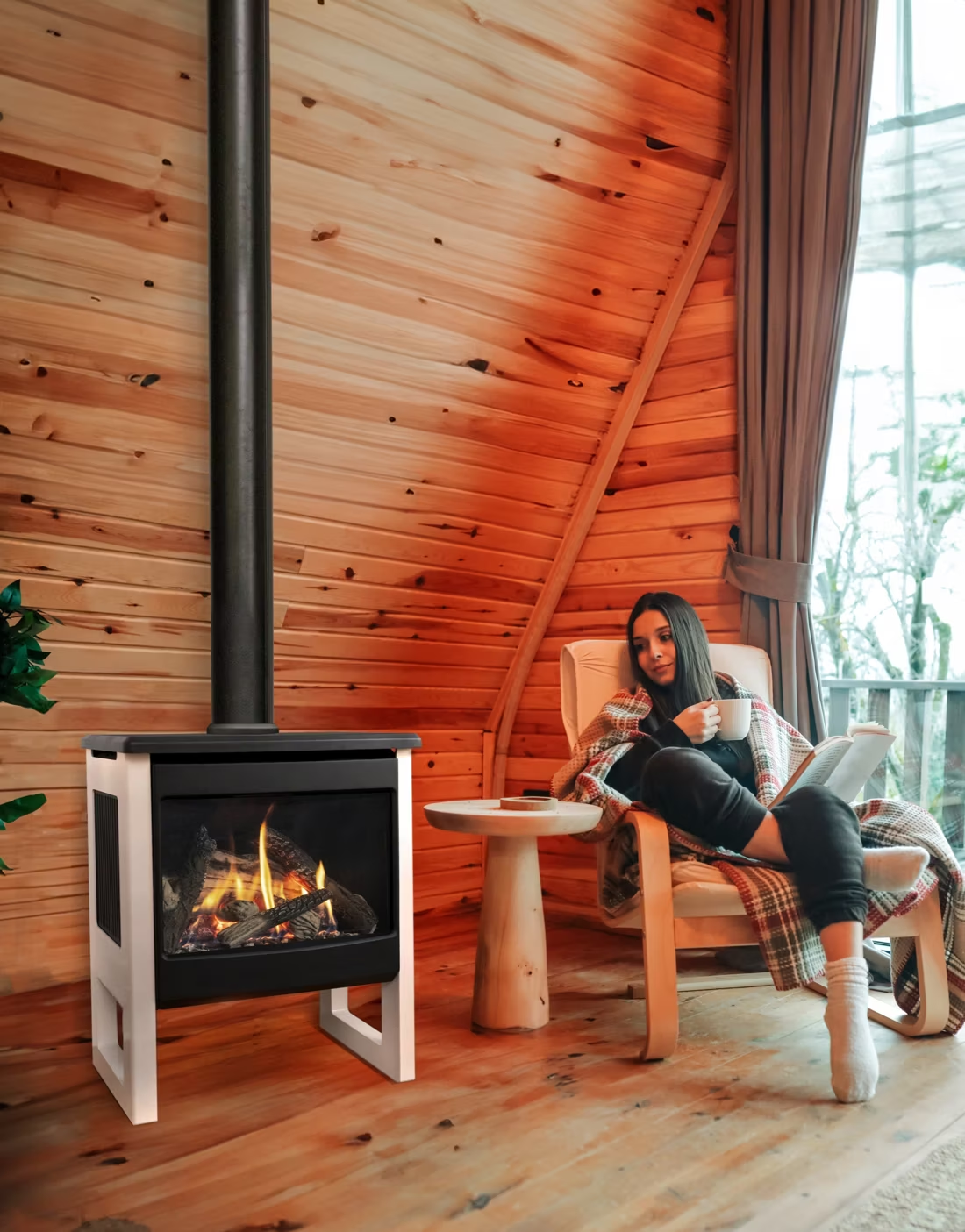
A built-in gas fireplace works for new construction or a full remodel where you're framing a wall from scratch—not the typical Hamtramck project. A gas insert is designed to slide into an existing masonry opening, which is exactly what most of the city's older homes already have. A freestanding gas stove sits on the floor and vents through a nearby wall, which can work well in a smaller row-style home without an existing fireplace at all, since it doesn't require framing a full surround. For most Hamtramck homeowners with a fireplace they already have, the insert is the straightforward answer.
Do I need a permit to install a gas fireplace in Hamtramck?
Yes. The City of Hamtramck Building Department requires a building permit for the installation, and the gas line work needs a separate permit pulled by a licensed gas-fitter. Most hearth dealers coordinate both as part of the install so you're not chasing two different trades and two different inspections. Given how close Hamtramck's houses sit to each other, the inspector will also confirm your vent termination meets clearance to the property line and any adjacent structure—one more reason to have a dealer familiar with the city's lot sizes handle the paperwork.
Should I get a vented or vent-free gas fireplace?
Vented (direct-vent) units draw combustion air from outside and exhaust it back outside through a sealed pipe—they're the safer, more universally recommended choice and the one most Hamtramck dealers install by default. Vent-free units burn fuel directly into the room and are legal in Michigan under specific room-size and ventilation rules, but Hamtramck's housing stock skews toward smaller rooms in older bungalows, which makes it harder to meet the cubic-footage minimums vent-free code requires. For most homes here, a direct-vent insert or fireplace is the simpler, lower-risk path—ask your local dealer to walk through both if you want to weigh it yourself.
How often does a gas fireplace need to be serviced?
Plan on an annual inspection, ideally in early fall before the heating season starts. A certified technician checks the burner, pilot assembly, venting, and gas connections, and cleans the glass and interior—a much lighter job than chimney sweeping but still important, especially on older units feeding from original gas lines. Local gas appliance service providers typically charge $150 to $250 for the visit. Skipping it for several years is how sooted glass and pilot problems turn into a mid-winter no-heat call.
Why doesn't anyone install wood stoves in Hamtramck?
It's mostly a matter of geometry. Hamtramck's lots are narrow, homes sit close together, and there's rarely room to season and store cords of firewood the way homeowners can in a rural Michigan setting. Regionally, oak, maple, birch, and ash are the common firewood species, but very few local dealers stock or install wood-burning equipment for a market this dense—clearance requirements and insurance considerations on tight lots push nearly everyone toward gas. If you're set on a wood-burning unit, a dealer can tell you honestly whether your specific lot and chimney can support one; for most Hamtramck homes, gas is simply the fuel that fits.
Can I put a TV above my fireplace?
Yes—with an asterisk. Fireplaces are hot and TVs don't like heat. Either put a mantel between them to deflect rising warmth, or choose a fireplace with heat-management technology that creates a cool zone on the wall above—the wall stays around 125 degrees, barely warm, while the room still gets full heat. If you like clean lines and don't want a mantel, heat management is the answer.
Is my gas fireplace wasting gas?
If it was installed more than 15 years ago, probably. Older gas fireplaces keep a standing pilot light burning all the time, and that little flame can cost a couple hundred dollars a year. Newer models use pilot-on-demand ignition—the pilot lights only when you use the fireplace and goes out when you turn it off.
How much should I budget for a fireplace?
For an average home—covering the fireplace, the vent pipe, and basic installation—a budget between $3,900 and $5,500 gives you a lot of options across wood, gas, and pellet. By the time you add finish work, gas line, and electrical, the average complete installation lands between $5,000 and $12,000 all-in. In a remodel or new build, a good rule is to put about 2.5% of the total project cost toward the fireplace.
What is an in-home preview and do I need one?
It's a visit where a hearth professional measures your space, confirms the model you picked actually works in your home, and walks the specs—framing, gas line, venting, finish work—before anything is ordered. Some details you just can't know until you see the house. Never make a down payment without one; it's the single most-skipped step that burns buyers.
Nearby Dealers
Hearth shops serving Hamtramck and the surrounding area. Every listing shows whether it is a WhyFire partner, a dealer we have verified as authorized for the brands we recommend, or a local business carrying hearth products. No manufacturer pays for placement. How we verify dealers →
AirMaster
Fireside Hearth & Home - Royal Oak
Marquis Fireplace Ltd.
Syles
Bourlier & Sons Inc
Allstate By Watsons
Allstate Billiards, Patio, Fireplace
Scott’s Fireplace
Fireside Hearth & Home - Utica
American Grill And Patio
Glenn's Fireplace & Spa
This Is It Shop's House Of Fire
Premier Furniture
Creative Design Build Associates
Bourlier's (Macombs)
Fireside Hearth & Home - Canton
Grate Fireplace Shop
Find your gas fireplace in Hamtramck.
Tell us a bit about your home and we'll put together a free Project Guide & Parts List—the right gas fireplace or insert, the vent kit it needs, and a trusted local dealer to install it.
Find Your Fireplace →