
Instant heat for Inkster's long, gray winters.
With a heavy winter heating load and winter lows averaging 18°F, Inkster homes need heat that turns on at the flip of a switch. Find the right gas fireplace or insert and get matched with a trusted local dealer.
Every Project Starts From One of These Five Situations
Reliable heat without splitting a single log.
Inkster sits low in the Detroit River basin at about 629 feet elevation, in a climate zone (5A) that puts it in the same cold-but-not-brutal category as Madison, Wisconsin—long heating seasons, gray winter stretches, and average lows around 18°F that make supplemental room heat genuinely useful, not just decorative. Wood heat never took hold here the way it has in more rural parts of Michigan; Inkster is a densely built Wayne County suburb with small lots, no nearby public timberland, and no local firewood-cutting permit program, so wood stoves and pellet appliances are rare in this market.
What does work here is gas. DTE Energy's natural gas network covers nearly all of Inkster's residential streets, and the same company (through DTE Electric) supplies the power grid that keeps modern ignition systems running. Wyandotte Municipal Services also serves electric customers just south of the city. A direct-vent gas fireplace or insert gives Inkster homeowners real, radiant heat with none of the wood handling, ash cleanup, or storage space that wood heat would require—a better fit for the 1950s and '60s brick ranch housing stock that makes up much of the city.
Three steps. No salesperson until you're ready.
Tell us about your project
Your zip code, your situation, and the fuel you're leaning toward—or let the answers point you to one.
See what's actually available
The brands dealers within 100 miles genuinely carry—real options, never a catalog mirage.
Get your dealer & Project Guide
A trusted local dealer, plus the free Project Guide & Parts List that names every component of the job.
Frequently Asked Questions
How much does a gas fireplace installation cost in Inkster?
Most gas fireplace and insert installations in the Inkster area run roughly $4,000 to $10,000, depending on the unit, the venting path, and whether a new gas line needs to be run. Converting an existing masonry fireplace—common in Inkster's older brick ranch homes—to a direct-vent gas insert tends to land on the lower-to-middle end if a gas line already serves the house. New construction, additions, or homes needing a fresh gas line from the meter push toward the higher end. A local dealer will give you a firm number after seeing your fireplace and chimney in person.
Can I convert my existing wood-burning fireplace to gas?
Yes, and it's one of the more common projects for Inkster homeowners with an older masonry fireplace that rarely gets used for wood. A gas insert slides into the existing firebox and vents through a stainless liner run up your current chimney, so you keep the look of the fireplace while gaining real, adjustable heat output. Since wood-cutting permits and firewood supply aren't really part of the local landscape here, most homeowners find the gas conversion is both the more practical and the more usable option long-term.
Do I need natural gas service, or is propane an option in Inkster?
Nearly every residential street in Inkster is already served by DTE Energy's natural gas lines, so propane is rarely necessary. If you already have gas appliances—a furnace, water heater, or range—adding a fireplace usually just means tapping into an existing line, which keeps installation costs down. Propane only tends to come up for detached garages, additions, or outbuildings that sit far from the existing gas meter and would require an expensive line extension.
Will my gas fireplace still work if the power goes out?
Most modern direct-vent gas fireplaces will, as long as they use an IPI (intermittent pilot ignition) system with battery backup—the AA batteries inside the unit take over automatically when DTE's grid drops, which happens periodically in southeast Michigan during ice storms and summer thunderstorms. Valor units go a step further: their pilot generates its own electricity through the thermocouple, so there's no battery to remember at all. Worth asking your local dealer about the ignition system on any model you're considering, especially since a fireplace that only runs on wall power is of no use during the outage it's meant to help with.
Gas fireplace, insert, or stove—which fits my Inkster home?
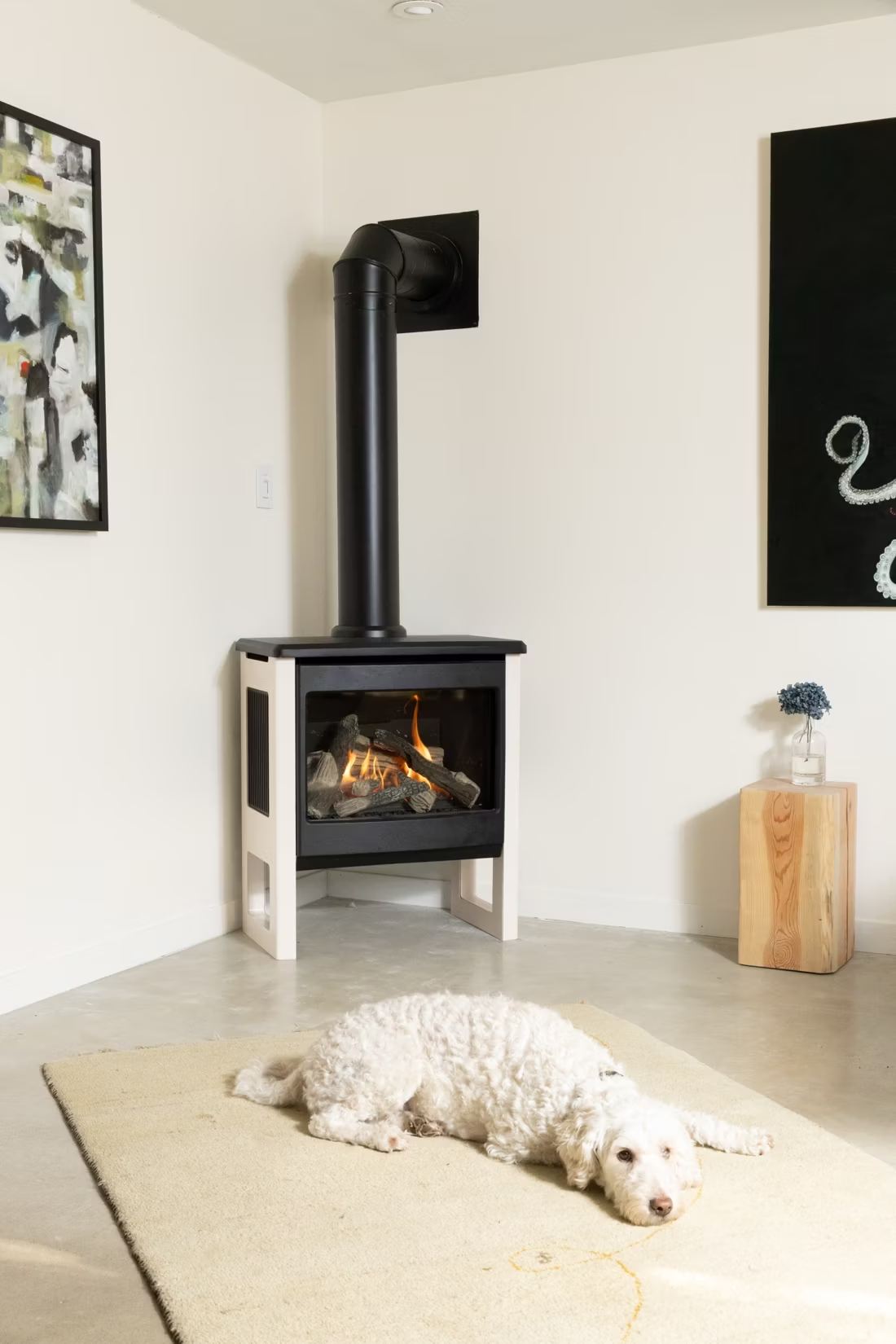
A gas insert fits into an existing masonry firebox and is the right call for the many Inkster homes built with a fireplace in the 1950s and '60s that could use a heat and efficiency upgrade. A built-in gas fireplace is framed into a wall and suits new construction, additions, or rooms with no existing chimney. A freestanding gas stove sits on the floor like a wood stove but runs on gas—a good option if you want visible flame and heat in a space like a finished basement or converted garage without the cost of framing a full fireplace enclosure.
Do I need a permit to install a gas fireplace in Inkster?
Yes. The City of Inkster Building Department requires a permit for gas fireplace installations, and any new or modified gas line has to be run by a licensed gas fitter and inspected before it's covered or concealed. Most established hearth dealers coordinate the building permit, the gas line work, and the final inspection as part of the installation, so homeowners typically don't have to manage separate trades or paperwork themselves.
Should I choose a vented or vent-free gas fireplace?
Vented (direct-vent) gas fireplaces draw combustion air from outside and exhaust it back outside through a sealed pipe—they're code-compliant everywhere and put out real, usable heat, which matters through Inkster's long heating season. Vent-free units burn without any outside venting and release some water vapor and combustion byproducts into the room; Michigan permits them with strict room-sizing and ventilation rules, but for a home you're heating through a full Michigan winter, a direct-vent unit is almost always the better long-term choice. Ask a local dealer to walk through both if you're weighing the tradeoff.
How often does a gas fireplace need to be serviced?
Plan on an annual inspection, ideally before the start of the fall heating season. A certified technician checks the burner, pilot assembly, venting, and gas connections, and cleans the glass and interior—a straightforward visit that typically runs $150 to $250 in the metro Detroit area. It's a smaller job than chimney sweeping for wood units, but skipping it is how minor issues like a dirty flame sensor or a failing thermocouple turn into a fireplace that won't light on a cold January morning.
Why does everyone in Inkster seem to install gas instead of wood?
Wood heat is genuinely uncommon here—Inkster's tight residential lots don't leave much room for dry firewood storage, there's no nearby public forest with a cutting-permit program the way there is in more rural parts of Michigan, and most homes are already tied into DTE's gas network. A handful of homeowners still use wood-burning fireplaces for occasional ambiance, but almost nobody in Inkster relies on wood as a heat source. Gas fills that role instead: it lights instantly, needs no fuel storage, and works well alongside the central furnace that heats most homes here through the coldest stretches of winter.
Can I put a TV above my fireplace?
Yes—with an asterisk. Fireplaces are hot and TVs don't like heat. Either put a mantel between them to deflect rising warmth, or choose a fireplace with heat-management technology that creates a cool zone on the wall above—the wall stays around 125 degrees, barely warm, while the room still gets full heat. If you like clean lines and don't want a mantel, heat management is the answer.
What's the difference between an insert and a zero-clearance fireplace?
An insert is a fireplace that slides into a pre-existing wood-burning fireplace—if you don't have one, there's nothing to insert it into. A zero-clearance fireplace is built into a framed wall, which makes it the answer for remodels and new construction. Simple test: existing masonry fireplace means insert; blank or framed wall means zero-clearance.
How much should I budget for a fireplace?
For an average home—covering the fireplace, the vent pipe, and basic installation—a budget between $3,900 and $5,500 gives you a lot of options across wood, gas, and pellet. By the time you add finish work, gas line, and electrical, the average complete installation lands between $5,000 and $12,000 all-in. In a remodel or new build, a good rule is to put about 2.5% of the total project cost toward the fireplace.
Does a fireplace add value to my home?
On average, a fireplace adds back to the home about the same amount you spent installing it. Add the monthly savings from heating the rooms you actually use instead of the whole house—often hundreds of dollars a year—and the value case is strong before you even count what a fire does for how your family uses the room.
Nearby Dealers
Hearth shops serving Inkster and the surrounding area. Every listing shows whether it is a WhyFire partner, a dealer we have verified as authorized for the brands we recommend, or a local business carrying hearth products. No manufacturer pays for placement. How we verify dealers →
Allstate By Watsons
Allstate Billiards, Patio, Fireplace
Premier Furniture
Glenn's Fireplace & Spa
Fireside Hearth & Home - Canton
AirMaster
This Is It Shop's House Of Fire
Fireside Hearth & Home - Royal Oak
Grate Fireplace Shop
Creative Design Build Associates
Syles
Marquis Fireplace Ltd.
Scott’s Fireplace
Big George’s
Big Georges Appliance Mart
Find your gas fireplace in Inkster.
Tell us a bit about your home and we'll match you with a trusted local dealer and send you a free Project Guide & Parts List—the exact fireplace or insert, vent kit, and installation plan for your Inkster gas project.
Find Your Fireplace →