
Steady pellet heat for Hampshire County's long, cold winters.
From the Connecticut River Valley floor in Northampton and Hadley to the hill towns above Worthington and Chesterfield, pellet stoves deliver thermostat-controlled heat through a long, demanding winter that keeps furnaces working overtime. Find the right unit and get matched with a trusted local dealer.
Every Project Starts From One of These Five Situations
Automated warmth built for a Connecticut River Valley winter.
Hampshire County is a study in contrasts—the flat, fertile valley floor around Northampton, Hadley, and Easthampton, where UMass Amherst and Smith College anchor a dense population corridor, and the quiet hill towns to the west, like Worthington, Chesterfield, Goshen, and Cummington, sitting several hundred feet higher and considerably colder on a still night. Either way, winters here are long. At a winter low average of 14°F and a climate zone of 5A, Hampshire County heats through roughly the same degree-day load as Burlington, Vermont—a season that starts in October and doesn't fully let go until April.
Pellet appliances fit that reality well for a specific kind of household: people who want consistent, thermostat-set heat without tending a firebox every few hours, and who like the tighter, more predictable burn a hopper and auger provide over open cordwood. Regional pellet brands including Lignetics, New England Wood Pellet, and Maine Woods Pellet Co. supply feed stores and hearth shops throughout the Pioneer Valley, so fuel sourcing isn't the obstacle it can be in less-served parts of the country. Hampshire County has no listed air quality non-attainment issues or winter burn curtailments, so unlike some New England counties, pellet owners here aren't navigating a patchwork of burn-ban exemptions—though pellet units qualify for exemption virtually everywhere those rules exist, since they burn cleaner than cordwood by design.
Three steps. No salesperson until you're ready.
Tell us about your project
Your zip code, your situation, and the fuel you're leaning toward—or let the answers point you to one.
See what's actually available
The brands dealers within 100 miles genuinely carry—real options, never a catalog mirage.
Get your dealer & Project Guide
A trusted local dealer, plus the free Project Guide & Parts List that names every component of the job.
Frequently Asked Questions
How much does a pellet stove installation cost in Hampshire County?
A freestanding pellet stove installation in Hampshire County typically runs $3,500 to $6,500, depending on the unit, whether you need a new through-wall vent kit, and any hearth pad work required for clearance. A pellet insert into an existing masonry fireplace—common in the older housing stock around Northampton and Amherst—tends to land in a similar range, since it reuses the chimney chase for venting rather than requiring new roof penetration. Costs run slightly higher for homes in the hill towns (Worthington, Chesterfield, Middlefield) where longer driveways and older wiring sometimes add labor. Ask any local dealer for a firm quote after an in-home look at your space.
What size pellet stove do I need for my home?
Sizing depends on square footage, ceiling height, and whether the stove is your primary heat source or a supplement to oil, propane, or electric baseboard. Small units (up to about 1,000 sq ft) suit a single room or an open first floor in a smaller Northampton or Easthampton home; medium units (1,000–2,000 sq ft) cover most Cape and colonial layouts common in the valley; larger units handle bigger or less-insulated homes, including older farmhouses out toward Belchertown and Ware. Homes at higher elevation in the western hill towns generally run colder overnight than the valley floor at the same square footage, so it's worth sizing up slightly if you're in Worthington or Goshen. A local dealer will size the stove based on an actual home visit rather than a square-footage chart alone.
Where can I find certified pellet stove installers near me?
Look for dealers whose installers carry NFI (National Fireplace Institute) certification, which covers proper venting, clearance, and combustion-air requirements for pellet appliances specifically. Certified dealers serving Hampshire County typically cover the Northampton–Amherst–Easthampton corridor as their core territory, with service extending out to South Hadley, Belchertown, and the western hill towns for an additional trip charge. Because pellet stoves rely on electric components—the auger motor, igniter, and combustion blower—a dealer who also handles routine service calls is worth more than one who only sells the box and disappears. Avoid a general contractor install; pellet venting has specific horizontal-run and termination clearance rules that differ from wood stove chimneys.
What's the difference between a pellet stove and a pellet insert?
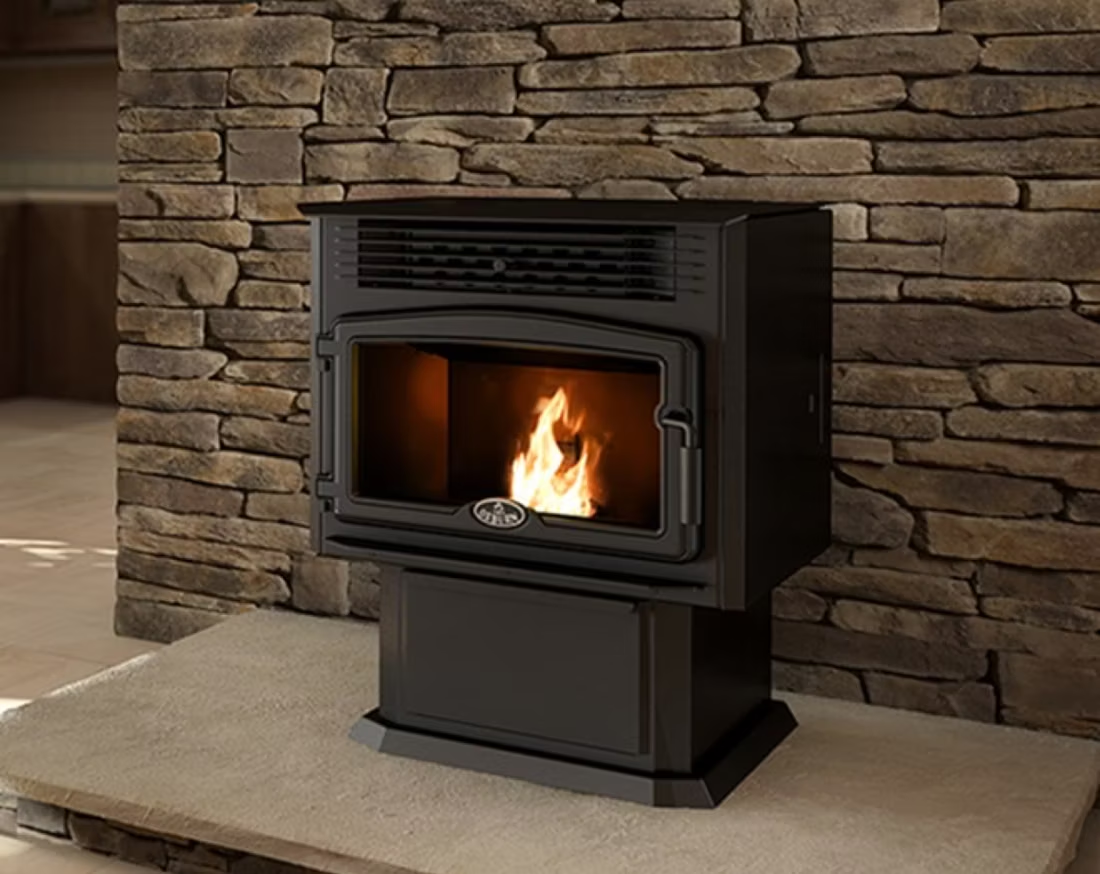
A pellet stove is a freestanding appliance that sits on a hearth pad and vents through an exterior wall or existing chimney—it can go almost anywhere in a room with the right clearances, which makes it a good fit for newer Hampshire County homes without an existing fireplace. A pellet insert is built to slide into an existing masonry fireplace opening, which is common in the older colonial and farmhouse stock around Hadley, Hatfield, and Northampton's historic districts. The insert uses your existing chimney chase (with a proper liner) rather than requiring new venting, so it's often the simpler retrofit if you already have a fireplace you rarely use.
Do I need a permit to install a pellet stove in Hampshire County?
Yes, but there's a wrinkle worth knowing: Hampshire County doesn't operate a county building department. Massachusetts building permits are issued at the town level, so whether you're in Northampton, Amherst, Easthampton, South Hadley, or one of the smaller hill towns like Chesterfield or Plainfield, your permit goes through that town's own building inspector, not a county office. Most established hearth dealers pull the permit as part of the installation and are familiar with the specific inspector in each town they serve, which saves you from having to figure out which office to call.
What's the best pellet stove for Hampshire County's climate?
At a winter low average of 14°F and with a long, demanding heating season, Hampshire County homes benefit from a pellet stove with a large enough hopper to run through a long overnight burn without needing a refill at 2 a.m.—look at models from Harman, Lopi, or Enviro with 40-plus pound hoppers if you want overnight coverage. For fuel, regional brands like Lignetics, New England Wood Pellet, and Maine Woods Pellet Co. are widely stocked at Pioneer Valley hearth and feed stores, so you're not relying on mail-order pellets. If you're heating a drafty older farmhouse in the hill towns as a primary source, size up; if you're supplementing central heat in a newer Amherst or Easthampton home, a mid-size unit with a lower burn-rate setting will run more efficiently on mild days.
How much maintenance does a pellet stove need?
Pellet stoves need more frequent light maintenance than wood stoves, but less heavy annual work. Plan on emptying the ash pan and wiping the glass every few days during regular use, and a deeper cleaning of the burn pot, auger, and exhaust fan every few weeks depending on how many bags you're running through. An annual professional inspection—checking the exhaust venting, gaskets, and electrical components—is still worth scheduling before the season starts, similar to a chimney sweep for a wood system. Because the auger and blower are mechanical parts, a stove that's been neglected is more likely to have a service call mid-winter than one that's been kept up.
Where can I buy pellets in Hampshire County?
Regional brands including Lignetics, New England Wood Pellet, and Maine Woods Pellet Co. are commonly stocked at hearth shops, hardware stores, and farm supply retailers throughout the Pioneer Valley, with Northampton, Hadley, and Easthampton serving as the main retail hubs for the county. Pellets typically run in the $280 to $380 per ton range depending on brand and time of year, with prices often ticking up if you wait until mid-winter to stock up. Many Hampshire County households buy a season's supply—roughly 2 to 3 tons for an average home—in late summer or early fall when pricing and availability are both at their best.
Pellet stove vs. wood stove—which is right for my home?
Wood stoves burn cordwood—locally, oak, maple, birch, and ash are the common species split among Hampshire County's hill-town woodlots—and they keep running without electricity, which matters during the ice storms that occasionally knock out power in this part of the Pioneer Valley. Pellet stoves trade that off-grid resilience for convenience: load the hopper, set the thermostat, and the auger and igniter handle the rest, with a cleaner, more consistent burn and far less ash. If reliable backup heat during an outage is the priority—especially out in the hill towns where outages can run longer—a wood stove or an insert with a battery backup blower is worth considering alongside a pellet unit. For households that want set-and-forget heat and don't need it to double as storm backup, pellet is usually the easier day-to-day choice.
Why is my open fireplace making my house colder?
Open fireplaces suck—literally. As the fire burns, it consumes air your furnace already paid to heat and pulls it out through the chimney, so the house is actually colder after the fire goes out than before you lit it. An insert fixes this: it seals the chimney, puts fixed glass across the front, and turns that hole in your house into a real heat source.
Why is a fireplace insert so efficient?
An insert does two things: it seals the chimney completely, so you stop losing air you already paid to heat, and it radiates warmth into the room through the firebox and glass. Most add a heat-exchange fan that pulls cool room air underneath, wraps it around the hot firebox, and pushes it back out warm. Your home is more efficient before you've even lit the first fire.
What is an in-home preview and do I need one?
It's a visit where a hearth professional measures your space, confirms the model you picked actually works in your home, and walks the specs—framing, gas line, venting, finish work—before anything is ordered. Some details you just can't know until you see the house. Never make a down payment without one; it's the single most-skipped step that burns buyers.
Can a fireplace actually lower my heating bill?
Yes—by creating a comfort zone. A furnace heats every square foot of the house just to warm the one room you're in; a gas fireplace on low burns roughly a sixth of the gas a typical furnace does. Set the furnace around 55–60 degrees as a baseline, then heat the rooms your family actually uses. Families who heat this way commonly save $20–$60 a month.
Stove and Fireplace Dealers in Hampshire County
Pellet Brands Stocked Around Hampshire County
Manufacturers will point you to the nearest stocking dealer.
Find your pellet stove in Hampshire County.
Tell us about your home and heating goals, and we'll put together a free Project Guide & Parts List—the right pellet stove or insert, the vent kit it needs, and a trusted local Hampshire County dealer to install it.
Find Your Fireplace →