
Electric warmth for Hampshire County's oldest farmhouses and newest apartments.
No chimney, no gas line, no permit headaches—just plug-in or hardwired heat for the Connecticut River Valley towns and the hilltowns above them. Find the right unit and connect with a trusted local dealer.
Every Project Starts From One of These Five Situations
The heat option that skips the chimney and the permit line.
Hampshire County runs from the flat, densely settled river towns of Northampton, Hadley, and Amherst up into hilltowns like Cummington, Chesterfield, and Worthington, where elevation and exposure push winters harder than the valley floor suggests. At roughly 6,664 heating degree days and a winter low averaging 14°F—a profile similar to Burlington, VT or Madison, WI—this is a place that heats seriously for five or six months a year. The county's housing stock splits two ways: 18th- and 19th-century farmhouses that were never built with a masonry chimney suited to a modern insert, and a huge concentration of rental apartments and condos driven by the Five Colleges—UMass Amherst, Smith, Mount Holyoke, Amherst College, and Hampshire College. Neither situation is a great fit for cutting into a wall for gas line or running new masonry.
That's where electric fireplaces earn their place here. A plug-in insert or wall-mount unit needs nothing more than an outlet—or a dedicated 240V circuit for larger built-ins—and most landlords and homeowners can add one without touching the chimney, the roofline, or a fuel line. Eversource serves most of the county, with Belchertown Municipal Light Department and South Hadley Electric Light Department covering their respective towns; either way, running an electric unit is straightforward and the install itself is fast. It won't replace a woodstove for whole-home heat in a drafty Cummington farmhouse at 14°F, but for zone heat in a bedroom, a converted den, or a Northampton triple-decker unit, it's often the only realistic option.
Three steps. No salesperson until you're ready.
Tell us about your project
Your zip code, your situation, and the fuel you're leaning toward—or let the answers point you to one.
See what's actually available
The brands dealers within 100 miles genuinely carry—real options, never a catalog mirage.
Get your dealer & Project Guide
A trusted local dealer, plus the free Project Guide & Parts List that names every component of the job.
Frequently Asked Questions
How much does an electric fireplace installation cost in Hampshire County?
A basic plug-in electric insert or freestanding stove-style unit runs $300 to $1,000 installed, since it just needs a standard 120V outlet—most homeowners in Northampton or Amherst rentals can even do this without hiring anyone. A built-in linear unit recessed into a wall, framed out with a mantel surround, and wired to a dedicated 240V circuit by a licensed electrician typically runs $1,500 to $3,500, depending on the wall work and finish materials. Hilltown installs in Cummington, Goshen, or Worthington sometimes run slightly higher if an electrician has to extend wiring further from the panel in an older farmhouse.
Can I install an electric fireplace in a rental apartment in Amherst or Northampton?
In most cases, yes—plug-in electric inserts and freestanding units are popular exactly because they require no permanent alteration to the unit. Given the size of the Five College rental market across Amherst and Northampton, this is one of the most common electric fireplace scenarios in the county. Wall-mounted or recessed built-ins are a different story since they involve cutting into drywall or running new circuits, which requires landlord approval and, in most cases, an electrical permit through the local building department.
Will an electric fireplace actually heat my Hampshire County home?
Most electric fireplaces are rated around 1,500 watts, which translates to roughly 5,000 BTU—enough to noticeably warm a single room, but not enough to serve as primary heat for a whole house when temperatures drop into the teens or single digits, which happens regularly in the hilltowns above Northampton. Think of it as zone heat: warming the room you're actually sitting in so you can turn down the thermostat elsewhere, or providing supplemental heat in a converted sunroom or finished basement that the furnace doesn't reach well.
Do I need a permit to install an electric fireplace in Hampshire County?
A simple plug-in unit generally doesn't require a permit anywhere in the county. A built-in unit that requires new electrical wiring—a dedicated 240V circuit, for example—typically requires an electrical permit through the local building department (Northampton, Amherst, and Easthampton each handle their own; smaller hilltowns route through their town office) and should be pulled by a licensed electrician. Framing or wall modifications for a recessed unit may also trigger a building permit depending on scope. Local dealers who handle installation typically manage this paperwork as part of the job.
What's the difference between an electric insert, a wall-mount, and an electric stove?
An electric insert is built to slide into an existing fireplace opening—common in Hampshire County homes with an old masonry firebox that's no longer safe or practical to burn wood in. A wall-mount or linear built-in is designed to be recessed into a wall or hung like a large-format TV, popular in newer condos and renovated units in Northampton and Easthampton. A freestanding electric stove mimics the look of a cast-iron woodstove and needs nothing more than floor space and an outlet—a common choice for renters in Amherst and Hadley who want the aesthetic without any wall work.
What's a good electric fireplace for an old Hampshire County farmhouse versus a newer condo?
For an older farmhouse with plaster walls and knob-and-tube wiring still lurking in places, a plug-in freestanding stove-style unit avoids any electrical work entirely and can be moved room to room as heating needs change through the season. For a newer condo or renovated unit in Northampton or Easthampton with modern wiring already in place, a recessed linear built-in from a brand like Dimplex or Napoleon gives a cleaner, more architectural look and can be wired into a dedicated circuit without much fuss. A local dealer can tell you quickly which wiring situation you're dealing with.
Electric vs. wood—which makes more sense in Hampshire County?
Wood is genuinely abundant here—oak, maple, birch, and ash are common in the county's woodlots and sold by local firewood dealers—and a woodstove or insert will out-heat an electric unit by a wide margin during a January cold snap, plus it keeps working when the power goes out. But wood requires an existing or new chimney, annual sweeping, and permitted clearances, which is a real barrier in a rental apartment or a farmhouse with a chimney that hasn't been used in decades. Electric skips all of that. Many Hampshire County households end up using wood as their primary heat source in the living room and electric as a low-effort supplement in a bedroom, office, or finished basement.
How much does it cost to run an electric fireplace in Hampshire County?
A typical 1,500-watt electric fireplace running on high costs roughly 20 to 30 cents per hour at current Eversource residential rates, or somewhat less for households served by the Belchertown or South Hadley municipal light departments, which often post lower per-kWh rates than the investor-owned utility. Run for a few hours a night to take the edge off a chilly room, that adds up to a modest monthly cost—nowhere near what it costs to heat the same space with oil or propane, but also not a substitute for a well-sized woodstove if you're trying to meaningfully cut a whole-home heating bill.
Will my electric fireplace work if the power goes out?
No—an electric fireplace is entirely dependent on grid power, and it will shut off the moment the electricity does. That matters in Hampshire County, where nor'easters and ice storms periodically knock out power in the hilltowns above Northampton for a day or more. If backup heat during an outage is a real concern for your household, a wood or pellet stove with electricity-free operation (a straight wood-burning unit, not a pellet stove, which needs power for its auger) is worth pairing with an electric unit rather than relying on electric alone.
Can I put a TV above my fireplace?
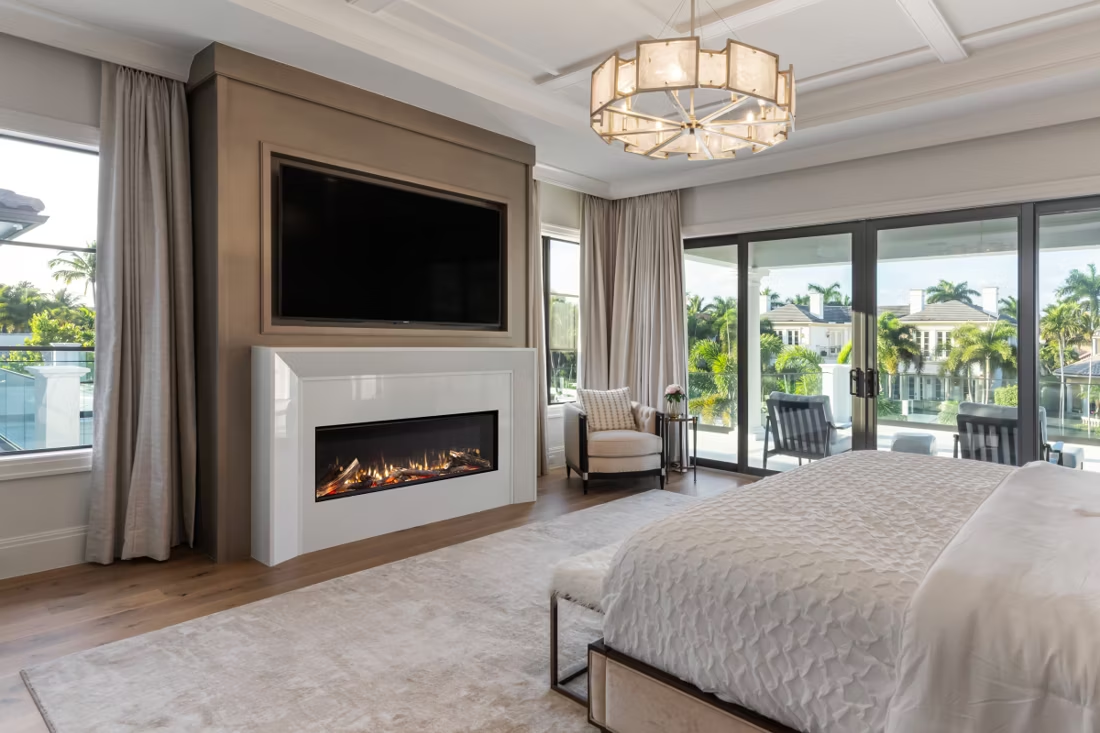
Yes—with an asterisk. Fireplaces are hot and TVs don't like heat. Either put a mantel between them to deflect rising warmth, or choose a fireplace with heat-management technology that creates a cool zone on the wall above—the wall stays around 125 degrees, barely warm, while the room still gets full heat. If you like clean lines and don't want a mantel, heat management is the answer.
Does an electric fireplace need a vent or chimney?
No—that's its superpower. An electric fireplace needs a wall and an outlet, period. No vent pipe, no gas line, no clearances to design around, which is why it works in bedrooms, offices, apartments, and walls where venting a gas or wood unit would be impractical or impossible. Installation is typically the simplest and least expensive of any fireplace type.
Can a fireplace actually lower my heating bill?
Yes—by creating a comfort zone. A furnace heats every square foot of the house just to warm the one room you're in; a gas fireplace on low burns roughly a sixth of the gas a typical furnace does. Set the furnace around 55–60 degrees as a baseline, then heat the rooms your family actually uses. Families who heat this way commonly save $20–$60 a month.
Does a fireplace add value to my home?
On average, a fireplace adds back to the home about the same amount you spent installing it. Add the monthly savings from heating the rooms you actually use instead of the whole house—often hundreds of dollars a year—and the value case is strong before you even count what a fire does for how your family uses the room.
Stove and Fireplace Dealers in Hampshire County
Find your electric fireplace in Hampshire County.
Tell us about your home—farmhouse, condo, or rental—and we'll put together a free Project Guide & Parts List with the right electric fireplace, the parts you need, and a trusted local dealer to install it.
Find Your Fireplace →