
Thermostat-Controlled Warmth for Northampton's Long Winters.
Set the thermostat, fill the hopper, and let the auger do the work—pellet heat built for the Pioneer Valley's cold, wet winters. Find the right stove or insert and connect with a trusted local dealer.
Every Project Starts From One of These Five Situations
Automated heat for a city of historic homes and cold nights.
Northampton sits at just 212 feet in the Connecticut River Valley, but that low elevation doesn't spare it from a real New England winter—average lows around 14°F and a winter heating season about as demanding as Burlington, VT's put it in the same range as that city. Between Elm Street's Victorians, the older housing stock around Smith College, and the farmhouses out toward Florence and Leeds, a lot of Northampton's homes were built long before modern insulation standards, which is exactly the kind of housing stock where a pellet stove earns its keep as steady, zone-based supplemental heat.
Northampton has no local air quality burn restrictions, so pellet appliances run without the curtailment concerns some Western cities deal with—though pellet stoves already burn clean enough to sidestep most of those issues anyway. Regional pellet brands like New England Wood Pellet (milled in NH from Northeast hardwood and softwood residuals), Lignetics, and Maine Woods Pellet Co. are all readily available through Hampshire County dealers, so you're not relying on truck freight from out of region. And with electric rates from Eversource (NSTAR) and National Grid (Massachusetts Electric) running close to 20–23 cents per kWh, a pellet stove's operating cost is often meaningfully lower than electric baseboard for the rooms where you actually spend your time.
Three steps. No salesperson until you're ready.
Tell us about your project
Your zip code, your situation, and the fuel you're leaning toward—or let the answers point you to one.
See what's actually available
The brands dealers within 100 miles genuinely carry—real options, never a catalog mirage.
Get your dealer & Project Guide
A trusted local dealer, plus the free Project Guide & Parts List that names every component of the job.
Frequently Asked Questions
How much does a pellet stove installation cost in Northampton?
A freestanding pellet stove installation in Northampton typically runs $3,500 to $6,500, covering the unit, a code-compliant hearth pad, dedicated electrical outlet, and through-the-wall direct venting. A pellet insert installed into an existing masonry fireplace usually costs a bit more, often $4,000 to $7,500, because it involves fitting a liner and adapter kit into the existing flue. Homes without an existing chimney or hearth—common in some of Northampton's older triple-deckers and farmhouses—tend to land toward the higher end once wall framing and venting penetrations are factored in. A local dealer can give you a firm number after seeing the room.
How is a pellet stove different from a wood stove?
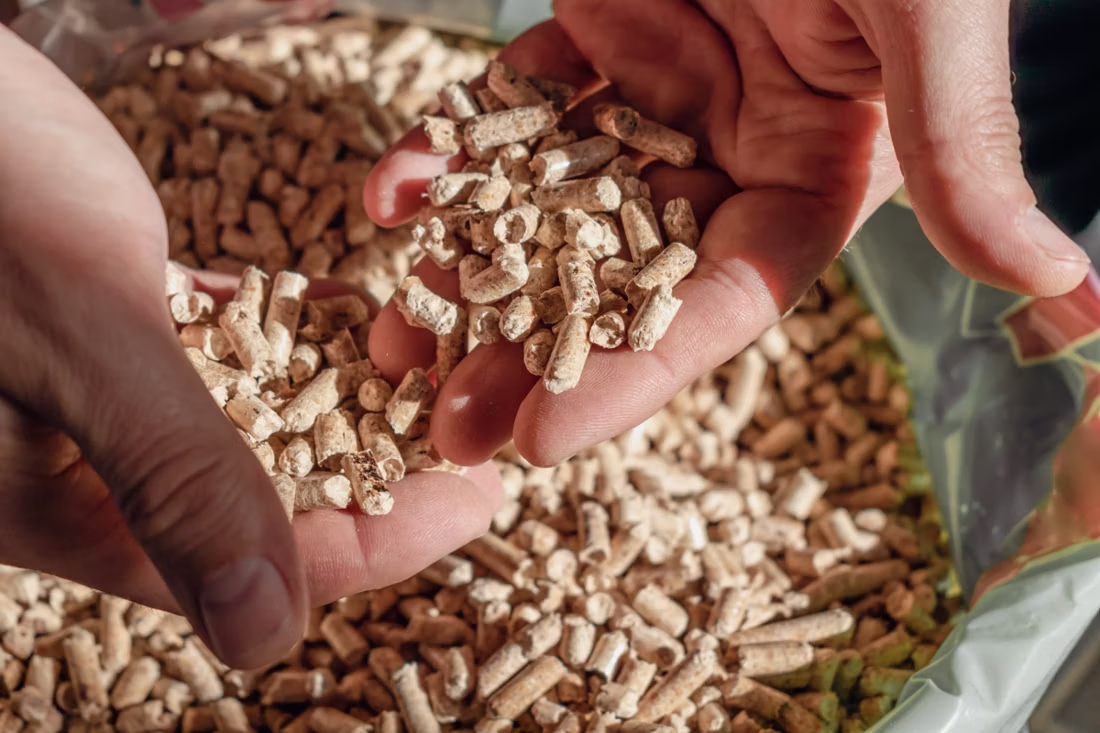
A wood stove burns cordwood you load by hand and control mostly through the air intake damper. A pellet stove burns compressed hardwood pellets fed automatically from a hopper by an auger, with a thermostat controlling burn rate—you set a temperature and the stove maintains it, similar to a furnace. That convenience comes with a tradeoff: pellet stoves need electricity to run the auger, igniter, and combustion blower, so they go dark in a power outage unless you have battery backup. Hampshire County has plenty of oak, maple, birch, and ash if you're set on cutting and splitting your own wood, but for homeowners who want set-it-and-forget-it heat without the wood pile, pellet is the more hands-off option.
Where can I buy pellets in Northampton?
New England Wood Pellet, milled in New Hampshire, is one of the most widely stocked brands throughout the Pioneer Valley, alongside Lignetics and Maine Woods Pellet Co. Local hardware stores and Agway-style farm supply outlets in and around Northampton typically carry all three during heating season. Premium hardwood pellets generally run $250 to $320 per ton in this region, and most local dealers recommend buying a season's supply (roughly 2-3 tons for an average home) early—pellets often sell out or jump in price once cold weather hits and demand spikes.
Do I need a permit to install a pellet stove in Northampton?
Yes. The City of Northampton Building Department requires a permit for any new solid-fuel or biomass appliance installation, including pellet stoves and inserts, along with an inspection of the venting and clearances once installed. Most local hearth dealers handle the permit application and schedule the inspection as part of the installation, so you typically aren't filing paperwork yourself. Unlike wood, pellet fuel isn't self-harvested, so there's no cutting permit to worry about—just the building permit for the appliance itself.
Will my pellet stove work during a power outage?
Not without backup power. Pellet stoves rely on electricity to run the hopper auger, igniter, and combustion blower, so a standard unit shuts down the moment the power drops. Given how often winter nor'easters and ice storms knock out power around Hampshire County, many Northampton homeowners pair their pellet stove with a small battery backup system or a portable generator sized to handle the stove's modest draw (usually under 100 watts on the run cycle). If backup heat during outages is a priority, mention it to your local dealer—some pellet models are pre-wired for a simple UPS-style battery hookup.
Are there rebates available for pellet stoves in Massachusetts?
Mass Save periodically offers rebates and incentives for high-efficiency heating equipment, and pellet stoves have qualified in past program years as a renewable biomass heating option. Program terms and rebate amounts change from year to year, so it's worth checking current Mass Save offerings before you buy, or asking your local dealer directly—most hearth retailers stay current on what's eligible and can help with the paperwork if a rebate applies to your purchase.
What size pellet stove do I need for my Northampton home?
Sizing depends on square footage, ceiling height, and how drafty the home is—a real factor in a city with as much pre-1950s housing stock as Northampton. As a general guide: smaller units (under 1,000 sq ft) suit a single large room or open-concept addition, mid-size stoves (1,000-2,000 sq ft) handle most main living areas, and larger units (2,000+ sq ft) can carry more of a whole-home heating load in a well-insulated house. Hopper capacity matters too—a bigger hopper means longer run time between refills, which is worth asking about if you're planning to use the stove as your primary heat source overnight. A local dealer will size the unit to your actual floor plan during an in-home visit.
How much maintenance does a pellet stove need?
Pellet stoves need more frequent light maintenance than a wood stove, but far less heavy cleaning. Plan to empty the ash pan every few days to weekly during regular use, and clean the burn pot and glass every one to two weeks depending on pellet quality. A full professional cleaning and inspection—including the exhaust venting, combustion blower, and auger mechanism—is recommended annually, ideally before the start of heating season each fall. Skipping the annual service is the most common cause of feed jams and reduced efficiency over time.
Pellet stove vs. gas fireplace—which makes more sense for my home?
Gas fireplaces offer instant on-off operation and, with the right ignition system, can keep running during a power outage—a real advantage during a Hampshire County ice storm. Pellet stoves need electricity to operate at all, but they burn a renewable, regionally-milled fuel and often cost less to run than electric resistance heat given National Grid and Eversource's current rates in the low-to-mid 20-cent range. For a primary living space where you want zero fuel handling, gas is usually the simpler choice. For a supplemental heat source in a den, sunroom, or older part of the house that runs cold, a pellet stove's steady, thermostatically-controlled output is hard to beat. Many Northampton homes end up running both—gas in the main living area, pellet in a secondary zone.
Why is a fireplace insert so efficient?
An insert does two things: it seals the chimney completely, so you stop losing air you already paid to heat, and it radiates warmth into the room through the firebox and glass. Most add a heat-exchange fan that pulls cool room air underneath, wraps it around the hot firebox, and pushes it back out warm. Your home is more efficient before you've even lit the first fire.
What does it take to replace an existing fireplace?
Fireplaces are like icebergs—bigger behind the wall than in front of it. Replacement means removing the surrounding tile or stone (the finish material laps onto the fireplace face), pulling the old unit, setting the new one in the same enclosure, and re-finishing the wall. A hearth professional can determine what's behind your wall without demolition during an in-home preview.
What is an in-home preview and do I need one?
It's a visit where a hearth professional measures your space, confirms the model you picked actually works in your home, and walks the specs—framing, gas line, venting, finish work—before anything is ordered. Some details you just can't know until you see the house. Never make a down payment without one; it's the single most-skipped step that burns buyers.
How much should I budget for a fireplace?
For an average home—covering the fireplace, the vent pipe, and basic installation—a budget between $3,900 and $5,500 gives you a lot of options across wood, gas, and pellet. By the time you add finish work, gas line, and electrical, the average complete installation lands between $5,000 and $12,000 all-in. In a remodel or new build, a good rule is to put about 2.5% of the total project cost toward the fireplace.
Nearby Dealers
Hearth shops serving Northampton and the surrounding area.
Pellet Brands Stocked Around Northampton
Manufacturers will point you to the nearest stocking dealer.
Find your pellet stove in Northampton.
Tell us about your home and heating goals, and we'll match you with a trusted local dealer plus a free Project Guide & Parts List—the exact equipment, vent kit, and installation plan for your pellet project in Northampton.
Find Your Fireplace →