
Find the right fireplace for your Hampshire County home.
Wood, gas, pellet, and electric fireplace guidance for every city and hill town in Hampshire County—from Northampton and Amherst down through Ware and up into Worthington and Plainfield. Get matched with a trusted local hearth retailer who knows what actually works in a Pioneer Valley winter.
Every Project Starts From One of These Five Situations
Hardwood-heated winters across Hampshire County, Massachusetts.
Hampshire County sits in climate zone 5A, with average winter lows around 14°F and roughly 6,664 heating degree days a year—a heating season on par with Burlington, Vermont, just up the Connecticut River watershed. The Pioneer Valley's mixed hardwood forests—oak, maple, birch, and ash—have supplied firewood to local households for generations, and split cordwood remains cheap and plentiful compared to much of New England. Winters here run cold and steady rather than extreme, with the coldest stretches typically hitting in January, but the heating season itself runs long, often October through April.
This hub covers the whole county—Northampton and Amherst in the valley center, Easthampton and South Hadley to the south, Belchertown and Ware toward the Quabbin, and the hill towns of Williamsburg, Goshen, Chesterfield, Cummington, Plainfield, Middlefield, and Worthington to the west. Pick a fuel below to see local dealers, typical installation costs, and the specific units that make sense for a Hampshire County home—whether that's a farmhouse near the Connecticut River or a cabin up in the hills.
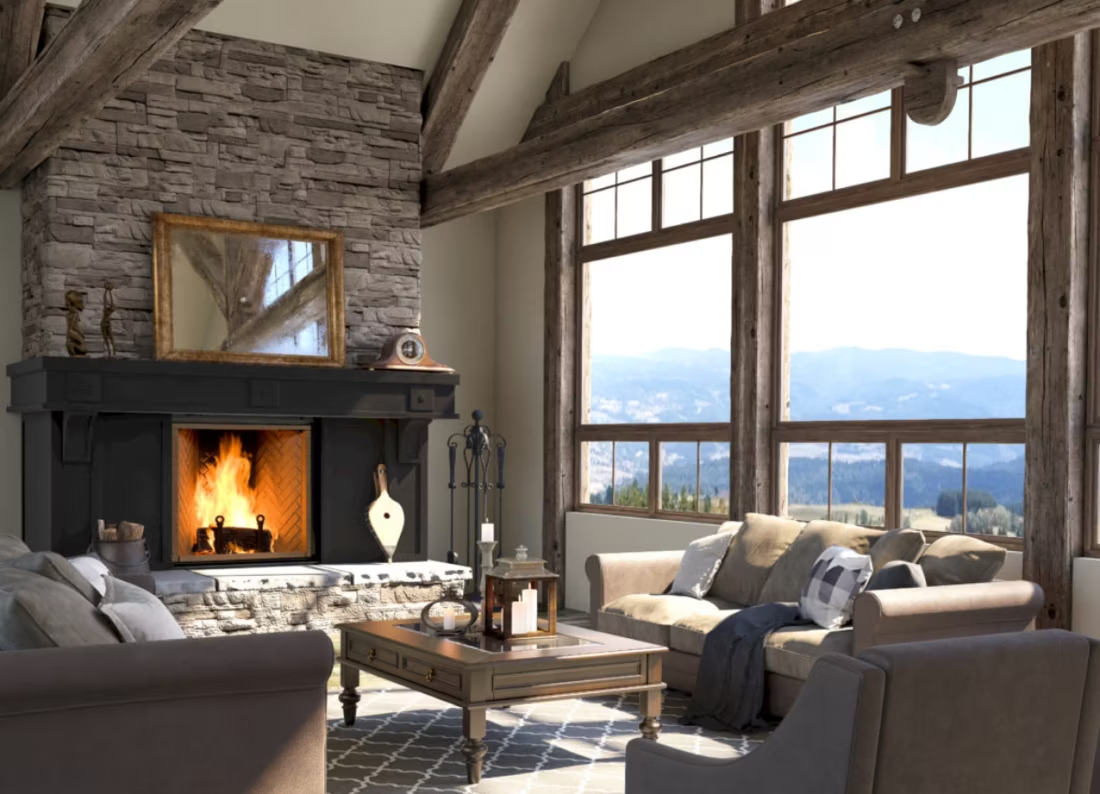
Four fuels. One honest answer for Hampshire County.
Three steps. No salesperson until you're ready.
Tell us about your project
Your zip code, your situation, and the fuel you're leaning toward—or let the answers point you to one.
See what's actually available
The brands dealers within 100 miles genuinely carry—real options, never a catalog mirage.
Get your dealer & Project Guide
A trusted local dealer, plus the free Project Guide & Parts List that names every component of the job.
Frequently Asked Questions
Which fuel works best in Hampshire County?
It depends on the house and the budget. Wood remains a strong choice in the hill towns—Worthington, Chesterfield, Plainfield, and Cummington—where oak, maple, and ash are cut locally and a well-fed catalytic stove can carry a farmhouse through a 14°F January night. Gas is the low-effort option in Northampton, Amherst, and Easthampton, where natural gas service is common—no wood handling, instant heat, easy to zone to one room. Pellet splits the difference: same wood-fire look and steady heat as a wood stove, without the splitting and stacking, and New England Wood Pellet bags are stocked at hardware stores across the valley. Electric fireplaces are supplemental almost everywhere in the county—good for a bedroom, a den, or a rental unit, but not a realistic sole heat source through a Massachusetts winter. Plenty of Hampshire County homes run two systems: wood or pellet as the workhorse, gas or electric for convenience in a secondary room.
Do I need a permit to install a fireplace in Hampshire County?
Yes, in almost every case. Hampshire County doesn't have a single county building department—each town issues its own permits, so a wood stove installed in Northampton goes through the Northampton building inspector, while the same job in Belchertown or Ware goes through that town's inspector. New wood stoves and inserts need to meet current EPA 2020 NSPS emissions standards to pass inspection. Gas fireplace and insert installs need both a building permit and a licensed plumber or gas-fitter for the line work—that's true whether you're on natural gas in Amherst or running propane out in Worthington or Plainfield. Electric fireplaces are usually permit-free unless they're hardwired into a new circuit. Most local retailers handle the paperwork with your town's office as part of the installation, so you're not filing it yourself.
Are there air quality restrictions on wood burning in Hampshire County?
No—Hampshire County doesn't sit in a non-attainment zone or experience the winter inversions that trigger burn advisories in basin communities out West. There's no yellow/red curtailment system here. That said, new wood stove and insert installations still need to meet EPA 2020 NSPS emissions standards, and a well-seasoned load of local oak or maple will always burn cleaner and hotter than green or wet wood, which matters for chimney buildup as much as for smoke. If you're replacing an older pre-1990s stove, ask your retailer about current efficiency gains—even without a mandatory program, newer catalytic and non-catalytic stoves burn noticeably cleaner than what they're replacing.
Can one local hearth retailer handle all four fuel types?
Several Hampshire County retailers carry three or four fuel types, which makes cross-shopping easier if you're not sure yet what fits your home. A dealer that carries wood, gas, pellet, and electric can put you in front of working displays of each and walk through the trade-offs for your specific house—chimney condition, gas line access, budget. Smaller shops sometimes specialize—a stove shop focused mainly on wood and pellet, for instance, with less depth on gas fireplaces. Ask upfront what a retailer stocks and installs before you drive out for a showroom visit; the fuel-specific pages above note each dealer's coverage.
How does service work in rural areas of Hampshire County?
Technicians based in the Northampton-Amherst area typically travel out to the hill towns—Worthington, Chesterfield, Goshen, Plainfield, Middlefield, Cummington—and out east toward Ware and the Quabbin. Expect a modest trip fee for the more remote calls, and expect scheduling to tighten up fast once the weather turns in October and November—booking your annual chimney sweep or gas inspection in late summer avoids the mid-winter wait. If you're on a dirt road or a long driveway that doesn't get plowed fast, mention that when you book; some techs plan rural routes on specific days of the week.
What's the typical cost range for fireplace installation across all fuel types in Hampshire County?
Costs vary by fuel and by how much existing infrastructure you have. Wood stove or insert: roughly $4,000–$8,500 for a typical install, more if a chimney needs relining or rebuilding. Gas fireplace, insert, or stove: roughly $4,000–$10,000, with cost driven mostly by how far the gas line has to run and whether direct venting is straightforward. Pellet stove or insert: roughly $4,000–$7,000 installed. Electric fireplace: $200–$3,000 for the unit itself, plus $300–$1,000 in labor for anything beyond a plug-and-play wall unit. The fuel-specific pages above break these down further with local retailer pricing.
Does a fireplace add value to my home?
On average, a fireplace adds back to the home about the same amount you spent installing it. Add the monthly savings from heating the rooms you actually use instead of the whole house—often hundreds of dollars a year—and the value case is strong before you even count what a fire does for how your family uses the room.
How much should I budget for a fireplace?
For an average home—covering the fireplace, the vent pipe, and basic installation—a budget between $3,900 and $5,500 gives you a lot of options across wood, gas, and pellet. By the time you add finish work, gas line, and electrical, the average complete installation lands between $5,000 and $12,000 all-in. In a remodel or new build, a good rule is to put about 2.5% of the total project cost toward the fireplace.
Wood, gas, pellet, or electric—how do I choose?
Match the fuel to your life, not the other way around. Wood: lowest fuel cost and total power-outage independence, but you're hauling and stacking. Gas: press a button, set a thermostat, no maintenance to speak of. Pellet: wood economics with automatic feeding, in exchange for weekly cleaning and a need for electricity. Electric: plugs in anywhere with honest supplemental heat. Nobody regrets the fuel that fits how they actually live.
What is an in-home preview and do I need one?
It's a visit where a hearth professional measures your space, confirms the model you picked actually works in your home, and walks the specs—framing, gas line, venting, finish work—before anything is ordered. Some details you just can't know until you see the house. Never make a down payment without one; it's the single most-skipped step that burns buyers.
Stove and Fireplace Dealers in Hampshire County
Listings include WhyFire partner dealers, dealers we have verified as authorized for the brands we recommend, and established local businesses that carry hearth products. Every listing shows which one it is. The ones marked Preferred run on WhyFire's software, so they can show you real pricing and book your appointment right here. No manufacturer pays for placement. How we verify dealers →
Done Right Chimney
McKenney Electric Dba McKenney Hearth & Home
Olde Hadleigh Hearth & Patio
The Fire Place
Amherst Farmers Supply
Area – Greenfield, Ma
Squier Lumber & Hardware
Bernardston Farmer's Supply
Get matched with a Hampshire County hearth retailer.
Pick your fuel below and we'll match you with a trusted local Hampshire County dealer—plus a free Project Guide & Parts List built around your specific project.
Find Your Fireplace →