
Instant heat, zero hassle—right here in Prince George's County.
From the rowhomes near the DC line to the wooded lots around Upper Marlboro, gas delivers on-demand warmth without the wood stacking. Find the right unit and get matched with a trusted local dealer.
Every Project Starts From One of These Five Situations
Convenience is the default in Prince George's County.
Prince George's County covers more than 500 square miles between the District of Columbia and the Patuxent River—from the dense inner suburbs of Hyattsville and College Park to the quieter, wooded stretches around Upper Marlboro, Croom, and Aquasco. The climate sits in Zone 4A, mixed-humid, with average winter lows near 22°F and a moderate winter heating load. That's a real heating season running late October through March, but nowhere close to the sustained deep-freeze of somewhere like Duluth, MN. Most homeowners here want reliable, low-maintenance heat rather than a wood-tending routine.
Washington Gas provides natural gas service across most of the county's incorporated cities and inner suburbs, while homes in the more rural southern reaches—around Aquasco, Baden, and parts of Cheltenham—more commonly run on propane. There are no county-wide air quality restrictions on combustion appliances here, so the choice between gas fireplace styles comes down to your home's existing fireplace, your gas access, and how much heat output you actually need. Wood stoves and pellet stoves are uncommon in Prince George's County—lot sizes, HOA rules in newer developments, and the mild-enough winters mean gas and electric have become the practical defaults, even though the county's oak, hickory, and maple forests once fueled plenty of hearths.
Three steps. No salesperson until you're ready.
Tell us about your project
Your zip code, your situation, and the fuel you're leaning toward—or let the answers point you to one.
See what's actually available
The brands dealers within 100 miles genuinely carry—real options, never a catalog mirage.
Get your dealer & Project Guide
A trusted local dealer, plus the free Project Guide & Parts List that names every component of the job.
Frequently Asked Questions
How much does a gas fireplace installation cost in Prince George's County?
A typical gas fireplace installation in Prince George's County runs roughly $4,000 to $10,000, depending on the unit, the venting path, and whether new gas line work is required. A direct-vent insert going into an existing masonry fireplace with gas already run to that wall sits toward the lower end. A new built-in gas fireplace in a remodel or addition—with framing, venting, and a fresh gas line from the meter—lands in the middle to upper range. Homes relying on propane, or needing a longer gas line run from the street, tend to land at the higher end. A local dealer will give you a firm number after seeing your home.
Can I convert my existing wood fireplace to gas?
Yes, and it's one of the most common projects for older Prince George's County homes—plenty of the brick colonials and rowhomes near College Park and Hyattsville were built with masonry fireplaces meant for oak or hickory. A gas insert typically installs into that existing chimney using a stainless liner, running $4,000 to $8,500 depending on the insert and whether the home is already plumbed for natural gas or needs propane service. The conversion keeps the look of your existing hearth while eliminating ash cleanup and wood storage—a real advantage on smaller inner-suburb lots where stacking cords isn't practical.
Do I need natural gas, or can I use propane?
Either works, and which one applies depends on where in the county you live. Washington Gas serves natural gas throughout most of the incorporated cities and denser suburbs—Bowie, Laurel, Hyattsville, College Park, and the areas closer to the DC line. In the more rural southern county—Aquasco, Baden, parts of Cheltenham and Croom—propane is the standard fallback, supplied by regional propane companies with either an existing tank or a new tank install. Most gas fireplace models can be configured for either fuel; your installer sets the correct orifice and regulator for whichever you have.
Will my gas fireplace work if the power goes out?
Most modern gas fireplaces are built to run during a power outage. Units with IPI (intermittent pilot ignition) carry a battery backup—typically AA batteries inside the unit—that takes over automatically when the power drops, so the fireplace still lights on demand. Valor's gas fireplaces go a step further: their on-demand pilot generates its own electricity through the thermocouple, so there's no battery to remember at all. For Prince George's County homes, where summer storms and the occasional ice event can knock out power for hours, that's a meaningful backup-heat feature worth asking your local dealer about.
What's the difference between a gas fireplace, gas insert, and gas stove?
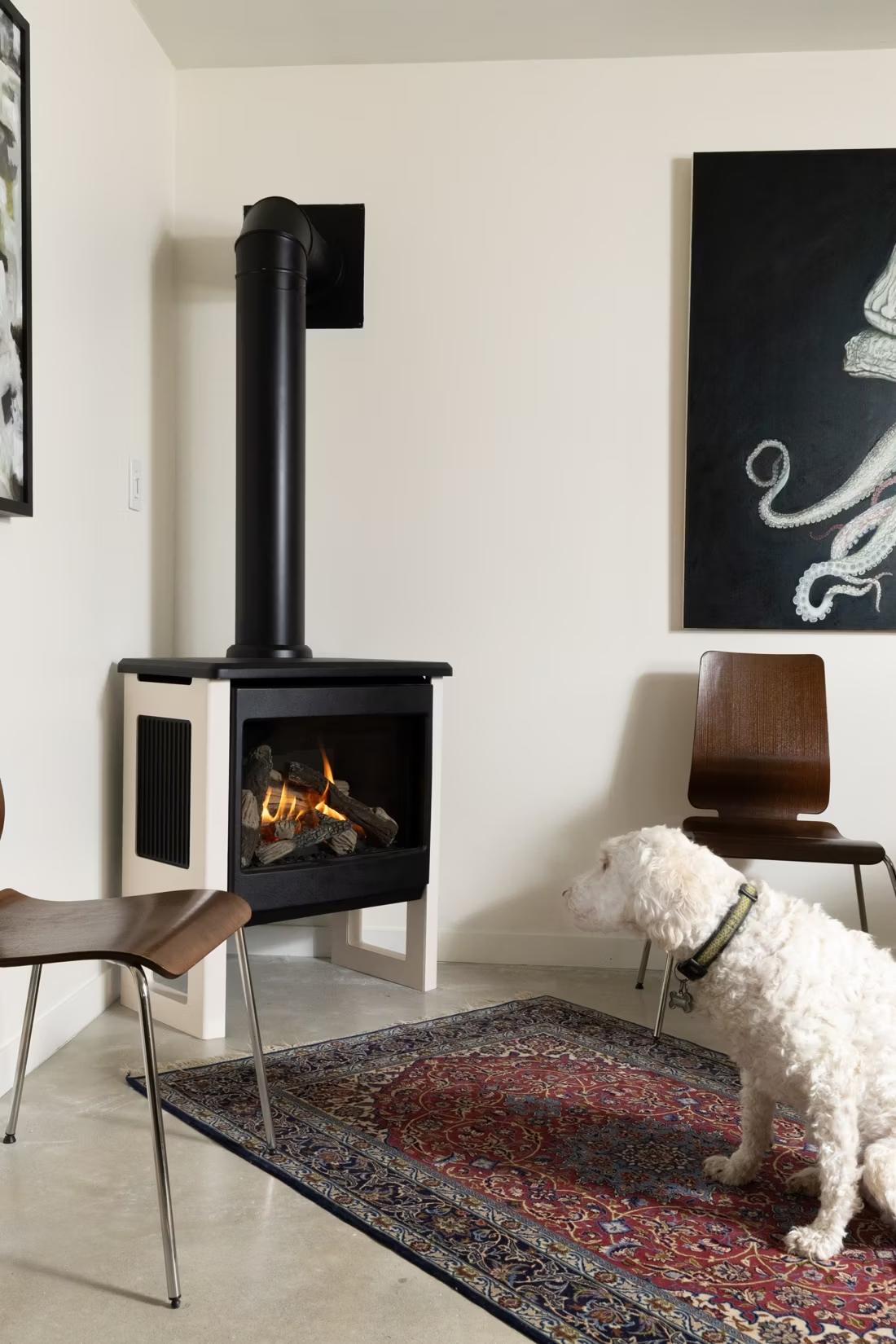
A gas fireplace is a fully built-in unit framed into a wall—the right call for new construction or a remodel without an existing hearth. A gas insert slides into an existing masonry fireplace opening and uses that chimney as the vent path, which fits a lot of the older housing stock around Upper Marlboro and the inner suburbs. A gas stove is a freestanding unit that sits on the floor like a wood stove but burns gas, and works well in a room without any existing fireplace. Most Prince George's County homeowners with a fireplace already in place are best served by an insert; new spaces usually call for a built-in unit.
Do I need a permit to install a gas fireplace in Prince George's County?
Yes—Prince George's County requires a building permit and a gas permit for new gas fireplace installations, both handled through the county's Department of Permitting, Inspections and Enforcement (DPIE). The gas line connection must be done by a licensed gas-fitter, which is one reason to go through a certified hearth dealer rather than a general handyman—they coordinate the gas hookup, venting, and DPIE inspection as one process instead of leaving you to manage separate trades.
Vented vs. vent-free gas fireplaces—what's the difference?
Vented gas fireplaces (direct-vent or B-vent) pull combustion air from outside and exhaust the byproducts back outside through a sealed pipe—the cleanest, safest option and the one most local dealers install by default. Vent-free ("ventless") units burn without any outside venting and release some water vapor and trace combustion gases into the room, which means strict room-sizing rules and an oxygen depletion sensor. Vent-free units are permitted in Maryland with those safeguards, but for Prince George's County homes—especially anything with modern insulation and tighter building envelopes—a direct-vent unit is the more common and more recommended choice. Ask a local dealer to walk through both if you're weighing the tradeoff.
How often does a gas fireplace need to be serviced?
Plan on an annual inspection for any gas fireplace or insert. A technician checks the burner, pilot assembly, venting, and gas connections, and cleans the glass and interior—a much lighter lift than a wood-stove chimney sweep, but still important for safety and for keeping the unit running efficiently through the winter. Most service providers in the county charge in the $150 to $250 range for a standard annual visit.
Gas vs. electric fireplace—which fits my Prince George's County home?
Gas delivers real heat output—enough to actually take the chill off a room on a 22°F night—plus the look and sound of an actual flame, and (with the right ignition system) it keeps working during a power outage. Electric fireplaces install almost anywhere with no venting or gas line at all, cost far less upfront, and work well as supplemental ambiance in a condo, apartment, or room where running gas isn't practical. For primary living spaces in single-family homes across the county, gas is usually the better long-term investment; for renters, secondary bedrooms, or homes without gas access, electric is often the simpler fit. Local dealers can show you both in person.
What's the difference between an insert and a zero-clearance fireplace?
An insert is a fireplace that slides into a pre-existing wood-burning fireplace—if you don't have one, there's nothing to insert it into. A zero-clearance fireplace is built into a framed wall, which makes it the answer for remodels and new construction. Simple test: existing masonry fireplace means insert; blank or framed wall means zero-clearance.
Why is my open fireplace making my house colder?
Open fireplaces suck—literally. As the fire burns, it consumes air your furnace already paid to heat and pulls it out through the chimney, so the house is actually colder after the fire goes out than before you lit it. An insert fixes this: it seals the chimney, puts fixed glass across the front, and turns that hole in your house into a real heat source.
Can a fireplace actually lower my heating bill?
Yes—by creating a comfort zone. A furnace heats every square foot of the house just to warm the one room you're in; a gas fireplace on low burns roughly a sixth of the gas a typical furnace does. Set the furnace around 55–60 degrees as a baseline, then heat the rooms your family actually uses. Families who heat this way commonly save $20–$60 a month.
Does a fireplace add value to my home?
On average, a fireplace adds back to the home about the same amount you spent installing it. Add the monthly savings from heating the rooms you actually use instead of the whole house—often hundreds of dollars a year—and the value case is strong before you even count what a fire does for how your family uses the room.
Stove and Fireplace Dealers in Prince George's County
Find your gas fireplace in Prince George's County.
Tell us a bit about your home and we'll put together a free Project Guide & Parts List—the right gas fireplace or insert, the exact parts including the vent kit, and a trusted local dealer to install it.
Find Your Fireplace →