
Clean Gas Heat for Laurel's Mid-Atlantic Winters.
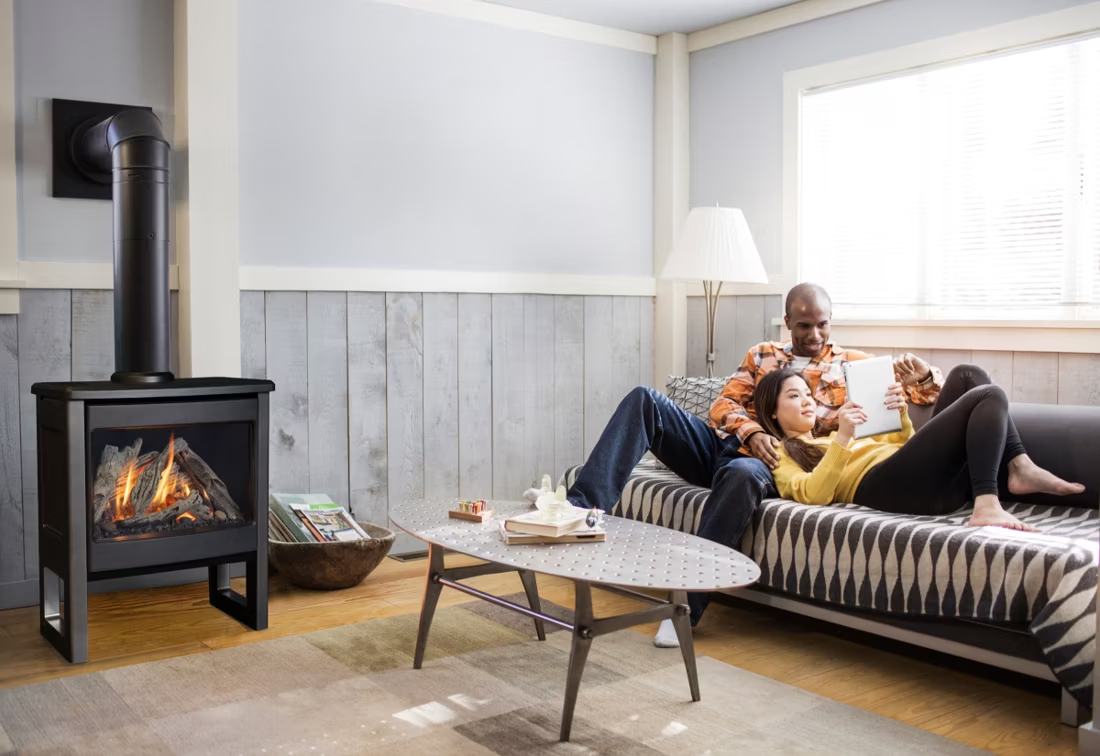
Laurel winters rarely dip below the mid-20s, but when a nor'easter or summer derecho knocks out the power along the Patuxent, a gas fireplace keeps the living room warm without splitting a single log. Find the right unit and connect with a trusted local dealer.
Every Project Starts From One of These Five Situations
Convenient heat for a moderate climate.
At 220 feet elevation between Baltimore and Washington, D.C., Laurel logs around 4,314 heating degree days a year with an average winter low near 26°F—a far cry from the sub-zero stretches homeowners deal with in places like Burlington, VT or Duluth, MN. That milder profile means a gas fireplace here rarely has to carry the whole heat load; it's more often the room you actually want to be in on a cold, damp February evening, plus reliable backup heat when an ice storm or summer derecho takes the grid down.
Natural gas service reaches most of Laurel and the surrounding Prince George's County neighborhoods, so adding a fireplace to a home that already has gas appliances is usually a straightforward tie-in. Wood-burning setups are uncommon here—Laurel's older, closely built neighborhoods and HOA-governed subdivisions leave little room for the cordwood storage and chimney maintenance that wood heat requires, and there's no local firewood-permit infrastructure like you'd find near national forest land out west. That leaves gas as the practical way to get a real, instant flame with none of the ash, smoke, or wood-hauling.
Three steps. No salesperson until you're ready.
Tell us about your project
Your zip code, your situation, and the fuel you're leaning toward—or let the answers point you to one.
See what's actually available
The brands dealers within 100 miles genuinely carry—real options, never a catalog mirage.
Get your dealer & Project Guide
A trusted local dealer, plus the free Project Guide & Parts List that names every component of the job.
Frequently Asked Questions
How much does a gas fireplace installation cost in Laurel?
Most gas fireplace and insert installations in Laurel run somewhere between $3,500 and $9,000, with the spread driven mainly by venting and gas line work. A direct-vent insert going into an existing masonry fireplace with a gas line already nearby sits toward the lower end. A new built-in gas fireplace in a remodel—with fresh framing, direct-vent piping through an exterior wall, and a new gas line run from the meter—lands in the middle to upper range. Prince George's County requires a building permit and a licensed gas-fitter for the line work, and most local installers fold that permitting into the project quote rather than leaving you to chase it down.
I have an old wood-burning fireplace—can it be converted to gas?
Yes, and it's one of the more common jobs local hearth dealers see in Laurel's older homes. Plenty of houses here still have a masonry firebox that was originally built for oak, hickory, or maple cordwood but hasn't seen a real fire in years. A direct-vent gas insert slides into that existing opening, runs a stainless liner up the chimney, and typically costs $4,000 to $8,500 installed depending on the insert and whether new gas line work is needed. You keep the mantel and masonry look, lose the ash and creosote, and gain a fireplace you can actually turn on with a remote.
Do I need natural gas, or is propane more common in Laurel?
Natural gas is the default here—most of Laurel and the surrounding Prince George's County suburbs are already served, so if your home has a gas furnace, water heater, or range, adding a fireplace is usually a simple tap into the existing line. Propane shows up mainly on the fringes of the county where gas mains haven't been extended, or for homeowners who prefer a standalone tank setup. Nearly every gas fireplace model on the market can be configured for either fuel—your installer sets the correct orifice and regulator for whichever you have.
Will my gas fireplace still work if the power goes out?
Most will, with the right ignition system. Units with intermittent pilot ignition (IPI) run on a small battery backup that kicks in automatically when the power drops, so the fireplace still lights on demand. That matters in Laurel, where summer thunderstorms and the occasional ice storm can knock BGE service out for hours at a time. Some brands, like Valor, skip batteries entirely—the pilot's thermocouple generates the small amount of electricity the unit needs to fire itself, so there's nothing to forget to replace. Worth asking about specifically if reliable outage heat is a priority for your home.
What's the difference between a gas fireplace, a gas insert, and a gas stove?
A gas fireplace is a fully built-in unit framed into a wall—the right call for new construction or a full remodel. A gas insert is built to drop into an existing masonry firebox, using your current chimney as the vent path, which fits a lot of Laurel's older housing stock well. A gas stove is a freestanding cast-iron or steel unit that sits out on the floor, similar in footprint to a wood stove but running on gas. If you've already got a fireplace opening you want to upgrade, an insert is almost always the simpler and more cost-effective path.
Do I need a permit to install a gas fireplace in Laurel?
Yes. New gas fireplace installations require a building permit and gas permit through Prince George's County's Department of Permitting, Inspections and Enforcement (DPIE), and the gas line connection has to be done by a licensed gas-fitter. In practice, most established hearth dealers handle the permit filing and inspection scheduling as part of the install, so it's rarely something the homeowner has to manage directly—but it's worth confirming before you hire anyone doing the work off the books.
Should I get a vented or vent-free gas fireplace?
Vented (direct-vent) fireplaces pull combustion air from outside and exhaust exhaust gases back outside through sealed piping—they're the more universally accepted option and the one most Laurel installers default to. Vent-free units burn directly into the room air and are permitted in Maryland within limits on room size and BTU output, but they release some water vapor and combustion byproducts indoors, which is a real consideration in smaller, tightly sealed rooms typical of Laurel's rowhomes and split-levels. For most homeowners here, a direct-vent unit is the simpler, lower-maintenance choice—ask your local dealer to walk through both if you're on the fence.
How often does a gas fireplace need to be serviced?
Plan on an annual inspection, ideally in early fall before you start using it regularly through the winter. A technician checks the burner, pilot assembly, venting, and gas connections, and cleans the glass and interior—a much lighter lift than wood-stove chimney sweeping, but still important since a cracked seal or blocked vent can let combustion gases back into the house. Local gas appliance service techs in the Laurel area typically charge $150 to $250 for a standard annual visit.
Should I get gas or consider a wood-burning fireplace instead?
For most Laurel homes, gas is the far more practical choice. Wood-burning setups are genuinely uncommon in this part of Prince George's County—lot sizes, HOA rules, and the lack of nearby public land for cutting permits (the kind of infrastructure that supports wood heat out west) make cordwood storage and chimney upkeep impractical for most homeowners here. Gas gives you the same instant, real-flame ambiance and dependable backup heat during a power outage, without needing anywhere to stack a cord of oak or hickory. If you inherited a wood-burning fireplace with the house, converting it to a gas insert is usually the more livable long-term option.
Is my gas fireplace wasting gas?
If it was installed more than 15 years ago, probably. Older gas fireplaces keep a standing pilot light burning all the time, and that little flame can cost a couple hundred dollars a year. Newer models use pilot-on-demand ignition—the pilot lights only when you use the fireplace and goes out when you turn it off.
Can I put a TV above my fireplace?
Yes—with an asterisk. Fireplaces are hot and TVs don't like heat. Either put a mantel between them to deflect rising warmth, or choose a fireplace with heat-management technology that creates a cool zone on the wall above—the wall stays around 125 degrees, barely warm, while the room still gets full heat. If you like clean lines and don't want a mantel, heat management is the answer.
Can a fireplace actually lower my heating bill?
Yes—by creating a comfort zone. A furnace heats every square foot of the house just to warm the one room you're in; a gas fireplace on low burns roughly a sixth of the gas a typical furnace does. Set the furnace around 55–60 degrees as a baseline, then heat the rooms your family actually uses. Families who heat this way commonly save $20–$60 a month.
What is an in-home preview and do I need one?
It's a visit where a hearth professional measures your space, confirms the model you picked actually works in your home, and walks the specs—framing, gas line, venting, finish work—before anything is ordered. Some details you just can't know until you see the house. Never make a down payment without one; it's the single most-skipped step that burns buyers.
Nearby Dealers
Hearth shops serving Laurel and the surrounding area.
Find your gas fireplace in Laurel.
Tell us a bit about your home and we'll match you with a trusted local dealer and send over a free Project Guide & Parts List—the exact parts, including the vent kit, for your gas fireplace project in Laurel.
Find Your Fireplace →