
Warm, Reliable Heat for College Park Homes.
From Old Town bungalows to newer construction near the Purple Line, gas delivers instant, clean heat for College Park's mid-Atlantic winters. Find the right unit and connect with a trusted local dealer.
Every Project Starts From One of These Five Situations
Clean heat that fits a modern Beltway suburb.
College Park sits at just 68 feet of elevation in USDA climate zone 4A, with winter lows averaging around 25°F and a fairly mild, short heating season—a fraction of the heating load a place like Burlington, VT sees each winter. That milder mid-Atlantic climate is a big reason gas fireplaces here tend to serve as supplemental zone heat and ambiance rather than a home's sole heat source, paired with central heat pumps or forced-air furnaces already doing the bulk of the work.
Most of College Park, including the neighborhoods around the University of Maryland campus and the Route 1 corridor, is served by Washington Gas. That existing natural gas infrastructure makes gas fireplaces a straightforward add for many homes—especially the older masonry-fireplace housing stock in Old Town and Berwyn. Wood and pellet stoves are uncommon here: smaller suburban lots, HOA and condo restrictions, and the absence of any local firewood permit system mean gas and electric are the two options local installers actually stock and service.
Three steps. No salesperson until you're ready.
Tell us about your project
Your zip code, your situation, and the fuel you're leaning toward—or let the answers point you to one.
See what's actually available
The brands dealers within 100 miles genuinely carry—real options, never a catalog mirage.
Get your dealer & Project Guide
A trusted local dealer, plus the free Project Guide & Parts List that names every component of the job.
Frequently Asked Questions
How much does a gas fireplace installation cost in College Park?
Most gas fireplace and insert installations in the College Park area run somewhere between roughly $4,000 and $9,500, depending on the unit and how much venting or gas line work is involved. A direct-vent insert into an existing masonry fireplace—common in Old Town and Berwyn homes—tends to land on the lower end if a gas line is already nearby. New construction or a fireplace added where none existed, requiring a fresh Washington Gas line run and full venting, sits toward the higher end. Prince George's County permit fees are typically layered on top of the installer's quote, and a certified local dealer can give you a firm number after seeing your home.
Can I convert my existing wood fireplace to gas?
Yes, and it's one of the more common projects for College Park's older housing stock—many Old Town and Berwyn homes built in the 1920s through 1950s have original masonry fireplaces that were never great heat sources. A gas insert typically slides into that existing opening, using a stainless liner run through the same chimney, and connects to a new gas line from your Washington Gas service. It preserves the look of the original fireplace while giving you real, controllable heat at the flip of a switch instead of a drafty, rarely-used firebox.
Do I need natural gas to install a gas fireplace, or can I use propane?
Natural gas is the default in most of College Park—Washington Gas serves the bulk of the city, including areas near the University of Maryland and along Route 1, so if your home already has a gas furnace, water heater, or range, adding a fireplace usually just means tapping into that existing line. Propane is the fallback for the small number of homes on the edges of the service area without natural gas access, and it requires either an existing tank or a new tank installation. Most fireplace models can be configured for either fuel; your installer sets the correct orifice and regulator for whichever you have.
Will my gas fireplace work during a power outage?
Most modern gas fireplaces are built to keep working when the power goes out, provided they use an IPI (intermittent pilot ignition) system with battery backup—a few AA batteries inside the unit that kick in automatically. Given how flat and tree-lined much of Prince George's County is, outages here tend to be tied to summer storms more than winter cold, but a battery-backed unit still means you're not left without heat or ambiance if the lights go out on a January evening. Some manufacturers, like Valor, generate their own power off the pilot's thermocouple and never need batteries at all—worth asking about if reliability matters to you.
What's the difference between a gas fireplace, gas insert, and gas stove?
A gas fireplace is a fully built-in unit framed into a wall—the right call for new construction or a major remodel, which is common in the newer developments going up near the Purple Line corridor. A gas insert is sized to slide into an existing masonry fireplace opening, which fits the bulk of College Park's older single-family homes. A gas stove is a freestanding unit that sits on the floor on its own hearth pad, useful in a room with no existing fireplace and no interest in framing one in. For most College Park homeowners with an existing fireplace, an insert is the simplest and most cost-effective upgrade.
Do I need a permit to install a gas fireplace in College Park?
Yes. New gas fireplace installations require both a building permit and a gas permit, handled through the Prince George's County Department of Permitting, Inspections and Enforcement (DPIE), which covers the City of College Park. The gas line connection has to be done by a licensed gas-fitter, which is one reason working with an established hearth dealer matters—they coordinate the gas work, venting, and DPIE inspection as one process instead of leaving you to manage separate trades and separate permit applications.
What's the difference between vented and vent-free gas fireplaces?
Vented (direct-vent) fireplaces pull combustion air from outside and exhaust it back outside through a sealed pipe—they're the standard choice and the one most College Park installers default to. Vent-free units burn fuel directly into the room without external venting; they're legal in Maryland but come with strict room-sizing rules, required oxygen depletion sensors, and restrictions on use in bedrooms. Given College Park's mix of older, smaller rooms in Old Town homes and tighter, better-sealed newer construction near campus, a local dealer will often steer you toward a direct-vent unit simply because it avoids any indoor air quality trade-offs—but it's worth asking about both if you're weighing the options.
How often should my gas fireplace be serviced?
Plan on an annual inspection, ideally before the heating season starts each fall. A technician checks the burner, pilot assembly, venting, gas connections, and any battery backup or electronic ignition, and cleans the glass and firebox interior. It's a much lighter lift than chimney sweeping for a wood-burning unit, but it's the step that keeps a gas fireplace safe and keeps the warranty intact. Local hearth service providers in the College Park area typically charge in the range of $150 to $250 for this visit.
Gas vs. electric—which is right for my College Park home?
Gas fireplaces produce real, radiant heat and can genuinely take the edge off a cold night, run independent of the thermostat, and—with battery-backed ignition—can operate through a power outage. Electric fireplaces, which run on Pepco service at a residential rate around 18.7 cents per kWh, are cheaper to install (often under $1,000), require no gas line or venting, and are a common choice in College Park's rental units and apartments near campus where landlords want ambiance without gas work. Wood isn't really part of the picture here—smaller suburban lots and the absence of any local firewood permit system make it impractical for most College Park addresses. For homeowners who want real supplemental heat, gas usually wins; for renters or anyone prioritizing simple installation, electric is often the better fit.
Can I put a TV above my fireplace?
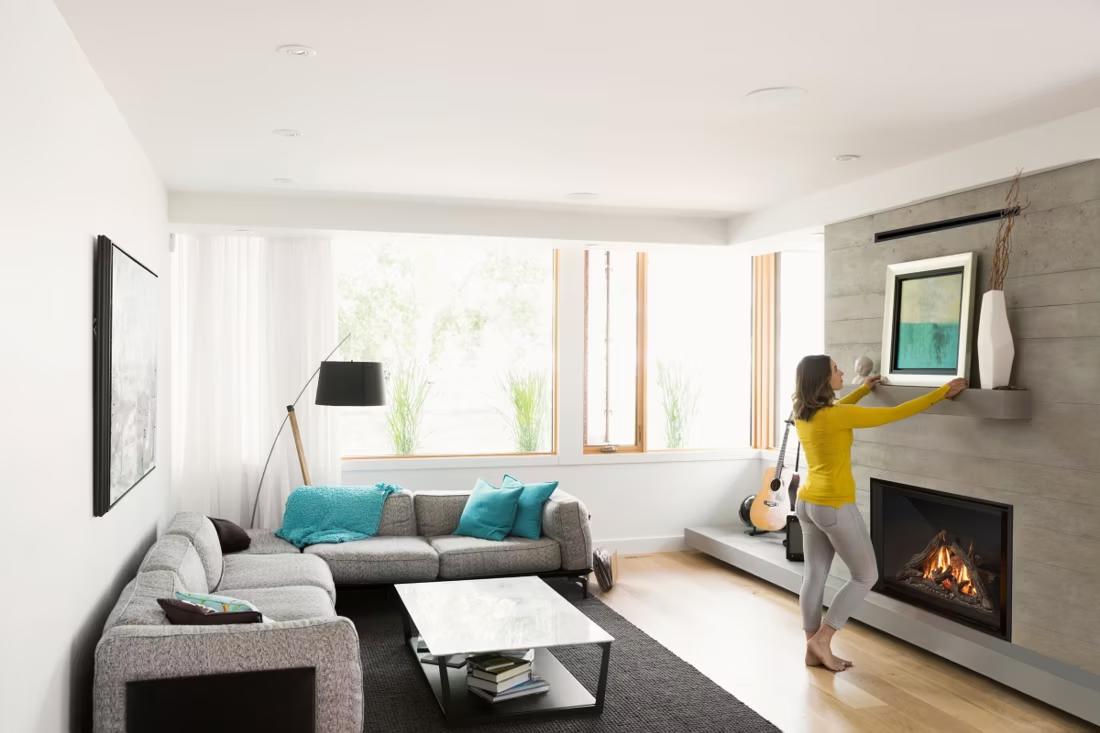
Yes—with an asterisk. Fireplaces are hot and TVs don't like heat. Either put a mantel between them to deflect rising warmth, or choose a fireplace with heat-management technology that creates a cool zone on the wall above—the wall stays around 125 degrees, barely warm, while the room still gets full heat. If you like clean lines and don't want a mantel, heat management is the answer.
Is my gas fireplace wasting gas?
If it was installed more than 15 years ago, probably. Older gas fireplaces keep a standing pilot light burning all the time, and that little flame can cost a couple hundred dollars a year. Newer models use pilot-on-demand ignition—the pilot lights only when you use the fireplace and goes out when you turn it off.
Can a fireplace actually lower my heating bill?
Yes—by creating a comfort zone. A furnace heats every square foot of the house just to warm the one room you're in; a gas fireplace on low burns roughly a sixth of the gas a typical furnace does. Set the furnace around 55–60 degrees as a baseline, then heat the rooms your family actually uses. Families who heat this way commonly save $20–$60 a month.
Does a fireplace add value to my home?
On average, a fireplace adds back to the home about the same amount you spent installing it. Add the monthly savings from heating the rooms you actually use instead of the whole house—often hundreds of dollars a year—and the value case is strong before you even count what a fire does for how your family uses the room.
Nearby Dealers
Hearth shops serving College Park and the surrounding area.
Find your gas fireplace in College Park.
Tell us a bit about your home and we'll match you with the right gas fireplace, insert, or stove—and hand you a free Project Guide & Parts List with your recommended local dealer.
Find Your Fireplace →