
Bring Reliable Gas Heat to Your Camp Springs Home.
Instant, clean heat for Prince George's County winters—no wood hauling, no ash cleanup. Find the right gas fireplace or insert and connect with a trusted local dealer.
Every Project Starts From One of These Five Situations
Clean, instant heat for the Washington D.C. suburbs.
Camp Springs sits just southeast of Washington, D.C. in Prince George's County, near Joint Base Andrews, at about 245 feet in elevation. The climate here—zone 4A—is far milder than the northern cold pockets of the country. Camp Springs has a winter heating load less than half of what a place like Duluth, MN sees, but winter nights still regularly dip into the 20s, and homeowners want dependable heat they can flip on without thinking twice.
Prince George's County is built out with brick colonials, ramblers, and townhomes from the 1960s through 1990s, many with existing masonry fireplaces that rarely see a real wood fire anymore. There's no national forest nearby for cutting permits, and suburban lot sizes make cordwood storage impractical for most residents—which is part of why gas has become the default upgrade. A direct-vent gas insert or built-in unit delivers real heat at the flip of a switch, works well as zone heat alongside central HVAC, and, with the right ignition system, can even keep running through a Pepco outage during a summer thunderstorm or winter ice event.
Three steps. No salesperson until you're ready.
Tell us about your project
Your zip code, your situation, and the fuel you're leaning toward—or let the answers point you to one.
See what's actually available
The brands dealers within 100 miles genuinely carry—real options, never a catalog mirage.
Get your dealer & Project Guide
A trusted local dealer, plus the free Project Guide & Parts List that names every component of the job.
Frequently Asked Questions
How much does a gas fireplace installation cost in Camp Springs?
Most Camp Springs gas fireplace installations run between roughly $3,500 and $9,500, depending on the unit, the venting path, and whether new gas line work is required. Converting an existing masonry fireplace to a direct-vent gas insert—common in the brick colonials and ramblers around zip codes 20744, 20746, and 20748—tends to land on the lower-to-middle end since the chimney is already in place. New construction or a built-in unit in a room without an existing fireplace runs higher once framing, venting, and a fresh gas line are factored in. A local dealer will give you a firm number after seeing the space.
Can I convert my existing wood fireplace to gas?
Yes, and it's one of the most common projects in Prince George's County, where many homes have an underused masonry fireplace from decades past. A gas insert typically drops into the existing firebox, using a stainless liner run through your current chimney for venting. Because wood-burning is rare in this part of Maryland—there's no nearby forest land for firewood permits and suburban lots make cordwood storage a hassle—most homeowners are converting an old ash-and-soot fireplace into a clean, on-demand heat source rather than replacing an actively used wood setup.
Do I need natural gas, or can I use propane?
Most Camp Springs neighborhoods are already served by natural gas, so if your home has a gas water heater, range, or furnace, adding a fireplace usually just means running a new line off the existing service. For the smaller number of homes without natural gas access, propane is a straightforward alternative—most fireplace models can be configured for either fuel with the right orifice and regulator. Your local installer will confirm what's available at your specific address before recommending a unit.
Will my gas fireplace work during a power outage?
For most models, yes. Units with intermittent pilot ignition (IPI) run on a battery backup that kicks in automatically, so the fireplace still lights on demand when Pepco service drops during a summer thunderstorm or an ice storm. Just remember to swap the batteries periodically—they're the kind of thing that gets forgotten until the power actually goes out. Some manufacturers, like Valor, skip batteries entirely and generate their own power through the pilot's thermocouple, which is worth asking about if reliable backup heat matters to you.
What's the difference between a gas fireplace, gas insert, and gas stove?
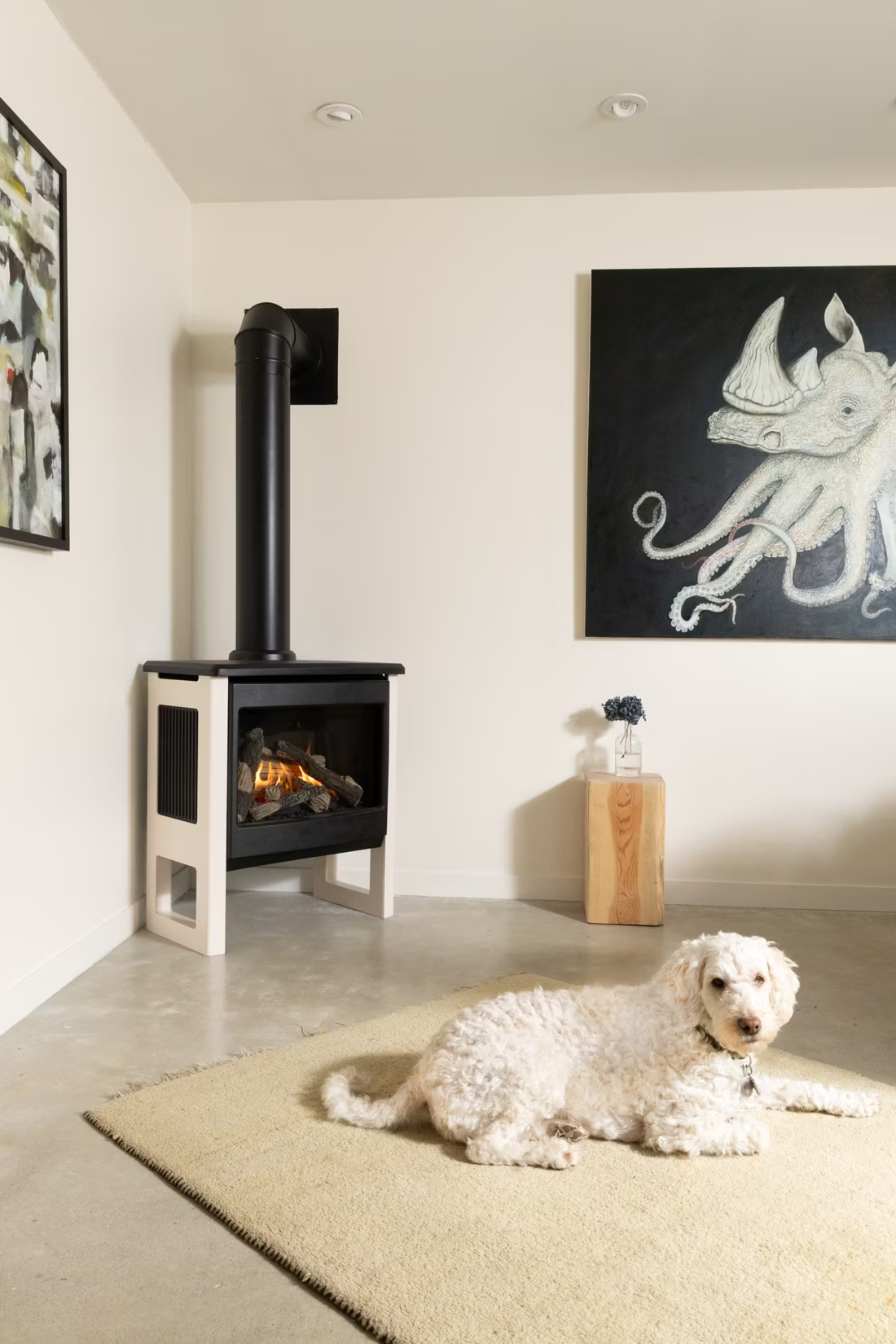
A gas fireplace is a fully built-in unit, typically used in new construction or a remodel where there's no existing masonry opening. A gas insert is sized to slide into an existing fireplace—the option most Camp Springs homeowners choose, since it reuses the chimney and firebox already in the house. A gas stove is a freestanding unit that sits out on its own hearth pad, similar in footprint to a wood stove but running on gas. For the older brick homes common throughout Prince George's County, an insert is usually the simplest and most cost-effective upgrade.
Do I need a permit to install a gas fireplace in Camp Springs?
Yes. Installations in Prince George's County go through the county's Department of Permitting, Inspections and Enforcement (DPIE), which requires both a building permit and sign-off on the gas line work by a licensed gas-fitter. Most established hearth dealers handle this paperwork as part of the job, coordinating the gas line, venting, and inspection so you're not managing multiple trades yourself.
What's the difference between vented and vent-free gas fireplaces?
Vented (direct-vent) fireplaces pull combustion air from outside and exhaust exhaust gases back outside through sealed venting—they're the most common choice and the one most installers in the D.C. suburbs recommend by default. Vent-free units burn fuel directly into the room air without external venting; they're legal in Maryland but come with strict room-size and ventilation requirements, and some homeowners are uncomfortable with any combustion byproducts released indoors. For most Camp Springs homes, a direct-vent unit is the safer, more universally accepted option, but ask your local dealer to walk through both if you're weighing a smaller space or a supplemental unit.
How often should my gas fireplace be serviced?
Plan on an annual inspection, ideally before the weather turns cold in the fall. A technician checks the burner, pilot assembly, venting, and gas connections, and cleans the glass and interior—a much quicker job than a wood chimney sweep, but just as important for safety. Local gas appliance technicians in the Camp Springs area typically charge $125 to $200 for this service.
Is a gas fireplace better than wood for a home in Camp Springs?
For most homes here, yes. Wood stoves and fireplaces are uncommon in Prince George's County—there's no national forest land nearby for cutting permits, and hauling and storing cordwood on a typical suburban lot is impractical. Gas offers instant, thermostat-controlled heat with no ash or creosote to manage, and it pairs well with the central HVAC most Camp Springs homes already have. Electric fireplaces are also a reasonable option for ambiance-focused rooms, though at Pepco's residential rate of about 18.7 cents per kWh, gas is generally the more economical choice for any unit doing real heating work.
Can I put a TV above my fireplace?
Yes—with an asterisk. Fireplaces are hot and TVs don't like heat. Either put a mantel between them to deflect rising warmth, or choose a fireplace with heat-management technology that creates a cool zone on the wall above—the wall stays around 125 degrees, barely warm, while the room still gets full heat. If you like clean lines and don't want a mantel, heat management is the answer.
Is my gas fireplace wasting gas?
If it was installed more than 15 years ago, probably. Older gas fireplaces keep a standing pilot light burning all the time, and that little flame can cost a couple hundred dollars a year. Newer models use pilot-on-demand ignition—the pilot lights only when you use the fireplace and goes out when you turn it off.
Can a fireplace actually lower my heating bill?
Yes—by creating a comfort zone. A furnace heats every square foot of the house just to warm the one room you're in; a gas fireplace on low burns roughly a sixth of the gas a typical furnace does. Set the furnace around 55–60 degrees as a baseline, then heat the rooms your family actually uses. Families who heat this way commonly save $20–$60 a month.
What is an in-home preview and do I need one?
It's a visit where a hearth professional measures your space, confirms the model you picked actually works in your home, and walks the specs—framing, gas line, venting, finish work—before anything is ordered. Some details you just can't know until you see the house. Never make a down payment without one; it's the single most-skipped step that burns buyers.
Nearby Dealers
Hearth shops serving Camp Springs and the surrounding area.
Find your gas fireplace in Camp Springs.
Tell us a bit about your home and we'll match you with a trusted local dealer and a free Project Guide & Parts List—the exact parts, vent kit, and recommended installer for your Camp Springs gas fireplace project.
Find Your Fireplace →