
Keep Your Family Warm and Safe—No Matter What
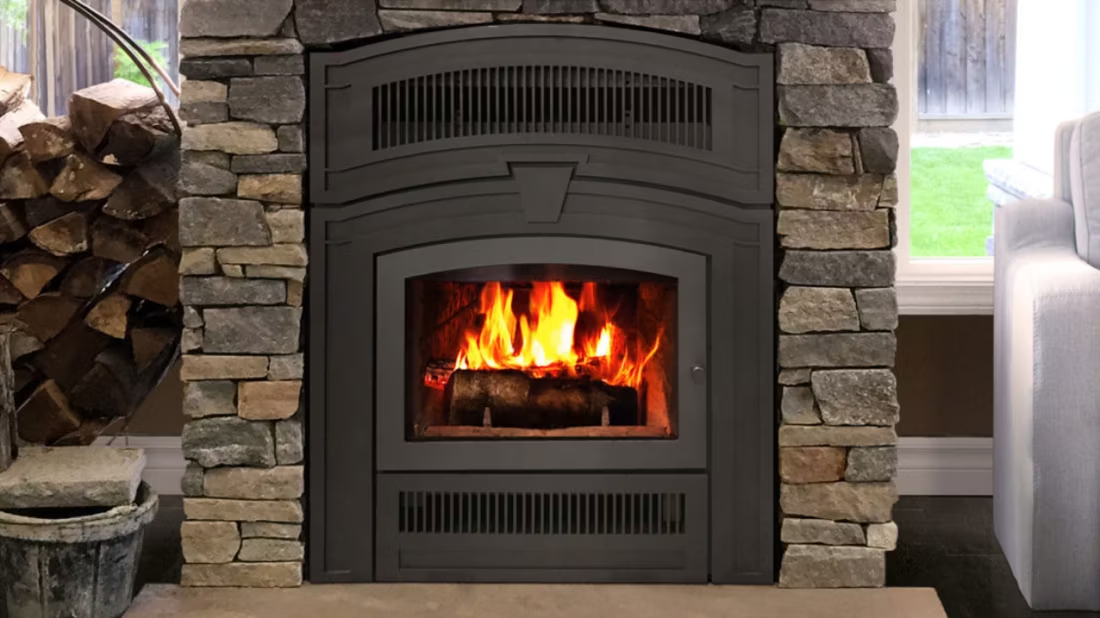
St. Helena Parish doesn't get brutal winters, but it does get ice storms and long power outages after Gulf hurricanes roll through. A wood stove or insert burning local oak and pecan keeps a home warm on its own, no grid required. Find the right unit and connect with a trusted local dealer.
Every Project Starts From One of These Five Situations
Supplemental heat for a parish where mild winters meet hard freezes.
St. Helena Parish sits in climate zone 2A—hot, humid Gulf South weather for most of the year, with a heating season that's short compared to almost anywhere else in the country. But short doesn't mean nonexistent: nighttime lows regularly dip into the 30s from December through February, and the parish sees real hard freezes most winters, along with the occasional ice event that knocks out power for days at a time. In a rural parish governed by the St. Helena Parish Police Jury, with limited utility crews covering a lot of ground, that kind of outage can stretch on longer than it would in Baton Rouge or Hammond.
There are no air quality restrictions or non-attainment concerns in St. Helena Parish, so there's no burn-ban bureaucracy standing between you and a fire—a real difference from parishes and cities dealing with inversion or wildfire smoke issues. The parish's piney woods and hardwood bottoms supply plenty of oak and pecan for dense, long-burning fuel, plus cypress from the wetter lowlands for kindling and quick-catch fires. For most homes here, a wood stove or insert isn't the primary heat source—it's the thing that keeps a family warm and cooking when a February ice storm takes the lights out for a week.
Three steps. No salesperson until you're ready.
Tell us about your project
Your zip code, your situation, and the fuel you're leaning toward—or let the answers point you to one.
See what's actually available
The brands dealers within 100 miles genuinely carry—real options, never a catalog mirage.
Get your dealer & Project Guide
A trusted local dealer, plus the free Project Guide & Parts List that names every component of the job.
Frequently Asked Questions
How much does a wood stove installation cost in St. Helena Parish?
Installations in a small, rural parish like St. Helena typically run $3,500 to $7,500, on the lower end of national averages, since most homes are single-story with straightforward roof lines and simpler venting runs than multi-story homes in larger cities. Converting an existing masonry fireplace to a wood insert is usually the cheaper path; a freestanding stove in a home with no existing chimney runs higher once Class A pipe and roof penetration are factored in. Because the parish is thinly populated, expect installers based out of Greensburg, Amite, or the Hammond area, and factor in a small travel charge for the drive.
What size wood stove do I need for a home in St. Helena Parish?
Given the parish's mild winter climate, most homes here don't need a large primary-heat stove—a small to mid-size unit (rated for 1,000 to 1,500 square feet) is plenty for most single-story ranch and camp-style homes common in the parish, especially if the stove's real job is backup heat during outages rather than daily heating. Homes that plan to run the stove as their main heat source, or larger farmhouses with open floor plans, should size up. A local dealer can walk your home and give you an accurate recommendation rather than guessing off square footage alone.
Where can I find certified wood stove installers near St. Helena Parish?
Look for NFI (National Fireplace Institute) or CSIA (Chimney Safety Institute of America) certification—both signal real training in wood-burning appliance installation, not just general contracting experience. Because St. Helena Parish is small and mostly rural, most certified hearth dealers are based in nearby population centers like Hammond, Amite, or Baton Rouge and travel out to the parish for installs. Ask up front about travel charges, and avoid handyman-style installs for a wood-burning unit—improper clearances and venting are the leading cause of chimney fires, and that risk doesn't shrink just because the parish is rural.
Wood stove or wood insert—which fits my home in St. Helena Parish?
A wood insert makes sense if your home already has a masonry fireplace—common in older parish farmhouses—since it reuses the existing chimney and turns a drafty, inefficient hearth into a real heat source. A freestanding wood stove is the better call for homes without an existing fireplace, camps, workshops, or newer construction where you're starting from scratch. Given how many homes in the parish are older single-story builds with an existing fireplace already in place, inserts are the more common project here.
Do I need a permit to install a wood stove in St. Helena Parish?
Building permits for wood-burning appliance installations go through the St. Helena Parish Police Jury's permitting process. Requirements are generally lighter here than in more urban parishes, but you'll still want an EPA-certified stove and a proper Class A chimney installation to pass inspection and keep your homeowner's insurance intact. Most local dealers handle the permit paperwork as part of the install, so you're not left navigating it solo. There are no burn-ban or air-quality curtailment periods to worry about in St. Helena Parish, unlike parishes closer to industrial corridors or non-attainment zones.
What's the best wood stove for St. Helena Parish's climate?
Because winters here are short and mild by national standards, most homeowners don't need an oversized catalytic stove built for 20-hour burns at sub-zero temperatures—that's overkill for a climate that rarely sees single-digit lows. A mid-size non-catalytic stove from a brand like Lopi or Pacific Energy is usually the right fit: efficient, easy to operate, and sized for occasional heavy use during ice storms and cold snaps rather than round-the-clock winter heating. If the stove's main job is emergency backup heat when hurricane season or a winter ice event knocks out power, prioritize a model that's simple to light and run without any electric components.
How often should my chimney be inspected in St. Helena Parish?
An annual inspection before burning season—ideally in late fall, ahead of the parish's short but real cold stretch from December through February—is the standard recommendation from the CSIA. Even light users who only fire up the stove during cold snaps and outages should still get a yearly sweep, since creosote builds up regardless of how many times you burn. This matters more, not less, in a rural parish where fire department response times can be longer than in nearby towns like Hammond or Amite.
Where can I get firewood in St. Helena Parish?
St. Helena Parish's piney woods and hardwood bottomland make oak and pecan easy to source locally, either through small local sellers or by cutting on private land with the landowner's permission—there's no national forest in the parish, so there's no federal cutting-permit system to navigate like in some Western states. Cypress from the wetter lowlands is common too, though it's better suited to kindling and quick fires than sustained overnight heat, since it's a softer, lower-density wood than oak. Expect to pay by the truckload or cord from local sellers, with prices typically running a bit below state averages given the parish's rural timber economy.
Wood stove vs. pellet stove—which makes more sense in St. Helena Parish?
A wood stove works with zero electricity, which matters in a parish where hurricane season and winter ice storms can knock out power for days—you can keep the house warm and cook on top of the stove regardless of grid status. A pellet stove, by contrast, needs electricity to run its auger and blower, so it goes dark exactly when a wood stove would be most useful. Pellet stoves do burn cleaner and are easier to operate day-to-day, and regional brands like Lignetics, Hamer Pellet Fuel, and Greenway Renewable Energy are available if convenience matters more than storm-proof heat for your household. For most rural St. Helena Parish homes, though, wood's independence from the power grid is the deciding factor.
Why is my open fireplace making my house colder?
Open fireplaces suck—literally. As the fire burns, it consumes air your furnace already paid to heat and pulls it out through the chimney, so the house is actually colder after the fire goes out than before you lit it. An insert fixes this: it seals the chimney, puts fixed glass across the front, and turns that hole in your house into a real heat source.
Why is a fireplace insert so efficient?
An insert does two things: it seals the chimney completely, so you stop losing air you already paid to heat, and it radiates warmth into the room through the firebox and glass. Most add a heat-exchange fan that pulls cool room air underneath, wraps it around the hot firebox, and pushes it back out warm. Your home is more efficient before you've even lit the first fire.
Does a fireplace add value to my home?
On average, a fireplace adds back to the home about the same amount you spent installing it. Add the monthly savings from heating the rooms you actually use instead of the whole house—often hundreds of dollars a year—and the value case is strong before you even count what a fire does for how your family uses the room.
How much should I budget for a fireplace?
For an average home—covering the fireplace, the vent pipe, and basic installation—a budget between $3,900 and $5,500 gives you a lot of options across wood, gas, and pellet. By the time you add finish work, gas line, and electrical, the average complete installation lands between $5,000 and $12,000 all-in. In a remodel or new build, a good rule is to put about 2.5% of the total project cost toward the fireplace.
Find your wood fireplace in St. Helena Parish.
Tell us a bit about your home and we'll match you with a trusted local dealer and send over a free Project Guide & Parts List—a clear plan for your wood stove or insert project in St. Helena Parish, down to the vent kit.
Find Your Fireplace →