
Real Fire Warmth for St. Helena Parish's Mild Winters.
From Greensburg to the banks of the Amite and Tickfaw Rivers, a gas fireplace adds instant warmth and ambiance to St. Helena Parish's short cold season. Find the right unit and connect with a trusted local dealer.
Every Project Starts From One of These Five Situations
Built for Louisiana's short cold spells.
St. Helena Parish sits in climate zone 2A—hot and humid most of the year, with a heating season that's short by national standards but not nonexistent. Freezes happen most winters, and multi-day cold snaps into the 20s and teens aren't rare, especially in the low-lying areas near the Amite and Tickfaw Rivers. With a population under 1,500 spread across rural crossroads like Greensburg, Montpelier, and Pine Grove, most homes here were built around central heat and pump systems, with a fireplace added for the handful of genuinely cold nights each year and for the everyday appeal of a real flame in the living room.
Given the parish's small population and rural footprint, piped natural gas service is limited to nonexistent in most of St. Helena Parish—propane is the fuel that actually reaches most homes, delivered and stored in a tank on the property. That changes the install conversation a bit: a propane tank (new or existing) is usually part of the project, alongside the fireplace or insert itself. A direct-vent gas unit set up for propane gives you flip-of-a-switch heat during a cold snap, works during the power outages that follow ice storms and severe weather in this part of Louisiana, and doesn't require the wood-splitting and hauling that oak, pecan, and cypress firewood demands elsewhere in the parish.
Three steps. No salesperson until you're ready.
Tell us about your project
Your zip code, your situation, and the fuel you're leaning toward—or let the answers point you to one.
See what's actually available
The brands dealers within 100 miles genuinely carry—real options, never a catalog mirage.
Get your dealer & Project Guide
A trusted local dealer, plus the free Project Guide & Parts List that names every component of the job.
Frequently Asked Questions
How much does a gas fireplace installation cost in St. Helena Parish?
Because most homes here run on propane rather than piped natural gas, a typical installation includes both the fireplace or insert and any propane line or tank work, which pushes the range to roughly $3,500–$9,000 depending on the unit and whether a new propane tank installation is needed. Homes that already have a propane tank and gas appliances (a range or water heater) tend to land on the lower end since the fuel supply is already in place. A local dealer will walk your property, confirm your propane setup, and give you a firm number before any work starts.
Can I convert my existing wood fireplace to gas?
Yes—this is a common request in St. Helena Parish, where many older homes have a masonry fireplace built for wood. A gas insert typically slides into that existing firebox, using the chimney as the vent path with a stainless liner, and runs on propane since natural gas lines don't reach most of the parish. The conversion keeps the look of your existing hearth while giving you heat at the flip of a switch instead of a fire that needs oak or cypress logs split and stacked. Expect the propane tank and line work to be part of the quote if you don't already have gas service to the house.
Do I need natural gas, or does propane work for a gas fireplace?
Propane is the standard fuel for gas fireplaces in St. Helena Parish. Piped natural gas service doesn't reach most of the parish's rural roads and unincorporated communities, so nearly every gas fireplace or insert installed here runs on propane, either from an existing tank or a new one set by a local propane supplier. Almost every gas fireplace model on the market can be configured for propane—your installer sets the correct orifice and regulator for the fuel you're using, so you're not limited on style or size by the fuel choice.
Will my gas fireplace work during a power outage?
Most direct-vent gas fireplaces with an intermittent pilot ignition (IPI) system include a battery backup that keeps the unit working when the power drops—which matters in St. Helena Parish, where ice storms and severe thunderstorms can knock out electricity for a day or more in rural areas. Valor fireplaces take a different approach: the pilot's thermocouple generates its own electricity, so the unit lights and runs with no batteries at all. Either way, a propane-fed gas fireplace gives you a genuine backup heat source that doesn't depend on the grid, which is worth asking about directly when you're comparing units with a local dealer.
What's the difference between a gas fireplace, gas insert, and gas stove?
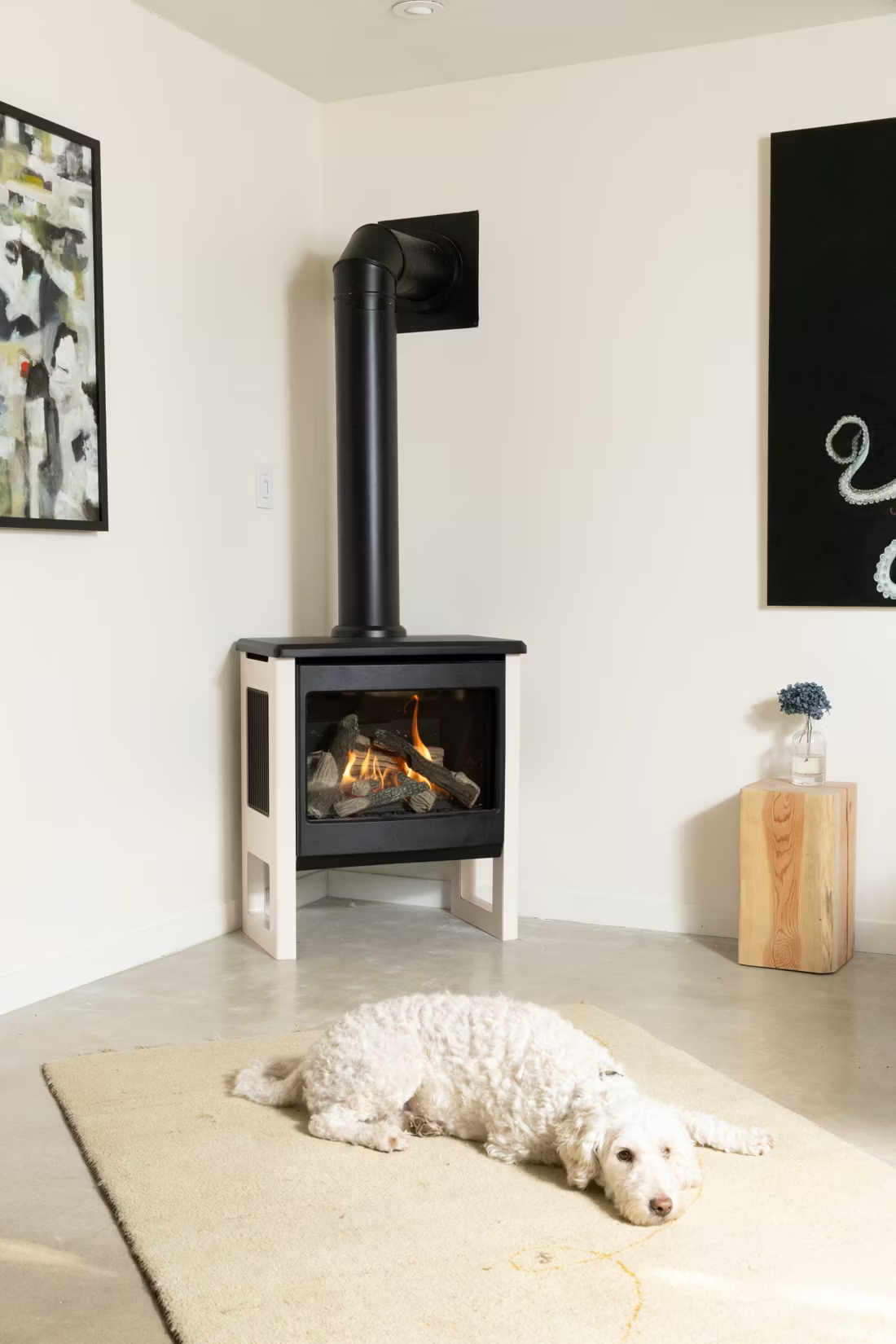
A gas fireplace is a fully built-in unit framed into a wall, typically chosen for new construction or a remodel. A gas insert is sized to drop into an existing masonry firebox—the common choice for St. Helena Parish's older wood-fireplace homes—and uses the existing chimney as its vent path. A gas stove is a freestanding cabinet-style unit that sits directly on the floor, similar in footprint to a wood stove but running on gas. For most homes in the parish with an existing fireplace, an insert is the simplest upgrade; homes without one often go with a built-in fireplace or a freestanding stove instead.
Do I need a permit to install a gas fireplace in St. Helena Parish?
Yes—a building permit and gas/propane line permit are typically required for a new gas fireplace installation, coordinated through the St. Helena Parish Police Jury's permitting office in Greensburg. Because propane line work requires a licensed gas-fitter, this is one area where working with an established local hearth dealer pays off: they coordinate the propane hookup, venting, and any required inspections instead of leaving you to manage separate trades on a rural job site.
What's the difference between vented and vent-free gas fireplaces?
Vented (direct-vent) gas fireplaces draw combustion air from outside and exhaust it back outside through a sealed vent—they're the cleanest and most universally code-compliant option. Vent-free units burn fuel directly into the room without outside venting; they're legal in Louisiana but come with strict room-sizing and ventilation rules, and they release some combustion byproducts indoors. Given St. Helena Parish's mild but humid climate, direct-vent units are the more common recommendation from local dealers—they deliver real heat without any indoor air quality trade-offs, which matters in a climate where homes are often closed up against humidity as much as cold.
How often should my gas fireplace be serviced?
An annual inspection is recommended for any gas or propane appliance, including fireplaces and inserts. A technician checks the burner, pilot assembly, propane line connections, and venting, and cleans the glass and interior—usually a $150–$250 visit. Since propane systems have an extra connection point at the tank and regulator compared to piped natural gas, it's worth having the same technician who installed your unit handle the annual check so they're familiar with your specific setup.
Gas vs. wood—which is right for my St. Helena Parish home?
Wood is deeply rooted in this part of Louisiana—oak, pecan, and cypress are all locally available, and a wood stove or fireplace works without any electricity or propane delivery, which some rural households value. Gas offers instant on-off heat, no wood splitting or ash cleanup, and a cleaner look, and with propane backup it still works through the power outages that follow the parish's ice storms and severe weather. Because St. Helena Parish's winters are short and mild overall, many homeowners choose gas for the convenience and reserve wood heat, if they have it, for the coldest handful of nights each year. A local dealer can help you weigh both against your specific home and budget.
Is my gas fireplace wasting gas?
If it was installed more than 15 years ago, probably. Older gas fireplaces keep a standing pilot light burning all the time, and that little flame can cost a couple hundred dollars a year. Newer models use pilot-on-demand ignition—the pilot lights only when you use the fireplace and goes out when you turn it off.
What's the difference between an insert and a zero-clearance fireplace?
An insert is a fireplace that slides into a pre-existing wood-burning fireplace—if you don't have one, there's nothing to insert it into. A zero-clearance fireplace is built into a framed wall, which makes it the answer for remodels and new construction. Simple test: existing masonry fireplace means insert; blank or framed wall means zero-clearance.
Does a fireplace add value to my home?
On average, a fireplace adds back to the home about the same amount you spent installing it. Add the monthly savings from heating the rooms you actually use instead of the whole house—often hundreds of dollars a year—and the value case is strong before you even count what a fire does for how your family uses the room.
How much should I budget for a fireplace?
For an average home—covering the fireplace, the vent pipe, and basic installation—a budget between $3,900 and $5,500 gives you a lot of options across wood, gas, and pellet. By the time you add finish work, gas line, and electrical, the average complete installation lands between $5,000 and $12,000 all-in. In a remodel or new build, a good rule is to put about 2.5% of the total project cost toward the fireplace.
Find your gas fireplace in St. Helena Parish.
Tell us a bit about your home and we'll match you with the right gas fireplace, insert, or stove—plus a free Project Guide & Parts List with your recommended local dealer.
Find Your Fireplace →