
Consistent, low-maintenance heat for St. Helena Parish's short winter season.
A thermostat-controlled option for the handful of genuinely cold weeks that hit Greensburg and the rest of the parish each year. Find the right pellet stove or insert and get matched with a trusted local dealer.
Every Project Starts From One of These Five Situations
A clean, controllable option for a climate that rarely demands much heat.
St. Helena Parish is a small, rural parish of about 1,500 people centered on Greensburg, sitting in USDA/DOE climate zone 2A—the same warm, humid classification as the rest of southeast Louisiana. Summers are long and humid; winters are short, with most of the heating need concentrated into a stretch of cold fronts that roll down from the north between December and February. There's no year-round furnace-running climate here, which is exactly the situation where a pellet stove earns its keep—enough heat to take the chill off a living room or shop on the coldest nights, without the overkill of a system sized for a Duluth or Fargo winter.
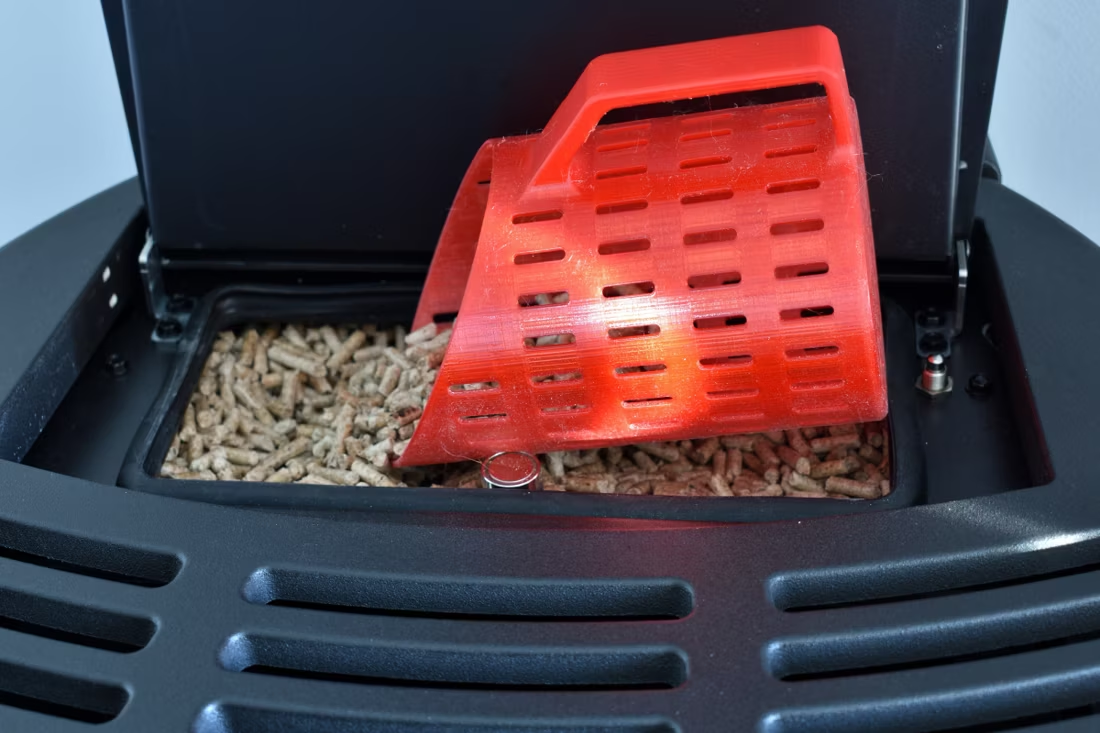
Oak, pecan, and cypress are the wood species that grow throughout the parish, and plenty of St. Helena Parish households already burn cordwood in an open fireplace or stove. A pellet appliance is a different proposition: no splitting, no seasoning, no chimney creosote to manage—just a hopper you load with bagged pellets from brands like Lignetics, Hamer Pellet Fuel, or Greenway Renewable Energy, available through farm and feed stores in the area or from dealers based in Denham Springs, Hammond, or Baton Rouge. The one honest tradeoff: pellet stoves run on electricity to feed the auger and blower, so during a hurricane-season outage—a real possibility this far south—a pellet stove goes cold unless it's paired with a battery backup or a generator. That's worth weighing against wood if outage heat matters as much as day-to-day convenience.
Three steps. No salesperson until you're ready.
Tell us about your project
Your zip code, your situation, and the fuel you're leaning toward—or let the answers point you to one.
See what's actually available
The brands dealers within 100 miles genuinely carry—real options, never a catalog mirage.
Get your dealer & Project Guide
A trusted local dealer, plus the free Project Guide & Parts List that names every component of the job.
Frequently Asked Questions
How much does a pellet stove installation cost in St. Helena Parish?
A freestanding pellet stove installation in a St. Helena Parish home typically runs in the $3,000 to $6,000 range, depending on the unit, whether the exterior wall venting is straightforward, and whether a dedicated electrical outlet needs to be added near the stove. Pellet inserts going into an existing masonry fireplace tend to land in a similar range once the vent liner and hearth work are factored in. Because dealer coverage in a parish this size is thin, expect a modest travel charge if your installer is coming from Denham Springs, Hammond, or Baton Rouge rather than someone based closer to Greensburg.
Where can I buy pellet fuel near St. Helena Parish?
Bagged pellets from Lignetics, Hamer Pellet Fuel, and Greenway Renewable Energy are the three brands most commonly stocked at farm and feed stores serving this part of Louisiana, though supply in St. Helena Parish itself can be seasonal and limited given the small population. Most homeowners either stock up early in the fall before demand picks up or make a run to a larger retailer in Denham Springs, Hammond, or Baton Rouge and buy several tons at once. Buying by the ton rather than the bag, when a dealer offers it, is usually the better value for anyone running a stove through a full winter.
Will my pellet stove work during a power outage?
Not on its own. Pellet stoves rely on an electric auger to feed fuel and a blower to circulate heat, so when the power goes out, the stove stops—a real consideration in a Gulf Coast parish like St. Helena where hurricane season regularly knocks out electricity for days at a time. Some homeowners pair a pellet stove with a small battery backup unit or a portable generator specifically to keep it running through outages. If reliable heat during a storm-related outage is your top priority, a wood stove or fireplace insert that needs no electricity at all is worth comparing against pellet before you decide.
What size pellet stove do I need for my home?
Sizing comes down to square footage and how the space is used. Given St. Helena Parish's mild zone 2A winters, most homes here don't need a stove sized for whole-house primary heat—a small to mid-size unit (rated for roughly 1,000 to 1,800 square feet) is usually plenty to heat a main living area or an open floor plan on the coldest nights, while a smaller stove or insert works well for a den, shop, or camp house. Oversizing is a common mistake in a climate this mild—a stove that's too large for the space will short-cycle constantly. A local dealer can size the unit correctly during an in-home look at your layout and insulation.
Do I need a permit to install a pellet stove in St. Helena Parish?
Permitting for hearth appliances in St. Helena Parish generally runs through the St. Helena Parish Police Jury, the parish's governing body for rural building matters, rather than a dedicated city building department—there's no incorporated city hall handling this in most of the parish. Requirements are lighter here than in denser Louisiana parishes, but the manufacturer's listed clearances and venting specifications still have to be followed regardless of whether a permit is pulled, and most established dealers will tell you upfront what, if anything, the parish requires for your specific install.
Pellet stove vs. wood stove—which makes more sense in St. Helena Parish?
Wood is abundant and inexpensive here—oak, pecan, and cypress are all common locally, and plenty of parish residents already have a source for cordwood or land to cut it from. A wood stove also keeps working without electricity, which matters given how often hurricane season interrupts power in this part of Louisiana. A pellet stove trades that off-grid resilience for convenience: no splitting or hauling, a cleaner burn with far less ash, and a thermostat that holds a steady temperature instead of the up-and-down heat of a wood fire. For a camp house, a workshop, or a main living space where you want set-it-and-forget-it heat, pellet usually wins. For a home where outage-proof backup heat matters most, wood still has the edge.
How often does a pellet stove need cleaning and maintenance?
Plan on emptying and vacuuming the ash pan every few days of regular use, and a deeper cleaning of the burn pot, glass, and venting once every one to two weeks during heavy winter use—pellet ash is fine and dry, and it builds up faster than most owners expect. A full inspection and cleaning by a technician once a year, ideally before the fall cold fronts arrive, catches wear on the auger motor, igniter, and gaskets before it turns into a mid-winter breakdown. Given the limited number of pellet-certified technicians serving a parish this size, it's worth booking that annual service early rather than waiting until the first cold snap.
What's the difference between a pellet stove and a pellet insert?
A pellet stove is a freestanding unit that sits on a hearth pad and vents through a wall or existing chimney—it can go almost anywhere with the right clearances, which makes it a good fit for camp houses and shops as well as main living areas. A pellet insert is built to slide into an existing masonry fireplace opening, turning a wood-burning fireplace into a pellet-fed heat source while reusing the existing chimney for venting. For St. Helena Parish homes with an older brick fireplace already in place, an insert is often the simpler retrofit; for a home or outbuilding with no existing fireplace, a freestanding stove is the more practical option.
Is pellet heat really worth it in a climate as mild as St. Helena Parish's?
It's a fair question in a zone 2A parish where hard freezes are the exception rather than the rule. The honest answer is that pellet stoves here work best as zone heat for a main living area or a supplemental source for the coldest few weeks of the year, rather than a whole-house furnace replacement—which is exactly the role most St. Helena Parish households actually want from one. You get clean, controllable, thermostat-driven heat for the nights that do get cold, without a system built for a much harsher climate sitting idle the rest of the year.
What's the difference between an insert and a zero-clearance fireplace?
An insert is a fireplace that slides into a pre-existing wood-burning fireplace—if you don't have one, there's nothing to insert it into. A zero-clearance fireplace is built into a framed wall, which makes it the answer for remodels and new construction. Simple test: existing masonry fireplace means insert; blank or framed wall means zero-clearance.
Why is my open fireplace making my house colder?
Open fireplaces suck—literally. As the fire burns, it consumes air your furnace already paid to heat and pulls it out through the chimney, so the house is actually colder after the fire goes out than before you lit it. An insert fixes this: it seals the chimney, puts fixed glass across the front, and turns that hole in your house into a real heat source.
What is an in-home preview and do I need one?
It's a visit where a hearth professional measures your space, confirms the model you picked actually works in your home, and walks the specs—framing, gas line, venting, finish work—before anything is ordered. Some details you just can't know until you see the house. Never make a down payment without one; it's the single most-skipped step that burns buyers.
How much should I budget for a fireplace?
For an average home—covering the fireplace, the vent pipe, and basic installation—a budget between $3,900 and $5,500 gives you a lot of options across wood, gas, and pellet. By the time you add finish work, gas line, and electrical, the average complete installation lands between $5,000 and $12,000 all-in. In a remodel or new build, a good rule is to put about 2.5% of the total project cost toward the fireplace.
Pellet Brands Stocked Around St. Helena County
Manufacturers will point you to the nearest stocking dealer.
Find your pellet stove in St. Helena Parish.
Tell us a bit about your home and we'll put together a free Project Guide & Parts List—the exact parts, including the vent kit, and a recommended local dealer to install it.
Find Your Fireplace →