
Steady, thermostat-controlled heat for Muscatine County winters.
From the river bluffs above Muscatine to the farm ground around West Liberty and Wilton, pellet stoves deliver consistent, low-maintenance heat without the splitting and stacking wood requires. Find the right unit and connect with a trusted local dealer.
Every Project Starts From One of These Five Situations
Consistent heat, without the wood-splitting.
Muscatine County sits along the Mississippi River in southeast Iowa, home to around 35,590 people spread across Muscatine, West Liberty, Wilton, Atalissa, Nichols, and Fruitland. The climate here is Zone 5A, with a winter heating load in the same range as Madison, Wisconsin, and winter lows averaging 13°F. The hardwood forests along the river bluffs supply plenty of oak, hickory, maple, and walnut for those who split their own firewood, but a growing number of county homeowners are choosing pellet stoves instead, especially on smaller in-town lots in Muscatine and West Liberty where storing and seasoning cordwood isn't practical.
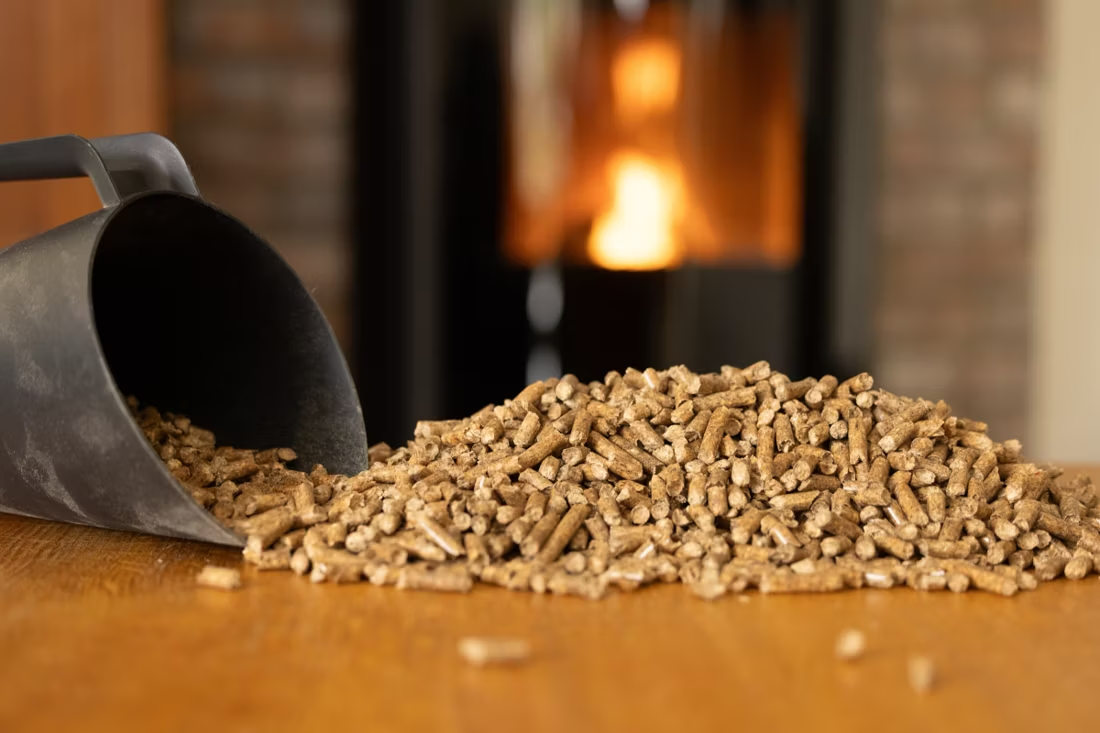
Muscatine County doesn't face the winter inversions or wildfire-smoke restrictions that limit wood burning in parts of the West, so the appeal of pellets here is less about air quality rules and more about convenience: load the hopper, set the thermostat, and get even heat output without tending a fire. Regional pellet supply runs through established manufacturers like Lignetics and Indeck Energy Services, both of which distribute widely enough that bags are generally easy to find at farm supply and hardware retailers along the US-61 corridor rather than something you have to special-order and wait on.
Three steps. No salesperson until you're ready.
Tell us about your project
Your zip code, your situation, and the fuel you're leaning toward—or let the answers point you to one.
See what's actually available
The brands dealers within 100 miles genuinely carry—real options, never a catalog mirage.
Get your dealer & Project Guide
A trusted local dealer, plus the free Project Guide & Parts List that names every component of the job.
Frequently Asked Questions
How much does a pellet stove installation cost in Muscatine County?
Most pellet stove installations in Muscatine County run between roughly $3,000 and $6,000, depending on the unit's size, whether it's a freestanding stove or an insert going into an existing fireplace, and how much venting work is involved. A pellet insert going into a masonry fireplace that already has a usable chimney chase tends to land on the lower end. A freestanding stove in a home with no existing hearth—common in some of the older river-town housing stock in Muscatine—runs higher once wall penetration and venting are factored in. A local dealer can give you a firm number after seeing your space.
What size pellet stove do I need for my Muscatine County home?
With winter lows averaging 13°F and a heating season on par with Madison, Wisconsin, most Muscatine County homes need a mid-size unit—enough output to handle a real cold stretch without running the hopper dry overnight. A small stove works for a single room or a well-insulated addition; a medium unit in the 40,000–50,000 BTU range covers most main living areas in the older two-story homes common in Muscatine and Wilton; larger, better-insulated homes around West Liberty may want the biggest hopper capacity available so you're not refilling every few hours during a hard freeze. A local dealer will size this to your actual square footage and insulation level rather than a rule of thumb.
Where can I buy pellets in Muscatine County?
Bagged pellets from brands like Lignetics and Indeck Energy Services are widely distributed through the Midwest and generally available at farm supply and hardware stores along the US-61 corridor connecting Muscatine, West Liberty, and Wilton. Because these are established regional manufacturers rather than niche brands, you shouldn't have trouble finding supply through a normal Iowa winter—but if you're heating primarily with pellets, it's still smart to keep a few weeks ahead of your usage rather than buying bag by bag in the middle of a cold snap.
Do I need a permit to install a pellet stove in Muscatine County?
Yes, in most cases. Within city limits—Muscatine, West Liberty, Wilton, and the other incorporated towns each issue their own building permits—while unincorporated areas of the county go through Muscatine County. A pellet stove installation typically needs sign-off on the venting path and clearances, even though pellet units use smaller-diameter vent pipe than wood stoves and are easier to route through a wall. Most local hearth dealers handle the permit paperwork as part of the installation, so you generally don't have to coordinate it yourself.
Pellet stove vs. wood stove—which fits Muscatine County better?
Wood is the traditional choice here, and with oak, hickory, maple, and walnut readily available from the river bluffs, plenty of county residents still burn their own cordwood. But a pellet stove trades the splitting, stacking, and seasoning for a hopper you load every day or two and a thermostat that holds a steady temperature—a real advantage for anyone in Muscatine or West Liberty without space to store a wood supply, or who wants heat that doesn't require daily fire-tending. The tradeoff is that pellet stoves need electricity to run the auger and blower, while a wood stove will keep putting out heat through a power outage. Some homeowners run both: wood as backup heat, pellet for daily convenience.
Will my pellet stove work if the power goes out?
No—pellet stoves rely on an electric auger to feed fuel and a blower to distribute heat and exhaust combustion gases, so they shut down without power. Muscatine's municipal utility, Muscatine Power and Water (MPW), generally delivers reliable service, but winter ice storms and high winds can still cause outages across the county's rural stretches. If backup heat during an outage matters to you, some homeowners pair a pellet stove for everyday convenience with a small battery backup for the stove's electronics, or keep a wood-burning option in reserve for extended outages.
What's the best pellet stove for Muscatine County's climate?
With a heating load similar to Madison, Wisconsin, look for a unit with a large enough hopper that you're not refilling constantly during the coldest stretches of January and February. Higher-output models with automatic feed-rate adjustment hold a more even temperature through a Mississippi Valley cold front than a basic single-setting unit. Local dealers carrying Lignetics-compatible and Indeck Energy Services-compatible units can walk you through hopper capacity, BTU output, and how each performs at sustained low outdoor temperatures—details that matter more here than they would in a milder climate.
How often does a pellet stove need to be cleaned and serviced?
Plan on cleaning the burn pot and ash area every few days during regular use, a deeper cleaning of the exhaust fan and venting once a month during the heating season, and a full professional inspection and cleaning once a year—typically in late summer or early fall before the county's cold sets in. Pellet stoves produce far less creosote than wood stoves, so the maintenance burden is lighter, but skipping the annual service is still the most common cause of feed jams and reduced heat output.
Pellet stove vs. gas fireplace—which should I choose?
Gas gives you instant on-off operation and, with the right ignition system, can run during a power outage—a real plus in Muscatine County's occasional ice storms. Pellet stoves need electricity to run but generally cost less to install than a new gas line and offer a more visible, authentic flame with local fuel sourced from established regional pellet manufacturers. If you already have natural gas or propane service to your home, a gas insert is often the simpler retrofit; if you don't, or you like the idea of a renewable, wood-based fuel without the splitting, a pellet stove is worth a serious look. A local dealer can walk through both options against your specific home.
How often does a pellet stove need cleaning?
A clean pellet stove is a happy pellet stove. Plan on cleaning the burn pot about once a week when you're burning regularly—ash and clinkers gum up the air holes just like a pellet barbecue. Most pellet stove problems trace back to skipped cleaning that nobody explained up front. Some designs make it easy with a trapdoor burn pot: pull a lever and the gunk drops into the ash pan.
Why is my open fireplace making my house colder?
Open fireplaces suck—literally. As the fire burns, it consumes air your furnace already paid to heat and pulls it out through the chimney, so the house is actually colder after the fire goes out than before you lit it. An insert fixes this: it seals the chimney, puts fixed glass across the front, and turns that hole in your house into a real heat source.
Can a fireplace actually lower my heating bill?
Yes—by creating a comfort zone. A furnace heats every square foot of the house just to warm the one room you're in; a gas fireplace on low burns roughly a sixth of the gas a typical furnace does. Set the furnace around 55–60 degrees as a baseline, then heat the rooms your family actually uses. Families who heat this way commonly save $20–$60 a month.
Does a fireplace add value to my home?
On average, a fireplace adds back to the home about the same amount you spent installing it. Add the monthly savings from heating the rooms you actually use instead of the whole house—often hundreds of dollars a year—and the value case is strong before you even count what a fire does for how your family uses the room.
Stove and Fireplace Dealers in Muscatine County
Pellet Brands Stocked Around Muscatine County
Manufacturers will point you to the nearest stocking dealer.
Find your pellet stove in Muscatine County.
Tell us a bit about your home and we'll put together a free Project Guide & Parts List—the right pellet stove or insert, the vent kit it needs, and a trusted local dealer to install it.
Find Your Fireplace →