
Pellet Heat Is Uncommon in Muscatine—Here's How It Still Works.
With Alliant Energy and MidAmerican Energy natural gas lines running through most of Muscatine, pellet stoves are a niche choice here—but for the right home, they still make sense. We'll connect you with a local dealer who can tell you straight whether one fits your situation.
Every Project Starts From One of These Five Situations
Natural gas and electric heat dominate Muscatine's homes.
Muscatine sits along the Mississippi River in climate zone 5A, with a long, cold heating season and average winter lows around 13°F—cold enough that heating costs matter to nearly every household here. But unlike parts of the rural Midwest where pellet stoves fill a gap left by limited gas infrastructure, Muscatine is well served by Interstate Power and Light (Alliant Energy) and MidAmerican Energy, both of which run natural gas service through most of the city. That access is a big part of why pellet stoves never became a common heating choice locally—when a gas line already runs to the house, a furnace or gas insert is usually the simpler, cheaper path to reliable heat.
That said, pellet stoves haven't disappeared from Muscatine County entirely. Rural acreages outside city gas service, homeowners heating a detached shop or finished basement, and people drawn to the steady, thermostat-like burn of a pellet appliance still install them from time to time. Iowa is also home to Indeck Energy Services, a regional pellet producer, and Lignetics distributes here as well, so fuel sourcing isn't the obstacle it can be in other non-pellet markets—it's more that gas and electric heat (through Interstate Power and Light, MidAmerican Energy, or Eastern Iowa Light & Power Cooperative, with residential rates ranging from roughly 11 to 18 cents per kWh) simply cover most households' needs already.
Three steps. No salesperson until you're ready.
Tell us about your project
Your zip code, your situation, and the fuel you're leaning toward—or let the answers point you to one.
See what's actually available
The brands dealers within 100 miles genuinely carry—real options, never a catalog mirage.
Get your dealer & Project Guide
A trusted local dealer, plus the free Project Guide & Parts List that names every component of the job.
Frequently Asked Questions
How much does a pellet stove installation cost in Muscatine?
Because pellet stoves aren't a high-volume product for hearth dealers in this market, pricing runs close to national averages: expect somewhere between $3,500 and $6,500 installed for a freestanding pellet stove, with pellet inserts (which slide into an existing masonry fireplace) sometimes landing a bit higher once a liner and hearth adjustments are factored in. Since these aren't stocked in the same volume as gas furnaces or inserts locally, plan on a slightly longer lead time for special-order units.
Are pellet stoves actually common in Muscatine, or is this a niche product here?
Honestly, it's a niche product in Muscatine. With Interstate Power and Light and MidAmerican Energy both running natural gas lines through most of the city, the majority of homeowners here heat with gas furnaces or electric systems rather than pellet appliances. Pellet stoves tend to show up in specific situations—a rural property outside gas service, a detached workshop that needs standalone heat, or a homeowner who simply prefers the low-maintenance, thermostat-controlled burn of a pellet unit over a wood stove. If that's your situation, a local dealer can tell you honestly whether it's the right call for your home.
Where can I buy pellet fuel in Muscatine?
Pellet fuel isn't sold on every street corner here the way it might be in a market where pellet heat is the norm, but it is available. Lignetics distributes pellets throughout the upper Midwest, and Indeck Energy Services, a pellet producer based in Iowa, puts regionally sourced fuel within reach. Farm supply stores and hardware retailers in and around Muscatine County typically carry pellets seasonally, so it's worth buying a season's supply in fall rather than expecting year-round shelf stock the way you would in Duluth or International Falls, where pellet heat is a mainstream choice.
Do I need a permit to install a pellet stove in Muscatine?
Most pellet stove and insert installations require a building permit, and because pellet stoves vent differently than wood stoves—usually through a small-diameter PL vent pipe rather than a full masonry chimney—the inspection process is generally more straightforward. Requirements are set by the City of Muscatine Building Department or Muscatine County, depending on where the property sits, and specifics can vary, so it's worth confirming with them directly before work begins. A local hearth dealer who regularly pulls permits in the area can usually handle this step for you.
What's the difference between a pellet stove and a pellet insert?
A pellet stove is a freestanding unit that sits on its own hearth pad and vents through a wall or small chimney chase—it can go almost anywhere with the right clearances, including a basement or detached shop. A pellet insert is built to slide into an existing masonry fireplace opening, which suits some of Muscatine's older river-town homes that still have a traditional wood-burning fireplace but rarely use it. If you have an existing fireplace you'd like to make functional again without the work of cutting and hauling wood, an insert is usually the better fit; if you're starting from scratch, a freestanding stove gives you more placement flexibility.
How does pellet heat compare to natural gas heat in Muscatine?
For most Muscatine homes already connected to Interstate Power and Light or MidAmerican Energy gas service, a gas furnace or gas fireplace insert is going to be cheaper to install and simpler to run than a pellet appliance—no fuel bags to store, no hopper to fill, no auger or blower motor to maintain. Pellet stoves make more sense as supplemental heat for a specific room or space, for homes without gas access, or for homeowners who like having a heat source that doesn't depend on the gas utility. It's rarely an either-or decision here so much as a question of what problem you're trying to solve.
Will a pellet stove keep working during a power outage?
No—this is one of the most important things to understand before buying one. Pellet stoves rely on an electric auger to feed fuel and a blower to circulate heat, so they shut down the moment the power goes out, same as a gas furnace with electronic ignition. If winter storm outages along the Mississippi River corridor are a real concern for your household, a small battery backup or generator can keep a pellet stove running, but it's an added cost worth planning for up front rather than discovering during the next ice storm.
What size pellet stove do I need for my Muscatine home?
Sizing depends on the square footage you're heating, insulation quality, and whether the stove is your primary or supplemental heat source. Given Muscatine's long, cold heating season and lows around 13°F in a typical winter, a small pellet stove (rated for roughly 1,000 sq ft) is usually enough for a single room, den, or workshop, while a mid-size unit (1,500–2,000 sq ft) can handle a whole smaller home used as a backup to gas heat. Because pellet installs are less common locally, it's worth having a dealer size the unit to your actual space rather than guessing from a box label.
Pellet stove or wood stove—which makes more sense in Muscatine?
Both are less common choices here than gas or electric heat, but they solve different problems. Wood stoves can run entirely without electricity and pair with locally available oak, hickory, maple, and walnut, though Muscatine County doesn't have the public-land cutting permit culture you'd find out West, so firewood generally means buying by the cord rather than cutting your own. Pellet stoves trade that off for a cleaner, thermostat-controlled burn and easier fuel handling—bags instead of rounds—but they need electricity to operate. If reliable off-grid backup heat matters most, wood usually wins; if convenience and consistent output matter more, pellet is the better fit.
How often does a pellet stove need cleaning?
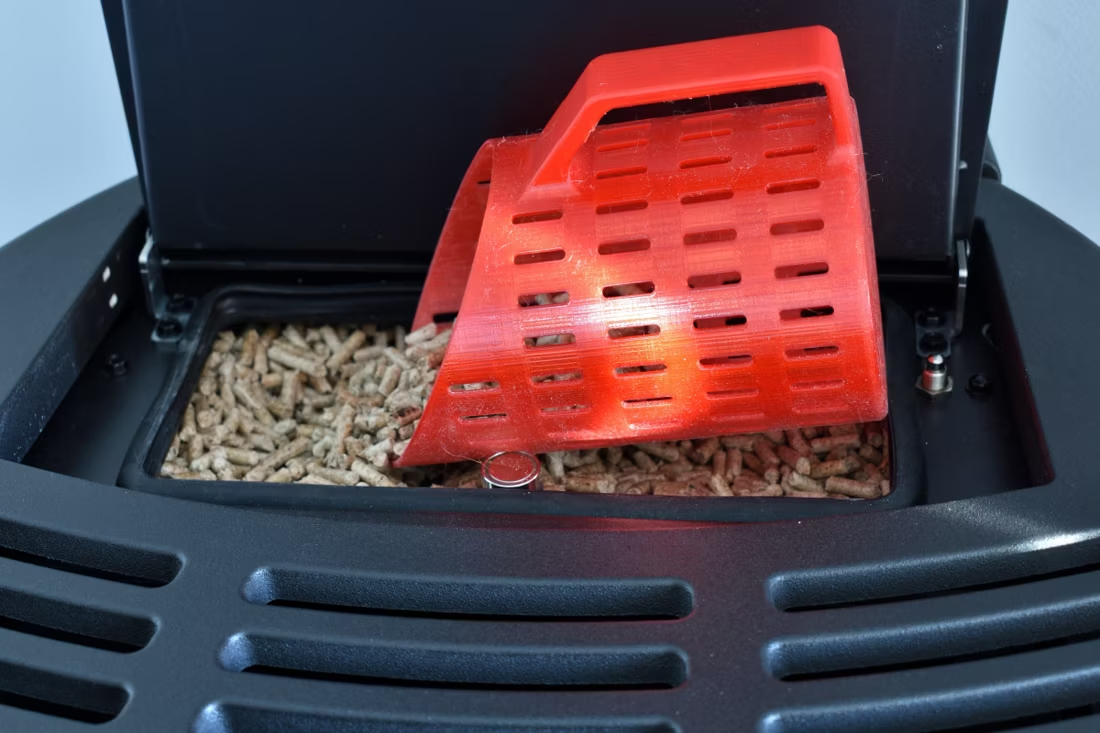
A clean pellet stove is a happy pellet stove. Plan on cleaning the burn pot about once a week when you're burning regularly—ash and clinkers gum up the air holes just like a pellet barbecue. Most pellet stove problems trace back to skipped cleaning that nobody explained up front. Some designs make it easy with a trapdoor burn pot: pull a lever and the gunk drops into the ash pan.
Why is a fireplace insert so efficient?
An insert does two things: it seals the chimney completely, so you stop losing air you already paid to heat, and it radiates warmth into the room through the firebox and glass. Most add a heat-exchange fan that pulls cool room air underneath, wraps it around the hot firebox, and pushes it back out warm. Your home is more efficient before you've even lit the first fire.
What is an in-home preview and do I need one?
It's a visit where a hearth professional measures your space, confirms the model you picked actually works in your home, and walks the specs—framing, gas line, venting, finish work—before anything is ordered. Some details you just can't know until you see the house. Never make a down payment without one; it's the single most-skipped step that burns buyers.
Can I install a fireplace myself?
If you're putting a fire in your house on purpose, it's best to work with an expert. Unless you're genuinely experienced in framing, gas line, vent pipe, and the national code on clearances to combustibles, have a professional do it—and ideally the same company that sells you the fireplace, so warranty, service, and liability all live under one roof.
Nearby Dealers
Hearth shops serving Muscatine and the surrounding area.
Pellet Brands Stocked Around Muscatine
Manufacturers will point you to the nearest stocking dealer.
Find your pellet insert or stove in Muscatine.
Tell us about your home and how you plan to use it, and we'll match you with a local dealer who can tell you honestly whether pellet heat makes sense—plus a free Project Guide & Parts List with the exact vent kit and parts your project needs.
Find Your Fireplace →