
Warm, reliable heat for Muscatine County's long Iowa winters.
From the river bluffs of downtown Muscatine to the farm towns of West Liberty, Wilton, and Nichols, gas heat delivers instant warmth through a Mississippi River Valley winter that runs six months a year. Find the right unit and get matched with a trusted local dealer.
Every Project Starts From One of These Five Situations
Instant heat that keeps up with Iowa cold.
Muscatine County sits along the Mississippi River in southeast Iowa, where Climate Zone 5A winters average lows around 13°F and the heating season is roughly as demanding as what a Madison, Wisconsin homeowner deals with. From the county seat of Muscatine, known historically as the Pearl City for its Mississippi River pearl button industry and now home to companies like HON Company and Kent Corporation, out to farm communities like West Liberty, Wilton, Nichols, Atalissa, Conesville, and Fruitland, the heating season stretches from October well into April.
Alliant Energy provides natural gas service through most of the city of Muscatine and the larger towns along Highway 61 and Highway 6, while many rural farmsteads and acreages elsewhere in the county rely on propane. Either fuel gets you the same core advantage: a gas fireplace or insert that lights instantly at the flip of a switch, runs without the ash and creosote of a wood-burning setup, and provides reliable zone heat to a living room or family room without asking your furnace to work overtime during the coldest stretches of the year—including the kind of severe weather that knocked out power across much of eastern Iowa during the August 2020 derecho.
Three steps. No salesperson until you're ready.
Tell us about your project
Your zip code, your situation, and the fuel you're leaning toward—or let the answers point you to one.
See what's actually available
The brands dealers within 100 miles genuinely carry—real options, never a catalog mirage.
Get your dealer & Project Guide
A trusted local dealer, plus the free Project Guide & Parts List that names every component of the job.
Frequently Asked Questions
How much does a gas fireplace installation cost in Muscatine County?
Installed cost for a gas fireplace or insert in Muscatine County typically runs $3,500 to $9,000, depending on whether you're installing a direct-vent insert into an existing masonry fireplace (many of the older homes near downtown Muscatine and in West Liberty have one) or a new built-in unit for a remodel or new construction. Homes already on Alliant Energy's natural gas line tend to land on the lower end; propane installations in rural parts of the county—Nichols, Atalissa, Conesville—sometimes run a bit higher if a new tank or longer gas line run is needed. A local dealer will give you a firm number after seeing the space in person.
Can I convert my existing wood fireplace to gas?
Yes, and it's a common project in Muscatine's older housing stock—plenty of the Victorian and Craftsman homes built during the city's early-1900s pearl button boom still have their original masonry fireplace and chimney. A gas insert slides into that existing opening, uses a stainless liner run up the same chimney for venting, and typically runs $4,000 to $8,000 depending on the insert and whether you're on natural gas or propane. It's a straightforward way to keep the look of an old fireplace while getting real, controllable heat out of it.
Do I need natural gas, or can I use propane?
Either works, and which one you use mostly comes down to your address. Inside the city of Muscatine and along the main corridors through West Liberty and Wilton, Alliant Energy's natural gas lines make hookup simple if you've already got gas appliances in the house. Out in the county's farmland—around Nichols, Atalissa, Conesville, and Fruitland—propane is the standard, either from an existing tank or a new one set by a local propane supplier. Most gas fireplace models can be configured for either fuel; your installer sets the correct orifice and regulator for whichever you're running.
Will my gas fireplace work during a power outage?
Most modern gas fireplaces will, as long as they use IPI (intermittent pilot ignition) with a battery backup—the unit keeps lighting on demand off a set of AA batteries even with the power out. That mattered plenty across Muscatine County during the August 2020 derecho, when high winds knocked out electric service for days in some areas. Valor fireplaces take a different approach worth asking about: they generate their own current through the pilot's thermocouple, so there are no batteries to remember at all. Either way, ask your local dealer about the ignition system before you buy if backup heat during a storm matters to you.
What's the difference between a gas fireplace, gas insert, and gas stove?
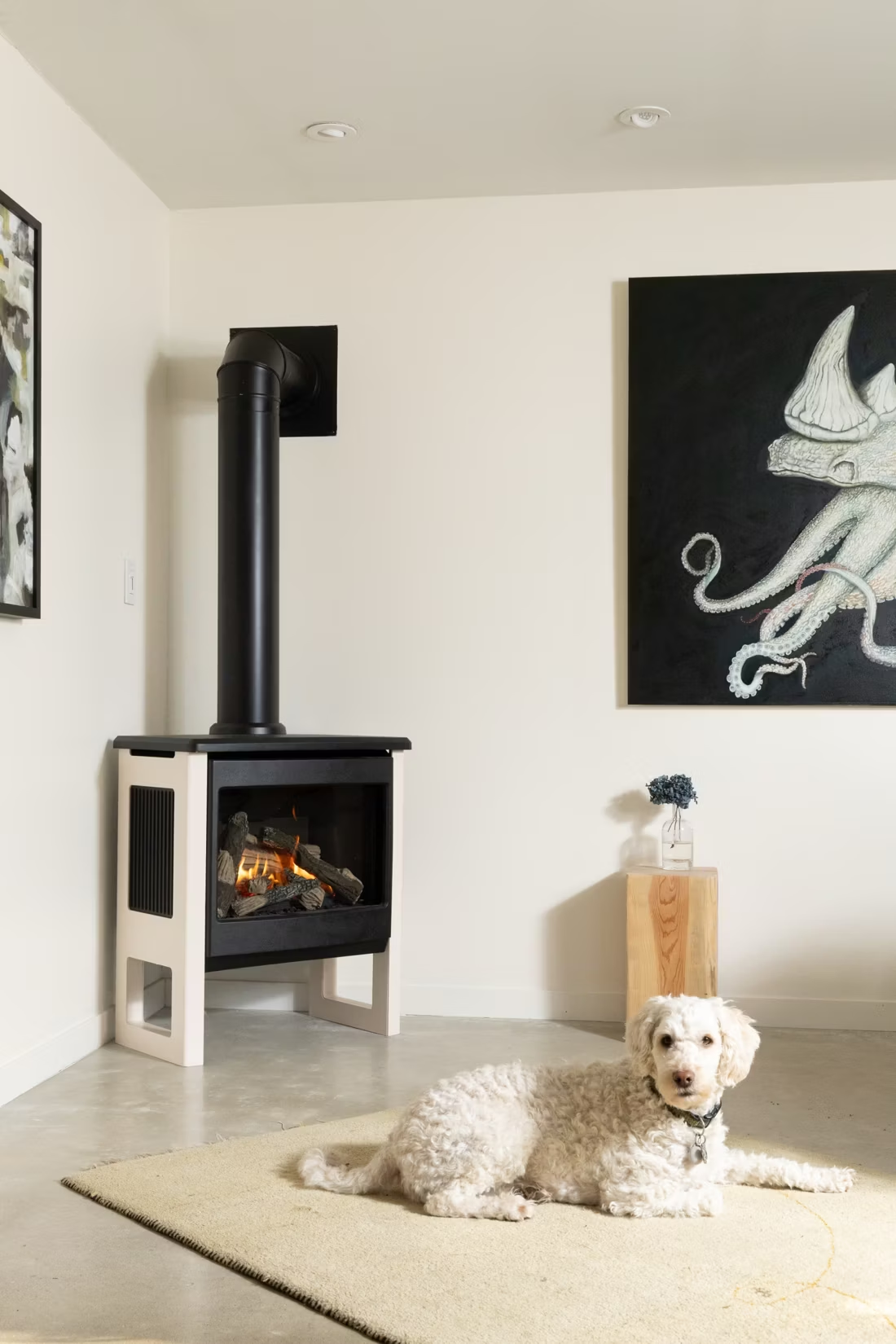
A gas fireplace is a fully built-in unit framed into a wall—the right call for new construction or a remodel without an existing hearth. A gas insert drops into an existing masonry fireplace opening and vents up the same chimney, which fits a lot of the older homes around downtown Muscatine and the county's small towns. A gas stove is a freestanding unit that sits on the floor on its own hearth pad, similar in footprint to a wood stove but running on gas. For most Muscatine County homeowners with a fireplace they're not using much, an insert is the simplest upgrade.
Do I need a permit to install a gas fireplace in Muscatine County?
Yes—a building permit and gas line permit are required for a new gas fireplace installation. Inside city limits, that permit goes through the local building inspection office (for example, the City of Muscatine's office for in-town projects); for rural addresses elsewhere in the county, it's handled through Muscatine County's building department. The gas line work itself needs a licensed gas-fitter. Most established hearth dealers coordinate the permitting, gas line, and venting inspection as part of the installation, so you're not left managing separate trades yourself.
What's the difference between vented and vent-free gas fireplaces?
Vented (direct-vent or B-vent) gas fireplaces pull combustion air from outside and exhaust the byproducts back outside through sealed venting—they're the cleanest, safest option and are code-approved everywhere, including Iowa. Vent-free units burn directly into the room without outside venting; they're legal in Iowa with proper room-sizing and an oxygen depletion sensor, but they do release some water vapor and combustion byproducts into your living space. For Muscatine County's fairly airtight, well-insulated homes built for a long, demanding heating season, most local dealers steer homeowners toward direct-vent units for both the heat output and the indoor air quality.
How often should my gas fireplace be serviced?
Plan on an annual inspection, ideally before the heating season kicks in around October. A technician checks the burner, pilot assembly, venting, gas connections, and any battery backup or electronic ignition components, and cleans the glass and interior. It's a quick visit—usually $150 to $250—but skipping it for a few years is how you end up with a pilot that won't hold or a unit that shuts down on the coldest night of an Iowa winter, which is exactly when you don't want it to.
Gas vs. wood—which is right for my home?
Muscatine County has no shortage of good firewood—oak, hickory, maple, and walnut are all common in the county's woodlots and river bottoms—so wood heat remains a solid option, especially as backup during outages like the 2020 derecho. But it means hauling, splitting, and stacking cordwood, plus regular chimney cleaning. Gas skips all of that: flip a switch, get instant, even heat, and walk away with no ash or soot. For a primary living space in a Muscatine or West Liberty home already on Alliant Energy's gas line, gas is usually the easier, lower-maintenance fit. Plenty of county homeowners keep a wood stove in a den or basement for backup and put gas in the main living area for daily use.
What's the difference between an insert and a zero-clearance fireplace?
An insert is a fireplace that slides into a pre-existing wood-burning fireplace—if you don't have one, there's nothing to insert it into. A zero-clearance fireplace is built into a framed wall, which makes it the answer for remodels and new construction. Simple test: existing masonry fireplace means insert; blank or framed wall means zero-clearance.
What does it take to replace an existing fireplace?
Fireplaces are like icebergs—bigger behind the wall than in front of it. Replacement means removing the surrounding tile or stone (the finish material laps onto the fireplace face), pulling the old unit, setting the new one in the same enclosure, and re-finishing the wall. A hearth professional can determine what's behind your wall without demolition during an in-home preview.
Can I install a fireplace myself?
If you're putting a fire in your house on purpose, it's best to work with an expert. Unless you're genuinely experienced in framing, gas line, vent pipe, and the national code on clearances to combustibles, have a professional do it—and ideally the same company that sells you the fireplace, so warranty, service, and liability all live under one roof.
Can a fireplace actually lower my heating bill?
Yes—by creating a comfort zone. A furnace heats every square foot of the house just to warm the one room you're in; a gas fireplace on low burns roughly a sixth of the gas a typical furnace does. Set the furnace around 55–60 degrees as a baseline, then heat the rooms your family actually uses. Families who heat this way commonly save $20–$60 a month.
Stove and Fireplace Dealers in Muscatine County
Find your gas fireplace in Muscatine County.
Tell us a bit about your home and heating goals, and we'll match you with a trusted local dealer and send over a free Project Guide & Parts List—the exact parts, vent kit, and recommended installer for your gas fireplace project in Muscatine County.
Find Your Fireplace →