
Reliable heat without the smoke, ash, or chimney work.
With winters that run nearly seven months and lows near 11°F, Linn County homes need real heat for months—from Cedar Rapids condos to Marion ranch homes to Hiawatha starter houses. Electric delivers it with no venting, no gas line, and no wood to split. Find the right unit and connect with a trusted local dealer.
Every Project Starts From One of These Five Situations
Clean heat that fits any room, any budget.
Linn County stretches from downtown Cedar Rapids out through Marion, Hiawatha, Robins, Center Point, and Mount Vernon, and its climate sits solidly in Zone 5A—closer in feel to Madison, WI than to anywhere mild. With average winter lows around 11°F and a long, nearly seven-month heating season, a lot of local homes lean on supplemental heat for months at a time, not just a handful of cold snaps. Electric fireplaces have become a go-to answer in that stretch, especially in the newer builds, condos, and apartments that make up a growing share of Cedar Rapids and Marion housing, where a masonry chimney or gas line was never part of the plan.
Alliant Energy serves electric accounts across most of Linn County, and that reliable grid backbone is part of why electric fireplaces make sense here even outside new construction—a plug-in insert or a wired wall unit can go into a finished basement, a converted bedroom, or an older Cedar Rapids bungalow without touching the existing heating system. Worth noting directly: wood and pellet appliances are uncommon among Linn County hearth dealers, who stock almost entirely gas and electric lines, so if you're comparing options, electric and gas are really the two paths most local installers will walk you through.
Three steps. No salesperson until you're ready.
Tell us about your project
Your zip code, your situation, and the fuel you're leaning toward—or let the answers point you to one.
See what's actually available
The brands dealers within 100 miles genuinely carry—real options, never a catalog mirage.
Get your dealer & Project Guide
A trusted local dealer, plus the free Project Guide & Parts List that names every component of the job.
Frequently Asked Questions
How much does an electric fireplace installation cost in Linn County?
Plug-in electric fireplace inserts and freestanding units typically run $300 to $1,200 installed, since they need no wiring beyond an existing outlet—a common choice for Cedar Rapids and Marion homes converting an old wood-burning fireplace opening. Built-in wall units or linear electric fireplaces that require a dedicated 20-amp circuit run higher, generally $800 to $2,500, once an electrician is factored in for the new circuit and any wall framing. Costs on the higher end usually involve custom surrounds or mounting into finished walls rather than the unit itself, which tends to be the cheapest line item.
What size electric fireplace do I need for my home?
Most electric fireplaces are rated for supplemental heat in a single room—typically 400 to 1,000 square feet on a standard 1,500-watt heater element—rather than whole-home heating. For a Linn County living room or finished basement in a home built before modern insulation codes, that's usually enough to take the edge off during the coldest stretches of a long, nearly seven-month winter without replacing your furnace. Larger linear units spanning 60 inches or more put out the same wattage but distribute the visual flame across a wider wall, which matters more for look than for actual heat output. A local dealer can walk through your room dimensions and ceiling height before you buy.
Do I need an electrician to install an electric fireplace?
For a plug-in insert or freestanding unit, no—it runs off a standard outlet like any large appliance. For a built-in wall unit or a linear fireplace mounted into a wall, most manufacturers require a dedicated circuit, which means a licensed electrician needs to run new wiring. Local hearth dealers serving Cedar Rapids, Marion, and Hiawatha generally coordinate this as part of the install rather than leaving you to hire a separate trade, which keeps the warranty and code compliance in one hand instead of two.
What's the difference between an electric fireplace, insert, and wall-mount unit?
An electric insert is built to slide into an existing fireplace opening—a popular option for older Linn County homes with a masonry firebox that's been sitting unused. A freestanding electric fireplace sits on the floor like a stove and can go anywhere with an outlet. A wall-mount or linear unit is a thinner, flatter design meant to be recessed into or hung on a wall, common in newer Cedar Rapids and Marion builds where a fireplace wasn't part of the original layout. All three use the same basic heating element; the difference is really about how they fit your existing space.
Do I need a permit to install an electric fireplace in Linn County?
A simple plug-in insert or freestanding unit generally doesn't require a permit since no wiring or structural work is involved. A built-in wall unit that requires new electrical circuitry typically does need an electrical permit, pulled through the building department in Cedar Rapids, Marion, or the Linn County office for unincorporated areas, depending on where the home sits. Most licensed electricians handle that paperwork as part of the job. Because electric units produce no combustion byproducts, they also fall outside any of the venting or clearance rules that apply to wood or gas appliances.
What's the best electric fireplace for Linn County's climate?
For homes leaning on an electric unit as real supplemental heat through a Linn County winter—not just ambiance—look for a full 1,500-watt heater rating with a built-in thermostat, which lets the unit cycle on and off to hold a set temperature instead of running flat out. Brands like Dimplex and Napoleon build linear and insert models with this feature standard. For rooms where you mainly want the visual flame with occasional heat, a lower-wattage or heat-optional model works fine and costs less to run. A local dealer can match wattage to your specific room rather than guessing from a box label.
How much maintenance does an electric fireplace need?
Very little compared to wood or gas. There's no chimney to sweep, no gas line to inspect, and no combustion byproducts to worry about. Occasional dusting of the vents and an annual check that the heating element and fan are running clean is generally all that's needed. Most units carry a manufacturer warranty of 2 to 5 years, and local dealers can usually source replacement parts like remote controls or LED flame kits directly if something needs swapping out.
Electric vs. gas—which is right for my Linn County home?
Gas fireplaces put out substantially more real heat—enough to serve as a primary heat source in a room—and Linn County has broad natural gas availability through the local utility infrastructure serving Cedar Rapids and Marion, making a gas insert or built-in unit a straightforward option for homes with an existing line. Electric fireplaces put out less heat but need no gas line, no venting, and no combustion, which makes them the simpler and cheaper install for condos, apartments, finished basements, or any room where running gas isn't practical. Many local homeowners choose gas for a main living space and electric for a bedroom, office, or secondary room where a full heat source isn't necessary.
Why don't more Linn County dealers carry wood or pellet stoves?
Linn County has plenty of hardwood in its tree canopy—oak, hickory, maple, and walnut are all common locally—but that hasn't translated into a strong wood or pellet stove market among area hearth dealers, who stock almost exclusively gas and electric lines. If you're set on wood heat, expect to look outside the immediate Cedar Rapids and Marion area or work with a dealer who special-orders. For most Linn County homeowners, though, the practical choice comes down to gas versus electric, and a local dealer can walk through both against your specific room and budget.
Do electric fireplaces actually produce heat?
Yes—most put out around 4,800–5,000 BTUs from a standard outlet, which comfortably warms a bedroom, office, or den as a comfort-zone heater. What they won't do is carry a whole house the way wood, gas, or pellet can. Think of electric as ambiance-first with honest supplemental heat: flames on with no heat in July, flames plus warmth in January.
Can I put a TV above my fireplace?
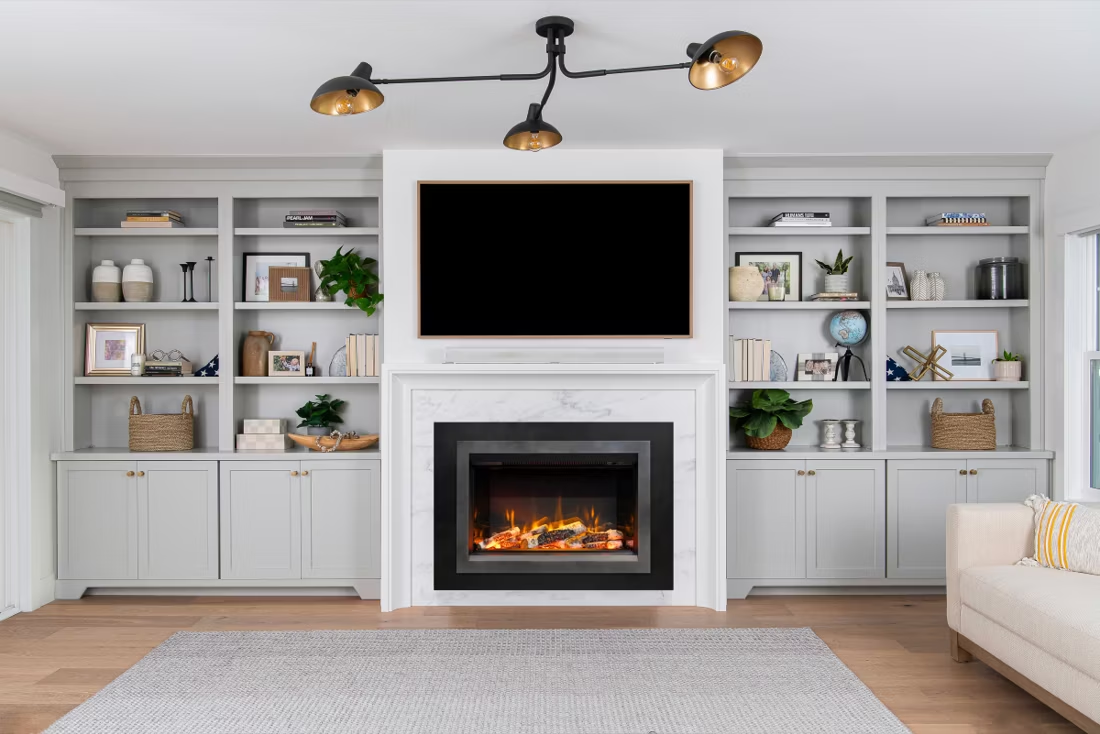
Yes—with an asterisk. Fireplaces are hot and TVs don't like heat. Either put a mantel between them to deflect rising warmth, or choose a fireplace with heat-management technology that creates a cool zone on the wall above—the wall stays around 125 degrees, barely warm, while the room still gets full heat. If you like clean lines and don't want a mantel, heat management is the answer.
How much should I budget for a fireplace?
For an average home—covering the fireplace, the vent pipe, and basic installation—a budget between $3,900 and $5,500 gives you a lot of options across wood, gas, and pellet. By the time you add finish work, gas line, and electrical, the average complete installation lands between $5,000 and $12,000 all-in. In a remodel or new build, a good rule is to put about 2.5% of the total project cost toward the fireplace.
Does a fireplace add value to my home?
On average, a fireplace adds back to the home about the same amount you spent installing it. Add the monthly savings from heating the rooms you actually use instead of the whole house—often hundreds of dollars a year—and the value case is strong before you even count what a fire does for how your family uses the room.
Stove and Fireplace Dealers in Linn County
Listings include WhyFire partner dealers, dealers we have verified as authorized for the brands we recommend, and established local businesses that carry hearth products. Every listing shows which one it is. The ones marked Preferred run on WhyFire's software, so they can show you real pricing and book your appointment right here. No manufacturer pays for placement. How we verify dealers →
Ferguson Home - Cedar Rapids
Stone Works - Marion Location
Spartan Heating, Cooling And Fireplaces
Ogden-Adams Building Solutions
Brick House Ops.
Hearth And Home Solutions
Brandt Heating And Air Conditioning
Find your electric fireplace in Linn County.
Tell us a bit about your home and we'll match you with a trusted local Linn County dealer and send over a free Project Guide & Parts List—the exact unit, mounting or insert kit, and electrical work your project needs.
Find Your Fireplace →