
Instant heat, zero venting, real ambiance in Fairfax.
No gas line, no chimney, no permit headaches—just plug-in or hardwired warmth for Linn County winters comparable to Madison, WI.
Every Project Starts From One of These Five Situations
The easiest heat upgrade for a cold Linn County winter.
Fairfax is a small town of about 2,800 people in Linn County, just outside Cedar Rapids, sitting in climate zone 5A with average winter lows around 11°F and a cold-climate heating load in the same range as Madison, WI. Most homes here get electric service from either Interstate Power and Light (Alliant Energy) or Linn County REC, the rural electric cooperative that covers much of the outlying county. That split matters for fireplace buyers: REC customers pay closer to $0.142/kWh while Interstate Power and Light customers pay closer to $0.179/kWh, a real difference over a full heating season.
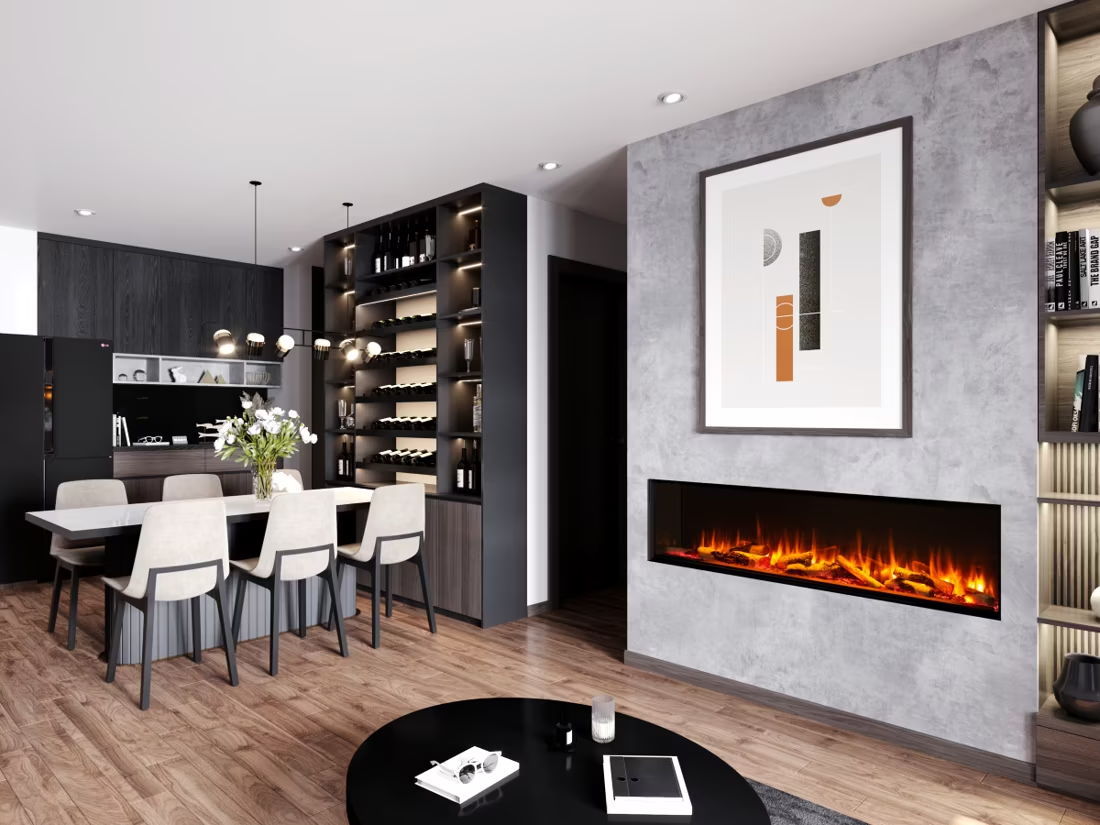
In a town this size, new construction and remodels increasingly skip wood-burning fireplaces altogether—Fairfax isn't near public timberland with cutting permits, and local building departments in Linn County generally steer new hearth projects toward gas or electric instead. Electric fireplaces fill a specific niche here: finished basements, rental units, manufactured and mobile homes, condos, and any room where running a gas line or masonry chimney just isn't practical. A plug-in insert needs nothing more than a standard outlet; a built-in linear unit usually needs a dedicated 20-amp circuit, which is where a local electrician or hearth dealer comes in.
Three steps. No salesperson until you're ready.
Tell us about your project
Your zip code, your situation, and the fuel you're leaning toward—or let the answers point you to one.
See what's actually available
The brands dealers within 100 miles genuinely carry—real options, never a catalog mirage.
Get your dealer & Project Guide
A trusted local dealer, plus the free Project Guide & Parts List that names every component of the job.
Frequently Asked Questions
How much does an electric fireplace installation cost in Fairfax?
Costs vary widely because electric fireplaces range from $200 plug-in inserts to $2,000+ built-in wall units with custom surrounds. A basic recessed insert into an existing opening, wired to a standard outlet, often lands in the $400-$900 range including labor. A built-in linear unit that needs a dedicated 20-amp circuit run by a licensed electrician typically runs $1,000-$2,500 once framing, trim, and wiring are included. Because there's no venting, chimney, or gas line involved, electric installs are consistently the least expensive fireplace option available to Fairfax homeowners.
Do I need a permit to install an electric fireplace in Fairfax?
Usually not for a simple plug-in unit—it's treated like any other appliance. If your installation requires new electrical wiring or a dedicated circuit, that work typically needs an electrical permit through Linn County or your local jurisdiction, and it should be pulled by a licensed electrician regardless of the paperwork. Built-in units that involve wall framing or drywall modification may also trigger a basic building permit. A local hearth dealer or electrician handling the install will know exactly what's required for your specific unit and address.
Electric vs. gas—which is better for my Fairfax home?
Gas is the stronger choice if you want real heat output during a power outage and already have a gas line or propane tank nearby—Fairfax sees its share of winter ice storms, and a gas unit with battery-backup ignition keeps running when the grid doesn't. Electric wins on install simplicity and upfront cost: no venting, no gas line, and a unit can go into almost any wall or built-in cabinet in an afternoon. For supplemental heat in a basement, bedroom, or rental unit, electric is usually the practical answer. For a primary heat source that needs to perform through a Linn County ice storm, gas is worth the added installation cost.
Will my electric fireplace still work if the power goes out?
No—this is the one real limitation of electric heat. Unlike a gas unit with battery-backup ignition or a wood stove that needs no power at all, an electric fireplace goes dark the moment your Interstate Power and Light or Linn County REC service drops. For most Fairfax homeowners installing electric for ambiance or supplemental warmth in a room that already has central heat, that's a fair trade-off for the low cost and easy install. If backup heat during outages matters to you, pair it with a gas unit elsewhere in the house.
What does it cost to run an electric fireplace in Fairfax?
Most electric fireplaces draw about 1,500 watts on the heat setting. At Interstate Power and Light's residential rate of roughly $0.179/kWh, that's about 27 cents an hour. Linn County REC customers pay closer to $0.142/kWh, or about 21 cents an hour. Running the flame effect alone without heat draws only 30-50 watts, so ambiance-only use costs a fraction of a cent per hour—worth knowing if you want the look of a fire on a Fairfax evening without running up the heating bill.
What about a wood-burning fireplace instead?
Wood-burning fireplaces are uncommon as new installs in Fairfax. There's no nearby national forest with cutting permits, and local building departments in Linn County generally steer new hearth projects toward gas or electric rather than masonry wood construction. That said, oak, hickory, maple, and walnut are all common regional firewood species for the households that already have a working wood fireplace or stove—it's just not the growth category here that it is in more heavily forested parts of the Midwest. If you're building new or remodeling, electric or gas will almost always be the more practical route.
What size electric fireplace do I need for my Fairfax home?
Electric fireplaces are rated by room size rather than whole-house square footage, since most units supplement rather than replace central heat. A 1,500-watt unit will noticeably warm a 400-500 sq ft room—enough for most bedrooms, basements, or living rooms in a typical Fairfax home. With winter lows averaging 11°F and a cold-climate heating load in the same range as Madison, WI, don't expect an electric fireplace to carry a whole floor on its own; it's built to take the edge off a specific room, not replace your furnace.
What's the best type of electric fireplace for a Fairfax home?
It depends on the house. Fairfax has a mix of newer subdivision homes and older farmhouses, and each suits a different style. Linear wall-mounted units look clean in newer builds with open floor plans and can be recessed into a stud wall. Insert-style units are the better fit for older homes with an existing but unused wood fireplace opening—they slide in and use your existing mantel and surround. Freestanding electric stoves work well in basements or additions where there's no existing fireplace opening at all. A local dealer can walk your specific room and tell you which style fits the space and your electrical setup.
Is electric a good option for a rental property or mobile home in Fairfax?
Yes—it's often the best option. Electric fireplaces don't require venting, gas lines, or structural changes, which makes them well suited to rental units, manufactured homes, and mobile homes where major modifications aren't practical or allowed. A plug-in unit can be installed in minutes and removed just as easily if a tenant changes or the property sells. For landlords managing multiple properties around Fairfax, electric is usually the lowest-hassle way to add a fireplace amenity without the liability of an open flame.
Does an electric fireplace need a vent or chimney?
No—that's its superpower. An electric fireplace needs a wall and an outlet, period. No vent pipe, no gas line, no clearances to design around, which is why it works in bedrooms, offices, apartments, and walls where venting a gas or wood unit would be impractical or impossible. Installation is typically the simplest and least expensive of any fireplace type.
Can I put a TV above my fireplace?
Yes—with an asterisk. Fireplaces are hot and TVs don't like heat. Either put a mantel between them to deflect rising warmth, or choose a fireplace with heat-management technology that creates a cool zone on the wall above—the wall stays around 125 degrees, barely warm, while the room still gets full heat. If you like clean lines and don't want a mantel, heat management is the answer.
Can I install a fireplace myself?
If you're putting a fire in your house on purpose, it's best to work with an expert. Unless you're genuinely experienced in framing, gas line, vent pipe, and the national code on clearances to combustibles, have a professional do it—and ideally the same company that sells you the fireplace, so warranty, service, and liability all live under one roof.
Can a fireplace actually lower my heating bill?
Yes—by creating a comfort zone. A furnace heats every square foot of the house just to warm the one room you're in; a gas fireplace on low burns roughly a sixth of the gas a typical furnace does. Set the furnace around 55–60 degrees as a baseline, then heat the rooms your family actually uses. Families who heat this way commonly save $20–$60 a month.
Nearby Dealers
Hearth shops serving Fairfax and the surrounding area. Every listing shows whether it is a WhyFire partner, a dealer we have verified as authorized for the brands we recommend, or a local business carrying hearth products. No manufacturer pays for placement. How we verify dealers →
Ferguson Home - Cedar Rapids
Ogden-Adams Building Solutions
Stone Works - Marion Location
Spartan Heating, Cooling And Fireplaces
Brick House Ops.
Hearth And Home Solutions
Brandt Heating And Air Conditioning
Electric Service in Fairfax
An electric fireplace's heater draws about 1,500 watts—pennies per hour at local rates.
Interstate Power And Light Co
Linn County Rec
Find your electric fireplace in Fairfax.
Tell us about your room and your home, and we'll match you with a trusted local dealer and send over a free Project Guide & Parts List—the exact unit, wiring needs, and trim pieces for your Fairfax install.
Find Your Fireplace →