
Electric heat that keeps up with Hiawatha winters.
No chimney, no gas line, no venting—just a fireplace you plug in or wire in and a trusted local dealer who gets it right.
Every Project Starts From One of These Five Situations
Reliable zone heat without the venting hassle.
Hiawatha sits just north of Cedar Rapids in Linn County, at about 842 feet elevation in climate zone 5A. With a long, demanding heating season and winter lows averaging 12°F, this is real heating-season territory—comparable in severity to Madison, Wisconsin. Electric fireplaces have become a popular fit here not as a replacement for the furnace, but as supplemental warmth in a family room, basement, or bedroom where running the whole HVAC system for one space feels wasteful.
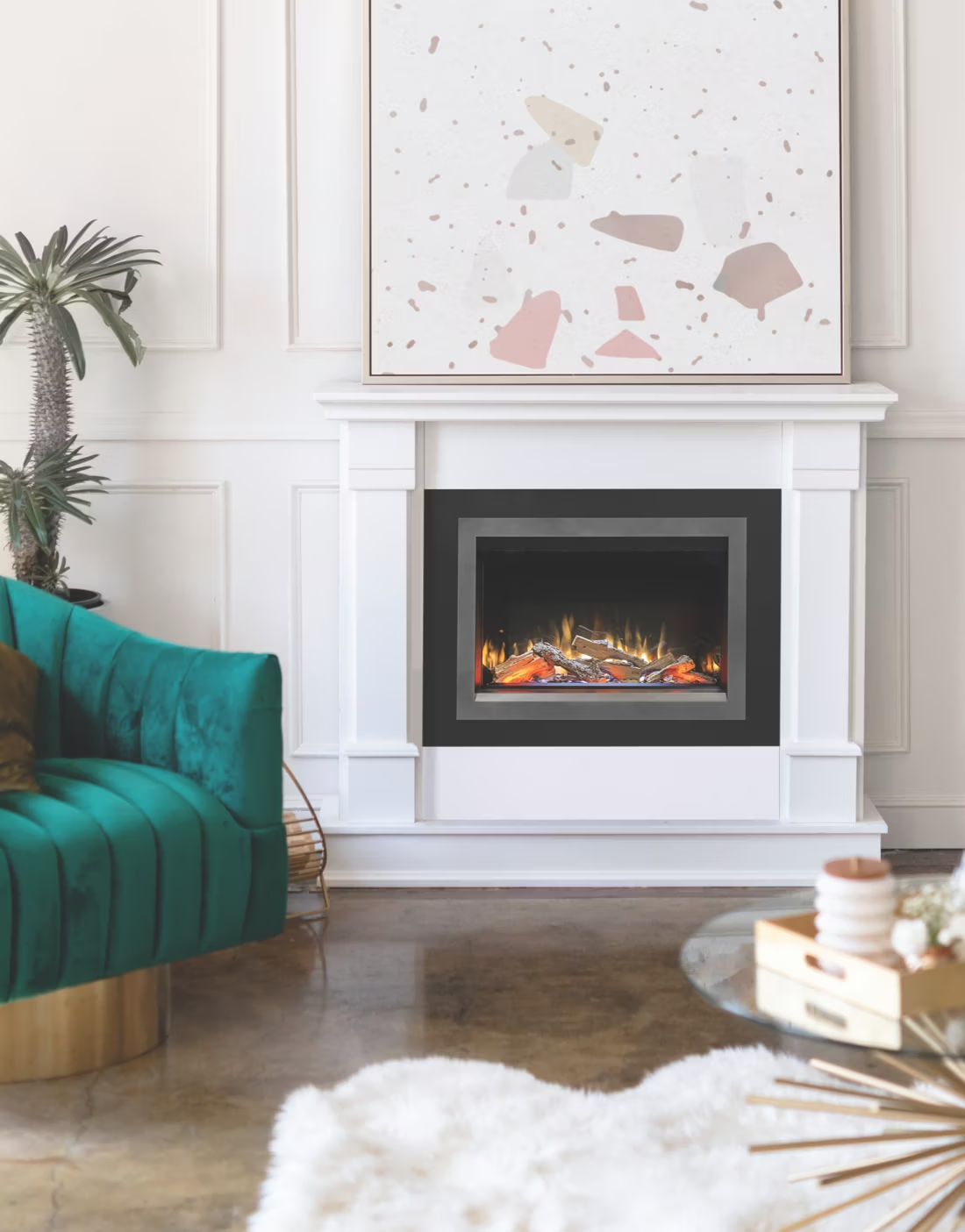
Three electric providers serve homes in and around Hiawatha—Interstate Power and Light (Alliant Energy), MidAmerican Energy, and Linn County REC—with residential rates ranging from about 11 to nearly 18 cents per kWh depending on which one serves your address. Because electric fireplaces plug into standard household circuits (or a dedicated 20-amp circuit for larger built-ins), installation skips the masonry, chimney sweeping, and gas line permitting that wood and gas units require. That simplicity is exactly why they show up so often in Hiawatha's newer subdivisions and finished basements.
Three steps. No salesperson until you're ready.
Tell us about your project
Your zip code, your situation, and the fuel you're leaning toward—or let the answers point you to one.
See what's actually available
The brands dealers within 100 miles genuinely carry—real options, never a catalog mirage.
Get your dealer & Project Guide
A trusted local dealer, plus the free Project Guide & Parts List that names every component of the job.
Frequently Asked Questions
How much does an electric fireplace installation cost in Hiawatha?
Plug-in freestanding units and smaller inserts that use an existing 120V outlet typically run $300 to $1,200 installed—most of that cost is the unit itself, since there's no new wiring involved. Built-in wall units and larger mantel packages that need a dedicated 20-amp circuit run $1,500 to $3,500 once you factor in an electrician's time to run new wiring from the panel. Either way, there's no chimney, no venting, and no gas line work, which keeps electric installs well below what a wood or gas project costs in Linn County.
Will an electric fireplace actually heat my home in Hiawatha's winters?
Not as a primary heat source—and any honest local dealer will tell you that upfront. With a long, demanding heating season and average winter lows around 12°F, Hiawatha's climate is similar to Madison, Wisconsin, and a standard electric fireplace heater (usually 1,500 watts, roughly 5,200 BTU) is built for zone heating: taking the chill off a family room or bedroom so you're not running the furnace harder than you need to. Think of it as supplemental warmth that pairs with your existing heating system, not a substitute for it.
Which electric utility serves my home, and how does that affect running costs?
Depending on your exact address in Hiawatha, you'll be billed by Interstate Power and Light (Alliant Energy) at around 17.9 cents per kWh, MidAmerican Energy at around 11 cents, or Linn County REC at around 14.2 cents. Running a typical 1,500-watt fireplace heater costs roughly 16 to 27 cents an hour depending on which provider serves you—a noticeable spread if you're running it several hours a night through an Iowa winter. Check a recent bill to confirm your provider before comparing running costs against a gas alternative.
Do I need a permit to install an electric fireplace in Hiawatha?
If you're plugging a freestanding or insert unit into an existing outlet, no permit is needed. If the unit requires a new dedicated circuit or any panel work, a licensed electrician will need to pull an electrical permit through the City of Hiawatha (or Linn County if you're just outside city limits). Most local dealers coordinate this as part of the install, so you're not left calling the building department yourself.
What's the difference between an electric insert, built-in, and mantel package?
An electric insert is sized to slot into an existing fireplace opening—a common choice for Hiawatha homes with an old wood-burning fireplace that no one uses anymore. A built-in is a wall-recessed unit designed for new construction or a remodel where you're framing the space from scratch. A mantel package pairs a freestanding or wall-mount electric unit with a surrounding mantel shelf and is the easiest option if you're not touching existing framing at all. Which one fits depends mostly on whether you're converting an existing fireplace or starting fresh.
What are the best electric fireplace brands for Iowa winters?
For actual supplemental heat rather than pure ambiance, look at units from Dimplex, Napoleon, or Touchstone—all of which offer models with a full 1,500-watt heater rather than a decorative flame effect alone. Dimplex's multi-fire LED technology and Napoleon's built-in options are common recommendations from local dealers for basements and family rooms, since both hold up well to daily winter use rather than occasional weekend operation.
Electric vs. gas fireplace—which is right for my Hiawatha home?
Interstate Power and Light provides natural gas service to much of Hiawatha alongside electric, so gas is a real option here too. Gas fireplaces put out more heat (often 20,000+ BTU) and can genuinely warm a room on a sub-zero night, but they require venting and a gas line, which pushes install costs higher. Electric fireplaces skip all of that—no venting, no gas permit, lower upfront cost—but they're limited to roughly 5,200 BTU, so they're a better fit for supplemental warmth than for offsetting a drafty room. If you already have gas service to the house, it's worth asking a local dealer to price both before deciding.
Will my electric fireplace work during a power outage?
No—an electric fireplace, unlike a wood stove, has no function without power, since both the flame effect and the heater run on household current. Wood heat isn't common in Hiawatha's newer subdivisions and Linn County doesn't see the kind of self-cut firewood culture you'd find farther north, so most homeowners here treat the electric fireplace purely as everyday supplemental heat and rely on a separate plan—a generator, a wood stove elsewhere, or simply extra blankets—for extended outages.
How long does an electric fireplace installation take?
A plug-in freestanding or insert unit can be installed and running the same day—often within an hour once it's on-site. A built-in unit that requires a new dedicated circuit typically takes one to two days: one day for the electrician to run wiring and pull the permit inspection, and a second for final installation and trim-out. Local dealers can usually schedule both trades back-to-back so you're not waiting weeks between steps.
Do electric fireplaces actually produce heat?
Yes—most put out around 4,800–5,000 BTUs from a standard outlet, which comfortably warms a bedroom, office, or den as a comfort-zone heater. What they won't do is carry a whole house the way wood, gas, or pellet can. Think of electric as ambiance-first with honest supplemental heat: flames on with no heat in July, flames plus warmth in January.
Does an electric fireplace need a vent or chimney?
No—that's its superpower. An electric fireplace needs a wall and an outlet, period. No vent pipe, no gas line, no clearances to design around, which is why it works in bedrooms, offices, apartments, and walls where venting a gas or wood unit would be impractical or impossible. Installation is typically the simplest and least expensive of any fireplace type.
Can a fireplace actually lower my heating bill?
Yes—by creating a comfort zone. A furnace heats every square foot of the house just to warm the one room you're in; a gas fireplace on low burns roughly a sixth of the gas a typical furnace does. Set the furnace around 55–60 degrees as a baseline, then heat the rooms your family actually uses. Families who heat this way commonly save $20–$60 a month.
What is an in-home preview and do I need one?
It's a visit where a hearth professional measures your space, confirms the model you picked actually works in your home, and walks the specs—framing, gas line, venting, finish work—before anything is ordered. Some details you just can't know until you see the house. Never make a down payment without one; it's the single most-skipped step that burns buyers.
Nearby Dealers
Hearth shops serving Hiawatha and the surrounding area. Every listing shows whether it is a WhyFire partner, a dealer we have verified as authorized for the brands we recommend, or a local business carrying hearth products. No manufacturer pays for placement. How we verify dealers →
Ogden-Adams Building Solutions
Ferguson Home - Cedar Rapids
Stone Works - Marion Location
Spartan Heating, Cooling And Fireplaces
Brick House Ops.
Hearth And Home Solutions
Electric Service in Hiawatha
An electric fireplace's heater draws about 1,500 watts—pennies per hour at local rates.
Interstate Power And Light Co
Midamerican Energy Co
Linn County Rec
Find your electric fireplace in Hiawatha.
Tell us about your space and we'll put together a free Project Guide & Parts List—the right unit, the wiring it needs, and a trusted local Hiawatha-area dealer to install it.
Find Your Fireplace →