
Find your fireplace in Linn County, Iowa.
Fireplace resources for every city in Linn County—Cedar Rapids, Marion, Hiawatha, Robins, and the smaller towns around them. Connect with a trusted local dealer who knows what actually works in a long, cold Iowa winter.
Every Project Starts From One of These Five Situations
Steady Midwest cold calls for steady heat in Linn County.
Linn County sits in east-central Iowa around Cedar Rapids, in climate zone 5A with a heating season on par with winters seeing average lows near 11°F. That's a real winter—comparable to what Madison, Wisconsin sees most years—but it's flat farmland cold, not mountain cold: long stretches of single-digit nights rather than deep sustained subzero cold. Natural gas is the backbone fuel here, served by Alliant Energy across most of the county, and gas fireplaces, inserts, and log sets are the default choice for anyone building new or replacing an old unit. Electric fireplaces fill in where gas isn't run or where a homeowner wants supplemental heat in a bedroom, sunroom, or finished basement.
Wood and pellet fireplaces are genuinely uncommon here, and this hub says so plainly rather than pretending otherwise. Older homes in Cedar Rapids, Marion, and Mount Vernon sometimes still have a masonry wood fireplace built decades ago, and a small number of rural Linn County homeowners near Central City or Coggon keep a wood stove for backup heat during ice storms. Regional pellet suppliers like Lignetics and Indeck Energy Services do serve this part of Iowa, but mostly for industrial and export markets—residential pellet stove demand in Linn County is thin. Pick your fuel below and we'll point you to what's actually installable and serviceable near you, not just what's technically possible.
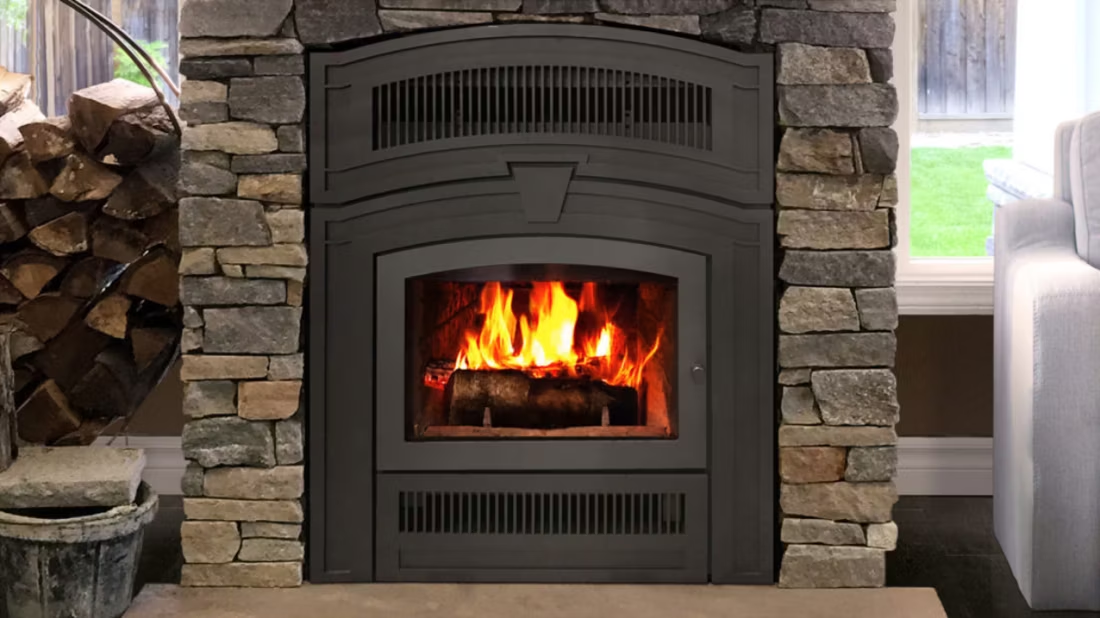
Four fuels. One honest answer for Linn County.
Three steps. No salesperson until you're ready.
Tell us about your project
Your zip code, your situation, and the fuel you're leaning toward—or let the answers point you to one.
See what's actually available
The brands dealers within 100 miles genuinely carry—real options, never a catalog mirage.
Get your dealer & Project Guide
A trusted local dealer, plus the free Project Guide & Parts List that names every component of the job.
Frequently Asked Questions
Which fuel works best in Linn County?
For most Linn County homes, it's gas. Alliant Energy's natural gas service covers Cedar Rapids, Marion, Hiawatha, and most of the incorporated towns, and a direct-vent gas fireplace or insert gives reliable heat through a long, cold Iowa winter without any daily upkeep. Electric fireplaces are the right call for supplemental warmth—a finished basement in Robins, a sunroom addition in Marion, a bedroom that gas venting can't reach—and for renters who can't modify a flue. Wood-burning fireplaces exist mostly in older Cedar Rapids and Mount Vernon homes built before gas lines reached every neighborhood; they're not a fuel type most local dealers actively sell into new installations. Pellet stoves are rare enough here that few retailers stock them, even though pellet producers like Lignetics operate regionally—that supply is mostly headed elsewhere.
Do I need a permit to install a fireplace in Linn County?
Usually, yes, for gas installations. A new gas fireplace, insert, or gas log set typically requires a mechanical or gas permit through the city (Cedar Rapids, Marion, and Hiawatha each issue their own) or through Linn County's building department for unincorporated areas, plus work by a licensed gas fitter for the line connection. Electric fireplaces are generally permit-free for plug-in units; built-in electric fireplaces that require new wiring or a dedicated circuit need an electrical permit. If you're one of the rare households installing or replacing a wood stove, expect to meet current EPA emissions standards regardless of permit requirements. Most local retailers pull the permits as part of the installation quote, so this rarely falls on the homeowner directly.
Are there air quality restrictions on fireplace use in Linn County?
No—Linn County doesn't have the winter inversion or non-attainment issues that trigger burn bans or curtailment periods in some Western states. There's no local ordinance restricting gas or electric fireplace operation, and no seasonal wood-burning advisories tied to air quality here. That said, gas units still need annual inspection for safe combustion and proper venting, and any wood-burning appliance should meet current EPA emissions standards if it's being replaced or newly installed—good practice even without a local mandate.
Can one local retailer handle both gas and electric fireplace projects?
Yes—most hearth retailers in the Cedar Rapids and Marion area carry both gas and electric lines, since those are the two fuels that actually move in Linn County. A dealer showing you a gas insert display can usually walk you through electric options in the same visit, which makes cross-shopping straightforward. If you're dealing with an existing wood fireplace—say, an older masonry unit in a Cedar Rapids bungalow—ask specifically, since fewer retailers keep wood inventory or installers on staff for that fuel.
I have an old wood fireplace in my Linn County home—what are my options?
You've got a few realistic paths. Many homeowners with an old masonry fireplace in Cedar Rapids or Marion convert it to a gas insert or gas log set, which keeps the fireplace look without the smoke, the chimney maintenance, or hunting for seasoned oak or hickory. Others keep the wood fireplace as-is for occasional ambiance and rely on gas or electric as the actual heat source. Full wood-burning restoration is possible—oak, hickory, maple, and walnut are all locally available firewood species—but it's a smaller niche here, so plan for a longer search to find an installer who still specializes in it.
What's the typical cost range for fireplace installation across fuel types in Linn County?
Gas fireplace, insert, or stove: roughly $4,000–$9,500 depending on whether it's a straightforward insert into an existing masonry opening or a full new-construction install with gas line extension. Electric fireplace: $200–$2,800 for the unit itself, plus $300–$1,000 in labor for anything beyond a plug-and-play wall unit—built-ins with new wiring run toward the higher end. Wood-burning installs are less common and priced case-by-case, generally starting around $4,500 once chimney and liner work is included. Pellet installs are rare enough in Linn County that most retailers quote them individually rather than carrying a standard price sheet.
Can I install a fireplace myself?
If you're putting a fire in your house on purpose, it's best to work with an expert. Unless you're genuinely experienced in framing, gas line, vent pipe, and the national code on clearances to combustibles, have a professional do it—and ideally the same company that sells you the fireplace, so warranty, service, and liability all live under one roof.
Does a fireplace add value to my home?
On average, a fireplace adds back to the home about the same amount you spent installing it. Add the monthly savings from heating the rooms you actually use instead of the whole house—often hundreds of dollars a year—and the value case is strong before you even count what a fire does for how your family uses the room.
Wood, gas, pellet, or electric—how do I choose?
Match the fuel to your life, not the other way around. Wood: lowest fuel cost and total power-outage independence, but you're hauling and stacking. Gas: press a button, set a thermostat, no maintenance to speak of. Pellet: wood economics with automatic feeding, in exchange for weekly cleaning and a need for electricity. Electric: plugs in anywhere with honest supplemental heat. Nobody regrets the fuel that fits how they actually live.
Can a fireplace actually lower my heating bill?
Yes—by creating a comfort zone. A furnace heats every square foot of the house just to warm the one room you're in; a gas fireplace on low burns roughly a sixth of the gas a typical furnace does. Set the furnace around 55–60 degrees as a baseline, then heat the rooms your family actually uses. Families who heat this way commonly save $20–$60 a month.
Stove and Fireplace Dealers in Linn County
Listings include WhyFire partner dealers, dealers we have verified as authorized for the brands we recommend, and established local businesses that carry hearth products. Every listing shows which one it is. The ones marked Preferred run on WhyFire's software, so they can show you real pricing and book your appointment right here. No manufacturer pays for placement. How we verify dealers →
Ferguson Home - Cedar Rapids
Stone Works - Marion Location
Spartan Heating, Cooling And Fireplaces
Ogden-Adams Building Solutions
Brick House Ops.
Hearth And Home Solutions
Brandt Heating And Air Conditioning
Find your fireplace project in Linn County.
Tell us about your home and we'll match you with a trusted local dealer and send over a free Project Guide & Parts List—the exact parts, vent kit included, and the right dealer for your gas or electric fireplace project in Linn County.
Find Your Fireplace →