
Find the right pellet stove for your Boone County home.
Consistent, thermostat-controlled heat for the 5,617 heating degree days Boone County sees every winter—matched with a trusted local dealer who sizes, permits, and installs it right.
Every Project Starts From One of These Five Situations
Set-it-and-forget-it heat for a genuinely cold Indiana winter.
Boone County sits in climate zone 5A, with average winter lows around 20°F and roughly 5,617 heating degree days a year—comparable in severity to what homeowners deal with around Madison, WI. That's enough sustained cold that a supplemental heat source pays for itself over a season, and pellet stoves have found a real following here for exactly that reason: load the hopper, set the thermostat, and let the auger do the rest. No cutting or splitting oak, hickory, maple, or beech like the wood-burning households in the county still do—just consistent output on the coldest nights around Lebanon, Zionsville, and Whitestown.
Boone County has no air quality non-attainment issues, so there's no curtailment season or burn-ban complexity to plan around—pellet stoves here are a straightforward supplemental or zone-heating choice rather than a workaround for local restrictions. Regional pellet supply is solid too: Indeck Energy Services, Lignetics, and Somerset Pellet Fuel all distribute into central Indiana, which keeps fuel available and reasonably priced through a full heating season without long drives or scarce inventory late in winter.
Three steps. No salesperson until you're ready.
Tell us about your project
Your zip code, your situation, and the fuel you're leaning toward—or let the answers point you to one.
See what's actually available
The brands dealers within 100 miles genuinely carry—real options, never a catalog mirage.
Get your dealer & Project Guide
A trusted local dealer, plus the free Project Guide & Parts List that names every component of the job.
Frequently Asked Questions
How much does a pellet stove installation cost in Boone County?
Pellet stove and insert installations in Boone County typically land in the mid-range compared to wood or gas projects, since pellet units vent through a smaller-diameter pipe and don't require full masonry chimney work. Expect the final number to depend most on whether you're installing a freestanding stove versus a fireplace insert, how far the vent run travels through an exterior wall, and whether you need a dedicated electrical circuit for the auger and blower motor. A local dealer serving Lebanon, Zionsville, or Whitestown will give you a firm number after seeing your home, since venting distance and wall type change the labor significantly.
What size pellet stove do I need for my Boone County home?
Sizing depends on square footage, ceiling height, and whether the stove is your primary heat or a supplemental source for a specific room. Most Boone County homes use pellet stoves as zone heat for a living room, finished basement, or open-concept main floor rather than whole-house heating, which means a mid-size unit is usually sufficient even during the coldest stretches near 20°F. Older farmhouses around the county's rural townships with less insulation may need a larger hopper capacity to avoid multiple daily refills. A local dealer will size the unit to your actual floor plan during an in-home visit rather than going off square footage alone.
Where can I find pellet fuel near me in Boone County?
Pellet supply in central Indiana is reliable thanks to regional producers like Indeck Energy Services, Lignetics, and Somerset Pellet Fuel, all of which distribute into the area. Farm supply stores, hardware stores, and hearth retailers around Lebanon and Zionsville typically stock bagged pellets by the ton during burning season, and it's worth buying early in fall since availability can tighten in January and February during extended cold spells. Premium hardwood pellets burn cleaner with less ash than economy softwood blends, which matters for stoves that see daily use through a full Boone County winter.
What's the difference between a pellet stove and a pellet insert?
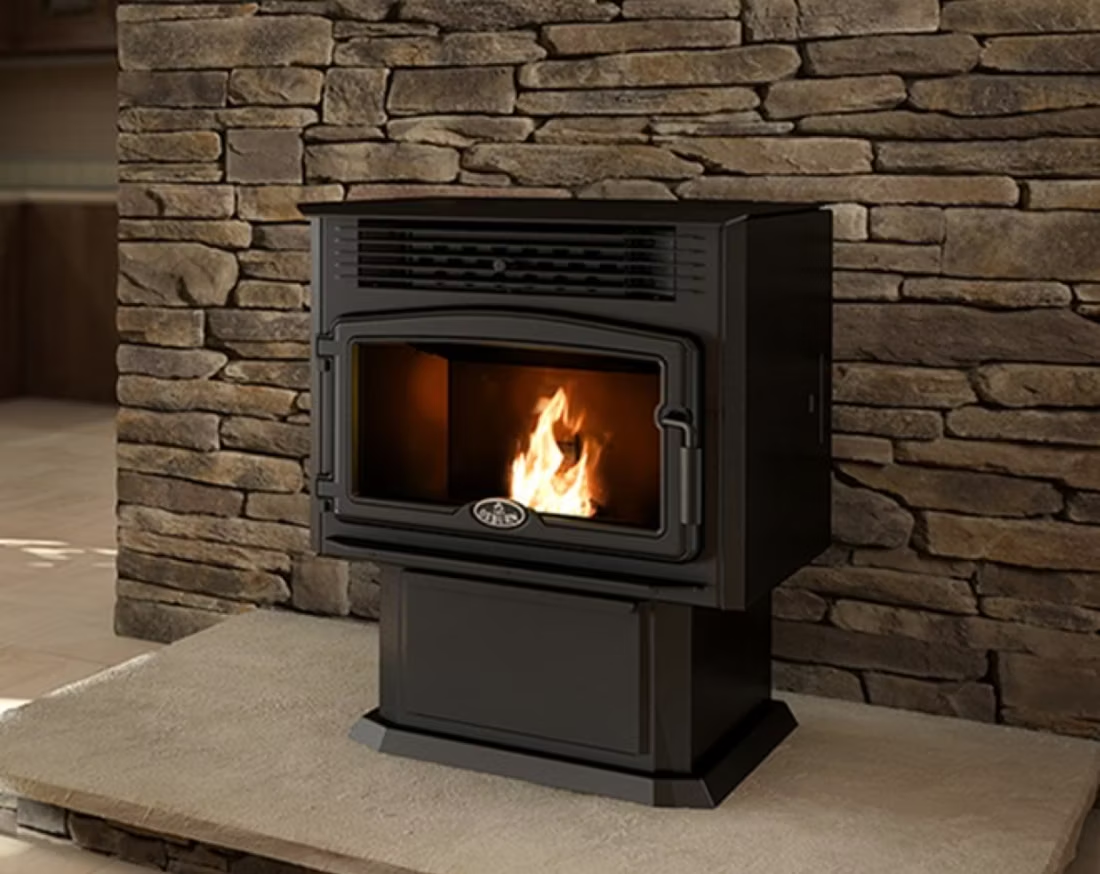
A pellet stove is a freestanding unit that sits on a hearth pad and vents through a wall or existing chimney chase—it can go almost anywhere with the right clearances. A pellet insert is built to slide into an existing masonry wood fireplace, using a vent liner run up the existing chimney and a surround panel to seal the opening. For Boone County homes with an older masonry fireplace that's rarely used, an insert is often the better upgrade since it repurposes a chimney that's otherwise just losing heat. Homes without an existing fireplace opening are better suited to a freestanding stove.
Do pellet stoves need electricity to run?
Yes—pellet stoves rely on electricity to run the auger that feeds fuel, the igniter, and the combustion blower, which is the main tradeoff compared to wood stoves. During a winter power outage in Boone County, a standard pellet stove will not operate unless it's paired with a battery backup or small generator. If backup heat during an ice storm or extended outage is a priority, a wood stove or a pellet unit with a battery backup system is worth discussing with your local dealer before you buy.
What's the best pellet stove for Boone County's climate?
For a climate zone 5A winter with lows around 20°F, look for a pellet stove with a reasonably large hopper capacity (40+ pounds) so overnight burns don't require refilling at 2 a.m., and a heat output in the 40,000-60,000 BTU range for whole-room or zone heating in an average Boone County home. Brands with reliable auger systems and easy-to-clean burn pots reduce maintenance headaches over a long heating season. A local dealer can match hopper size and BTU output to your specific square footage and how much of the house you're actually trying to heat.
How often does a pellet stove need to be cleaned and serviced?
Pellet stoves need more frequent attention than gas units but less than wood stoves—the burn pot should be cleaned every few days to weekly depending on use, and a full professional service (vent inspection, gasket check, motor cleaning) is recommended once a year, typically before the season starts in fall. Ash buildup and clinkers in the burn pot are the most common cause of poor performance, and skipping the annual service is the most common reason pellet stoves lose efficiency over a few seasons. Local hearth retailers serving the county typically offer seasonal service appointments.
Do I need a permit to install a pellet stove in Boone County?
Most pellet stove installations require a building permit through the relevant local jurisdiction—Lebanon, Zionsville, and Whitestown each handle permitting within their city limits, while unincorporated areas go through Boone County. The permit covers proper venting clearances, hearth pad requirements, and confirms the electrical circuit for the unit meets code. Most local dealers handle the permitting paperwork as part of the installation, so it's rarely something homeowners have to navigate on their own.
Pellet stove vs. wood stove—which is right for my Boone County home?
Wood stoves burn oak, hickory, maple, or beech cut and split locally, work without electricity (a real advantage during Boone County ice storms), and offer higher raw heat output for the effort. Pellet stoves are far more convenient—load the hopper, set the thermostat, and walk away—plus they burn cleaner with far less ash and no chimney creosote buildup. Since Boone County has no wood-smoke air quality restrictions, the choice comes down to lifestyle: if daily convenience and consistent output matter more than tending a fire, pellet wins; if backup heat during outages and lower fuel cost matter more, wood is usually the better fit. Some households run both.
How often does a pellet stove need cleaning?
A clean pellet stove is a happy pellet stove. Plan on cleaning the burn pot about once a week when you're burning regularly—ash and clinkers gum up the air holes just like a pellet barbecue. Most pellet stove problems trace back to skipped cleaning that nobody explained up front. Some designs make it easy with a trapdoor burn pot: pull a lever and the gunk drops into the ash pan.
What's the difference between an insert and a zero-clearance fireplace?
An insert is a fireplace that slides into a pre-existing wood-burning fireplace—if you don't have one, there's nothing to insert it into. A zero-clearance fireplace is built into a framed wall, which makes it the answer for remodels and new construction. Simple test: existing masonry fireplace means insert; blank or framed wall means zero-clearance.
Does a fireplace add value to my home?
On average, a fireplace adds back to the home about the same amount you spent installing it. Add the monthly savings from heating the rooms you actually use instead of the whole house—often hundreds of dollars a year—and the value case is strong before you even count what a fire does for how your family uses the room.
Can I install a fireplace myself?
If you're putting a fire in your house on purpose, it's best to work with an expert. Unless you're genuinely experienced in framing, gas line, vent pipe, and the national code on clearances to combustibles, have a professional do it—and ideally the same company that sells you the fireplace, so warranty, service, and liability all live under one roof.
Stove and Fireplace Dealers in Boone County
Pellet Brands Stocked Around Boone County
Manufacturers will point you to the nearest stocking dealer.
Get matched with a Boone County pellet dealer.
Tell us about your home and we'll put together a free Project Guide & Parts List—the right pellet stove or insert, the vent kit, and a trusted local dealer to install it correctly.
Find Your Fireplace →