
Find the right electric fireplace for your Boone County home.
From Zionsville's historic downtown to new construction in Whitestown and Lebanon, electric fireplaces add ambiance and zone heat without touching your chimney or your gas line. I'll match you with a local dealer who knows what actually fits your space.
Every Project Starts From One of These Five Situations
Supplemental warmth, zero venting, real flexibility.
Boone County sits in climate zone 5A, with winter lows averaging around 20°F and a solid Midwest winter heating season—comparable to what homes see around Madison, WI, though not as brutal as Fargo or International Falls. That's cold enough that most households run a furnace or heat pump as primary heat, but mild enough that electric fireplaces work well as exactly what they're designed for: supplemental warmth in a specific room, plus the visual of a fire without smoke, gas lines, or a chimney.
Boone County has grown fast—Whitestown and Zionsville in particular have added a lot of new-construction housing stock over the past decade, much of it built with finished basements, bonus rooms, and primary suites that don't have existing masonry fireplaces. Electric inserts and wall-mount units are a natural fit for those spaces: no venting, no gas permit, and a straightforward 120V or 240V circuit in most cases. For older homes in downtown Lebanon or Zionsville with an existing but rarely-used wood fireplace, an electric insert is also a common way to get usable heat and glow back into a firebox that's otherwise sitting cold.
Three steps. No salesperson until you're ready.
Tell us about your project
Your zip code, your situation, and the fuel you're leaning toward—or let the answers point you to one.
See what's actually available
The brands dealers within 100 miles genuinely carry—real options, never a catalog mirage.
Get your dealer & Project Guide
A trusted local dealer, plus the free Project Guide & Parts List that names every component of the job.
Frequently Asked Questions
How much does an electric fireplace installation cost in Boone County?
Most electric fireplace and insert installations in Boone County run $400 to $1,200. A plug-in unit or a straightforward insert into an existing firebox that just needs a standard outlet is on the lower end. Built-in wall units, custom mantels, or installations that require an electrician to run a dedicated 240V circuit—common in larger great rooms in newer Whitestown or Zionsville homes—land toward the higher end. Because there's no venting or gas line involved, electric is consistently the least expensive fireplace fuel to install here, and most projects are done in a day.
Do I need a permit to install an electric fireplace in Boone County?
In most cases, no separate fireplace permit is required for a plug-in or insert-style electric unit, since there's no venting or gas work involved. If your installation requires new wiring—a dedicated circuit for a larger built-in unit, for example—that electrical work should be pulled through a licensed electrician and may require an electrical permit through the relevant local building department, whether that's the City of Lebanon, Town of Zionsville, or Boone County directly for unincorporated areas. Your local dealer or installer can tell you up front whether your specific unit needs one.
Can an electric fireplace actually heat a room, or is it just for looks?
A properly sized electric fireplace can meaningfully heat a single room—most units put out around 4,000 to 5,000 BTU, enough for a bedroom, den, or bonus room, especially as supplemental heat alongside your furnace. What it won't do is replace central heat for a whole house during a Boone County cold snap; at 20°F outdoor lows, you still want your furnace or heat pump carrying the load. Where electric fireplaces earn their keep locally is in finished basements, home offices, and additions in newer Whitestown and Zionsville construction where running ductwork wasn't practical—a targeted heat source for a specific space, with the flame visual as a bonus.
What's the difference between an electric insert and a wall-mount electric fireplace?
An electric insert is built to slide into an existing masonry firebox—a good option for older Lebanon or Zionsville homes with a wood fireplace that's rarely used and could use an easy upgrade to instant heat and flame. A wall-mount or built-in electric fireplace is designed for new construction or remodels without an existing firebox, and can be recessed into a wall or set into custom cabinetry. Freestanding electric stoves are a third option, useful where you want something that looks like a traditional stove but plugs into a standard outlet. A local dealer can walk through which fits your specific room and existing structure.
Will an electric fireplace work during a power outage?
No—electric fireplaces require power to run, so they won't provide heat or flame during an outage. This is worth weighing seriously in Boone County, where winter ice storms occasionally knock out power for hours at a time. If backup heat during outages matters to your household, a wood stove or a gas unit with battery-backup ignition is a more resilient choice; many local homeowners install electric for daily ambiance and supplemental heat in one room while relying on a furnace or a separate wood-burning appliance for true outage backup.
How does electric compare to gas or wood for heating cost in Boone County?
Electric fireplaces are the cheapest to install but generally the most expensive per BTU to run continuously, since electricity costs more per unit of heat than natural gas or wood in most of Boone County. Gas fireplaces cost more upfront ($4,500-$11,000 typically) but deliver more heat per dollar of fuel and can serve as reliable zone heat. Wood is the most labor-intensive but, with local hardwood species like oak and hickory being commonly available in the area, can be the least expensive fuel cost if you're processing your own wood. For most Boone County homeowners, electric fireplaces make the most sense as supplemental or accent heat rather than a primary heating strategy.
Do electric fireplaces need any maintenance?
Very little, which is one of their advantages. There's no chimney to sweep and no annual gas line inspection required. Occasional dusting of the unit and vents, periodic replacement of the LED light strips (which typically last many years before dimming), and checking that the heating element and fan are clear of dust are about all that's needed. If a unit stops producing heat but the flame effect still works, that's usually the heating element or a safety thermal cutoff—a straightforward fix or part replacement rather than a full unit failure.
Can I install an electric fireplace myself, or do I need a dealer?
Plug-in electric fireplaces and many inserts are genuinely simple enough for a competent DIYer to install—plug into a standard outlet, and you're done. Where a local dealer earns their fee is in sizing the right unit for your room, handling built-in or recessed installations that need custom framing or trim work, and coordinating with an electrician if your unit needs a dedicated circuit. For a straightforward plug-in unit in an existing space, DIY is reasonable. For anything built into a wall or requiring new wiring in a Whitestown or Zionsville new-construction home, working with a trusted local installer avoids guesswork on clearances and electrical code.
Electric vs. gas fireplace—which is right for my Boone County home?
Gas delivers real, substantial heat output and can serve as genuine zone heating during a cold Indiana winter, but it requires venting or careful vent-free sizing and typically costs several thousand dollars more to install. Electric costs far less to install, requires no venting or gas line, and can go almost anywhere with an outlet—but its heat output is modest and it won't work in a power outage. For a primary living room where you want dependable supplemental heat, gas is usually the better long-term fit. For a bedroom, basement, or accent space in a newer Zionsville or Whitestown home where flexibility and low install cost matter more, electric is often the practical choice. A local dealer can walk through both options against your specific room.
Can I put a TV above my fireplace?
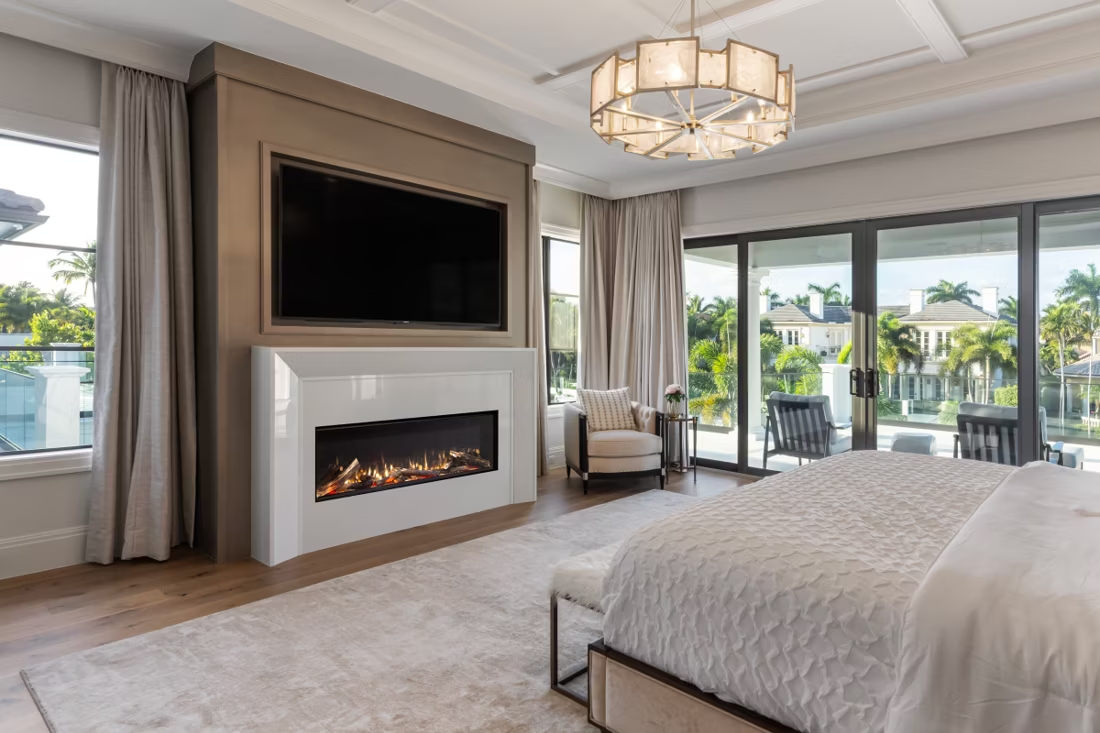
Yes—with an asterisk. Fireplaces are hot and TVs don't like heat. Either put a mantel between them to deflect rising warmth, or choose a fireplace with heat-management technology that creates a cool zone on the wall above—the wall stays around 125 degrees, barely warm, while the room still gets full heat. If you like clean lines and don't want a mantel, heat management is the answer.
Does an electric fireplace need a vent or chimney?
No—that's its superpower. An electric fireplace needs a wall and an outlet, period. No vent pipe, no gas line, no clearances to design around, which is why it works in bedrooms, offices, apartments, and walls where venting a gas or wood unit would be impractical or impossible. Installation is typically the simplest and least expensive of any fireplace type.
Can a fireplace actually lower my heating bill?
Yes—by creating a comfort zone. A furnace heats every square foot of the house just to warm the one room you're in; a gas fireplace on low burns roughly a sixth of the gas a typical furnace does. Set the furnace around 55–60 degrees as a baseline, then heat the rooms your family actually uses. Families who heat this way commonly save $20–$60 a month.
Does a fireplace add value to my home?
On average, a fireplace adds back to the home about the same amount you spent installing it. Add the monthly savings from heating the rooms you actually use instead of the whole house—often hundreds of dollars a year—and the value case is strong before you even count what a fire does for how your family uses the room.
Stove and Fireplace Dealers in Boone County
Get your free Project Guide & Parts List for electric in Boone County.
Tell me about your room and I'll match you with a trusted local dealer and put together a free Project Guide & Parts List—the right electric fireplace or insert for your space, with a clear plan to get it installed.
Find Your Fireplace →