
Pellet stoves are the exception in Zionsville, not the rule.
With reliable electric service and widespread gas infrastructure across Boone County, most Zionsville homes don't need biomass heat—but for the right property, a pellet stove still earns its place. Find out if yours is one of them.
Every Project Starts From One of These Five Situations
Zionsville leans on gas and electric—pellet stoves are a niche choice.
Zionsville sits in climate zone 5A at about 920 feet elevation, with a solid, moderately long heating season and average winter lows near 20°F—a real but not extreme Midwest winter. Most of the town's housing stock is newer construction inside subdivisions served by Duke Energy Indiana and, in the outlying county, Boone County Rural EMC. That combination—dependable electric service, easy gas hookups, and HOA-governed neighborhoods—means very few homeowners here reach for a pellet stove as their primary or even secondary heat source.
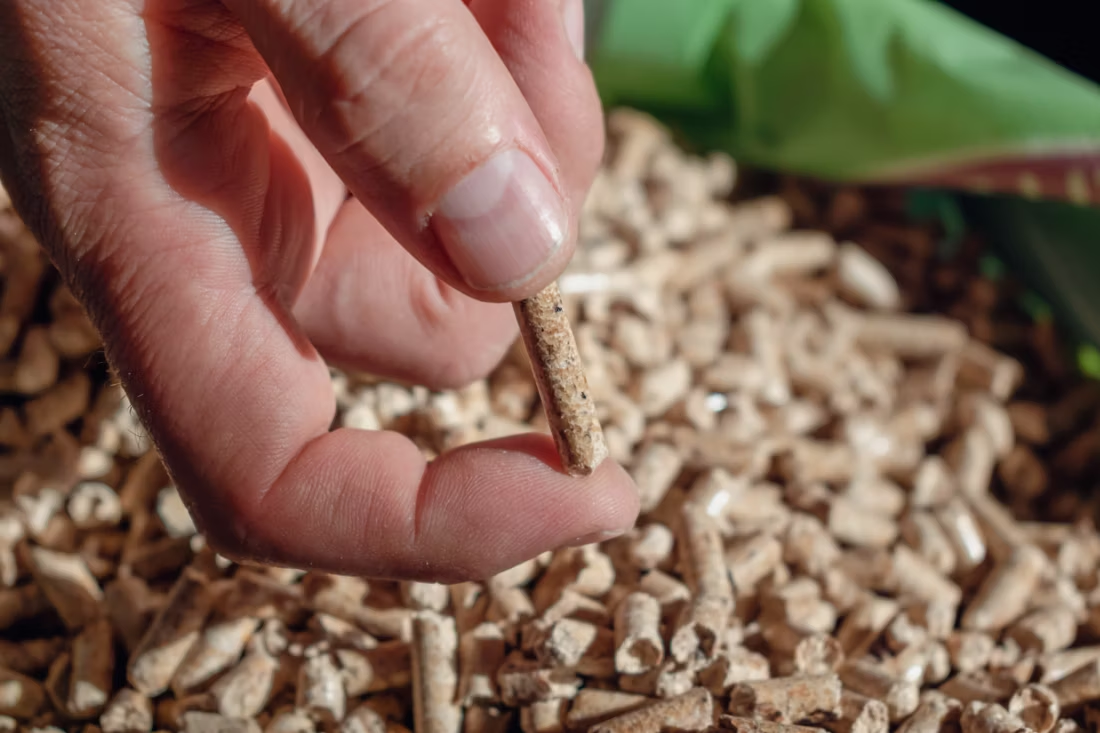
Where pellet stoves do show up in Zionsville, it's usually on larger acreage parcels in unincorporated Boone County, in finished walkout basements looking for zone heat without running new gas line, or with homeowners who like the idea of a domestic, bag-fed fuel supply from regional producers like Lignetics, Somerset Pellet Fuel, or Indeck Energy Services. It's worth saying plainly: a pellet stove requires electricity to run its auger and blower, so it isn't the off-grid backup some homeowners assume it is when the power goes out.
Three steps. No salesperson until you're ready.
Tell us about your project
Your zip code, your situation, and the fuel you're leaning toward—or let the answers point you to one.
See what's actually available
The brands dealers within 100 miles genuinely carry—real options, never a catalog mirage.
Get your dealer & Project Guide
A trusted local dealer, plus the free Project Guide & Parts List that names every component of the job.
Frequently Asked Questions
How much does a pellet stove installation cost in Zionsville?
Most pellet stove installations run somewhere between $3,000 and $6,000 nationally, and Zionsville homes generally fall in that range—often toward the lower end for a freestanding stove venting through an exterior wall, and higher for a pellet insert going into an existing masonry fireplace with liner work. Because pellet appliances are uncommon locally, fewer dealers stock them on the showroom floor, so expect a special order and a slightly longer lead time than you'd see for a gas insert.
Why don't more people in Zionsville use pellet stoves?
Natural gas service reaches most of the town, and Duke Energy Indiana and Boone County Rural EMC both provide dependable electric service—so the two conveniences that usually justify a pellet stove (no gas access, or wanting off-grid backup) rarely apply here. Add in HOA covenants common in many Zionsville subdivisions that regulate exterior venting and appliance appearance, and gas simply wins on convenience for the vast majority of homes in town.
Where can I buy wood pellets near Zionsville?
Bagged pellets from regional producers like Lignetics and Somerset Pellet Fuel are typically available through farm and home stores in the Indianapolis metro area, such as Rural King and Menards, with prices generally landing in the $250 to $320 per ton range depending on the brand and softwood versus hardwood blend. Because pellet stoves are a niche appliance here, it's worth calling ahead in the fall to confirm stock before burning season rather than assuming pellets sit on the shelf year-round like they might in a heavier wood-heat region.
Is a pellet stove or a wood stove better for a Zionsville home?
Both are uncommon choices in Zionsville for the same reason—reliable gas and electric infrastructure covers most heating needs. That said, on larger Boone County properties where oak, hickory, maple, or beech are already being cut and split, a wood stove can make sense as a genuine off-grid heat source during outages. A pellet stove offers cleaner burning and easier day-to-day operation—load the hopper, set the thermostat—but it depends on electricity to run, so it doesn't provide the same outage-proof backup that a wood stove does.
Will a pellet stove keep working if the power goes out?
Not on its own. Pellet stoves need electricity to run the auger that feeds fuel and the blower that distributes heat, so a standard outage from Duke Energy Indiana or Boone County Rural EMC will shut the unit down along with everything else. Homeowners who want pellet convenience and outage protection typically pair the stove with a small battery backup or portable generator sized to run the stove's low-wattage components—worth discussing with your installer if backup heat is the main reason you're considering pellet in the first place.
Do I need a permit to install a pellet stove in Zionsville?
Yes—a building permit is required for a new pellet stove installation, whether through the Town of Zionsville building department or the Boone County building department depending on whether your property sits inside or outside town limits. The permit process covers venting clearances and hearth pad requirements. If you're inside a homeowners association, check your covenants separately—several Zionsville subdivisions have their own rules about exterior vent pipe placement and visible appliance venting that go beyond what the town requires.
How is pellet stove venting different from a wood stove's?
Pellet stoves vent through a smaller-diameter pipe—typically 3 or 4 inches—compared to the 6-inch Class A chimney a wood stove needs, and pellet exhaust can usually run horizontally through an exterior wall rather than requiring a full vertical chimney. That makes pellet stoves genuinely easier to retrofit into a finished basement or a room without an existing flue, which is one of the few scenarios where a pellet stove is the more practical option for a Zionsville home over a wood-burning alternative.
Are pellet stoves allowed in Zionsville HOA neighborhoods?
It depends on the specific association—some Zionsville subdivisions restrict exterior venting, exhaust pipe visibility, or any solid-fuel appliance outright, while others have no restrictions at all. Because pellet stoves are already a less common request here, local installers are used to pulling architectural review approval from HOAs before scheduling work. If you're under an HOA, get that approval in writing before you order equipment—it avoids a costly reinstall if the association pushes back on vent placement after the fact.
Pellet stove vs. gas insert—which makes more sense in Zionsville?
For most Zionsville homes, a gas insert is the more practical choice: it's push-button convenient, doesn't depend on hauling bags of fuel, and fits the town's widespread gas access. A pellet stove makes more sense in specific situations—a finished basement without gas run to it, a homeowner who wants a renewable, domestically produced fuel source, or a rural Boone County property where bulk pellets are easy to store. If you're not sure which fits your situation, a local dealer can walk your specific room and give you a straight answer rather than a generic one.
What's the difference between an insert and a zero-clearance fireplace?
An insert is a fireplace that slides into a pre-existing wood-burning fireplace—if you don't have one, there's nothing to insert it into. A zero-clearance fireplace is built into a framed wall, which makes it the answer for remodels and new construction. Simple test: existing masonry fireplace means insert; blank or framed wall means zero-clearance.
Why is a fireplace insert so efficient?
An insert does two things: it seals the chimney completely, so you stop losing air you already paid to heat, and it radiates warmth into the room through the firebox and glass. Most add a heat-exchange fan that pulls cool room air underneath, wraps it around the hot firebox, and pushes it back out warm. Your home is more efficient before you've even lit the first fire.
What is an in-home preview and do I need one?
It's a visit where a hearth professional measures your space, confirms the model you picked actually works in your home, and walks the specs—framing, gas line, venting, finish work—before anything is ordered. Some details you just can't know until you see the house. Never make a down payment without one; it's the single most-skipped step that burns buyers.
Can a fireplace actually lower my heating bill?
Yes—by creating a comfort zone. A furnace heats every square foot of the house just to warm the one room you're in; a gas fireplace on low burns roughly a sixth of the gas a typical furnace does. Set the furnace around 55–60 degrees as a baseline, then heat the rooms your family actually uses. Families who heat this way commonly save $20–$60 a month.
Nearby Dealers
Hearth shops serving Zionsville and the surrounding area.
Pellet Brands Stocked Around Zionsville
Manufacturers will point you to the nearest stocking dealer.
See if pellet heat fits your Zionsville home.
Tell us about your home and we'll put together a free Project Guide & Parts List—the right pellet stove or insert, the exact vent kit, and a trusted local dealer near Zionsville who can actually install it.
Find Your Fireplace →