
Find the right fireplace for your Boone County home.
Wood, gas, pellet, and electric fireplace resources for every city and township in Boone County—from the new subdivisions of Zionsville and Whitestown to the farm crossroads at Thorntown and Advance. Find the right unit and connect with a trusted local hearth retailer.
Every Project Starts From One of These Five Situations
Central Indiana heating, from farmhouse to subdivision.
Boone County sits in the flat corn-and-soybean country northwest of Indianapolis, and it's one of the fastest-growing counties in the state—Zionsville and Whitestown have added thousands of new homes over the past decade, while Lebanon, Advance, Jamestown, and Thorntown keep their small-town, farm-anchored character. Climate zone 5A and roughly 5,617 heating degree days put winters here in the same range as Madison, Wisconsin, though usually a shade milder—average lows around 20°F, with real cold snaps below zero most Januaries. Wood heat has deep roots in the county's farm woodlots and fence-row timber: oak, hickory, maple, and beech are the common cordwood species, and hickory and oak in particular are prized for dense, long-burning overnight fires in a cast-iron or catalytic stove.
What you'll find on this hub: hearth retailers, service technicians, and fuel suppliers serving every community in the county—from the growth corridor along US-421 and I-65 through Zionsville and Whitestown, to Lebanon at the county seat, out to Thorntown, Jamestown, and Advance on the county's rural edges. Pick your fuel below to drill into specifics—local dealers, installation costs, recommended units, and the resources that match your project. Whether you're heating a new-build subdivision home or a farmhouse on county road acreage, this is the starting point.
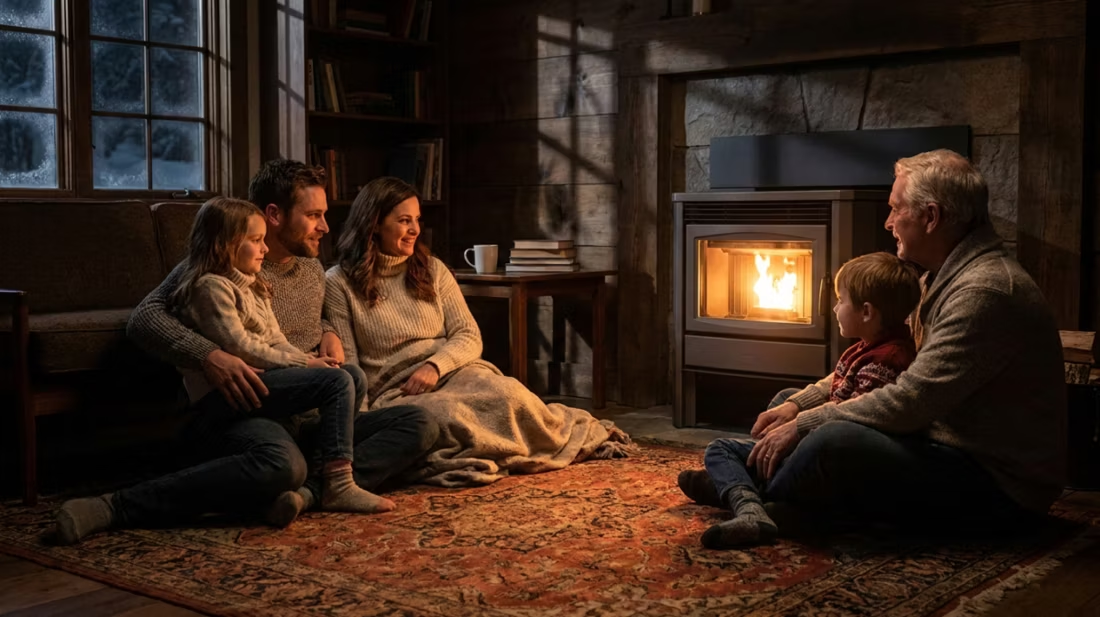
Four fuels. One honest answer for Boone County.
Three steps. No salesperson until you're ready.
Tell us about your project
Your zip code, your situation, and the fuel you're leaning toward—or let the answers point you to one.
See what's actually available
The brands dealers within 100 miles genuinely carry—real options, never a catalog mirage.
Get your dealer & Project Guide
A trusted local dealer, plus the free Project Guide & Parts List that names every component of the job.
Frequently Asked Questions
Which fuel works best in Boone County?
It depends on your home and where in the county you sit. Wood is the traditional choice on the county's farm properties—oak, hickory, maple, and beech from local woodlots burn long and hot, and a hickory-fed catalytic stove will comfortably hold a fire through a sub-zero January night. Gas is the default in Boone County's newer subdivisions—Zionsville, Whitestown, and much of Lebanon have solid natural gas infrastructure built out alongside new construction, making direct-vent gas fireplaces and inserts a common builder-grade and remodel choice. Pellet is the middle ground, and supply is dependable here thanks to regional producers like Indeck Energy Services, Lignetics, and Somerset Pellet Fuel—you get wood-style heat without splitting and stacking cordwood. Electric is supplemental—good for finished basements, bedrooms, and ambiance, but not enough on its own to carry a Boone County winter with 5,600+ heating degree days. Most homes here end up running two fuels: wood or pellet for primary heat, gas or electric for secondary rooms.
Do I need a permit to install a fireplace in Boone County?
In most cases, yes. New wood stoves, wood inserts, gas fireplaces, gas inserts, gas stoves, and pellet stoves all typically require a building permit. Gas installations also need a separate gas line permit and a licensed gas-fitter for the connection work. Wood-burning appliances need to meet current EPA 2020 NSPS emissions standards to be installed new. Where you apply depends on address: within Zionsville, Lebanon, and Whitestown, permits generally run through each town's own building department; in unincorporated Boone County—including the areas around Advance, Jamestown, and Thorntown—permits go through the county building department. Electric fireplaces usually don't require a permit unless it's a built-in unit involving new wiring or a dedicated circuit. Most local hearth retailers handle the permitting as part of the installation, so it's rarely something you have to manage yourself.
Are there air quality restrictions on wood burning in Boone County?
No—Boone County isn't in an EPA non-attainment area, and it doesn't deal with the winter temperature inversions or wildfire smoke that trigger burn advisories in some Western counties. There's no local curtailment program here. That said, national EPA 2020 NSPS emissions standards still apply to any new wood stove or insert sold and installed, and swapping an older, uncertified stove for a current EPA-certified unit will burn cleaner and pull more heat out of the same cord of oak or hickory. If you're burning green or unseasoned wood, that's the more common local issue—seasoned hardwood (six months to a year dried) burns cleaner and hotter than anything fresh-split off a fence row.
Can one local hearth retailer handle all four fuel types?
Many hearth retailers serving Boone County carry wood, gas, and pellet stoves and inserts side by side, since those three overlap heavily in installation know-how—venting, hearth clearances, and permitting are similar across all three. Fewer dealers stock built-in electric fireplaces as a primary line, since those units often move through appliance and home-goods channels as much as hearth shops. If you're not sure which fuel fits your home—say, comparing a wood insert against a gas conversion in an older Lebanon farmhouse—a multi-fuel retailer can walk you through working displays and the real trade-offs for your chimney, gas access, and budget rather than pushing one fuel by default.
How does service work across the rural and suburban parts of Boone County?
Boone County covers a lot of ground between the dense new subdivisions of Zionsville and Whitestown and the farm townships around Thorntown, Jamestown, and Advance. Most service technicians are based in or near the Lebanon-Zionsville corridor and travel out from there, so rural calls may carry a modest travel fee, often in the $40–$80 range depending on distance. Pre-season appointments—scheduled in September or October before the first real cold snap—are far easier to book than mid-winter emergency calls, especially once temperatures drop into the teens and everyone wants their chimney swept or gas unit inspected at once. If you're on a rural property, it's worth scheduling annual service early and keeping a backup heat source in mind for extended power outages, since electric ignition on gas units and pellet stove auger motors both depend on grid power.
What's the typical cost range for fireplace installation across all fuel types in Boone County?
Ranges vary by fuel and by how much existing infrastructure you have. Wood stove or insert installation: roughly $4,000–$8,500 for a typical install, more if new chimney or hearth work is needed. Gas fireplace, insert, or stove: roughly $4,000–$10,000, with the low end for units connecting into existing gas service and the high end for new gas line runs plus venting. Pellet stove or insert: roughly $4,000–$7,000 for a standard install. Electric fireplace: $200–$3,000 for the unit itself, plus $400–$1,200 in labor for anything beyond simple plug-and-play—which covers most wall-mount, insert, and built-in installs. For the specifics tied to your fuel choice, see the county + fuel pages above—each one has cost detail based on local retailer pricing.
Does a fireplace add value to my home?
On average, a fireplace adds back to the home about the same amount you spent installing it. Add the monthly savings from heating the rooms you actually use instead of the whole house—often hundreds of dollars a year—and the value case is strong before you even count what a fire does for how your family uses the room.
How much should I budget for a fireplace?
For an average home—covering the fireplace, the vent pipe, and basic installation—a budget between $3,900 and $5,500 gives you a lot of options across wood, gas, and pellet. By the time you add finish work, gas line, and electrical, the average complete installation lands between $5,000 and $12,000 all-in. In a remodel or new build, a good rule is to put about 2.5% of the total project cost toward the fireplace.
Can a fireplace actually lower my heating bill?
Yes—by creating a comfort zone. A furnace heats every square foot of the house just to warm the one room you're in; a gas fireplace on low burns roughly a sixth of the gas a typical furnace does. Set the furnace around 55–60 degrees as a baseline, then heat the rooms your family actually uses. Families who heat this way commonly save $20–$60 a month.
Can I install a fireplace myself?
If you're putting a fire in your house on purpose, it's best to work with an expert. Unless you're genuinely experienced in framing, gas line, vent pipe, and the national code on clearances to combustibles, have a professional do it—and ideally the same company that sells you the fireplace, so warranty, service, and liability all live under one roof.
Stove and Fireplace Dealers in Boone County
Listings include WhyFire partner dealers, dealers we have verified as authorized for the brands we recommend, and established local businesses that carry hearth products. Every listing shows which one it is. The ones marked Preferred run on WhyFire's software, so they can show you real pricing and book your appointment right here. No manufacturer pays for placement. How we verify dealers →
The Cinder Box
Mowery Inc.
O'Malia's Living
Pate's Pool Service & Supply
Newco Dealers Wholesale
Get matched with a fireplace dealer in Boone County.
Pick your fuel below and we'll match you with a trusted local dealer and send you a free Project Guide & Parts List—the exact parts, including the vent kit, for your project in Boone County, plus who to call to get it installed right.
Find Your Fireplace →