
Find your pellet stove in Knox County.
Consistent, low-maintenance heat for the long Illinois winters around Galesburg and the surrounding farm towns. Get matched with a trusted local dealer who knows what actually works here.
Every Project Starts From One of These Five Situations
A steady burn for a long, flat winter.
Knox County sits in the heart of Illinois farm country, with a long, cold winter season and winter lows that average around 14°F—a season closer to Madison, WI than to the Ohio Valley. That's a long stretch of cold, gray months where a fireplace needs to do real work, not just look nice. Pellet stoves fit that reality well: load the hopper, set the thermostat, and get consistent output for days without the daily wood-splitting and hauling that oak, hickory, walnut, and maple firewood demands from Knox County's abundant hardwood supply.
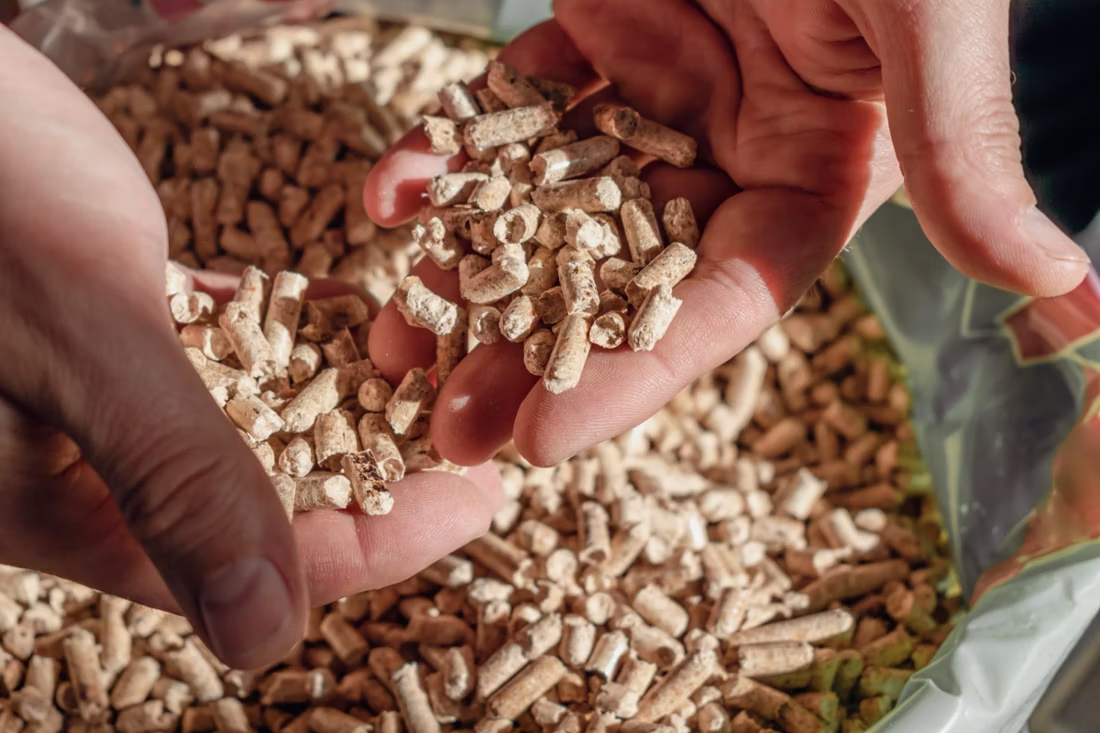
Regional pellet brands including Indeck Energy Services, Lignetics, and Somerset Pellet Fuel serve the Illinois and greater Midwest market, which keeps supply steady and pricing competitive for Knox County homeowners compared to areas that have to truck pellets in from farther afield. For Galesburg-area homes and the smaller communities scattered across the county—Abingdon, Williamsfield, Wataga, Oneida—a pellet unit offers cleaner burning than cordwood, easier ash cleanup, and a thermostat-driven consistency that works well for both primary and supplemental heat through a flat, wind-exposed winter.
Three steps. No salesperson until you're ready.
Tell us about your project
Your zip code, your situation, and the fuel you're leaning toward—or let the answers point you to one.
See what's actually available
The brands dealers within 100 miles genuinely carry—real options, never a catalog mirage.
Get your dealer & Project Guide
A trusted local dealer, plus the free Project Guide & Parts List that names every component of the job.
Frequently Asked Questions
How much does a pellet stove installation cost in Knox County?
Pellet stove and insert installations in Knox County typically run in line with regional Midwest pricing, generally landing between $3,000 and $7,000 depending on the unit, whether it's a freestanding stove or an insert into an existing fireplace, and the venting path required. Freestanding pellet stoves usually need only a smaller-diameter PL vent through an exterior wall, which keeps installation costs down compared to a full masonry chimney project. Inserts going into an existing fireplace add modest venting work through the flue. A local dealer will give you a firm number after seeing your home, but pellet installs are generally the most budget-friendly hearth option outside of electric.
How much does it cost to run a pellet stove through a Knox County winter?
With a long, cold winter season, Knox County homes running a pellet stove as a significant heat source can expect to burn through several tons of pellets over a full winter, depending on square footage, insulation, and how much of the heating load the stove is carrying. Regional supply from brands like Indeck Energy Services and Lignetics helps keep per-ton pricing steady in this part of Illinois compared to markets that rely on pellets shipped in from the Pacific Northwest or Southeast. Buying pellets in bulk before the fall rush, and storing a full winter's supply in a dry garage or shed, is the standard local strategy for getting the best per-ton price.
Do I need a chimney for a pellet stove, or can I vent through a wall?
Most pellet stoves in Knox County are vented directly through an exterior wall using PL (pellet vent) pipe rather than a traditional masonry chimney—this is one of the appliance's biggest advantages for homes without an existing fireplace. That makes pellet stoves a practical option for ranch homes, additions, and outbuildings across the county's farm communities where a full chimney retrofit would be expensive. For homes with an existing masonry fireplace, a pellet insert can also be installed to vent through the existing flue with a smaller liner. Either path is generally more affordable than the venting required for a wood-burning masonry chimney installation.
Does a pellet stove work if the power goes out?
No—this is the one real tradeoff of pellet heat, and it's worth understanding before you buy. Pellet stoves rely on an electric auger to feed fuel and a blower to distribute heat, so they stop working when the power drops. For Knox County, where winter storms and occasional ice events can knock out rural power for hours or longer, some homeowners pair a pellet stove with a small backup generator, or keep a wood-burning unit elsewhere in the house for true outage backup. If reliable heat during outages is your top priority, a wood stove or a gas unit with battery-backed ignition may be a better primary choice—a local dealer can walk through the tradeoff based on how often your area loses power.
What size pellet stove do I need for my Knox County home?
Sizing depends on square footage, ceiling height, insulation quality, and whether the stove is primary or supplemental heat. As a general guide for Knox County's cold-climate housing stock—a mix of older farmhouses and newer construction around Galesburg—small pellet stoves (up to 1,200 sq ft) suit a single main living area, while medium units (1,200–2,200 sq ft) handle most whole-home heating needs in a reasonably insulated house. Older farmhouses with less insulation and higher ceilings often need to size up compared to the square footage alone. A local dealer will size your specific home during an in-home consultation rather than relying on a rough online calculator.
How often does a pellet stove need to be cleaned and maintained?
Pellet stoves need more frequent light maintenance than wood stoves, but far less heavy cleaning. Plan on emptying the ash pan every few days during regular winter use, cleaning the burn pot weekly to keep the auger feeding properly, and a full professional cleaning and inspection once a year—typically before the season starts in early fall. Because pellet stoves burn more completely than cordwood, there's minimal creosote buildup, but the mechanical components—auger motor, igniter, blower—benefit from an annual once-over by a technician familiar with the specific brand you own.
Where can I buy pellets in Knox County?
Regional brands including Indeck Energy Services, Lignetics, and Somerset Pellet Fuel are commonly stocked at hearth retailers and farm supply stores throughout the Galesburg area and greater Knox County, and being regionally produced keeps freight costs—and therefore per-ton pricing—more reasonable than pellets shipped in from out of region. Most homeowners buy by the ton (fifty 40-pound bags) in the fall before demand and pricing tighten up. Your local dealer can typically point you toward reliable suppliers and may offer seasonal pre-buy programs.
Pellet stove vs. wood stove—which is right for my home?
Wood stoves burn cordwood from Knox County's plentiful oak, hickory, walnut, and maple supply, work without electricity—a real advantage during winter power outages—and offer the lowest fuel cost if you're cutting or sourcing your own wood. Pellet stoves are more convenient day to day: load the hopper, set the thermostat, and let it run for a day or more without tending, with easier cleanup and no splitting or stacking. For Knox County homes prioritizing hands-off convenience and consistent output through a long flat winter, pellet often wins. For homes wanting guaranteed heat during outages, or access to cheap or free firewood, wood remains the stronger choice. A local dealer can walk through both options side by side.
Do I need a permit to install a pellet stove in Knox County?
Most pellet stove installations require a building permit in Knox County, particularly for new wall penetrations or venting work, though requirements can vary slightly between the city of Galesburg and unincorporated parts of the county. Most established hearth dealers handle the permitting process as part of the installation, so you typically don't need to coordinate it yourself. It's worth confirming with your installer before work begins, since permit requirements and inspection timing can affect your installation schedule.
How often does a pellet stove need cleaning?
A clean pellet stove is a happy pellet stove. Plan on cleaning the burn pot about once a week when you're burning regularly—ash and clinkers gum up the air holes just like a pellet barbecue. Most pellet stove problems trace back to skipped cleaning that nobody explained up front. Some designs make it easy with a trapdoor burn pot: pull a lever and the gunk drops into the ash pan.
What's the difference between an insert and a zero-clearance fireplace?
An insert is a fireplace that slides into a pre-existing wood-burning fireplace—if you don't have one, there's nothing to insert it into. A zero-clearance fireplace is built into a framed wall, which makes it the answer for remodels and new construction. Simple test: existing masonry fireplace means insert; blank or framed wall means zero-clearance.
Can a fireplace actually lower my heating bill?
Yes—by creating a comfort zone. A furnace heats every square foot of the house just to warm the one room you're in; a gas fireplace on low burns roughly a sixth of the gas a typical furnace does. Set the furnace around 55–60 degrees as a baseline, then heat the rooms your family actually uses. Families who heat this way commonly save $20–$60 a month.
Does a fireplace add value to my home?
On average, a fireplace adds back to the home about the same amount you spent installing it. Add the monthly savings from heating the rooms you actually use instead of the whole house—often hundreds of dollars a year—and the value case is strong before you even count what a fire does for how your family uses the room.
Pellet Brands Stocked Around Knox County
Manufacturers will point you to the nearest stocking dealer.
Get your Knox County Project Guide & Parts List.
Tell us about your home and we'll match you with a trusted local dealer and a free Project Guide & Parts List—the exact pellet stove or insert, vent kit, and installation plan for your Knox County home.
Find Your Fireplace →