
Find the right fireplace for Knox County's long, cold winters.
Wood, gas, pellet, and electric fireplace resources for every city and rural township in Knox County—from Galesburg to Abingdon, Williamsfield, Oneida, and the farm communities in between. Find the right unit and connect with a trusted local hearth retailer.
Every Project Starts From One of These Five Situations
Hardwood country heating across Knox County, Illinois.
Knox County sits in west-central Illinois farm country, with Galesburg as the county seat and largest population center. Winters here run cold and long—an average winter low near 14°F and roughly 6,322 heating degree days put the county in a similar heating category to Madison, Wisconsin, even though the flat prairie landscape looks nothing like the upper Midwest lake country. The heating season typically stretches from October into April. Farm woodlots and windbreaks across the county produce a steady local supply of oak, hickory, walnut, and maple—dense hardwoods that burn long and hot, which is part of why wood stoves and inserts remain common in rural Knox County homes, not just as backup heat but as a primary source through the coldest stretches of winter.
What you'll find on this hub: hearth retailers, service technicians, and fuel suppliers serving every community in the county—Galesburg, Abingdon, Knoxville, Williamsfield, Oneida, Wataga, Maquon, Yates City, Altona, and the smaller unincorporated crossroads that dot the townships. Pick your fuel below to drill into specifics—local dealers, installation costs, recommended units, and the resources that match your project. Whether you're heating a farmhouse outside Williamsfield or a brick two-story in downtown Galesburg, this is the starting point.
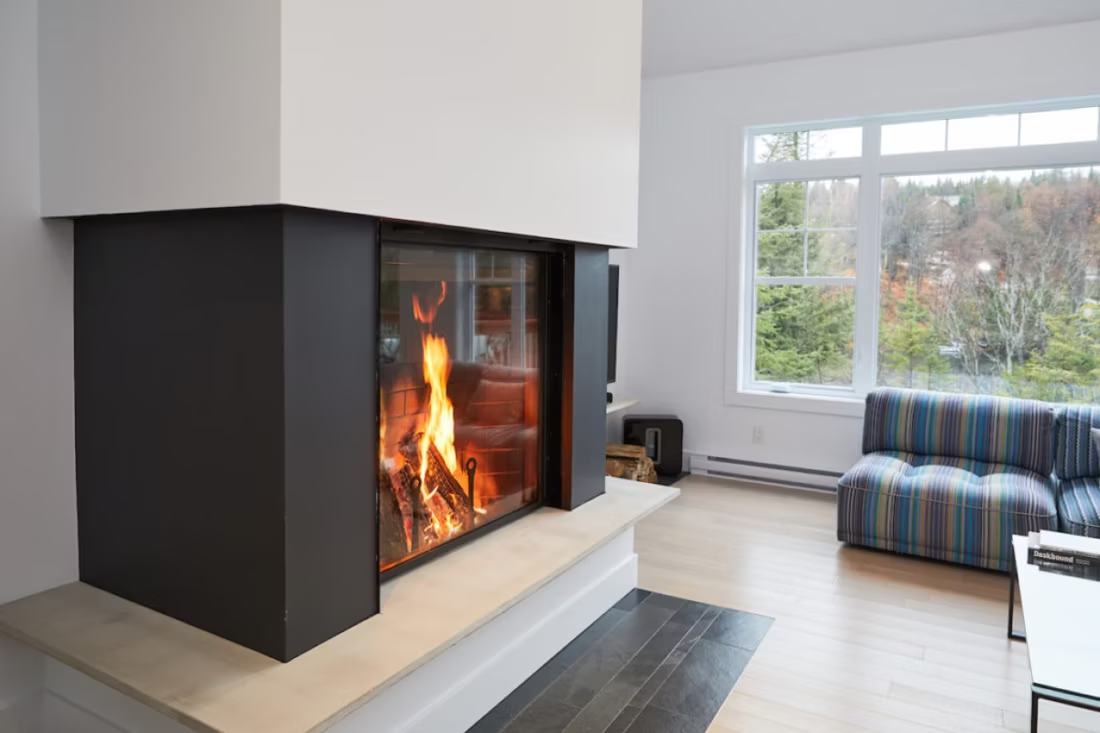
Four fuels. One honest answer for Knox County.
Three steps. No salesperson until you're ready.
Tell us about your project
Your zip code, your situation, and the fuel you're leaning toward—or let the answers point you to one.
See what's actually available
The brands dealers within 100 miles genuinely carry—real options, never a catalog mirage.
Get your dealer & Project Guide
A trusted local dealer, plus the free Project Guide & Parts List that names every component of the job.
Frequently Asked Questions
Which fuel works best in Knox County?
It depends on your home and how you use it. Wood is well established in rural Knox County—oak, hickory, walnut, and maple from local farm woodlots burn long and hot, there are no local air quality restrictions on burning, and a good catalytic or non-catalytic stove can carry a farmhouse through single-digit nights without leaning on the furnace. Gas is the convenience pick for homes in and around Galesburg with natural gas service, or propane for homes further out in the townships—no wood to split or haul, consistent heat at the flip of a switch. Pellet is a solid middle ground: less labor than cordwood, and regional supply from Indeck Energy Services, Lignetics, and Somerset Pellet Fuel keeps it reasonably priced and available. Electric works well as supplemental heat for a bedroom, sunroom, or apartment, but with 6,322 heating degree days on the books, it's not a realistic primary heat source through a Knox County winter on its own.
Do I need a permit to install a fireplace in Knox County?
Generally yes. New wood stoves, wood inserts, gas fireplaces, gas inserts, gas stoves, and pellet stoves typically require a building permit through your local city or the county building office, depending on whether you're inside Galesburg city limits or in unincorporated Knox County. Gas installations also need a separate gas-line permit and licensed gas-fitter work for the connection itself. Modern wood-burning appliances need to meet current EPA emissions certification. Electric units usually skip the permit process unless you're doing a built-in installation with new wiring. Most local hearth retailers pull the permit as part of the installation quote, so it's rarely something homeowners have to chase down themselves.
Are there air quality restrictions on wood burning in Knox County?
No—Knox County has no local wood-burning curtailment days or non-attainment designations, unlike some western basin communities that deal with winter inversions trapping smoke. That said, an EPA-certified stove still burns cleaner and more efficiently than an older uncertified unit, which matters when you're running oak and hickory for months at a time. If you're replacing an old stove, a current-generation catalytic or non-catalytic model will use less wood per BTU and produce noticeably less visible smoke from the flue—a practical upgrade even without a regulatory requirement pushing you toward it.
Can one local hearth retailer handle all four fuel types?
Many hearth retailers serving Knox County, concentrated mostly in and around Galesburg, carry three or four of the fuel types under one roof—wood, gas, and pellet are the most common combination, with electric units often stocked as a smaller add-on category. Some smaller shops specialize more narrowly, focusing on wood and pellet for rural farm customers, or on gas for in-town remodels. If you're not sure which fuel fits your home, a multi-fuel dealer can walk you through working displays of each type and talk through the trade-offs for your specific chimney, gas access, and heating goals before you commit.
How does service work in rural areas of Knox County?
Most service technicians are based in Galesburg and travel out to the surrounding townships—Abingdon, Williamsfield, Oneida, Wataga, Maquon, and the smaller crossroads communities. Expect a modest travel fee for calls further from Galesburg, and know that pre-season scheduling (August through October) is a lot easier to book than a mid-January emergency call when everyone's chimney needs attention at once. For farmhouses running wood as a primary heat source, an annual sweep before the first hard freeze is worth planning ahead for, especially with dense hardwoods like oak and hickory that leave more creosote buildup than softer woods.
What's the typical cost range for fireplace installation across all fuel types in Knox County?
Ranges vary by fuel and by how much existing infrastructure you're working with. Wood stove or insert installation: roughly $3,800–$8,500 for a typical install, higher if new chimney work is needed. Gas fireplace, insert, or stove: roughly $4,000–$10,000 depending on gas line routing and venting, lower if you're converting an existing gas-served fireplace. Pellet stove or insert: roughly $4,200–$7,000 for most installs. Electric fireplace: $200–$2,800 for the unit itself, plus $300–$1,000 in labor for anything beyond a plug-and-play wall unit. For details tied to specific local retailer pricing, see the county + fuel pages above.
What is an in-home preview and do I need one?
It's a visit where a hearth professional measures your space, confirms the model you picked actually works in your home, and walks the specs—framing, gas line, venting, finish work—before anything is ordered. Some details you just can't know until you see the house. Never make a down payment without one; it's the single most-skipped step that burns buyers.
Can I install a fireplace myself?
If you're putting a fire in your house on purpose, it's best to work with an expert. Unless you're genuinely experienced in framing, gas line, vent pipe, and the national code on clearances to combustibles, have a professional do it—and ideally the same company that sells you the fireplace, so warranty, service, and liability all live under one roof.
Should the dealer who sells my fireplace also install it?
Ideally, yes. A fireplace project involves vent pipe, gas line, electrical, and often tile or stone. Hire three or four separate trades and you own the liability and the game of telephone between them. One company selling and installing means one accountable party, start to finish—ask about factory training, on-time completion records, and what happens if an inspection fails.
I know I want a fireplace—where do I actually start?
Do two things today: snap a photo of the wall or fireplace you want to transform, and take a tape measure to the space—width, height, depth. Those two artifacts answer most of a hearth professional's first questions. Then settle fuel (wood, gas, pellet, or electric) and set a realistic budget: $3,900–$5,500 covers fireplace, vent, and basic install for most homes.
Stove and Fireplace Dealers in Knox County
Listings include WhyFire partner dealers, dealers we have verified as authorized for the brands we recommend, and established local businesses that carry hearth products. Every listing shows which one it is. The ones marked Preferred run on WhyFire's software, so they can show you real pricing and book your appointment right here. No manufacturer pays for placement. How we verify dealers →
Kbl Design Center
Hampton Distributing
Get matched with a Knox County hearth dealer.
Tell us about your home and fuel preference, and we'll match you with a trusted local dealer and send a free Project Guide & Parts List—the exact parts, vent kit included, and the recommended dealer for your project in Knox County.
Find Your Fireplace →