
Find the right electric fireplace for your Knox County home.
No chimney, no gas line, no permit hassle for most installs—just clean supplemental heat and real flame-look ambiance for homes across Galesburg, Knoxville, Abingdon, and the rest of Knox County.
Every Project Starts From One of These Five Situations
Electric heat that fits without a chimney or gas line.
Knox County sits in west-central Illinois—Galesburg as the county seat and home to Knox College, with Abingdon, Knoxville, Oneida, Wataga, and Williamsfield rounding out the rest. Climate zone 5A, with a heating season on par with Madison, Wisconsin, and average winter lows near 14°F put the county in the same general cold-winter category as Madison, Wisconsin—enough cold to justify real heating investment, but not so extreme that a full masonry fireplace or Class A chimney is the only answer.
A lot of Knox County's housing stock is older—turn-of-the-century homes near downtown Galesburg, farmhouses out toward Oneida and Wataga, rentals near the college—and not every one of them has a working masonry fireplace or a convenient gas line. That's exactly where electric fireplaces fit best: drop an insert into an old, unused firebox, mount a unit on a wall for zone heat in a family room, or add supplemental warmth to a drafty upstairs bedroom, all without new venting, gas piping, or a building permit in most cases. Ameren Illinois serves electric service across the county, and running costs for a typical 1,500-watt unit stay modest compared to running a whole-house furnace harder through a Knox County winter.
Three steps. No salesperson until you're ready.
Tell us about your project
Your zip code, your situation, and the fuel you're leaning toward—or let the answers point you to one.
See what's actually available
The brands dealers within 100 miles genuinely carry—real options, never a catalog mirage.
Get your dealer & Project Guide
A trusted local dealer, plus the free Project Guide & Parts List that names every component of the job.
Frequently Asked Questions
How much does an electric fireplace installation cost in Knox County?
A plug-in freestanding unit or a basic insert into an existing firebox typically runs $300 to $1,200 in Knox County, with most of that being the unit itself since no venting or gas line is required. A true built-in electric fireplace that needs a new dedicated 20-amp circuit—common in older Galesburg homes with knob-and-tube or undersized panels—can run $1,500 to $2,500 once an electrician is involved. Rural properties out toward Oneida, Wataga, or Williamsfield sometimes see a small travel charge added by installers, but the core installation cost doesn't change much with distance since there's no chimney or gas trenching involved.
Will an electric fireplace actually heat my house?
Not the whole house—and that's an honest answer worth giving upfront. Most electric fireplaces top out around 5,000 to 6,000 BTU (roughly 1,500 watts), which comfortably heats a single room in the 400 to 1,000 square foot range. With Knox County's average winter lows sitting near 14°F and a heating season on par with Madison, Wisconsin, an electric unit works well as zone heat for a living room, bedroom, or finished basement, or as backup warmth on shoulder-season days when running the furnace feels like overkill. For whole-home primary heat during the coldest stretches of a Galesburg winter, you'll still want your furnace or a wood or gas appliance as the main source.
Do I need a permit for an electric fireplace in Knox County?
In most cases, no. A plug-in freestanding unit or a simple insert that uses an existing outlet doesn't typically require a permit anywhere in Knox County. If your installer needs to run a new dedicated circuit for a built-in unit—which is common in older homes near downtown Galesburg or farmhouses with older wiring—that electrical work usually does require a permit through the City of Galesburg building department if you're inside city limits, or Knox County zoning and building for unincorporated areas. A licensed electrician handling the circuit work will typically pull that permit as part of the job.
What's the difference between an electric fireplace and a space heater?
A space heater is purely functional—it heats a room and nothing else. An electric fireplace does the same heating job (most use the same resistance-coil or infrared technology) but adds a realistic flame display, a mantel or surround, and a fixed, finished look that becomes part of the room rather than an appliance you tuck away in summer. For Knox County homeowners weighing the two, the heat output is often comparable watt-for-watt, so the real decision comes down to whether you want the ambiance and built-in look of a fireplace or just the cheapest possible way to warm a room.
Should I get a built-in, an insert, or a freestanding electric fireplace?
If you've got an old, unused masonry firebox in a Galesburg or Knoxville home—common in the county's older housing stock—an insert is usually the easiest path: it slides into the existing opening and plugs into a nearby outlet or new circuit. A built-in works best for new construction or a remodel where you're framing a wall specifically for it. A freestanding unit is the simplest option and the one to consider for rural properties out near Abingdon or Williamsfield where there's no existing fireplace at all—it just needs floor space and an outlet.
How much does it cost to run an electric fireplace with Ameren Illinois rates?
At a typical Ameren Illinois residential rate, a 1,500-watt electric fireplace costs roughly 20 cents an hour to run at full heat output—call it $1.60 for an eight-hour evening of use. Most units let you run the flame effect alone without the heater engaged, which draws a fraction of that. Compared to running a central furnace harder to cover the same room, using an electric fireplace for zone heating in one frequently-used space can meaningfully trim a Knox County winter electric bill, especially in a home where you're only occupying one or two rooms in the evening.
Electric vs. wood or gas—which is right for my Knox County home?
Wood is abundant locally—oak, hickory, walnut, and maple are all common regional species—and it keeps working during a power outage, which matters when an ice storm knocks out lines in rural Knox County. Gas offers instant heat without the ash and wood handling. Electric is the easiest and cheapest to install, requires no chimney or gas line, and is the best fit for supplemental warmth, rentals, or rooms where running new venting isn't practical—but it goes dark the moment the power does, and it won't carry a whole house through a stretch of single-digit nights the way a wood stove can. Many Knox County homes end up using electric for convenience in a secondary room and wood or gas as the primary heat source elsewhere.
Are electric fireplaces a good fit for apartments and rentals near Knox College?
Yes—this is one of the strongest use cases in the county. Freestanding and small wall-mounted electric units need nothing more than a standard outlet, which makes them well suited to rental housing near Knox College, apartments in downtown Galesburg, and mobile or manufactured homes throughout the county where venting a wood or gas unit isn't an option. Renters can typically take the unit with them when they move, and landlords don't have to worry about chimney liability or gas line inspections.
How much maintenance does an electric fireplace need?
Very little compared to a wood or gas unit—there's no chimney to sweep and no annual gas safety inspection required. Basic upkeep is wiping down the glass or lens, occasionally replacing the LED lights (most last many years before needing attention), and checking that the blower fan runs quietly and isn't collecting dust. That low-maintenance profile is part of why electric units are popular as secondary heat sources in busy Knox County households that don't want another seasonal chore added to the list.
Can I put a TV above my fireplace?
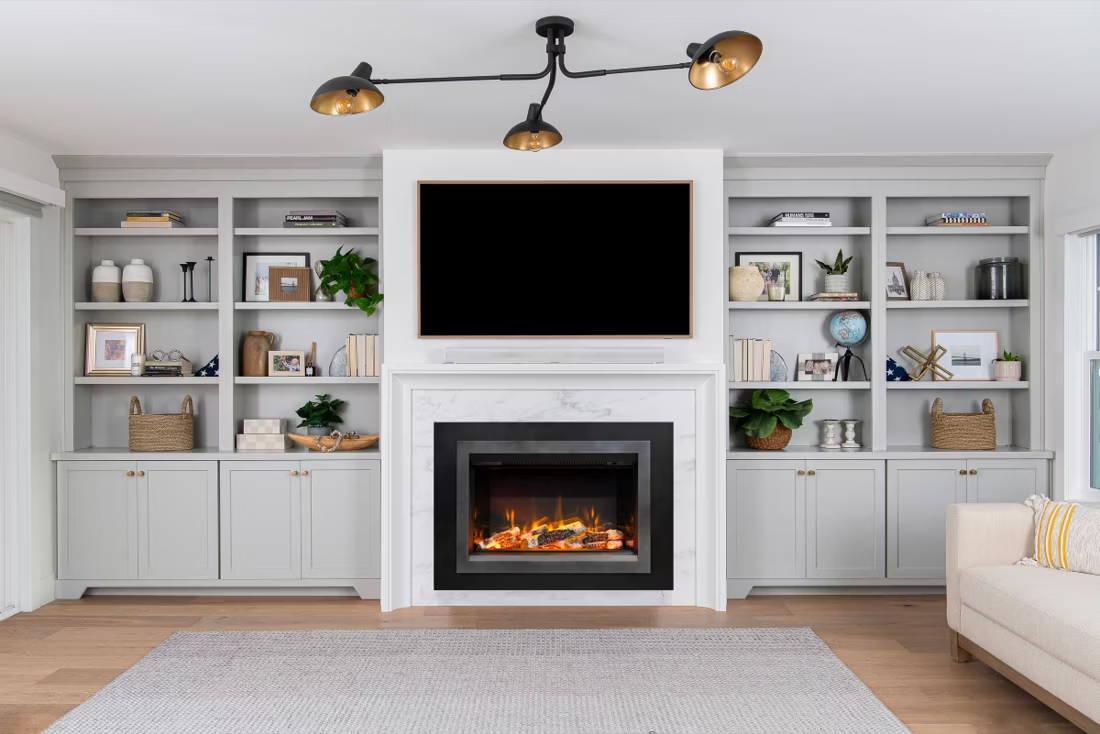
Yes—with an asterisk. Fireplaces are hot and TVs don't like heat. Either put a mantel between them to deflect rising warmth, or choose a fireplace with heat-management technology that creates a cool zone on the wall above—the wall stays around 125 degrees, barely warm, while the room still gets full heat. If you like clean lines and don't want a mantel, heat management is the answer.
Does an electric fireplace need a vent or chimney?
No—that's its superpower. An electric fireplace needs a wall and an outlet, period. No vent pipe, no gas line, no clearances to design around, which is why it works in bedrooms, offices, apartments, and walls where venting a gas or wood unit would be impractical or impossible. Installation is typically the simplest and least expensive of any fireplace type.
Can a fireplace actually lower my heating bill?
Yes—by creating a comfort zone. A furnace heats every square foot of the house just to warm the one room you're in; a gas fireplace on low burns roughly a sixth of the gas a typical furnace does. Set the furnace around 55–60 degrees as a baseline, then heat the rooms your family actually uses. Families who heat this way commonly save $20–$60 a month.
Does a fireplace add value to my home?
On average, a fireplace adds back to the home about the same amount you spent installing it. Add the monthly savings from heating the rooms you actually use instead of the whole house—often hundreds of dollars a year—and the value case is strong before you even count what a fire does for how your family uses the room.
Find your electric fireplace in Knox County.
Tell us about your home and we'll match you with a trusted local dealer and send over a free Project Guide & Parts List for your electric fireplace project in Knox County.
Find Your Fireplace →