
Pellet heat is rare in Galesburg—here's when it still makes sense.
Most Knox County homes heat with natural gas or electric furnaces, but a small number of homeowners choose pellet for supplemental warmth, ambiance, or backup capability. We'll help you figure out if it's right for your house—and match you with a dealer who actually carries it.
Every Project Starts From One of These Five Situations
Galesburg homes run on gas—pellet is a niche choice.
Galesburg sits in climate zone 5A at about 771 feet on the Illinois prairie, with a winter heating season on par with a typical Midwestern year and average winter lows around 14 degrees. That's a real Midwestern winter—cold enough to matter, though noticeably milder than places like Duluth MN or Fargo ND, where pellet and wood heat carry a lot more weight in the local heating mix. In Knox County, natural gas furnaces are the standard, and electric service from Ameren Illinois and Spoon River Electric Cooperative covers the rest. That combination is a big part of why freestanding pellet stoves never became a common sight here the way they have in colder or more rural, off-gas-grid parts of the country.
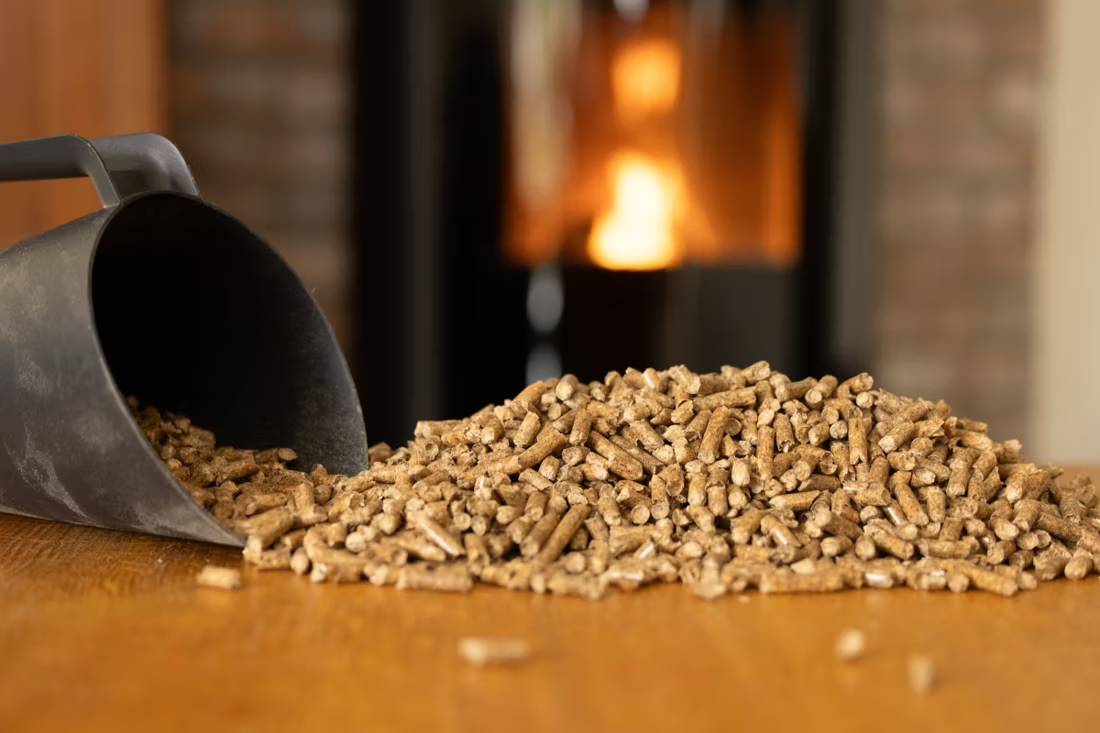
That doesn't mean pellet heat has no place in Galesburg. A handful of homeowners install a pellet stove or insert for zone heating in a converted garage, a finished basement, or an older home with an underused fireplace opening. Interestingly, pellet fuel itself isn't hard to find regionally—Indeck Energy Services and Somerset Pellet Fuel both operate in the Illinois biomass space, and Lignetics distributes widely through the Midwest—so sourcing bags of pellets is rarely the obstacle. The bigger question is usually whether a pellet appliance fits your specific heating goals better than the gas furnace or electric baseboard you likely already have. I'll say it plainly: if you're weighing pellet against gas in Galesburg, gas will usually win on convenience and running cost. Pellet earns its place when you want supplemental heat with real flame, some backup capability, or a wood-stove look without the chimney and cutting-permit hassle.
Three steps. No salesperson until you're ready.
Tell us about your project
Your zip code, your situation, and the fuel you're leaning toward—or let the answers point you to one.
See what's actually available
The brands dealers within 100 miles genuinely carry—real options, never a catalog mirage.
Get your dealer & Project Guide
A trusted local dealer, plus the free Project Guide & Parts List that names every component of the job.
Frequently Asked Questions
How much does a pellet stove installation cost in Galesburg?
Because pellet stoves are installed far less often here than in colder or off-gas-grid regions, there isn't a deep local pricing history to draw on the way there is for gas furnace work. Nationally, a typical freestanding pellet stove installation runs roughly $3,000 to $6,000, including the unit, venting, and a hearth pad if one is needed. Converting an existing masonry fireplace to a pellet insert tends to land in a similar range, depending on chimney condition and whether a liner is needed. A local dealer can give you a firm number once they've seen your space—ask specifically how many pellet jobs they've done, since experience varies more here than with gas or electric work.
Is pellet heat actually a realistic option for a house in Galesburg?
Yes, but go in with clear eyes about how it fits. Pellet appliances are a minority choice in this market—most Knox County homes are built around a gas furnace or electric heat, and that's not going to change. Where pellet makes sense in Galesburg is as supplemental or zone heat: a converted three-season room, a detached garage workshop, a finished basement without good ductwork, or a family room where you want visible flame without a full wood-burning setup and firewood storage. If you're hoping to replace your furnace entirely with a pellet stove, that's a harder case to make here than it would be in, say, rural Minnesota or Montana.
Where can I buy pellet fuel in or near Galesburg?
Sourcing pellets is easier than you might expect given how few homes burn them. Lignetics distributes widely through Midwest hardware chains and farm supply stores, and regional producers including Indeck Energy Services and Somerset Pellet Fuel operate biomass and pellet operations elsewhere in Illinois, which keeps supply reasonably steady in this part of the state. Expect to pay in the neighborhood of $250 to $300 per ton for hardwood pellets, generally sold in 40-pound bags—a full heating season for a single stove used as supplemental heat typically runs one to two tons.
Why are both pellet stoves and wood stoves uncommon in Galesburg?
It comes down to what's already built into most Galesburg homes: reliable natural gas service and a solid electric grid through Ameren Illinois and Spoon River Electric Cooperative. When a furnace already heats the house effectively and air quality here isn't a regulatory concern the way it is in some non-attainment areas out West, there's less pressure—practical or environmental—pushing homeowners toward solid-fuel appliances. That said, Knox County has plenty of oak, hickory, walnut, and maple in its woodlots, so homeowners who do want a wood or pellet appliance for ambiance or backup heat aren't short on local fuel options; it's simply a smaller, more deliberate slice of the market than in colder, gas-scarce regions.
Will a pellet stove keep working during a power outage?
Not without a backup power plan. Pellet stoves rely on an electric auger to feed fuel and a blower to distribute heat, so they shut down when the power does—worth knowing if you're on Spoon River Electric Cooperative's rural lines, where outages after ice storms can run longer than in town. Some homeowners pair a pellet stove with a small battery backup or generator specifically so it keeps running through an outage. If uninterrupted backup heat during storms is your main goal, a vented gas appliance or a wood-burning stove will get you there more reliably than pellet.
What size pellet stove do I need for a Galesburg home?
Since most pellet installs here are supplemental rather than whole-house heat, sizing usually comes down to the specific room or zone rather than total square footage. A small unit (rated for 500-1,000 sq ft) is plenty for a converted garage, sunroom, or single large living area. Anything bigger than that starts to overlap with what your existing furnace already handles well, so there's rarely a reason to size up further unless you're heating an unusually large, open finished basement. A local dealer will walk your space and confirm sizing before you buy.
Is a pellet stove cheaper to run than my gas furnace or electric heat?
It depends on the comparison. Against Ameren Illinois or Spoon River Electric Cooperative rates—residential electricity in the area runs around $0.1176 per kWh—a pellet stove used for zone heating can meaningfully cut electric baseboard costs in the room it serves. Against a modern gas furnace, pellet fuel is usually a wash or slightly more expensive per BTU once you account for pellet prices in the $250-$300-per-ton range, plus the extra effort of loading a hopper and cleaning the burn pot. The honest answer for most Galesburg homeowners: pellet isn't chosen here to save money over gas, it's chosen for the heat experience, backup flexibility, or a specific room the furnace doesn't reach well.
Do I need a permit to install a pellet stove in Galesburg?
Most likely yes—new solid-fuel or pellet-burning appliances typically require a building permit through the City of Galesburg or Knox County, covering the appliance clearance, venting, and any structural work. Because pellet installs are less frequent here, it's worth confirming directly with the local building department before work starts rather than assuming the process mirrors a gas furnace swap. A dealer experienced with pellet installations, even if they do more gas and electric work overall, should be able to walk the permit through with you.
Pellet vs. gas—which makes more sense for my Galesburg home?
For whole-house heating, gas wins in this market—it's the infrastructure Galesburg is built around, it's less labor to operate, and it doesn't require hopper loading or ash cleanup. Pellet makes sense as a secondary system: supplemental warmth in a room your furnace struggles to reach, some backup heat capability if you pair it with a power source, or simply the appeal of visible flame without the bulk of firewood storage that wood burning requires. If you're on the fence, ask a local dealer to walk through your actual heating bills and layout—for most homes here, the answer ends up being gas as primary with pellet, if at all, in a supporting role.
What's the difference between an insert and a zero-clearance fireplace?
An insert is a fireplace that slides into a pre-existing wood-burning fireplace—if you don't have one, there's nothing to insert it into. A zero-clearance fireplace is built into a framed wall, which makes it the answer for remodels and new construction. Simple test: existing masonry fireplace means insert; blank or framed wall means zero-clearance.
How often does a pellet stove need cleaning?
A clean pellet stove is a happy pellet stove. Plan on cleaning the burn pot about once a week when you're burning regularly—ash and clinkers gum up the air holes just like a pellet barbecue. Most pellet stove problems trace back to skipped cleaning that nobody explained up front. Some designs make it easy with a trapdoor burn pot: pull a lever and the gunk drops into the ash pan.
Can a fireplace actually lower my heating bill?
Yes—by creating a comfort zone. A furnace heats every square foot of the house just to warm the one room you're in; a gas fireplace on low burns roughly a sixth of the gas a typical furnace does. Set the furnace around 55–60 degrees as a baseline, then heat the rooms your family actually uses. Families who heat this way commonly save $20–$60 a month.
Can I install a fireplace myself?
If you're putting a fire in your house on purpose, it's best to work with an expert. Unless you're genuinely experienced in framing, gas line, vent pipe, and the national code on clearances to combustibles, have a professional do it—and ideally the same company that sells you the fireplace, so warranty, service, and liability all live under one roof.
Pellet Brands Stocked Around Galesburg
Manufacturers will point you to the nearest stocking dealer.
Find your pellet stove in Galesburg.
Tell us about your home and your heating goals, and we'll match you with a local Galesburg-area dealer who actually installs pellet appliances—plus a free Project Guide & Parts List covering the exact parts, vent kit, and next steps for your space.
Find Your Fireplace →