
Add Real Warmth to Any Room in Knollwood—No Chimney Required.
Zone heat and real flame-look ambiance for Knollwood's tight North Shore lots—no venting, no masonry, no chimney sweep. Find the right unit and connect with a trusted local dealer.
Every Project Starts From One of These Five Situations
Clean, flexible heat for a small North Shore village.
Knollwood is a small village of under 2,000 residents tucked into Lake County's wooded North Shore, at roughly 690 feet elevation with a real winter—average lows near 16°F and a heating season as long and demanding as Madison, Wisconsin's. Most homes here run on a central gas furnace as primary heat, which is why electric fireplaces show up almost exclusively as secondary heat: a family room that runs cold at night, a finished basement with no existing flue, a primary bedroom that never quite catches up to the thermostat.
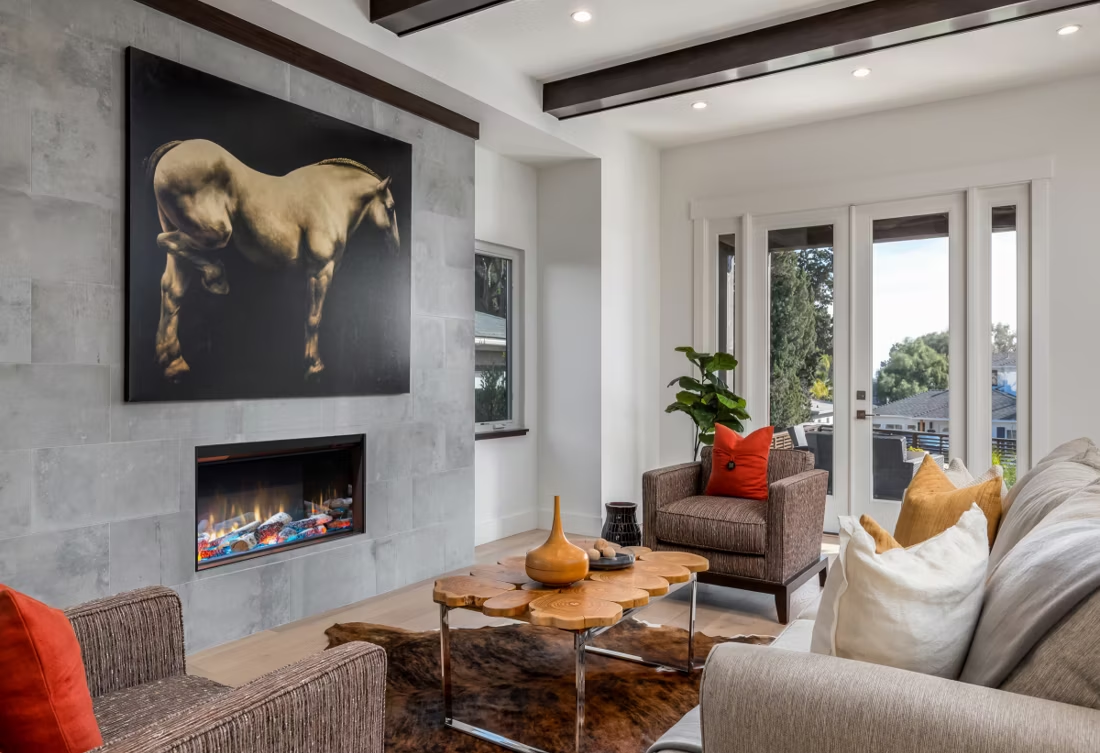
The appeal is practical as much as aesthetic. Knollwood's lots are compact and close to neighbors, which makes chimney work, clearances, and smoke a real consideration—an electric insert or wall unit sidesteps all of it, running on a standard outlet or a dedicated circuit through Commonwealth Edison at 13.39 cents per kWh. No venting, no gas line, no annual sweep—just a unit that can go into an interior wall, a built-in bookcase, or an existing mantel opening in an afternoon.
Three steps. No salesperson until you're ready.
Tell us about your project
Your zip code, your situation, and the fuel you're leaning toward—or let the answers point you to one.
See what's actually available
The brands dealers within 100 miles genuinely carry—real options, never a catalog mirage.
Get your dealer & Project Guide
A trusted local dealer, plus the free Project Guide & Parts List that names every component of the job.
Frequently Asked Questions
How much does it cost to install an electric fireplace in Knollwood?
A plug-in insert or freestanding electric fireplace that uses a standard 120V, 15-amp outlet typically runs $300 to $1,200 installed, since there's often no electrical work required beyond placement. A built-in wall unit or a linear electric fireplace set into new framing or an existing mantel usually runs $1,500 to $4,500 once you factor in a licensed electrician for a dedicated 20-amp circuit and any finish carpentry around the unit. Because Knollwood's housing stock skews toward older single-family homes, panel capacity is worth checking before committing to a larger built-in—your local dealer or electrician can confirm this during a walkthrough.
What does an electric fireplace cost to run on ComEd's rates?
Commonwealth Edison's residential rate in Knollwood runs about 13.39 cents per kWh. A typical 1,500-watt electric fireplace on its heat setting draws 1.5 kWh per hour, which works out to roughly 20 cents an hour—about $1.60 for a four-hour evening with the heater running, or just a few cents an hour if you're running flame-only mode without heat. That's a fraction of what it costs to raise the thermostat on the whole house, which is exactly why most Knollwood homeowners use these units for zone heating a specific room rather than as a furnace replacement.
Do I need a permit or an electrician to install an electric fireplace here?
A plug-in unit that uses an existing outlet needs no permit at all. A hardwired built-in or a unit requiring a new dedicated circuit does need a licensed electrician, and depending on scope, an electrical permit through the Village of Knollwood or Lake County. Most local hearth and electrical dealers handle this as part of the installation quote, so you're not coordinating trades yourself—worth asking about upfront if you're eyeing a built-in wall unit rather than a simple insert.
Will an electric fireplace actually keep a room warm during a Knollwood winter?
For a single room, yes—most 1,500-watt units are rated to comfortably heat 300 to 400 square feet, which covers a family room or bedroom even on a 16°F night. What it won't do is replace your furnace or heat an open-concept main floor on its own; Knollwood's heating season runs long and sustained, on par with Madison, Wisconsin, not just a handful of cold snaps, and the whole-home load needs a real HVAC system behind it. Think of electric as the unit that makes one specific room comfortable without running the furnace harder, not a standalone heat source for the house.
Electric vs. gas fireplace—which makes more sense for my Knollwood home?
Gas fireplaces are standard here and deliver more real heat output, work during power outages with the right ignition system, and give you an actual flame—but they need a gas line, venting, and a larger installed cost. Electric fireplaces install almost anywhere with no venting or gas work, cost less upfront, and run cheaply as supplemental heat on ComEd's rate, but they do nothing during a power outage and produce a flame effect rather than real fire. For a finished basement, a bedroom, or a room with no existing chimney or gas access, electric is usually the simpler and cheaper answer. For a primary living space where you want serious heat output, gas is worth the extra install cost.
What types of electric fireplaces work best in Knollwood homes?
For older Knollwood homes with an existing masonry fireplace that's no longer used, an electric insert slides into the opening and gives you flame-look ambiance and heat without touching the chimney. For newer construction or a remodel, a linear wall-mount unit set into framing or a media console fireplace that just plugs in are both popular—the media console option in particular requires zero electrical or construction work, which makes it a common choice for finished basements. A local dealer can walk your specific space and tell you which format fits the opening and wiring you already have.
Are wood-burning fireplaces common in Knollwood?
Not really. Knollwood's small, closely-spaced lots make wood smoke and chimney clearances impractical for most homes, and very few properties in the village have an active wood-burning setup—most existing fireplaces here are either gas-converted or sit unused. If you're drawn to a real wood-burning stove or fireplace, it's a much rarer project locally and worth discussing directly with a hearth dealer about feasibility on your specific lot. For most Knollwood homeowners chasing the look and warmth without the smoke, electric is the far more common route.
Will my electric fireplace work if the power goes out?
No—electric fireplaces need power to run both the heater and the flame-effect display, so they go dark along with everything else on the ComEd grid during an outage. If backup heat during winter storms is a priority for your household, that's a real consideration worth raising with a local dealer, since a gas unit with battery-backup ignition can operate through an outage where an electric unit can't. Most Knollwood homeowners treat electric fireplaces purely as everyday supplemental heat and ambiance rather than emergency backup.
How much maintenance does an electric fireplace need?
Very little. There's no chimney to sweep, no gas line to service, and no combustion byproducts to worry about. LED flame elements are typically rated for 20,000 to 30,000 hours of use—many years of regular evening use—and the main upkeep is an occasional dust-off of the vents and a bulb or LED board replacement well down the line if the flame effect dims. This low-maintenance profile is a big part of why electric units are popular as secondary heat sources in Knollwood's older housing stock, where owners already have a furnace and chimney to maintain elsewhere in the house.
Can I put a TV above my fireplace?
Yes—with an asterisk. Fireplaces are hot and TVs don't like heat. Either put a mantel between them to deflect rising warmth, or choose a fireplace with heat-management technology that creates a cool zone on the wall above—the wall stays around 125 degrees, barely warm, while the room still gets full heat. If you like clean lines and don't want a mantel, heat management is the answer.
Do electric fireplaces actually produce heat?
Yes—most put out around 4,800–5,000 BTUs from a standard outlet, which comfortably warms a bedroom, office, or den as a comfort-zone heater. What they won't do is carry a whole house the way wood, gas, or pellet can. Think of electric as ambiance-first with honest supplemental heat: flames on with no heat in July, flames plus warmth in January.
How much should I budget for a fireplace?
For an average home—covering the fireplace, the vent pipe, and basic installation—a budget between $3,900 and $5,500 gives you a lot of options across wood, gas, and pellet. By the time you add finish work, gas line, and electrical, the average complete installation lands between $5,000 and $12,000 all-in. In a remodel or new build, a good rule is to put about 2.5% of the total project cost toward the fireplace.
Can I install a fireplace myself?
If you're putting a fire in your house on purpose, it's best to work with an expert. Unless you're genuinely experienced in framing, gas line, vent pipe, and the national code on clearances to combustibles, have a professional do it—and ideally the same company that sells you the fireplace, so warranty, service, and liability all live under one roof.
Nearby Dealers
Hearth shops serving Knollwood and the surrounding area. Every listing shows whether it is a WhyFire partner, a dealer we have verified as authorized for the brands we recommend, or a local business carrying hearth products. No manufacturer pays for placement. How we verify dealers →
Fireplaces Plus
Smokin' Deal Bbq
General Masonry Supply
Fireplace And Patio
Jhb Group, Inc.
Ember Glow
Electric Service in Knollwood
An electric fireplace's heater draws about 1,500 watts—pennies per hour at local rates.
Commonwealth Edison Co
Find your electric fireplace in Knollwood.
Tell us a bit about your home and we'll put together a free Project Guide & Parts List for your electric fireplace project—the exact parts, including any wiring needs, and our recommended local dealer in the Knollwood area.
Find Your Fireplace →