
Pellet Stoves Are Rare in Knollwood—Here's What to Know.
Knollwood is a small, gas-heated community on Chicago's North Shore where pellet stoves rarely show up on a building permit. If you still want one, here's the honest picture—and a path to a real local dealer.
Every Project Starts From One of These Five Situations
A gas-first village on Chicago's North Shore.
Knollwood is an unincorporated community of roughly 1,763 residents tucked into Lake County, Illinois, a few miles from Lake Michigan. Winters here are genuinely cold—average lows around 16°F and a long, demanding heating season, putting Knollwood in the same climate tier as Madison, Wisconsin. But unlike colder, more rural parts of the Midwest where pellet stoves fill a real heating gap, Knollwood's homes sit on well-established natural gas infrastructure, and Commonwealth Edison delivers reliable grid electric at 13.39 cents per kWh.
That combination—dependable gas service, dependable electric service, and no wildfire smoke or air-quality driver pushing residents toward solid-fuel backup heat—means pellet stoves never really took hold in this part of Lake County. It's not that they don't work here; they simply haven't been the local default the way they are in parts of the rural Midwest or Pacific Northwest. A handful of Knollwood homeowners still install them for a den, a lake-facing sunroom, or a detached workshop, and regional pellet suppliers like Indeck Energy Services, Lignetics, and Somerset Pellet Fuel do serve the broader Chicago area if you go that route.
Three steps. No salesperson until you're ready.
Tell us about your project
Your zip code, your situation, and the fuel you're leaning toward—or let the answers point you to one.
See what's actually available
The brands dealers within 100 miles genuinely carry—real options, never a catalog mirage.
Get your dealer & Project Guide
A trusted local dealer, plus the free Project Guide & Parts List that names every component of the job.
Frequently Asked Questions
Can I even find a pellet stove dealer near Knollwood?
Yes, but you'll likely be working with a dealer based elsewhere in the Chicago metro rather than someone in Knollwood itself—dedicated pellet-stove retailers are scarce this close to the North Shore, where gas fireplace and insert showrooms dominate. Nationally, a fully installed pellet stove (unit, venting, hearth pad, and labor) typically runs $3,000 to $6,000, and that range holds reasonably well for the Chicago area too. Because installers here don't see many pellet jobs, it's worth confirming your dealer has actually pulled venting through a masonry or frame wall for a pellet unit before, not just gas.
Why isn't pellet heat common in Knollwood?
A few things line up against it. Natural gas service is well established throughout this part of Lake County, so most homes already have a clean, no-maintenance heat source with no fuel storage or ash to deal with. Commonwealth Edison's grid here is also solid enough that electric fireplaces and space heaters cover ambiance and supplemental zone heat without much thought. There's also no local air-quality or wildfire-smoke pressure pushing residents toward wood or pellet backup heat the way there is in the West. Add in that many Knollwood lots are wooded, established properties where exterior venting and pellet delivery/storage feel out of step with the setting, and pellet stoves simply never became part of the local building pattern.
What's the real difference between a pellet stove and a wood stove, since neither is common in Knollwood?
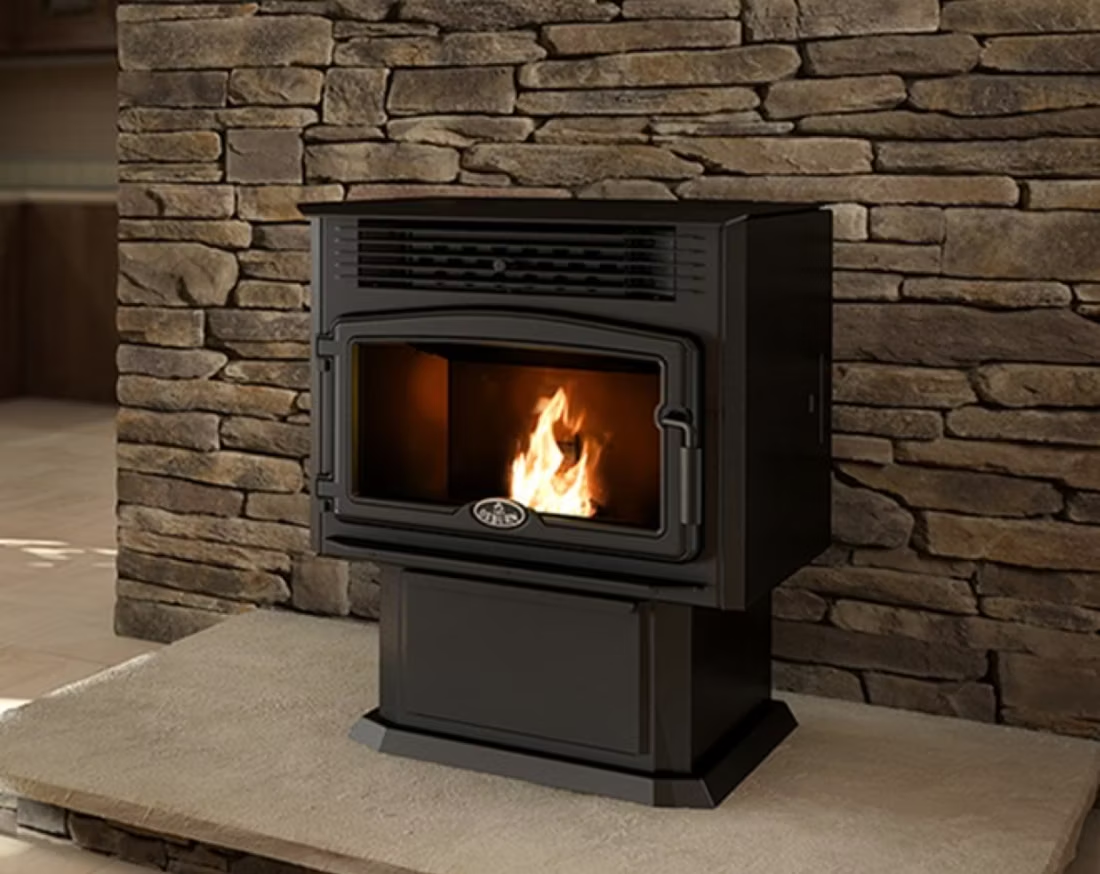
A pellet stove burns compressed hardwood pellets fed automatically from a hopper, using an electric auger and blower—it's more hands-off than wood but needs continuous electricity to run. A wood stove burns cordwood and needs no power at all, which is actually the more useful trait during a Lake County ice storm and ComEd outage. Given that oak, hickory, walnut, and maple are all common regional firewood species, a wood-burning appliance would have the edge for true off-grid backup heat—but wood stoves are just as uncommon here as pellet units, for the same reasons: reliable gas service and lot-by-lot aesthetic considerations in this part of Knollwood.
Do I need a permit to install a pellet stove in Knollwood?
Yes. Since Knollwood is unincorporated, building permits for a new pellet stove installation run through the Lake County Building & Zoning Division rather than a city building department. Expect the same basics required anywhere: an EPA-certified appliance, correct clearances to combustibles, and inspected venting. Because pellet installs are infrequent here, it's worth asking your installer to confirm they've coordinated a Lake County permit before, so there are no surprises with inspection timing.
Where can I actually buy pellet fuel near Knollwood?
Bagged pellets aren't a fixture on every shelf in this area the way they are further north or west, but they're not hard to source either. Indeck Energy Services and Lignetics both supply the broader Chicago and Great Lakes region, and Somerset Pellet Fuel ships into the Midwest as well; hardware stores and farm/feed retailers in Lake County typically stock one or more of these brands seasonally. Expect to pay somewhere in the $250 to $320 per ton range for premium hardwood pellets, on the higher side of national averages given the limited local demand.
Will a pellet stove keep working if the power goes out?
No—this is the biggest practical drawback for a Knollwood home. A pellet stove's auger, igniter, and combustion blower all run on standard household electricity, so a ComEd outage shuts it down along with everything else, unless you add a battery backup or run it off a generator. If your main goal is heat security during winter storms, a wood-burning unit or a generator-backed setup will serve you better than pellet alone.
What do most Knollwood homeowners install instead of a pellet stove?
Direct-vent gas fireplaces and inserts are by far the most common choice in Knollwood, given how widely natural gas is already run to homes in this part of Lake County. Electric fireplaces are the second most common pick, especially for supplemental zone heat in a sunroom or finished basement, since Commonwealth Edison's grid is dependable even though the residential rate (about 13.4 cents per kWh) runs a bit higher than gas per BTU delivered. Pellet stoves show up occasionally in workshops, garages, or detached structures where running a gas line isn't practical.
Pellet stove vs. electric fireplace—which makes more sense for a Knollwood home?
An electric fireplace or insert is almost always the simpler fit here: no venting, no fuel deliveries, no ash, and a straightforward plug-in or hardwired install that a licensed electrician can usually handle in a day. A pellet stove offers more real heat output and a live flame, but it requires a hopper to refill, a vent run to the exterior, and—as noted above—it still needs electricity to operate, so it doesn't buy you outage protection the way a wood stove would. For most Knollwood living rooms and dens, electric covers the ambiance-plus-supplemental-heat need without the added complexity pellet brings.
Is a pellet stove worth installing in a Knollwood lake house or detached space?
It can be, particularly for a detached workshop, garage, or three-season room near the lake where running a gas line isn't practical but you still want real heat output rather than just an electric heater. In those settings, a pellet stove's ability to hold a steady, thermostatically controlled burn for hours has real appeal. Just plan for pellet storage (a ton or two takes real floor space) and factor in that you'll be sourcing bags from a regional supplier like Lignetics or Indeck rather than picking them up at a store down the street.
What's the difference between an insert and a zero-clearance fireplace?
An insert is a fireplace that slides into a pre-existing wood-burning fireplace—if you don't have one, there's nothing to insert it into. A zero-clearance fireplace is built into a framed wall, which makes it the answer for remodels and new construction. Simple test: existing masonry fireplace means insert; blank or framed wall means zero-clearance.
Why is a fireplace insert so efficient?
An insert does two things: it seals the chimney completely, so you stop losing air you already paid to heat, and it radiates warmth into the room through the firebox and glass. Most add a heat-exchange fan that pulls cool room air underneath, wraps it around the hot firebox, and pushes it back out warm. Your home is more efficient before you've even lit the first fire.
What is an in-home preview and do I need one?
It's a visit where a hearth professional measures your space, confirms the model you picked actually works in your home, and walks the specs—framing, gas line, venting, finish work—before anything is ordered. Some details you just can't know until you see the house. Never make a down payment without one; it's the single most-skipped step that burns buyers.
Can I install a fireplace myself?
If you're putting a fire in your house on purpose, it's best to work with an expert. Unless you're genuinely experienced in framing, gas line, vent pipe, and the national code on clearances to combustibles, have a professional do it—and ideally the same company that sells you the fireplace, so warranty, service, and liability all live under one roof.
Nearby Dealers
Hearth shops serving Knollwood and the surrounding area. Every listing shows whether it is a WhyFire partner, a dealer we have verified as authorized for the brands we recommend, or a local business carrying hearth products. No manufacturer pays for placement. How we verify dealers →
Fireplaces Plus
Smokin' Deal Bbq
General Masonry Supply
Fireplace And Patio
Jhb Group, Inc.
Ember Glow
Pellet Brands Stocked Around Knollwood
Manufacturers will point you to the nearest stocking dealer.
Find your pellet stove in Knollwood.
Pellet stoves aren't the default heating choice in Knollwood, but if one fits your project, we'll match you with a trusted local dealer and send you a free Project Guide & Parts List—the exact parts, including the vent kit, and the right installer for your home.
Find Your Fireplace →