
Find a gas fireplace built for Fox Valley winters.
With a heavy winter heating load and winter lows averaging around 16°F, Kane County homes from Aurora to Elgin to St. Charles need heat that turns on instantly and keeps up. Find the right gas fireplace, insert, or stove, and get matched with a trusted local dealer who can actually install it.
Every Project Starts From One of These Five Situations
Clean, controlled heat for a Zone 5A winter.
Kane County is home to more than half a million people spread across a dense patchwork of Fox Valley suburbs and small towns—Aurora, Elgin, St. Charles, Geneva, Batavia, North Aurora, and outlying communities like Hampshire and Sugar Grove. In climate zone 5A, with a heavy winter heating load and average winter lows near 16°F, comfortable heat isn't optional here—it's a five-to-six-month-a-year requirement, not unlike the winters that hit Buffalo, NY. Gas fireplaces have become the default upgrade for most of the county, not because wood heat doesn't work, but because gas fits the lot sizes, the building codes, and the pace of suburban life in the Fox Valley.
Nicor Gas serves natural gas to the vast majority of incorporated Kane County communities, so most homeowners in Aurora, Elgin, St. Charles, Geneva, and Batavia already have a gas line at the meter—which keeps a fireplace or insert project simpler and cheaper. In pockets of unincorporated Kane County near Hampshire, Big Rock, or the edges of Sugar Grove Township where natural gas mains don't reach, propane fills the gap. Either way, a direct-vent gas fireplace gives you real heat at the flip of a switch, works as zone heat alongside a central furnace, and—with the right ignition system—keeps running through the kind of winter storm that knocks out power along ComEd lines.
Three steps. No salesperson until you're ready.
Tell us about your project
Your zip code, your situation, and the fuel you're leaning toward—or let the answers point you to one.
See what's actually available
The brands dealers within 100 miles genuinely carry—real options, never a catalog mirage.
Get your dealer & Project Guide
A trusted local dealer, plus the free Project Guide & Parts List that names every component of the job.
Frequently Asked Questions
How much does a gas fireplace installation cost in Kane County?
Most Kane County gas fireplace installations run somewhere between $4,000 and $11,000, depending on the unit, whether you're converting an existing masonry fireplace or starting fresh, and how much gas line work is involved. A direct-vent insert into an existing fireplace with a Nicor Gas line already run to that wall sits at the lower end. New construction or remodels that require framing, venting through an exterior wall, and a new gas line run land in the middle to upper end. Homes in unincorporated areas needing a new propane tank installation instead of a gas main tap typically see the higher end of that range. A local dealer will give you a firm number after walking the space.
Can I convert my existing wood fireplace to gas?
Yes, and it's one of the more common upgrades in Kane County's older housing stock—plenty of homes in downtown Geneva, St. Charles, and Aurora still have original masonry fireplaces framed for oak, hickory, or walnut cordwood. A gas insert slides into that existing opening and vents through the current chimney using a stainless liner, which keeps the exterior look intact while swapping out the wood-hauling and creosote maintenance for a switch-flip flame. Expect the project to run somewhere in the $4,000 to $9,500 range depending on the insert and whether the home already has a nearby gas line.
Do I need natural gas, or can I use propane?
Natural gas from Nicor Gas covers most of incorporated Kane County—Aurora, Elgin, St. Charles, Geneva, Batavia, and North Aurora all have gas mains running to the vast majority of homes. If you're outside those service areas, particularly in unincorporated stretches near Hampshire, Big Rock, or the far edges of Sugar Grove and Burlington Townships, propane is the standard fallback, either from an existing tank or a new tank set by a local propane supplier. Nearly every gas fireplace on the market can be configured for either fuel—your installer sets the correct orifice and regulator for whichever you have.
Will my gas fireplace work if the power goes out?
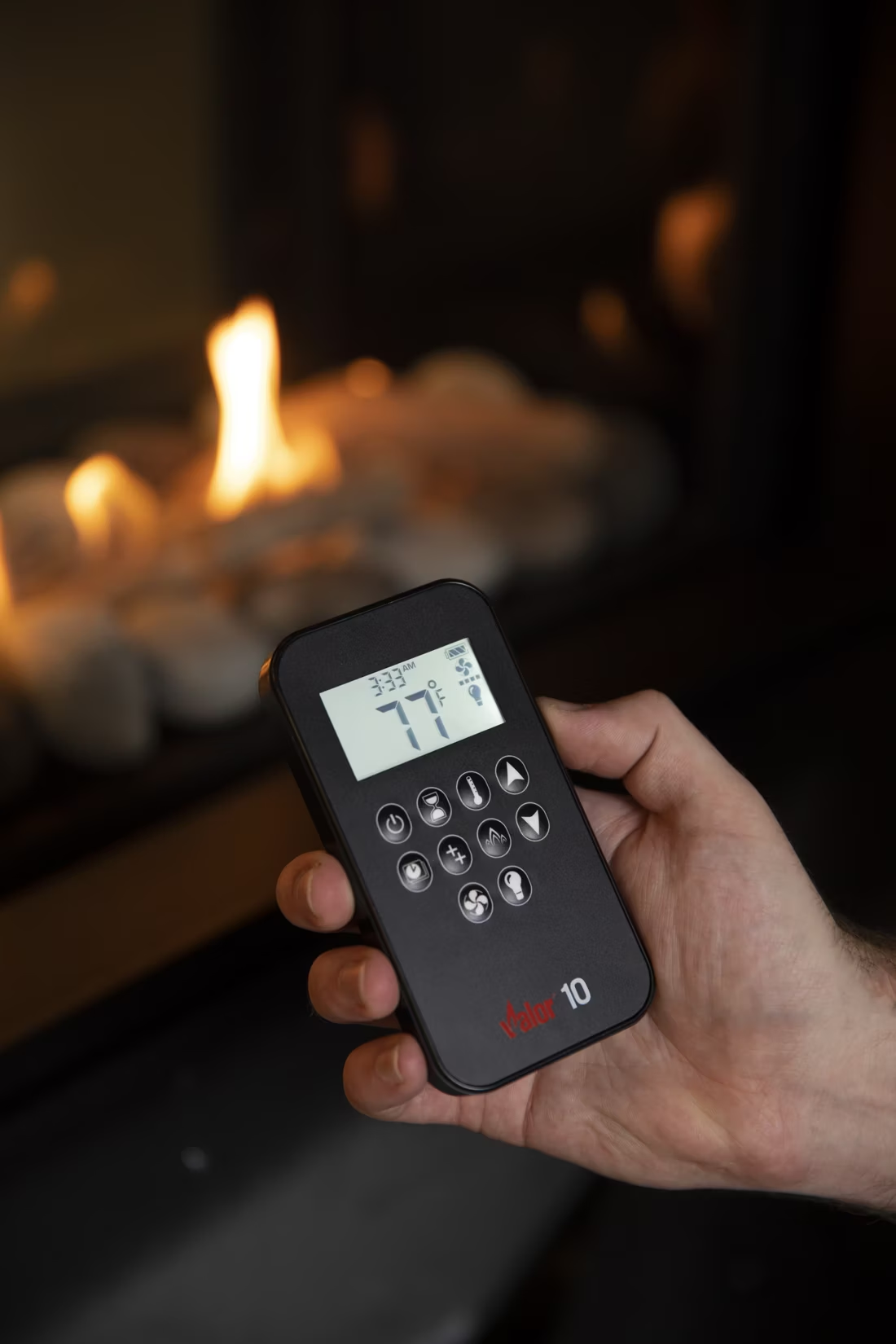
Most modern gas fireplaces will, provided they have the right ignition system. Units with intermittent pilot ignition (IPI) run on AA battery backup that kicks in the moment ComEd power drops, so the fireplace still lights on demand. Valor fireplaces take a slightly different approach—the pilot's thermocouple generates its own electricity, so there's no battery to remember or replace at all. For a Kane County winter storm that knocks out power for a day or two, that distinction matters. Ask your local dealer which ignition system is on any unit you're considering.
What's the difference between a gas fireplace, gas insert, and gas stove?
A gas fireplace is a fully built-in unit framed into a wall—the standard choice for new construction or a room addition. A gas insert is sized to slide into an existing masonry fireplace opening and use the existing chimney as its vent path, which makes it the natural fit for Kane County's older Fox Valley homes. A gas stove is a freestanding cabinet unit that sits on the floor and vents through a wall or chimney, similar in footprint to a wood stove but running on gas. Most homeowners converting an existing fireplace go with an insert; new spaces without a chimney usually call for a built-in fireplace or a freestanding stove.
Do I need a permit to install a gas fireplace in Kane County?
Yes, and where you apply depends on your address. Aurora, Elgin, St. Charles, Geneva, and Batavia each run their own building department and issue permits for gas fireplace installations within city limits, while unincorporated parts of the county go through the Kane County Building Department. Every jurisdiction requires a licensed gas-fitter for the actual gas line connection, which is one reason working with an established local hearth dealer is easier than piecing the job together yourself—they coordinate the gas work, venting, and inspection sign-off as one job instead of three.
What's the difference between vented and vent-free gas fireplaces?
Vented (direct-vent) gas fireplaces pull combustion air from outside and exhaust it back outside through a sealed pipe—they're the cleanest, safest, and most universally code-compliant option, and they're what the overwhelming majority of Kane County dealers install. Vent-free units burn gas directly into the room without any outside venting; they're legal in Illinois but come with strict room-sizing rules and require an oxygen depletion sensor, and some other states restrict them outright. For Kane County homes, direct-vent is the default recommendation—you get strong, consistent heat without any tradeoff on indoor air quality, which matters in tightly sealed, energy-efficient newer construction found throughout the county's subdivisions.
How often should my gas fireplace be serviced?
Plan on an annual inspection, ideally before the heating season ramps up in October or November. A technician checks the burner, pilot assembly, venting, and gas connections, and cleans the glass and firebox interior. It's a shorter visit than a wood chimney sweep but just as important for safe operation—most Kane County gas service providers charge in the $150 to $250 range for a standard annual inspection.
Should I even consider wood or pellet instead of gas?
For most Kane County homes, no—and it's worth being direct about why. Wood stoves and pellet stoves are genuinely uncommon here: lot sizes in Aurora, Elgin, St. Charles, and the rest of the Fox Valley suburbs tend to be tight, several municipalities restrict outdoor wood storage or open burning, and with Nicor Gas already running to most homes, there's little reason to manage cordwood or pellet deliveries from suppliers like Indeck Energy Services or Lignetics when gas delivers comparable heat with none of the handling. A small number of rural Kane County properties with existing oak or hickory woodlots still burn wood by choice, but for the county as a whole, gas is the practical, code-friendly answer—which is exactly why it's become the default here.
What's the difference between an insert and a zero-clearance fireplace?
An insert is a fireplace that slides into a pre-existing wood-burning fireplace—if you don't have one, there's nothing to insert it into. A zero-clearance fireplace is built into a framed wall, which makes it the answer for remodels and new construction. Simple test: existing masonry fireplace means insert; blank or framed wall means zero-clearance.
Why is my open fireplace making my house colder?
Open fireplaces suck—literally. As the fire burns, it consumes air your furnace already paid to heat and pulls it out through the chimney, so the house is actually colder after the fire goes out than before you lit it. An insert fixes this: it seals the chimney, puts fixed glass across the front, and turns that hole in your house into a real heat source.
How much should I budget for a fireplace?
For an average home—covering the fireplace, the vent pipe, and basic installation—a budget between $3,900 and $5,500 gives you a lot of options across wood, gas, and pellet. By the time you add finish work, gas line, and electrical, the average complete installation lands between $5,000 and $12,000 all-in. In a remodel or new build, a good rule is to put about 2.5% of the total project cost toward the fireplace.
Should the dealer who sells my fireplace also install it?
Ideally, yes. A fireplace project involves vent pipe, gas line, electrical, and often tile or stone. Hire three or four separate trades and you own the liability and the game of telephone between them. One company selling and installing means one accountable party, start to finish—ask about factory training, on-time completion records, and what happens if an inspection fails.
Stove and Fireplace Dealers in Kane County
Listings include WhyFire partner dealers, dealers we have verified as authorized for the brands we recommend, and established local businesses that carry hearth products. Every listing shows which one it is. The ones marked Preferred run on WhyFire's software, so they can show you real pricing and book your appointment right here. No manufacturer pays for placement. How we verify dealers →
A Cozy Fireplace
Jhb Group, Inc.
Ember Glow
Fireplace And Patio
A Fireplace Store And More
Find your gas fireplace in Kane County.
Tell us about your home and we'll match you with a trusted local Kane County dealer and send over a free Project Guide & Parts List—the exact parts, vent kit, and recommended installer for your gas fireplace project.
Find Your Fireplace →