
Gas Heat That Keeps Up With Kane County Winters.
With winters as cold and long as Buffalo, NY, Campton Hills homes need heat that works on demand. Find the right gas fireplace and connect with a trusted local dealer.
Every Project Starts From One of These Five Situations
Instant warmth without splitting a log.
Campton Hills sits on the flat, open prairie of Kane County at roughly 847 feet, where average winter lows hover around 16°F and the heating season runs long. This is a low-density village of large lots and custom homes, many built or renovated in the last two decades—and in that kind of housing stock, gas has become the default choice for a fireplace that gets used every night of a Chicago-area winter, not just on holidays.
Nicor Gas serves most of the village, with ComEd providing electric service, so homeowners already running gas furnaces and water heaters typically have a straightforward tap for a fireplace or insert. A properly sized direct-vent gas unit delivers real, consistent heat to a great room or finished basement, works at the flip of a switch during Illinois' ice storms and grid hiccups, and doesn't require the wood supply, cutting permits, or masonry upkeep that make sense in more rural, forested parts of the state but rarely apply here.
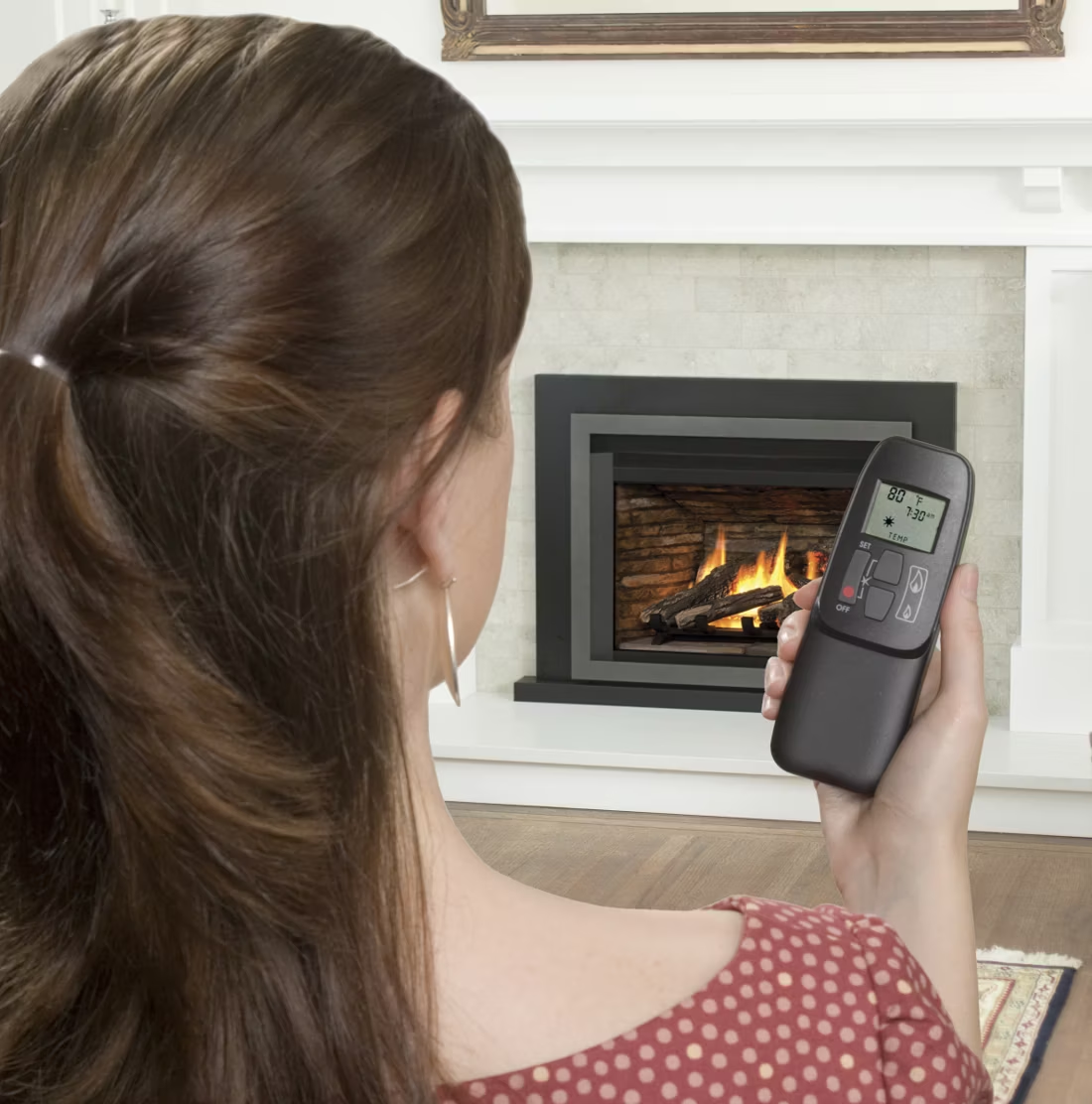
Three steps. No salesperson until you're ready.
Tell us about your project
Your zip code, your situation, and the fuel you're leaning toward—or let the answers point you to one.
See what's actually available
The brands dealers within 100 miles genuinely carry—real options, never a catalog mirage.
Get your dealer & Project Guide
A trusted local dealer, plus the free Project Guide & Parts List that names every component of the job.
Frequently Asked Questions
How much does a gas fireplace installation cost in Campton Hills?
Most gas fireplace installations in Campton Hills run between $4,800 and $11,500. A direct-vent insert going into an existing masonry firebox with a nearby gas line already run sits toward the low end. A new built-in gas fireplace for a great-room addition or finished basement—where framing, venting through an exterior wall, and a fresh gas line are all part of the job—lands in the middle to upper range. Homes on the edges of the village where a propane tank has to be set and plumbed will run higher. A local dealer will give you a firm number after seeing the room.
Can I convert an older wood-burning fireplace to gas?
Yes, and it's a common project on the older farmhouse-style homes scattered through Campton Hills and the surrounding Kane County countryside. A gas insert typically slides into the existing masonry firebox and vents up the existing chimney with a stainless liner, so you keep the look of the original hearth while gaining real heat output and losing the ash, creosote, and wood handling. Expect $4,800 to $9,500 depending on the insert and whether new gas piping needs to be run from your meter to the fireplace location.
Do I need natural gas, or is propane more common here?
Most of Campton Hills falls within Nicor Gas's service territory, so if your home already has a gas furnace, range, or water heater, adding a fireplace is usually a matter of tapping an existing line. Some larger-lot properties on the outer edges of the village, particularly toward unincorporated Kane County, sit outside easy gas main access and rely on propane instead, with a tank set on the property by a regional supplier. Nearly every gas fireplace model on the market can be configured for either fuel—your installer sets the correct orifice and regulator for whichever you have.
Will a gas fireplace still work if the power goes out?
Most modern gas fireplaces will, which matters here given how often winter storms and high winds knock out ComEd service for a few hours or longer. Units with standing pilot or IPI (intermittent pilot ignition) systems run on a small battery backup that keeps the fireplace lighting on demand even with no power to the house. A few manufacturers, including Valor, go a step further and generate their own electricity from the pilot flame's thermocouple, so there's no battery to remember at all. Worth asking about specifically if backup heat during outages is a priority for you.
What's the difference between a gas fireplace, insert, and stove?
A gas fireplace is a fully built-in unit framed into a wall—the right choice for new construction or a remodel without an existing firebox. A gas insert is built to slide into an existing masonry fireplace opening, using the existing chimney as its vent chase, and is the more common upgrade for Campton Hills homes with an older wood-burning hearth. A gas stove is a freestanding, cast-iron-style unit that sits on the floor on its own hearth pad, similar in footprint to a wood stove but running on gas. Which one fits depends mostly on whether you're starting with an existing opening or building from scratch.
How do I know what size gas fireplace I need?
Sizing comes down to the square footage you're heating, ceiling height, and how open the floor plan is—a common consideration in Campton Hills' newer homes, which often have vaulted great rooms that swallow heat. As a rough guide, a 20,000–30,000 BTU direct-vent unit handles a typical family room, while larger open-concept spaces may call for 35,000+ BTU with a blower to push heat further into the room. Oversizing leads to a room that's too hot to sit near; undersizing means the fireplace looks nice but doesn't actually offset your furnace. A local dealer will size it correctly during an in-home visit rather than guessing off a spec sheet.
Do I need a permit to install a gas fireplace in Campton Hills?
Yes—the Village of Campton Hills requires a building permit for new gas fireplace installations, and any gas line work has to be done by a licensed gas-fitter and inspected before it's covered up. Most established hearth dealers handle the permit application and coordinate the inspection as part of the installation price, which is one of the real advantages of using a certified local installer instead of a handyman: gas line, venting, and code sign-off all move through one point of contact instead of three.
Are vent-free gas fireplaces allowed in Illinois?
Illinois permits vent-free (unvented) gas fireplaces, but they come with strict room-size minimums and require an oxygen depletion sensor, and many Kane County building departments scrutinize them more closely than a standard direct-vent unit. Direct-vent gas fireplaces, which draw combustion air from outside and exhaust it back outside through a sealed pipe, are the standard recommendation for Campton Hills homes—they produce more usable heat, don't affect indoor air quality, and clear inspection without the extra paperwork. Ask your local dealer to walk you through both if you're comparing options for a bedroom or lower-square-footage room.
Should I install gas or stick with wood in Campton Hills?
Wood-burning installations are genuinely uncommon in Campton Hills—this is a suburban Kane County village of large, newer-construction lots rather than a forested area with cutting permits or a local firewood culture, so most homeowners who want a hearth default to gas. That said, plenty of older properties still have a masonry fireplace, and local tree services and firewood suppliers around the area do sell seasoned oak, hickory, walnut, and maple by the cord for the handful of residents who keep one burning. But for day-to-day heat, ambiance, and resale appeal in this market, gas is the practical choice: no ash, no wood storage, and instant heat on the coldest Illinois nights.
Why is my open fireplace making my house colder?
Open fireplaces suck—literally. As the fire burns, it consumes air your furnace already paid to heat and pulls it out through the chimney, so the house is actually colder after the fire goes out than before you lit it. An insert fixes this: it seals the chimney, puts fixed glass across the front, and turns that hole in your house into a real heat source.
Why is a fireplace insert so efficient?
An insert does two things: it seals the chimney completely, so you stop losing air you already paid to heat, and it radiates warmth into the room through the firebox and glass. Most add a heat-exchange fan that pulls cool room air underneath, wraps it around the hot firebox, and pushes it back out warm. Your home is more efficient before you've even lit the first fire.
Can a fireplace actually lower my heating bill?
Yes—by creating a comfort zone. A furnace heats every square foot of the house just to warm the one room you're in; a gas fireplace on low burns roughly a sixth of the gas a typical furnace does. Set the furnace around 55–60 degrees as a baseline, then heat the rooms your family actually uses. Families who heat this way commonly save $20–$60 a month.
Does a fireplace add value to my home?
On average, a fireplace adds back to the home about the same amount you spent installing it. Add the monthly savings from heating the rooms you actually use instead of the whole house—often hundreds of dollars a year—and the value case is strong before you even count what a fire does for how your family uses the room.
Nearby Dealers
Hearth shops serving Campton Hills and the surrounding area. Every listing shows whether it is a WhyFire partner, a dealer we have verified as authorized for the brands we recommend, or a local business carrying hearth products. No manufacturer pays for placement. How we verify dealers →
A Cozy Fireplace
Jhb Group, Inc.
Ember Glow
Fireplace And Patio
Find your gas fireplace in Campton Hills.
Tell us about your home and your project, and we'll put together a free Project Guide & Parts List—the right gas fireplace or insert, the vent kit it needs, and a trusted local Kane County dealer to install it.
Find Your Fireplace →