
Find the right fireplace in Kane County.
Fireplace resources for every Fox Valley community in Kane County—from Aurora and Elgin to St. Charles, Geneva, Batavia, and the smaller towns beyond. Connect with a trusted local hearth retailer for your project.
Every Project Starts From One of These Five Situations
Suburban heat, Fox Valley scale.
Kane County is home to over 548,000 people along the Fox River corridor west of Chicago—Aurora, Illinois's second-largest city, anchors the south end, with Elgin, St. Charles, Geneva, and Batavia strung north along the river. Winters here run cold and long: an average winter low near 16°F and a heating load that puts Kane County in the same range as Buffalo, NY. Despite oak, hickory, walnut, and maple stands still growing along the river bluffs, wood heat never became the default here—dense subdivisions, HOA restrictions in newer developments, and near-universal natural gas service pushed the county toward gas and, more recently, electric fireplaces instead.
What you'll find on this hub: hearth retailers, service technicians, and fuel suppliers serving every community in the county—from Aurora and Elgin down to Sugar Grove, Elburn, Hampshire, and Big Rock. Because wood and pellet appliances are genuinely rare in Kane County's suburban housing stock, most of what's covered here centers on gas and electric fireplaces, which is what local dealers actually stock and install. Pick your fuel below to see local dealers, installation costs, and the resources that match your project.
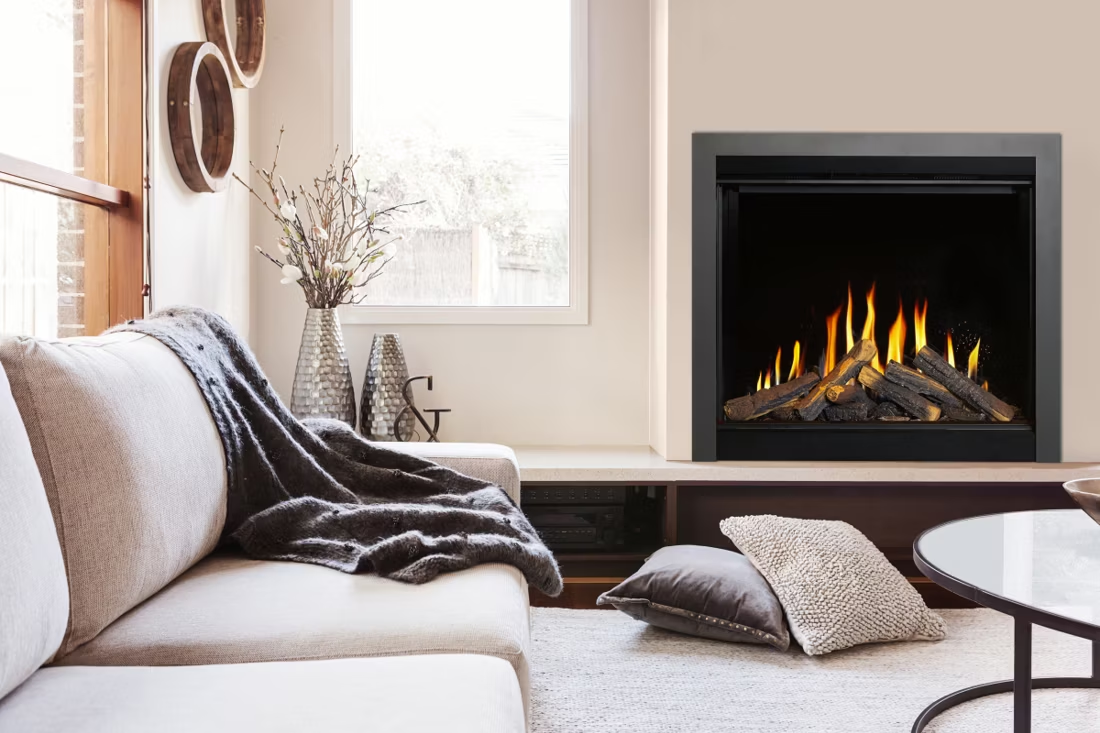
Four fuels. One honest answer for Kane County.
Three steps. No salesperson until you're ready.
Tell us about your project
Your zip code, your situation, and the fuel you're leaning toward—or let the answers point you to one.
See what's actually available
The brands dealers within 100 miles genuinely carry—real options, never a catalog mirage.
Get your dealer & Project Guide
A trusted local dealer, plus the free Project Guide & Parts List that names every component of the job.
Frequently Asked Questions
Which fuel works best in Kane County?
Natural gas is the default across Kane County's suburban housing stock—direct-vent gas fireplaces, gas inserts, and gas log sets are standard in new construction from Aurora to Geneva to St. Charles, and Nicor Gas service reaches nearly every subdivision in the county. Electric fireplaces are the practical supplemental option: condos in downtown Aurora and Elgin, finished basements, and homes without an existing chimney chase often add a zero-clearance electric insert for ambiance and secondary warmth, run off ComEd's grid. Wood-burning fireplaces are uncommon here despite the oak, hickory, walnut, and maple stands still growing along the Fox River—suburban lot sizes, HOA rules in many newer developments, and near-universal natural gas access have pushed wood into a niche category, mostly limited to rural acreage outside Hampshire, Big Rock, and Kaneville. Pellet stoves are rarer still; the regional pellet suppliers that do exist here—Indeck Energy Services, Lignetics, Somerset Pellet Fuel—serve industrial and bulk biomass markets, not a residential hearth trade, so pellet-stove dealers are hard to find in the county.
Do I need a permit to install a fireplace in Kane County?
Usually, yes. If you're inside one of Kane County's incorporated cities—Aurora, Elgin, St. Charles, Geneva, Batavia—permits are issued through that city's own building department, not the county. In unincorporated areas, permits go through the Kane County Development Department. A new gas fireplace, insert, or gas stove typically requires both a building permit and a licensed plumber or gas fitter for the gas line connection, since Nicor Gas service and local code require a proper shutoff and pressure test. Electric fireplaces generally don't need a permit for plug-in units, but built-in electric fireplaces that require new wiring or a dedicated circuit usually do. Most local dealers handle the permitting paperwork as part of the installation quote.
Are there air quality restrictions on wood burning in Kane County?
No—Kane County isn't a designated nonattainment area and doesn't have the winter inversion pattern that triggers burn advisories in places like the Klamath Basin or parts of the Rockies. There's no county-wide no-burn-day system here. That said, a few individual municipalities, including Aurora and Elgin, have local nuisance ordinances that limit outdoor and recreational burning, separate from any fireplace or stove use. In practice this is a minor consideration in Kane County simply because wood-burning fireplaces and stoves are already uncommon in the county's suburban housing stock.
Can one local hearth retailer handle all four fuel types?
Not really—and that's specific to Kane County's fuel mix. Most local retailers here concentrate on gas and electric because that's what's actually installable and in demand across Aurora, Elgin, St. Charles, Geneva, and Batavia. If you're set on wood or pellet, ask directly before you visit a showroom—many Fox Valley dealers carry limited or no wood-burning inventory, and pellet-stove selection is thin countywide since the regional pellet suppliers (Indeck Energy Services, Lignetics, Somerset Pellet Fuel) serve bulk biomass buyers rather than retail hearth customers. Dealers that do carry wood or pellet units are usually smaller specialty shops rather than the larger gas-and-electric showrooms.
How does service work across a county as spread out as Kane?
Kane County stretches roughly 30 miles along the Fox River, from Aurora—Illinois's second-largest city—north through Batavia, Geneva, St. Charles, and Elgin, with smaller communities like Sugar Grove, Elburn, and Hampshire further out. Most gas service technicians and electricians are based in the Aurora–Elgin corridor and travel out to the smaller towns; expect a modest travel fee for appointments in Hampshire, Big Rock, or Kaneville. Because gas fireplaces need periodic pilot and valve inspection and electric units rarely need more than a supply-line check, service calls here tend to be quicker and less weather-dependent than in wood-heavy counties—scheduling ahead of the coldest months (October–November) is still the easiest way to avoid a mid-winter wait.
What's the typical cost range for fireplace installation across all fuel types in Kane County?
Gas fireplace, insert, or stove: roughly $3,500–$9,000 depending on venting type and whether a new gas line run is needed off existing Nicor Gas service; conversions of an existing masonry fireplace to a gas insert tend to land on the lower end. Electric fireplace: $200–$3,000 for the unit itself, plus $300–$1,200 in labor for anything beyond a plug-and-play wall unit, such as a built-in with a dedicated circuit. Wood and pellet installations are uncommon enough in Kane County that consistent local pricing data is limited—homeowners pursuing either fuel should expect to shop a smaller pool of specialty dealers and get a project-specific quote rather than a countywide average.
Can a fireplace actually lower my heating bill?
Yes—by creating a comfort zone. A furnace heats every square foot of the house just to warm the one room you're in; a gas fireplace on low burns roughly a sixth of the gas a typical furnace does. Set the furnace around 55–60 degrees as a baseline, then heat the rooms your family actually uses. Families who heat this way commonly save $20–$60 a month.
Can I install a fireplace myself?
If you're putting a fire in your house on purpose, it's best to work with an expert. Unless you're genuinely experienced in framing, gas line, vent pipe, and the national code on clearances to combustibles, have a professional do it—and ideally the same company that sells you the fireplace, so warranty, service, and liability all live under one roof.
Wood, gas, pellet, or electric—how do I choose?
Match the fuel to your life, not the other way around. Wood: lowest fuel cost and total power-outage independence, but you're hauling and stacking. Gas: press a button, set a thermostat, no maintenance to speak of. Pellet: wood economics with automatic feeding, in exchange for weekly cleaning and a need for electricity. Electric: plugs in anywhere with honest supplemental heat. Nobody regrets the fuel that fits how they actually live.
How much should I budget for a fireplace?
For an average home—covering the fireplace, the vent pipe, and basic installation—a budget between $3,900 and $5,500 gives you a lot of options across wood, gas, and pellet. By the time you add finish work, gas line, and electrical, the average complete installation lands between $5,000 and $12,000 all-in. In a remodel or new build, a good rule is to put about 2.5% of the total project cost toward the fireplace.
Stove and Fireplace Dealers in Kane County
Listings include WhyFire partner dealers, dealers we have verified as authorized for the brands we recommend, and established local businesses that carry hearth products. Every listing shows which one it is. The ones marked Preferred run on WhyFire's software, so they can show you real pricing and book your appointment right here. No manufacturer pays for placement. How we verify dealers →
A Cozy Fireplace
Jhb Group, Inc.
Ember Glow
Fireplace And Patio
A Fireplace Store And More
Find your fireplace match in Kane County.
Tell us about your home and we'll match you with a trusted local Kane County dealer and send a free Project Guide & Parts List—the exact parts, including the vent kit, for your gas or electric fireplace project.
Find Your Fireplace →